Jones–Shafroth Act of 1917: Puerto Rican Citizenship and Self-Government
What changed when Congress granted statutory U.S. citizenship to Puerto Ricans—and what remained under federal control.
Quick answer
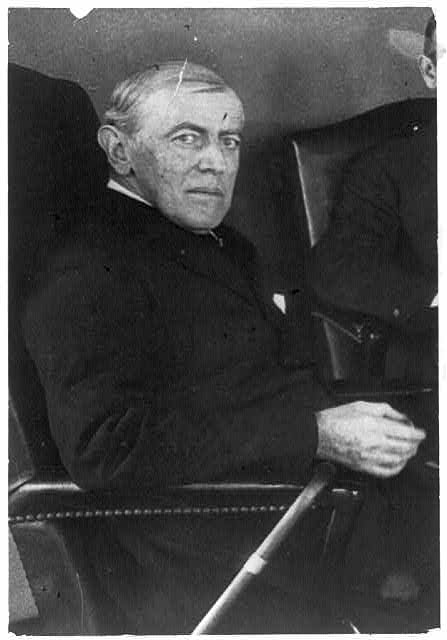
President Woodrow Wilson signed the Jones–Shafroth Act on March 2, 1917. The law conferred U.S. citizenship on most people who were citizens of Puerto Rico under the prior legal arrangement, established an elected bicameral insular legislature and provided a local bill of rights. It did not make Puerto Rico a U.S. state, grant its residents a vote for U.S. president or end federal control over the territorial government.
Key facts
On this page
- Puerto Rico before the Jones–Shafroth Act
- Why citizenship had become a central question
- What Congress enacted on March 2, 1917
- Statutory U.S. citizenship and its qualifications
- The new elected Senate and House
- The bill of rights and civil government
- What did not change about voting for president
- World War I and the new Selective Service law
- Migration and new possibilities on the mainland
- Later self-government reforms
- Why the Jones–Shafroth Act matters
- Timeline
- Frequently asked questions
- Sources
Puerto Rico before the Jones–Shafroth Act
Puerto Rico became a possession of the United States after the Spanish–American War and the Treaty of Paris of December 1898. Spain ceded the island, and Congress subsequently determined its governmental arrangements. This status preceded the Jones–Shafroth Act by almost nineteen years. Any description that says Puerto Rico first became a U.S. territory in 1917 confuses acquisition of the island with the later legislation on citizenship and civil government. Those events concerned different questions, even though both were part of the continuing relationship between Puerto Rico and the United States.
The Foraker Act of 1900 had established an early civilian government with substantial control retained by U.S.-appointed officials. Puerto Rican political leaders debated autonomy, representation, citizenship and the ability of the island’s residents to make decisions about local laws. Some favored statehood, some greater self-government and others different arrangements. Those positions cannot be collapsed into a unanimous demand for one predetermined future. The 1917 statute grew out of those debates and congressional decisions about how to govern an inhabited territory.
Why citizenship had become a central question
After 1898, Puerto Ricans faced a complicated nationality status different from the ordinary citizenship enjoyed by people born in U.S. states. Federal policy treated the island as subject to U.S. authority while limiting the political rights of residents. This situation raised practical questions about travel, legal belonging, public service and the relationship between citizenship and sovereignty. People could live under American laws and institutions without having the full political representation of residents of the states.
Citizenship debates were also bound to disagreements over empire. Congress and federal courts had considered whether the Constitution automatically applied in the same way to newly acquired territories. Puerto Rican leaders and mainland lawmakers did not all draw identical conclusions from that history. Some argued that national citizenship would establish a firmer legal relationship, while others criticized an arrangement in which citizenship could be granted without equal national political participation. The Jones–Shafroth Act addressed one important question—nationality—without settling all the others.
What Congress enacted on March 2, 1917
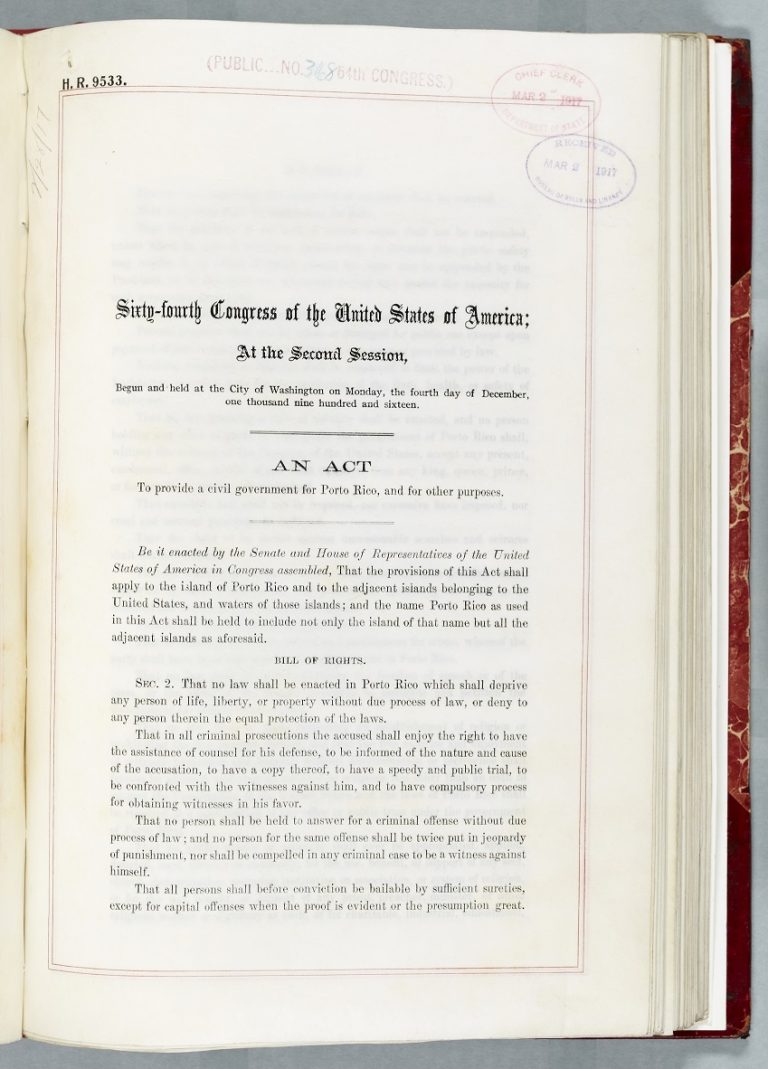
Congress passed a measure named for its sponsors, Representative William Atkinson Jones and Senator John F. Shafroth. President Woodrow Wilson signed it on March 2, 1917. Its title described an act providing civil government for Puerto Rico and other purposes, reflecting a legislative program wider than citizenship alone. The law is also frequently called the Jones Act of 1917, although the name Jones Act is used for other U.S. statutes. Adding the year and Puerto Rico context avoids confusion with the Merchant Marine Act of 1920.
The act revised the island’s governmental framework, set out civil-rights protections and conferred U.S. citizenship on a broad class of people covered by its provisions. The original statute, preserved by the Library of Congress, is the best source for its exact legal language. It is not enough to rely on the popular phrase ‘Puerto Ricans became Americans’ without clarifying that the island was already under U.S. sovereignty and that the law did not transform Puerto Rico into a state.
Statutory U.S. citizenship and its qualifications
The law generally declared Puerto Rican citizens to be citizens of the United States, subject to statutory exceptions and a provision allowing certain individuals to retain their existing status through a timely declaration. The legal terms mattered because the act was a congressional statute dealing with a territory rather than a constitutional amendment granting statehood or voting representation. It placed national citizenship into the lives of many island residents while preserving other distinctions tied to territorial residence.
Calling the citizenship ‘statutory’ recognizes that the original grant was made by Congress. It does not suggest that ordinary Puerto Rican citizens today lack the everyday rights of U.S. citizenship. The constitutional and statutory history of citizenship in territories is complex, and the situation in 1917 should not be replaced by modern political slogans. The historically significant point is that Congress legislated a new citizenship relationship while retaining authority over Puerto Rico’s broader political status.
The new elected Senate and House
One of the law’s governmental reforms was an elected bicameral legislature consisting of a 19-member Senate and a 39-member House of Representatives. That represented a meaningful change in local political participation. Previously, the legislative system established under the Foraker Act included significant appointed components, limiting island voters’ control of lawmaking. The Jones–Shafroth arrangement created an institutional basis for a larger role by elected local representatives.
However, an elected legislature does not on its own amount to full self-government. The governor was still appointed by the U.S. president, and federal authorities retained substantial power over island legislation and administration. The act did not make the Puerto Rican legislature equivalent to that of a state within the union, nor did it grant territorial representatives voting power in Congress on the same terms as state members. It combined expanded local democracy with continued federal oversight, which is why its meaning has remained debated.
The bill of rights and civil government
The 1917 statute provided a bill of rights addressing protections such as due process and other safeguards associated with individual liberty. It also organized separate executive, legislative and judicial functions. These provisions mattered to residents who sought clearer legal guarantees and locally accountable institutions. They reflected a broader early twentieth-century language of constitutionalism, although the legal architecture was not identical to the federal Bill of Rights or a state constitution.
Such rights existed within an institutional framework where the U.S. government still exercised authority over the territory. Historians should distinguish what a legal text promised from how rights were enforced and experienced. A guarantee of due process did not mean every resident enjoyed equal wealth, influence or representation. The law changed an important part of the governing structure, but practical self-government still depended on later laws, elections, court decisions and political struggles.
What did not change about voting for president
The Jones–Shafroth Act did not create votes in the U.S. Electoral College for Puerto Rico. U.S. citizens residing on the island therefore did not obtain the same ability to participate in the general presidential election as citizens living in states. Likewise, Puerto Rico remained outside the ordinary allocation of voting seats in both houses of Congress. The office of resident commissioner provided a connection to Congress but not full voting representation equivalent to that of a state’s delegation.
This distinction can be difficult to understand because citizenship and voting often overlap in ordinary political life. The history of Puerto Rico demonstrates that nationality, residence and constitutional governmental structure affect different rights. Many Puerto Ricans who move to a state can participate in elections there under the same applicable rules as other state residents, while people resident on the island remain under a different territorial arrangement. The 1917 act therefore should not be described as bringing complete political equality.
World War I and the new Selective Service law
The date of the act is striking: the United States entered the First World War weeks later, on April 6, 1917. Congress then enacted the Selective Service Act on May 18. Puerto Rican men became subject to wartime military registration and service under the law’s terms. The relationship between citizenship and military obligations was politically sensitive, but historians should avoid presenting the Jones–Shafroth Act as merely a disguised recruiting statute. The citizenship and government debates had a longer history that preceded wartime entry.
Puerto Ricans served in the U.S. military during the First World War and subsequent conflicts. Their service illustrates both participation in national institutions and the continuing debate over the island’s political status. Our Selective Service Act of 1917 article explains the broader draft process; the Puerto Rico law explains the changed citizenship framework within which those obligations and later opportunities developed.
Migration and new possibilities on the mainland
U.S. citizenship affected movement between Puerto Rico and the mainland, and over the following decades many Puerto Ricans established communities in New York and elsewhere. The Library of Congress notes migration of tens of thousands during the 1920s. Economic opportunities, family ties, political conditions and transport connections all influenced these journeys. The law supplied an important legal context for mobility, but it did not single-handedly cause every migration decision or eliminate discrimination faced on the mainland.
Puerto Rican community life in mainland cities developed through work, organizations, newspapers, schools and family networks. People also maintained enduring ties with the island. Treating citizenship as the whole story would overlook the economic and cultural experiences that shaped migration. The history of the Jones–Shafroth Act is therefore connected with, but distinct from, the larger history of Puerto Rican communities in the United States.
Later self-government reforms
Puerto Rico’s institutions continued to change after 1917. The island obtained an elected governor in the mid-twentieth century, and its present constitutional arrangement developed later. Those subsequent changes should not be attributed to the original Jones–Shafroth Act. Similarly, disputes over statehood, independence and the existing territorial status remained part of Puerto Rican politics through multiple generations. The 1917 statute did not create a final, uncontested answer about sovereignty.
Reading the law alongside earlier documents from 1898 and 1900, and later constitutional developments, makes the sequence clearer: U.S. acquisition of Puerto Rico, establishment of civilian institutions, citizenship and expanded local legislature, followed by later reforms. Each step changed a different dimension of the island’s relationship with the federal government. That sequence is preferable to a simplified story in which citizenship immediately converted the territory into a state.
Why the Jones–Shafroth Act matters
The act was a landmark in Puerto Rican and United States history because it connected national citizenship with a revised insular government. The elected bicameral legislature gave Puerto Rican voters greater influence over local affairs, while the bill of rights established additional formal protections. Yet the appointed governor and federal veto powers revealed how far the island remained from the political position of a state.
The key lesson is that citizenship, territorial government and voting representation are distinct historical questions. The 1917 law answered them differently. To understand its significance, it is necessary to consider both its genuine reforms and the limitations that persisted. The Spanish–American War and the subsequent annexation debates provide the imperial background, while the 1917 draft law connects its new citizenship framework with the pressures of wartime America.
Timeline
- 1898: Puerto Rico ceded to the United States after Spanish–American War
- 1900: Foraker Act establishes civilian government
- March 2, 1917: Jones–Shafroth Act signed
- April 6, 1917: U.S. enters World War I
- May 18, 1917: Selective Service Act signed
- 1948: Puerto Ricans first elect governor directly
- 1952: New constitutional framework inaugurated
Frequently asked questions
When was the Jones–Shafroth Act signed?
March 2, 1917, by President Woodrow Wilson.
Did it first make Puerto Rico a U.S. territory?
No. Puerto Rico came under U.S. sovereignty in 1898; the 1917 act concerned citizenship and civil government.
Did the act grant Puerto Ricans U.S. citizenship?
It conferred statutory U.S. citizenship on most people covered by its Puerto Rican citizenship provisions, with qualifications in the original text.
Did Puerto Rico become a state in 1917?
No. It remained a U.S. territory.
Could Puerto Rican residents vote for president after the act?
No. The law did not give Puerto Rico votes in the Electoral College.
What kind of legislature did the act establish?
An elected insular Senate of 19 members and House of Representatives of 39 members.
Sources and further reading
Relevant primary records and historical institutions support the dates and interpretations presented here.