Underwood Tariff Act of 1913: Rates, Income Tax and Wilson’s Reform
How a 1913 tariff reduction and a new federal income tax became a single major revenue law.
Quick answer
The Underwood Tariff Act, also called the Underwood–Simmons Tariff or Revenue Act of 1913, was signed by President Woodrow Wilson on October 3, 1913. It reduced many U.S. import duties and enacted a federal income tax under the newly ratified Sixteenth Amendment. The act did not eliminate tariffs or instantly replace customs revenue; it changed the balance of federal tax policy.
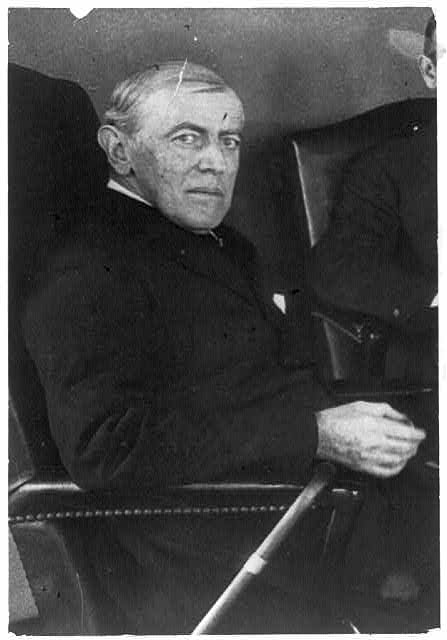
The tariff statute of 1913 was both a trade measure and a revenue measure. Reading those parts together explains what Wilson’s administration sought to change, what Congress actually enacted, and why a federal income tax appeared in the same law.
Key facts
On this page
- Why tariff reform was central in 1913
- The election of 1912 and Wilson’s first priority
- How the Underwood–Simmons bill moved through Congress
- What actually changed in the tariff schedule?
- Why free-list changes mattered
- The income tax inside the tariff act
- Why the two reforms were combined
- The political arguments for and against the measure
- What World War I changed
- Legacy and how to read the 1913 act today
- Timeline
- FAQ
- Sources
Why tariff reform was central in 1913
Import duties played a much larger role in federal finance before the establishment of a permanent peacetime income tax. For generations Congress had argued over whether tariffs primarily should raise money for the Treasury or shield American industries from foreign competition. By the early twentieth century the debate involved everyday consumer costs, factory employment, industrial investment, agricultural exports and the growing power of the national government. A tariff schedule could contain many different rates, so speaking of a single ‘American tariff’ often concealed large variations between manufactured goods, raw materials and food products.
The Republican-backed Payne–Aldrich Tariff of 1909 became a focal point for criticism from advocates of lower duties. Woodrow Wilson and many congressional Democrats argued that high protective tariffs could favor established producers at the expense of consumers and competing firms. Protectionists answered that tariffs could support domestic production and employment, and they questioned whether lower duties would deliver lasting benefits to households. These competing claims shaped the legislation of 1913. The law was not merely a technical adjustment of customs collections; it was a prominent dispute over who should bear the costs and reap the advantages of federal trade policy.
The election of 1912 and Wilson’s first priority
Wilson entered office in March 1913 after an election in which tariff policy, competition, banking and broader Progressive Era proposals featured heavily. The fractured Republican vote and the presence of Theodore Roosevelt’s Progressive candidacy formed part of the political setting, but the legislative story turns on Congress, where Democrats controlled both chambers. Wilson made tariff revision an early priority and worked closely with members of the House Ways and Means Committee. On April 8 he addressed Congress in person on the subject, a notable presidential intervention in a period when presidents had commonly communicated legislative messages in writing.
House Democratic leader Oscar Underwood was central to the bill’s development. His committee developed schedules that reduced duties on numerous products, while the Senate required its own negotiations. Wilson’s involvement did not erase congressional bargaining; it made tariff reform a prominent test of the administration’s political program. Understanding this sequence also helps distinguish the Underwood statute from later Wilson-era legislation such as the Federal Reserve Act and Clayton Antitrust Act, which addressed different economic problems.
How the Underwood–Simmons bill moved through Congress
The House phase was associated with Underwood, while Senate Finance Committee chairman Furnifold Simmons played a key role in shepherding the measure through the upper chamber. The two names became attached to the final tariff law. Congressional bargaining centered not only on the overall direction of reductions, but also on exemptions and particular schedules that mattered to industries and regions. Every change affected groups differently. A reduction on an imported input might benefit manufacturers who used it, while firms making a competing domestic product could object to the same provision.
After debate, amendment and reconciliation of the chambers’ versions, the finished bill reached Wilson and became law on October 3, 1913. Readers sometimes treat that date as solely an income-tax milestone; it was also the enactment date of a major customs reform. An original copy of the statute, preserved through the Federal Reserve Bank of St. Louis’s FRASER archive, makes the connection unmistakable: its formal description covers reductions in tariff duties and provision of federal revenue. The legislative process, rather than a separate income-tax law passed later, produced both changes together.
What actually changed in the tariff schedule?
The act lowered rates on many imports and enlarged the list of products admitted without duty. It changed treatment of important raw materials and manufactured goods, with measures involving items such as wool, agricultural goods, iron and other industrial products. Different schedules could phase in changes on different dates, and some items still carried protective duties. It is inaccurate to describe the 1913 act as abolishing tariffs or establishing unrestricted free trade. The general reduction was real, but the statute remained a long and detailed schedule rather than one universal percentage.
Contemporary descriptions sometimes summarize the reform by comparing average duty rates before and after 1913. Such averages depend on what is measured: duties on all imports, duties only on goods that remained dutiable, the statutory schedule, or actual customs receipts. Trade composition also changes an observed average. A careful account therefore avoids presenting any one average as the rate paid on every product. The historically significant finding is a broad redirection toward lower duties in many categories, with exceptions, transitional rules and continued customs enforcement.
Why free-list changes mattered
A free-list item entered without the particular import duty that had previously applied, but that did not guarantee lower shop prices in a fixed proportion. Domestic retailers, transport costs, currency conditions, and competition could alter the final price. A reduction in the tax on raw materials could be reflected in industrial input costs, yet its ultimate effect on wages, business profits and consumer prices depended on other conditions. That distinction is useful whenever tariff law is discussed as though Congress could prescribe the exact retail price of a product.
For businesses, predictability also mattered. Manufacturers who purchased imported materials considered whether a revised schedule could lower their costs; businesses protected against overseas competitors considered whether the change threatened profits or employment. Consumers could benefit from increased competition, while some workers or investors feared adjustment costs in exposed industries. Those effects were debated in 1913, and historians can examine them without reducing the bill to a simple story of winners and losers. The law redistributed advantages, risks and federal revenues, but not identically across every industry.
The income tax inside the tariff act
The Underwood measure mattered as much for what it established alongside tariff reductions as for the reductions themselves. After the Sixteenth Amendment was ratified, Congress could impose income taxes without the apportionment obstacle that had affected the tax attempted in the 1890s. The 1913 act used that authority. It provided a normal individual income tax of 1% on taxable income above exemptions, plus graduated additional taxes for larger incomes. The basic exemption was $3,000 for an unmarried person and $4,000 for a married couple under the relevant rules.
The tax did not immediately fall on most Americans. Its original thresholds excluded a very large share of ordinary earners, and revenue from customs and other taxes remained important. The Bureau of Internal Revenue then had to put the new tax into practice with instructions and the first Form 1040. That administrative story deserves separate treatment: see how the federal income tax began operating in 1913–1914. The Underwood Act is the legislative bridge between tariff revision and a durable federal system of income taxation.
Why the two reforms were combined
Lowering import duties could reduce customs receipts, other things being equal, at a moment when Congress still needed to finance federal operations. An income tax provided a different revenue instrument. That pairing was politically appealing to reformers who wanted to reduce dependence on customs duties and place more of the tax burden on higher incomes. But describing it as a complete, immediate swap is misleading. The amount collected through the early income tax was limited, and changes in trade volumes, war conditions and later legislation affected the balance of federal receipts.
The connection was also constitutional and institutional. Without the Sixteenth Amendment, the particular income-tax scheme would have faced the apportionment issue that reformers wanted to resolve. Without the revenue act, the amendment alone would not have prescribed filing or rates. Without the Bureau’s administrative work, the tax could not have been enforced. Understanding these links provides a more precise answer to a common question: the amendment allowed a national income tax, the Underwood statute enacted one, and tax administrators implemented it.
The political arguments for and against the measure
Wilson and tariff-reform advocates presented lower duties as a way to encourage competition and curb advantages created by high protective rates. Critics worried about exposing American firms to foreign competition and undermining industries that had made investments on the assumption that tariff protection would continue. Business interests did not speak with one voice: import-dependent producers could welcome cheaper materials while producers of competing goods resisted cuts. Regional economies also differed, making tariff amendments the subject of intense congressional bargaining.
The income tax prompted a related but distinct debate about fiscal fairness and the role of national government. Supporters emphasized the ability to tax higher net incomes, while opponents raised concerns about federal reach, private financial records and effects on investment. These are documented policy disagreements, not simply evidence that one party understood economic reality and another did not. The historical importance lies in the institutional choice Congress made in 1913: a revenue system less exclusively tied to customs and an income tax capable of future expansion.
What World War I changed
The law took effect only months before the outbreak of World War I in Europe in 1914. War disrupted international trade, altered import patterns and eventually led to enormous new demands on U.S. federal finance. Congress made further revenue changes and increased income-tax rates in subsequent legislation. Consequently, the relative importance of the 1913 tariff schedule and the initial income-tax brackets changed quite quickly. The 1913 rules should not be projected unchanged into the war years or the postwar economy.
That changing setting complicates claims that the Underwood Act alone caused a particular long-term movement in prices, wages or the federal budget. Trade volumes were affected by war and global markets, and later law revised tax schedules. A careful historical analysis begins with what Congress enacted, then asks what else changed before measuring results. The Underwood Act’s enduring importance is best located in the direction of revenue-policy reform and the legal framework it helped create, rather than in an alleged permanent effect on any single product price.
Legacy and how to read the 1913 act today
The Underwood–Simmons Tariff brought together two recognizable dimensions of the Progressive Era: regulation of the relationship between government and national markets, and experimentation with the sources of public revenue. The measure remains a useful example of how tax policy can involve both international trade and the distribution of domestic income. It was not a stand-alone constitutional change; neither was it a generic promise of free trade. It was a detailed statute with customs schedules, revenue provisions and practical limits.
For readers following this period chronologically, the act fits between the election of 1912 and subsequent Wilson administration reforms, while sharing its constitutional background with the income-tax amendment. Looking at the original statute alongside the congressional record also reveals why Underwood and Simmons both appear in its name. Their roles refer to the different stages of the legislative process, not to two separate laws. It is this combined story—tariffs reduced, revenue diversified, administrative work begun—that explains the act’s lasting place in U.S. fiscal history.
Timeline
- 1909: Payne–Aldrich Tariff renews disputes over protection
- 1912: Wilson wins the presidential election amid competing reform platforms
- April 8, 1913: Wilson addresses Congress in person on tariff revision
- 1913: Underwood and Simmons guide legislation through the two chambers
- October 3, 1913: Wilson signs the Revenue Act/Underwood–Simmons Tariff
- 1914 onward: World War I transforms trade and federal revenue conditions
Frequently asked questions
When was the Underwood Tariff Act passed?
President Woodrow Wilson signed the act on October 3, 1913, after congressional debate and reconciliation.
Is the Underwood Tariff the same as the Revenue Act of 1913?
Yes. Underwood–Simmons Tariff and Revenue Act of 1913 refer to the same major law, which combined changes in import duties with income-tax provisions.
Did the act eliminate tariffs?
No. It reduced many tariff rates and expanded the free list, but numerous imports remained subject to duties.
Why is the act connected to the Sixteenth Amendment?
The amendment supplied constitutional authority for an unapportioned income tax; Congress used that authority in the revenue provisions of the tariff act.
Did all Americans begin paying income tax in 1913?
No. The initial exemptions meant that most Americans were outside the individual income-tax base.
Who were Underwood and Simmons?
Oscar Underwood was a leading House sponsor and Furnifold Simmons managed the bill in the Senate.
Did tariff cuts instantly make every imported product cheaper?
No. Actual prices depended on import schedules, trade conditions, distribution costs and competition; the law did not fix retail prices.
Sources and further reading
Primary legal texts and historical institutions underpin the dates and descriptions above.