1800–Present
Modern History
Revolutions, industrialization, empires, world wars and political transformation created the institutions and conflicts that still shape the contemporary world.
Explore Modern History
Stories from this period
-
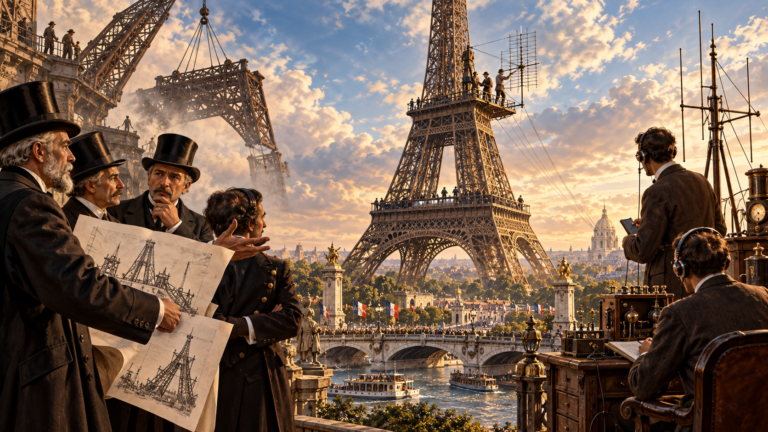
The Eiffel Tower Was Supposed to Be Dismantled After 20 Years
The Eiffel Tower was originally expected to stand for only 20 years. Scientific experiments and radio communications helped save it from dismantling.
-
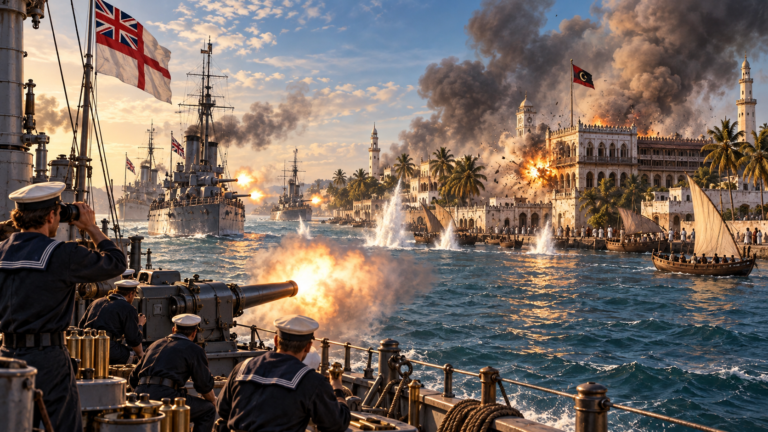
The Shortest War in Recorded History Lasted Less Than an Hour
The Anglo-Zanzibar War of 27 August 1896 lasted roughly 38 to 45 minutes, depending on how its beginning and end are measured.
-
The First World War: Causes, Alliances, and Key Figures
The First World War, also known as the Great War, erupted in 1914 due to a complex web of political, economic, and social tensions. Its immediate trigger was the assassination of Archduke Franz Ferdinand of Austria-Hungary, but the underlying causes included militarism, nationalism, imperial rivalries, and a tangled system of alliances that drew multiple countries…
-
Great Depression of 1929: causes and characteristics of the economic crisis
The Great Depression of 1929: history, causes and consequences of the 1929 crisis in the United States: from the Wall Street crash to the New Deal The Global Impact of the 1929 Economic Crisis By the late 1920s, the world appeared to be moving past the traumas of World War I. Diplomatic relations between major…
-
A Brief Summary of Absolutism and English Society in the Early Seventeenth Century
In early 17th-century England, Absolutism began to take shape under the rule of James I Stuart (1603-1625), who believed in the divine right of kings. This created growing tensions between the monarchy and Parliament, as James sought to centralize power while Parliament defended its role in governance. Religious divisions also deepened, particularly between Puritans, who…
-
Charles I and His Tense Relationship with Parliament
When Charles I ascended to the throne in 1625, following the death of his father, James I, the delicate balance of power between the monarchy and Parliament quickly began to unravel. Charles’ reign (1625-1649) was marked by frequent clashes with Parliament, which stemmed from deeper tensions regarding authority and governance. Unlike his father, who had…
-
5 Incredible Facts About Napoleon
Napoleon Bonaparte (1769–1821) was a French military leader and emperor who rose to prominence during the French Revolution. Known for his strategic genius, he led France in numerous successful campaigns across Europe, eventually crowning himself Emperor in 1804. Napoleon implemented significant reforms in law, administration, and education, most notably through the Napoleonic Code, which influenced…