Hiram Rhodes Revels: First Black U.S. Senator (1870) and His Legacy
How a free-born minister from North Carolina became the first African American to serve in Congress.
Hiram Rhodes Revels became the first African American member of Congress when he was seated in the U.S. Senate for Mississippi on February 25, 1870. A minister and educator born free in 1827, he served until March 1871 and later led Alcorn College.
Explore Revels’s early life, religious work, the debate over Senate eligibility and his educational legacy.
On this page — 22 topics
Who was Hiram Rhodes Revels?
Hiram Rhodes Revels was a clergyman, educator and Reconstruction politician who became the first African American to serve in the United States Congress. He entered the Senate on February 25, 1870, representing Mississippi. Born free in Fayetteville, North Carolina, in 1827, he built a career in religious leadership and education before becoming involved in postwar politics. His appointment was nationally significant because Black people had been excluded from federal political power while slavery shaped the country. Revels’s term was brief, but it demonstrated the new possibilities created by the Civil War and Reconstruction. It also provoked arguments over citizenship, the Constitution and the political standing of formerly enslaved Americans.
When did Revels enter the U.S. Senate?
Revels took his seat in the United States Senate on February 25, 1870. The Mississippi legislature elected him to fill the remainder of a Senate term that had been vacant since the Civil War. The date is a landmark because no African American had previously served in either chamber of Congress. Senators were then chosen by state legislatures, not by direct popular vote; the Seventeenth Amendment did not establish direct Senate elections until 1913. Consequently it would be inaccurate to describe Revels as winning a modern statewide election. His selection emerged from Mississippi’s newly established Reconstruction government and the wider transformation in political participation following the abolition of slavery.
Was Revels born enslaved?
No. Revels was born free in Fayetteville, North Carolina, in 1827. His family background and opportunities were still shaped by a society in which slavery and racial restrictions were widespread. He received an early education through a free Black teacher and later traveled north to pursue further study. His biography differs from those of Reconstruction politicians who had themselves been enslaved, demonstrating that African American political leadership came from people with varied personal experiences. Being born free did not remove the discrimination he faced in schooling, travel or public life. His early freedom is nevertheless an important fact and should not be replaced by an assumption that every Black politician during Reconstruction had previously been enslaved.
What education did Revels receive?
As a young man Revels sought educational opportunities beyond North Carolina. He attended schools in Indiana and Ohio that were available to Black students, including institutions associated with Quaker education. His studies supported a career in Christian ministry and teaching. At a time when many Southern states severely restricted Black education, these opportunities were valuable. Revels later became involved in organizing and supporting schools for African Americans in several states. His educational background helped prepare him for public speaking and political leadership. It also demonstrates how antebellum Black communities developed institutions and networks that would become important during Reconstruction, when schools and literacy acquired greater national political significance.
Why was religion central to his career?
Revels was a minister associated with the African Methodist Episcopal tradition and served congregations in different parts of the United States. Religious leadership involved preaching, education, community organization and public speaking, providing experience useful in political life. Black churches were important centers of mutual support and civic activity before and after the Civil War. Revels’s work therefore combined spiritual responsibilities with practical concerns about schools and community welfare. His reputation as a moderate and capable speaker contributed to the support he gained in Mississippi. Reducing his life to one Senate photograph would miss the years of service through which he developed relationships and gained the confidence of people who later encouraged his political involvement.
Did Revels serve during the Civil War?
During the Civil War, Revels supported the Union effort and helped recruit African American soldiers. He also served as a chaplain and participated in educational and religious work connected with Black military communities. His activities linked the wartime struggle against slavery to the later demand for national citizenship and representation. Black soldiers’ service challenged racist claims that African Americans lacked the capacity or loyalty to participate in public institutions. Revels’s role was not that of a battlefield general, and descriptions of his military activity should distinguish recruiting and chaplaincy from combat command. His service and networks nevertheless strengthened his credentials among communities that viewed Union victory and emancipation as openings for political change.
How did he settle in Mississippi?
Revels moved to Mississippi after the Civil War and became involved in ministry and public education, including work in Natchez. The city had a large Black community and experienced substantial political change under federal occupation and Reconstruction. Revels served as an alderman, gaining experience with local government and issues affecting residents. His religious connections helped bring him into contact with voters and Republican leaders. Mississippi’s political institutions were undergoing a difficult transition as the state sought congressional readmission. Revels’s career illustrates how local leadership could become a route to national office during Reconstruction, even for someone who had not previously held the kind of public position that typically launched a Senate career.
What was his role in the Mississippi legislature?
Revels won a seat in the Mississippi state senate in 1869, during the establishment of a Reconstruction government. Black men were participating in state politics in numbers unprecedented before the war, though they continued to face organized resistance. His work in the legislature and his reputation as a measured speaker attracted attention among Republican colleagues. Members of the legislature had the responsibility for choosing United States senators under the system then in place. Revels became a candidate to fill a vacant seat and was elected in early 1870. This sequence matters because his national appointment was grounded in the political changes of Mississippi, not simply in a symbolic invitation from officials in Washington.
Why was his appointment controversial?
Some senators questioned whether Revels satisfied the Constitution’s requirement that a senator have been a United States citizen for nine years. Their arguments drew on the earlier Dred Scott decision, which had denied national citizenship to Black Americans under its infamous reasoning. Opponents contended that Revels could not have held citizenship long enough, while supporters argued that his status as a free-born American and the postwar constitutional changes established his eligibility. The debate concerned legal doctrine but also reflected resistance to the presence of a Black senator. The Senate ultimately seated him. Understanding the argument requires distinguishing a genuine constitutional eligibility rule from the contested racial assumptions used to interpret it.
How did the Fourteenth Amendment matter?
The Fourteenth Amendment was ratified in 1868 and established a constitutional definition of citizenship that included people born in the United States and subject to its jurisdiction. Opponents of seating Revels tried to argue that citizenship had begun only then, making him ineligible under the nine-year requirement. Supporters rejected that interpretation, pointing to his status as a free American and the changes brought by the Civil War. The issue shows how Reconstruction amendments affected the composition and legitimacy of the national legislature. Revels’s seating did not settle every constitutional question in later law, but it demonstrated the Senate’s willingness to recognize a Black member after an era in which federal institutions had supported slavery.
What did Charles Sumner say about Revels?
Senator Charles Sumner of Massachusetts strongly supported Revels’s admission and framed it as a fulfillment of the Declaration of Independence’s promise of equality. Sumner’s argument connected the symbolic moment to the broader abolitionist struggle and the national need to recognize Black citizenship. His support did not mean the entire Senate agreed or that racism disappeared from American political life. The speech became memorable because Revels’s seating placed an African American inside the legislative chamber where major questions of slavery and citizenship had long been debated. Historians examine the speech alongside the legal dispute and the political changes within Mississippi rather than treating the event as an uncomplicated national celebration.
How long did Revels serve in Congress?
Revels served from February 1870 until March 1871, completing a remaining Senate term rather than a new full six-year term. His brief tenure limits how many legislative projects can be attributed directly to him. Nevertheless, he spoke on issues affecting equal treatment and the position of Southern states after the war. A short term can still have great historical significance when it breaks a barrier to representation. It would be inaccurate to imply he remained a senator throughout the whole Reconstruction period or served for decades in Congress. His later career was substantial, particularly in higher education, but it took place outside the United States Senate.
What policies did Revels support?
Revels generally supported Reconstruction’s efforts to secure equal citizenship and improve educational opportunities for African Americans. His political style was frequently described as moderate, and he expressed concerns about policy decisions he considered unjust or counterproductive. He opposed racial discrimination and supported people attempting to exercise public rights. His approach was not identical to that of every Republican politician during Reconstruction. Some of his positions reflected a desire for reconciliation and stable local government, while his presence in Congress itself challenged entrenched racial exclusion. Studying his actual speeches and votes is preferable to treating him only as a symbol without independent political ideas or experiences.
What did he do after the Senate?
After completing his Senate term, Revels turned much of his attention to education. He became president of Alcorn Agricultural and Mechanical College, now Alcorn State University, in Mississippi. The institution was founded during Reconstruction to provide higher education for African Americans. Revels’s leadership helped link the new political opportunities of the era with the development of Black educational institutions. His career also included continued religious activity and public service. He experienced political disagreements during subsequent years, showing that his life after Congress was not simply a quiet retirement. His work in education continued the themes of community leadership and citizenship that had shaped his earlier career.
How is Alcorn State University connected to Revels?
Alcorn State University traces its history to a Reconstruction-era institution established in 1871 for Black students in Mississippi. Revels served as one of its early presidents, making education a central component of his legacy. Historically Black colleges and universities were founded through varied combinations of state action, churches, federal assistance and community initiative, and their histories cannot all be reduced to one model. Alcorn’s founding occurred in a state where access to education had been deeply unequal under slavery. Revels’s involvement shows how Black political leadership and institution-building intersected. It also reminds readers that Reconstruction’s enduring achievements included schools and colleges as well as amendments, elections and courtroom decisions.
Was he the only Black senator during Reconstruction?
No. Blanche K. Bruce later became the second African American to serve in the United States Senate, also representing Mississippi. Bruce took office in 1875 and served a full six-year term, unlike Revels’s shorter service. The distinction is historically useful: Revels was the first Black senator, while Bruce was the first to serve a complete Senate term. Other African American lawmakers entered the House of Representatives during Reconstruction, including Joseph Rainey of South Carolina. Together these officeholders reveal the scale of political change after the Civil War. Their achievements must be interpreted alongside the violence and discriminatory measures that later restricted African American political participation.
How did white supremacist violence affect Black politicians?
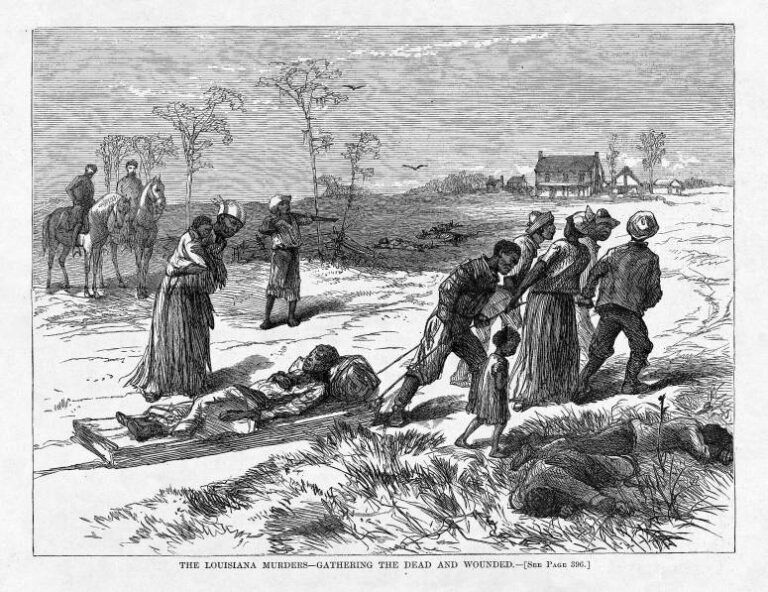
Black public officials and their supporters faced intimidation, attacks and economic retaliation during Reconstruction. The Ku Klux Klan and other organizations sought to reverse gains in voting and political representation. Revels himself became a public figure amid these conflicts, although his particular experiences differed from those of politicians in more violent districts. The 1871 Ku Klux Klan Act was one federal response to organized terror. Political representation did not automatically ensure that elections were fair or that officials could serve without threats. This wider context is essential to understanding why the breakthrough of a first Black senator was so consequential and why equal political participation proved difficult to sustain after Reconstruction weakened.
What is the historical importance of his Senate portrait?
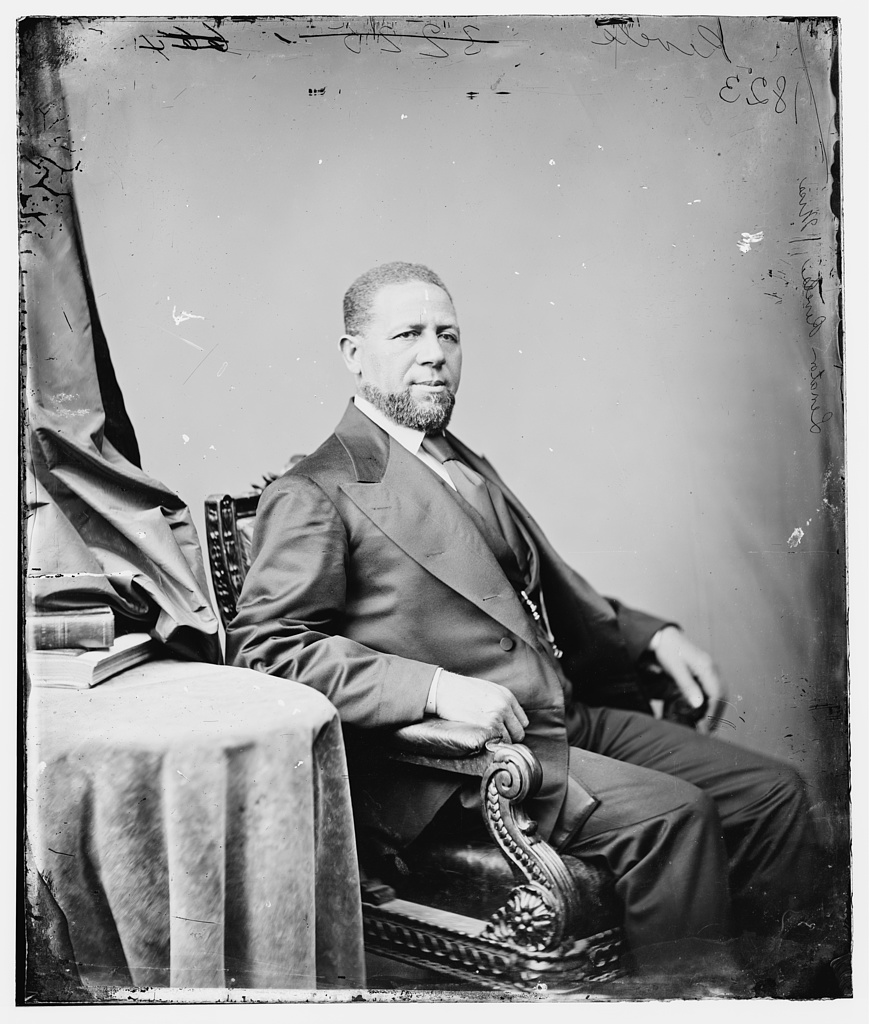
A surviving studio photograph from the Brady-Handy collection shows Revels seated in formal clothing in 1870. The image provides a direct visual record of the first African American member of Congress and contrasts with the caricatures often circulated in racist political materials of the era. But a portrait cannot communicate the legislation he considered or the lives of his constituents. It should be used alongside biographies, Senate proceedings, letters and contemporary newspapers. The Library of Congress preserves the image and its descriptive metadata. Captioning the photograph accurately helps readers distinguish authentic visual evidence from later artwork or dramatizations.
Why does Revels matter to U.S. history?
Revels’s election and seating in 1870 marked a major break with the political order sustained by slavery. A Black clergyman and educator gained entry to an institution that had previously excluded African Americans. His career was possible because the Civil War and Reconstruction changed citizenship and political participation, but it also depended on his own work in ministry, education and Mississippi politics. The gains remained vulnerable as federal support weakened and white supremacist efforts intensified. His legacy therefore belongs to both the history of constitutional reform and the history of Black institution-building. The National Park Service and congressional historical offices preserve detailed biographies that go far beyond the familiar statement that he was the first Black senator.
Hiram Revels timeline
| Date | Event |
|---|---|
| 1827 | Born free in Fayetteville, North Carolina. |
| 1860s | Works in ministry, education and Black Union military recruitment. |
| 1868 | Enters Natchez municipal politics. |
| 1869 | Elected to Mississippi state senate. |
| February 25, 1870 | Seated as first Black U.S. senator. |
| March 1871 | Completes his U.S. Senate term. |
| 1870s | Serves as president of Alcorn College. |
| 1901 | Dies in Mississippi. |