Red River Campaign (1864): Banks, Mansfield, Pleasant Hill and Failure
The Red River Campaign was a failed Union army-and-navy operation through Louisiana and Arkansas during spring 1864. Nathaniel P. Banks and naval commander David D. Porte
The Red River Campaign was a failed Union army-and-navy operation through Louisiana and Arkansas during spring 1864. Nathaniel P. Banks and naval commander David D. Porter attempted to advance toward Shreveport, but Richard Taylor’s Confederate forces defeated Banks at Mansfield on April 8. Union troops fought again at Pleasant Hill on April 9, then withdrew. Low water trapped naval vessels until emergency dam construction helped them escape.
A sourced historical guide to the chronology, evidence, people and consequences of this event.
On this page — 23 topics
What was the Red River Campaign?
The Red River Campaign was a United States military operation undertaken during March–May 1864 in western Louisiana and parts of Arkansas. Union soldiers under Nathaniel P. Banks cooperated with naval forces commanded by David D. Porter, aiming to move up the Red River toward Shreveport and weaken Confederate control of the region. The expedition encountered difficult roads, low river levels and determined resistance from Confederate troops under Richard Taylor. After defeat at Mansfield and a separate engagement at Pleasant Hill, Banks abandoned the advance. Naval vessels became stranded by falling water, and a major engineering effort was required to bring them downstream safely.
Why did Union leaders target the Red River?
Union officials sought to strengthen control of western Louisiana and threaten Confederate positions connected to Texas and Arkansas. Shreveport was an important regional center supporting Confederate forces west of the Mississippi. There were also political and commercial interests in Louisiana cotton and potential operations closer to Texas. Commanders hoped an army-and-navy advance could exploit federal control of the main Mississippi River after Vicksburg and Port Hudson surrendered in 1863. However, objectives were not identical for every participant. The campaign suffered from disagreements over strategy, supply and the resources required at a time when Grant wanted military effort concentrated against more important Confederate armies elsewhere.
Who commanded the Union forces?
Nathaniel P. Banks commanded the main Union ground army in Louisiana, while David Dixon Porter directed the naval squadron moving up the Red River. Their forces had to cooperate but operated with different practical needs: soldiers required roads, food and secure formations, while shallow-draft gunboats and transport vessels depended on sufficient water. General William T. Sherman also supplied troops for a limited period, creating additional coordination challenges. Banks was both a political figure and a military officer, and his judgment during the campaign later attracted criticism. His command was not an independent navy expedition that could freely ignore the changing river conditions.
Who was Confederate General Richard Taylor?
Richard Taylor commanded Confederate forces in western Louisiana. He was the son of former president Zachary Taylor and had experience in earlier Civil War campaigns. Against the advancing Union troops, he withdrew at times while gathering strength and looking for an opportunity to strike an exposed column. At Mansfield on April 8 he attacked a federal force that had become extended along a difficult road. His tactical success disrupted Banks’s offensive and helped force the Union retreat. Taylor’s work must be understood alongside the larger Confederate Trans-Mississippi command under Edmund Kirby Smith, whose strategic priorities did not always match Taylor’s preferences.
Why was Shreveport the objective?
Shreveport served as an important Confederate military and administrative center in Louisiana, connected to routes toward Texas and Arkansas. Capturing the city could have damaged Confederate supplies, communications and authority west of the Mississippi River. It also had symbolic value as a visible target for the Union offensive after the major river victories of 1863. But reaching Shreveport required the fleet and army to cover considerable distances through terrain poorly suited to sustained movement. The campaign’s logistics became more difficult as the columns moved away from secure bases. The objective was ambitious relative to the time and resources available.
How did the expedition advance?
Union naval vessels traveled upstream while Banks’s soldiers moved by road, using plantations, towns and river landings as points of contact. Advance guards encountered scattered Confederate resistance, and detachments were required to protect supplies and communications. A combined force could be powerful when ships and infantry remained close enough to support each other. At other times, the river and roads diverged, leaving the army vulnerable without immediate naval help. Conditions in Louisiana also changed rapidly with water levels and weather. The need to maintain a coherent column was crucial, and failures in that coordination contributed to the problems that developed near Mansfield.
What happened at Fort DeRussy?
Union forces attacked and captured Fort DeRussy near Marksville in March 1864, overcoming a Confederate position intended to obstruct river movement. The victory helped open a route for the naval expedition, demonstrating the potential of coordinated land and river operations. It also encouraged optimism that the campaign could continue upriver toward Shreveport. But success against a fixed fort did not resolve the problems of navigating low water, supplying an army or defeating Confederate forces operating on roads away from the river. Fort DeRussy was an important early achievement rather than proof that the entire expedition would be completed without serious resistance.
Why did low water become a major problem?
The Red River had seasonal changes in depth, and water levels during the campaign became dangerously low for Porter’s gunboats and transports. Vessels could ground, damage their hulls or be unable to cross shoals, especially near Alexandria. The army’s movement and the navy’s ability to provide fire support therefore depended on a river that could not be controlled by military orders. Commanders had to decide whether to wait, continue upstream or turn back. The water problem was not simply unfortunate weather at the end of the expedition; it was a predictable logistical risk that should have shaped the original plan and coordination.
What happened at the Battle of Mansfield?
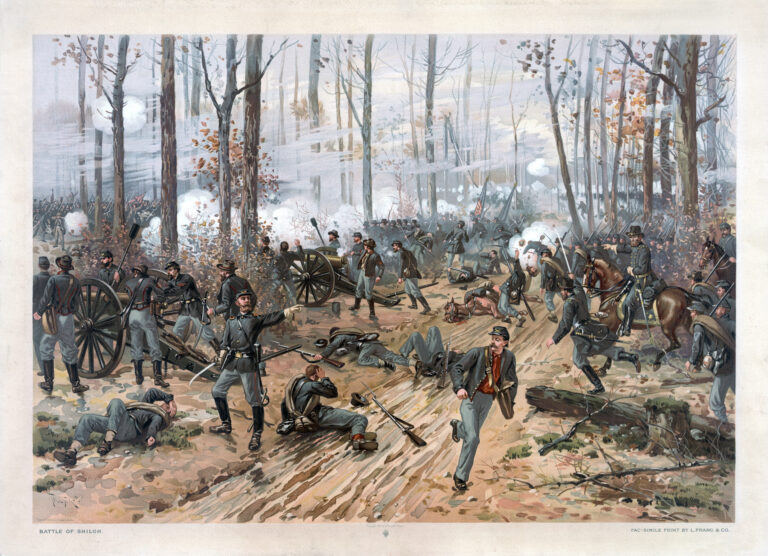
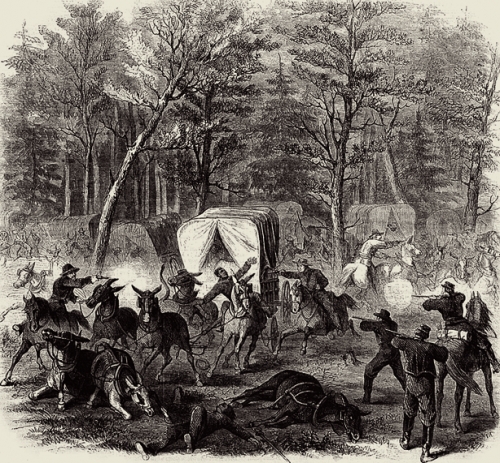
On April 8, 1864, Confederate troops under Richard Taylor attacked Union forces near Mansfield, Louisiana, also known as Sabine Crossroads. Banks’s army was stretched along a road, with wagons and formations occupying limited maneuvering space. Confederate assaults forced the forward Union units to retreat in confusion, and supply vehicles made the withdrawal more difficult. The Confederates won an important battlefield victory and inflicted substantial losses. The result effectively ended hopes of a straightforward advance toward Shreveport. The Union army needed to regroup before it could determine whether to fight again or retreat toward its river supply base.
Why were Union wagon trains vulnerable?
The Union column moving toward Mansfield had to use roads that were often narrow and difficult. Wagons carried food, ammunition, baggage and other essential stores, but a long train could become an obstacle when troops needed to turn around or deploy into battle. Confederate attacks pressured the federal vanguard and sent soldiers back toward vehicles that could not move quickly. In some places the resulting congestion turned a retreat into a disorderly struggle. The episode illustrates how logistics can directly influence battlefield tactics. Supplies are vital for an army’s survival, but poorly protected or positioned wagons can hinder its ability to react under attack.
What happened at Pleasant Hill on April 9?
The Union army regrouped near Pleasant Hill and fought Richard Taylor’s forces on April 9, 1864. Confederate attacks met substantial resistance, and Union troops counterattacked in parts of the field. The battle checked the Confederate pursuit and prevented another immediate disaster like Mansfield. Historians differ in how they categorize the tactical outcome, but the campaign decision is clear: Banks continued withdrawing rather than resuming the offensive toward Shreveport. Pleasant Hill is therefore not evidence that the Union army captured its intended objective. It demonstrates that a force can resist successfully in battle yet choose retreat because broader logistical and strategic conditions remain unfavorable.
Why did Banks decide to retreat?
After Mansfield, Banks faced damaged formations, reduced confidence, difficult supplies and an uncertain route farther upriver. The presence of Confederate forces threatened a renewed advance, while the naval squadron faced worsening water conditions. Even after the fighting at Pleasant Hill, Banks concluded that continuing toward Shreveport would be too risky. The retreat drew criticism because the campaign had consumed troops needed elsewhere and had failed to achieve its principal objectives. Nevertheless, the decision must be evaluated in the context of preserving his remaining army and coordinating with vessels whose freedom of movement was rapidly disappearing.
What happened to Porter’s gunboats?
As the Union forces returned toward Alexandria, falling water left several of Porter’s vessels unable to pass dangerous rapids. Gunboats that had helped open the campaign now risked capture or destruction because they could not move downstream. Their guns and crews were valuable, and abandoning them would have compounded the Union defeat. The problem called for an engineering solution rather than another infantry battle. Soldiers and sailors were enlisted to construct temporary works that would raise the water level enough for vessels to cross. This was one of the most distinctive episodes of the campaign, illustrating the dependence of river warfare on practical engineering.
What was Bailey’s Dam?
Lieutenant Colonel Joseph Bailey, an officer with engineering experience, proposed constructing temporary dams near Alexandria to increase the depth of water over rapids. Union soldiers, laborers and sailors worked to build structures using timber, stone and available materials. The dams created a temporary rise in water level, allowing trapped gunboats to move downstream. The operation was difficult and involved danger to vessels and crews, but it succeeded in saving much of the fleet. Bailey’s Dam became a famous example of improvised military engineering. It was not a permanent dam built to regulate the Red River for commerce after the war.
Did the campaign include Arkansas?
Yes. A related Union expedition advanced through Arkansas under Frederick Steele, intended to cooperate with the movement toward Shreveport. Steele faced Confederate resistance and supply difficulties, and his campaign ultimately withdrew toward Little Rock after fighting around Camden and Jenkins’ Ferry. The Arkansas operation did not converge successfully with Banks as originally intended. This wider geography shows that the Red River Campaign was more than a battle or a river voyage through Louisiana. The plans depended on separated forces acting together despite long distances, unreliable communication and the Confederate ability to concentrate against portions of the Union effort.
How did the campaign affect civilians?
Union troops and Confederate forces operated through Louisiana communities already disrupted by war, occupation and slavery. Armies requisitioned or seized food, animals and supplies, damaged property and altered trade. The movement of Union soldiers gave enslaved people opportunities to seek freedom while also exposing them to the uncertainties of military withdrawal and renewed Confederate control. Some plantation owners and merchants were involved in contested cotton transactions during the campaign. This history is not fully captured by maps of Banks and Taylor. The humanitarian and economic consequences continued after the armies had passed, particularly for families whose security depended on changing military control.
How many casualties occurred?
Casualty totals vary depending on whether authors count only Mansfield and Pleasant Hill or include the whole multi-state campaign. The two major battles produced thousands of killed, wounded, missing and captured men. It is misleading to offer a single precise number without explaining which operations and dates are included. Naval losses, damaged or captured supplies and horses also affected the campaign’s cost but are not counted in ordinary infantry casualty figures. Historians therefore distinguish tactical losses from the broader expenditure of military resources, political credibility and logistical effort associated with the failed expedition.
Did the Red River Campaign achieve its objectives?
The Union failed to capture Shreveport or destroy the major Confederate forces in the region. Banks’s army withdrew, and the naval squadron escaped only after difficult engineering work. Confederate commanders considered the campaign a major success because they stopped the advance and inflicted significant losses. The outcome also complicated federal plans at a time when resources were needed for operations in Virginia and Georgia. However, the campaign did not reverse Union control of the Mississippi River itself, gained after Vicksburg and Port Hudson fell. The failure was regional and strategic, not the collapse of all Union gains in the West.
How did the campaign influence the war in 1864?
Grant’s wider 1864 strategy sought coordinated offensives against Confederate armies, particularly those of Lee in Virginia and Johnston in Georgia. The Red River expedition drew soldiers, vessels and supplies into a campaign that failed to produce comparable results. The withdrawal weakened the credibility of Banks’s leadership and fed debates over political influence in military decisions. Confederate success under Taylor was real but did not create the resources necessary to defeat the United States nationally. The campaign reveals the challenge of conducting simultaneous operations across a continental war, where one unsuccessful expedition could consume manpower needed for more decisive objectives.
Where can the campaign be researched?
The National Park Service Gulf Coast history places the expedition within the western war and explains its failure. Battlefield interpretation around Mansfield and Pleasant Hill provides additional military detail. Period maps from the Library of Congress show the route between Alexandria and Shreveport and the locations of important engagements. Researchers should compare army reports with navy records, because the river’s condition and the timing of naval movement are central to explaining the campaign. Accounts focused only on Mansfield can overlook Bailey’s Dam and the ultimate withdrawal.
Timeline
| Date | Event |
|---|---|
| March 1864 | Union expedition begins; Fort DeRussy captured. |
| April 8 | Confederate victory at Mansfield. |
| April 9 | Fighting at Pleasant Hill; Union advance not resumed. |
| April–May | Federal troops retreat toward Alexandria; vessels face low water. |
| May 1864 | Bailey’s Dam helps the fleet escape; expedition ends. |