Fordney–McCumber Tariff of 1922: Rates, Protection and Trade Effects
Why the United States raised tariffs after World War I and how the Fordney–McCumber Act affected agriculture, industry and overseas trade.
Quick answer
President Warren G. Harding signed the Fordney–McCumber Tariff Act on September 21, 1922. The law raised protective duties on many imported products compared with the lower-tariff Underwood Act of 1913. It also introduced a ‘flexible tariff’ provision allowing the president, after Tariff Commission investigation, to adjust certain rates by up to 50% under specified conditions. Its impact depended on the product, the measure of tariff averages and changing world trade.
Key facts
On this page
- The tariff debate after World War I
- Why the 1913 Underwood law mattered
- The 1921 Emergency Tariff Act
- Fordney, McCumber and Harding
- How the protective tariff worked
- The flexible tariff provision
- Farmers and industrial manufacturers
- Tariffs and the European debt problem
- Did foreign countries retaliate?
- Fordney–McCumber versus Smoot–Hawley
- The act’s place in U.S. economic history
- Timeline
- FAQs
- Sources
The tariff debate after World War I
The First World War disrupted production, transport and international trade. American farmers and manufacturers expanded to meet wartime demand, but the end of fighting brought falling prices and renewed competition from suppliers abroad. Supporters of higher import duties argued that industries needed time to adjust, while critics worried that tariffs would raise consumer prices and make it harder for European countries to earn dollars through exports. Both positions reflected a major policy question: who should bear the costs of postwar economic readjustment?
Import duties were also a longstanding source of political conflict between parties and regions. A tariff might benefit a producer competing with imports while increasing costs for businesses relying on foreign materials. Agriculture, manufacturing and consumers did not have identical interests, and even individual industries could be divided. The 1922 law emerged from those competing pressures rather than an uncomplicated national agreement that every tariff should rise by the same amount.
Why the 1913 Underwood law mattered
The Underwood–Simmons Tariff of 1913 reduced duties on many goods and included a new federal income tax. It had been a prominent part of Wilson-era economic reform. After World War I, Republicans argued that the tariff schedule no longer provided the protection businesses and farmers needed. The Fordney–McCumber measure represented a significant return to higher protective duties compared with that earlier arrangement.
The contrast is a useful starting point but should not become an oversimplified claim that 1913 was completely free trade and 1922 restored a single universal rate. Both were lengthy schedules containing categories, exceptions and different assessments. Changes in the composition and value of imports also complicate comparisons of average duties. A reliable history describes the legislative direction while distinguishing statutory rates from averages calculated using actual import data.
The 1921 Emergency Tariff Act
Before the comprehensive measure of 1922, Congress adopted the Emergency Tariff Act of 1921. It offered temporary protection to selected agricultural products during difficult market conditions. The law showed how pressure for relief could produce an interim measure while Congress debated the details of a much larger permanent tariff schedule. Farmers seeking protection from lower-priced imported products were an influential constituency in the early debate.
The emergency measure and the Fordney–McCumber Act were separate statutes. The latter did not appear without preparation; it followed negotiations over agricultural and industrial interests and growing demands for a broader system. Recognizing the sequence also prevents readers from assuming that every change in postwar trade was a direct effect of the law signed in September 1922. Some shifts had already occurred under the earlier emergency statute and changing global conditions.
Fordney, McCumber and Harding
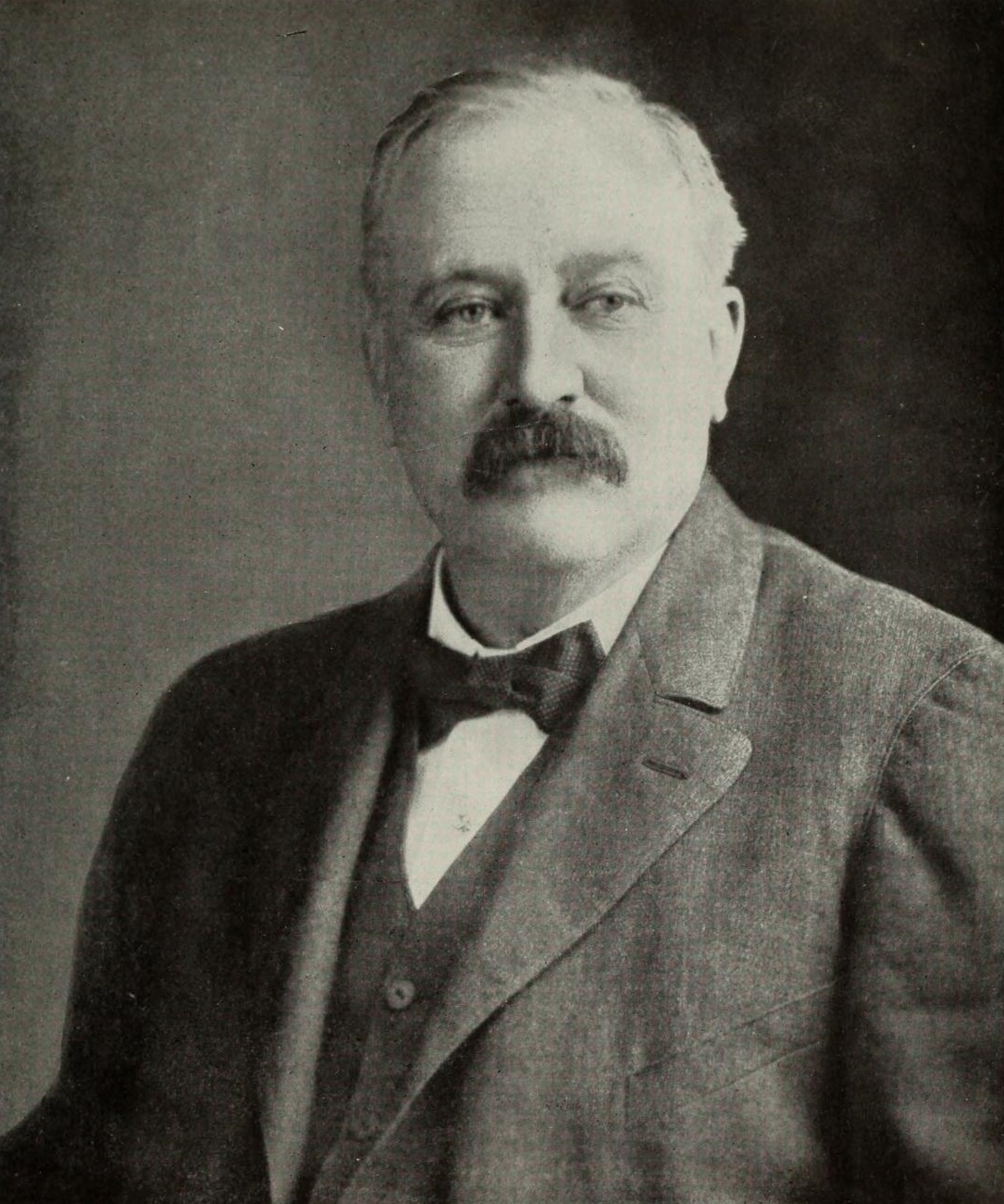
Representative Joseph W. Fordney of Michigan played a central House role, while Senator Porter J. McCumber of North Dakota became associated with the measure’s Senate development. Their names identify the two prominent congressional sponsors rather than two separate tariff laws. President Harding signed the resulting statute on September 21, 1922. The American Presidency Project preserves a contemporary presidential chronology confirming the date and Harding’s favorable description of the flexible provisions.
The photograph accompanying this article is a portrait of Fordney published in 1919, not a photograph of the bill-signing ceremony. It represents one of the lawmakers associated with the statute. The portrait also reminds readers that a tariff emerged from negotiation among legislators, industries and officials. The president’s signature was decisive for enactment, but the complicated schedules were drafted and revised through congressional bargaining.
How the protective tariff worked
The act imposed import duties across a wide variety of goods. Some duties were calculated as a percentage of an imported product’s value, while others were based on quantities or other specifications. A producer inside the United States could benefit when a duty increased the price of a competing imported product. The Treasury collected the duties, but their economic burden could be distributed among foreign suppliers, importers, manufacturers and consumers depending on how markets adjusted.
Because the schedules differed, it is not accurate to tell readers that a shopper always paid a uniform ‘Fordney–McCumber tax rate.’ The observed average depended on which products were imported, their values and whether they remained dutiable. Historical USITC tables report an average rate of approximately 38.5% on dutiable imports during the Fordney–McCumber period, while the average on all imports was much lower. Those two measurements answer different questions and should never be presented as interchangeable.
The flexible tariff provision
One notable innovation authorized the president to increase or decrease certain rates by up to 50% after investigation and findings by the U.S. Tariff Commission under statutory rules. The idea was to make tariff policy more responsive to differences in costs of production at home and abroad. Supporters argued that scientific comparison could protect domestic industry without requiring Congress to rewrite every schedule whenever market circumstances changed.
The provision did not authorize unlimited, arbitrary changes to all import duties. It created a procedure tied to commission investigation and prescribed bounds. It was a significant experiment in delegating specific adjustment authority to the executive branch while leaving the main schedules set by Congress. The mechanism also reflected the era’s confidence in administrative expertise. Debates over the reliability of cost comparisons and the influence of domestic industries continued after enactment.
Farmers and industrial manufacturers
American farmers faced falling prices and growing uncertainty after the war, and some agricultural groups supported tariffs to protect particular crops and products from overseas competition. Domestic manufacturers also favored duties on finished goods they feared could be produced abroad at lower cost. But these interests did not always align. A manufacturer using imported raw materials might prefer low input duties, while a domestic supplier of those materials might favor higher protection.
A tariff can therefore create different effects within a supply chain. The final price of a machine or consumer product may reflect duties on inputs as well as competition from imported finished goods. Economic historians examining the 1922 act compare individual schedules and industry conditions rather than inferring universal gains or losses from its headline purpose. Postwar monetary conditions, productivity and changing transport costs also shaped market prices.
Tariffs and the European debt problem
After World War I European governments and businesses faced large financial obligations and changing opportunities for trade. Critics of American protectionism argued that making it harder for foreign firms to sell goods in the United States also made it harder for European economies to obtain dollars and meet debts. Supporters of the tariff emphasized domestic employment and argued that American industries should not be exposed to foreign competitors they believed operated with lower costs.
The problem connects trade policy to international finance, but it should not be turned into the assertion that the 1922 act alone caused Europe’s financial instability. Debts, reparations, exchange rates and national reconstruction policies were major forces in their own right. The State Department’s historical account presents the tariff as one part of America’s postwar protectionist turn. Understanding the wider context allows a more measured assessment of its international consequences.
Did foreign countries retaliate?
Some trading partners objected to American tariff increases, and commercial tensions grew. The law contributed to a climate in which countries considered how to protect their own markets, but particular acts of retaliation must be established through evidence rather than assumed for every trading partner. The fact that a tariff discourages some imports does not automatically demonstrate an immediate, equal counter-tariff abroad. Trade flows can change for many reasons.
Historians use customs data, diplomatic records and individual country policies to evaluate effects. The evidence also needs to distinguish trade volumes from import prices: a tariff may increase costs without causing the same proportional reduction in every product’s movement. The Fordney–McCumber law is associated with a protectionist era, but it should not be made the sole cause of all subsequent international trade conflict.
Fordney–McCumber versus Smoot–Hawley
The 1922 tariff was followed by the Smoot–Hawley Tariff Act of 1930, passed after the 1929 stock market crash and during the early stages of the Great Depression. Both raised protectionist questions, but they were enacted under different presidents and economic circumstances. A frequent mistake is to attribute the more famous Smoot–Hawley controversy to Fordney and McCumber or suggest the 1922 statute was signed as a response to the Depression. The Depression had not yet begun in 1922.
USITC historical tables permit comparisons of average collected duties under the two tariff regimes. The numbers are useful but depend on definitions and the timing of price changes. Researchers must also avoid assigning the later collapse of world trade to one statute without considering financial crisis, falling demand and other countries’ policies. The distinction between the 1922 and 1930 laws is an essential part of accurate interwar economic history.
The act’s place in U.S. economic history
The Fordney–McCumber Act illustrates the return to higher protective tariffs after the Wilson administration’s lower-tariff legislation. It combined congressional schedules with a flexible adjustment mechanism reflecting confidence in expert evaluation. Its supporters focused on domestic production and postwar recovery, while critics worried about costs and international trade. The law became a defining feature of the Republican economic-policy turn of the early 1920s.
Studying it alongside the Underwood Tariff Act and the election of 1920 shows how politics influenced economic institutions. It is most informative when its exact enactment date, flexible tariff provision and actual tariff statistics are kept separate. That evidence gives readers a better explanation than a simple assertion that high tariffs were always good or always bad.
Timeline
- 1913: Underwood–Simmons Tariff lowers many duties
- 1918: First World War ends
- 1921: Emergency Tariff Act protects certain agricultural goods
- September 21, 1922: Harding signs Fordney–McCumber Tariff
- 1920s: Flexible rate adjustment and tariff disputes continue
- 1930: Smoot–Hawley Tariff enacted
Frequently asked questions
When was the Fordney–McCumber Tariff signed?
September 21, 1922, by President Warren G. Harding.
Who were Fordney and McCumber?
Joseph W. Fordney was a leading House sponsor; Porter J. McCumber was a leading Senate figure.
Did the law raise tariff rates?
Yes, it increased protective duties on many goods compared with the 1913 Underwood tariff.
What was the flexible tariff?
It allowed specified presidential rate adjustments of up to 50% under a Tariff Commission investigation process.
Was there one tariff rate for all products?
No. The schedules contained many different duties; historical averages depend on which imports are included.
Did it cause the Great Depression?
The act preceded the Depression by years, and economic historians do not attribute the Depression to one 1922 tariff statute.
How was it different from Smoot–Hawley?
Smoot–Hawley was a separate 1930 law passed during a different economic crisis.