Presidential Election of 1940: Roosevelt vs. Willkie and the Third-Term Debate
How Franklin Roosevelt won an unprecedented third term in 1940, why Wendell Willkie challenged him and how war in Europe changed the campaign.
Quick answer
Franklin D. Roosevelt won the presidential election of November 5, 1940, defeating Republican Wendell Willkie by 449 electoral votes to 82. Roosevelt took approximately 54.7% of the popular vote and Willkie about 44.8%. Roosevelt’s victory made him the first U.S. president elected to a third consecutive term. The campaign combined debate over the New Deal with mounting concerns about World War II, aid to Britain and whether the United States would enter the conflict. Roosevelt’s running mate was Henry A. Wallace; Willkie ran with Charles L. McNary.
Key facts
On this page
- Why the 1940 election was different
- The two-term tradition before Roosevelt
- Roosevelt’s decision to seek another nomination
- Henry Wallace replaces John Nance Garner
- Who was Republican nominee Wendell Willkie?
- Charles McNary and the Republican ticket
- The main domestic issue: the New Deal
- The war in Europe and American neutrality
- The first peacetime draft and military preparedness
- Campaign speeches and accusations about war
- The Electoral College result: 449 to 82
- Why Roosevelt’s victory was historically unprecedented
- The inauguration and what happened afterward
- The legacy of the 1940 presidential election
- Timeline
- FAQs
- Sources
Why the 1940 election was different
The United States entered the 1940 campaign still dealing with the consequences of the Great Depression, but foreign events had changed the national political debate. Germany invaded Poland in September 1939, triggering war in Europe, and German forces conquered France in June 1940. Britain continued resisting the Axis powers, and American voters confronted new questions about military preparedness, aid to countries at war and the danger of direct involvement.
Roosevelt had already been elected twice, in 1932 and 1936. His third candidacy challenged a longstanding American political tradition. The contest therefore combined an unusual constitutional debate with immediate international uncertainty. The country was not yet formally at war, and voters could reasonably distinguish preparing for danger from choosing to enter the European conflict.
The two-term tradition before Roosevelt
George Washington voluntarily retired after serving two presidential terms, establishing an influential precedent. Thomas Jefferson and many later presidents observed the same general limit, although the Constitution did not then forbid a third term. Earlier political figures sought or considered additional terms under different circumstances, but none had been elected to a third presidential term. Roosevelt’s decision in 1940 therefore broke a powerful custom rather than violating an existing constitutional amendment.
The Twenty-Second Amendment, which limits most presidents to two elected terms, was not ratified until 1951. It would be historically inaccurate to say Roosevelt won a third term by being exempted from a constitutional rule already in force. The political argument in 1940 was whether the custom should continue, especially during a period of international emergency. Both candidates’ supporters invoked constitutional traditions, continuity and public safety in different ways.
Roosevelt’s decision to seek another nomination
Roosevelt did not announce a conventional reelection campaign far in advance, and Democrats debated whether he would run again. As war intensified in Europe, a third term attracted supporters who valued experienced leadership. At the Democratic National Convention in Chicago in July 1940, delegates nominated Roosevelt once more. His willingness to serve another term became one of the most disputed features of the election.
The reasons behind his decision have been studied extensively. Roosevelt’s backers argued that changing leaders might be risky when global events required careful judgment. Opponents warned that extending one individual’s time in office could weaken republican norms and concentrate executive power. A balanced account should not assume every supporter wanted indefinite presidential rule or that every opponent was indifferent to national security. The disagreement concerned how democracy should handle continuity during a crisis.
Henry Wallace replaces John Nance Garner
The Democratic convention selected Henry A. Wallace as Roosevelt’s vice-presidential running mate. Wallace had been secretary of agriculture and an important participant in New Deal farm policy. He replaced John Nance Garner, who had served as vice president during Roosevelt’s first two terms. Garner and Roosevelt had experienced political disagreements, including tensions over federal policy and presidential leadership.
Wallace’s selection reflected the administration’s desire to maintain support for its reform agenda and to present a different political partnership. He was not universally popular among Democratic leaders, and his nomination produced internal resistance. Roosevelt’s support was decisive. The choice shows how the third-term decision also reshaped the vice-presidential ticket and brought to the surface divisions within the Democratic coalition.
Who was Republican nominee Wendell Willkie?
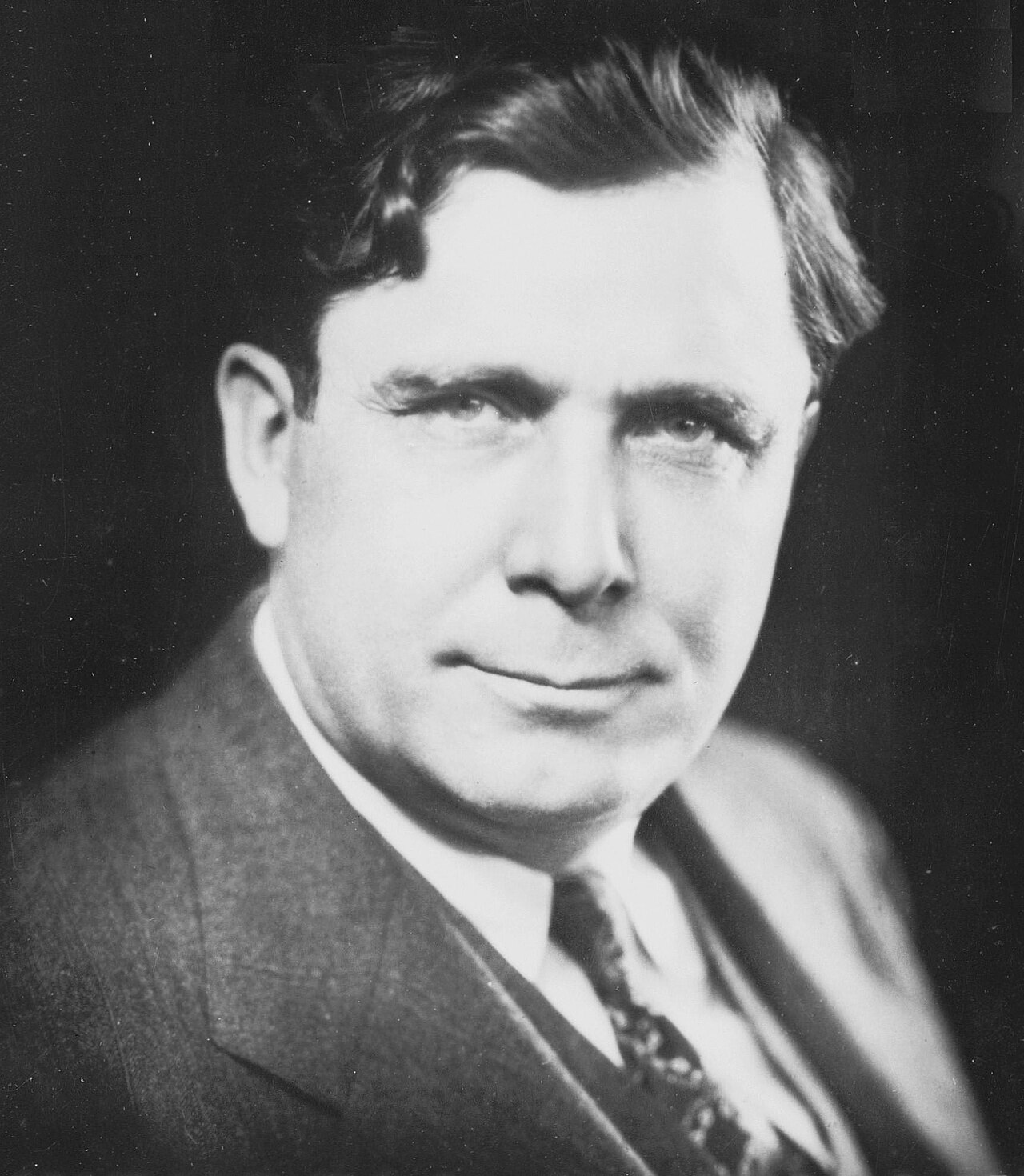
Wendell L. Willkie was a businessman and public utility executive who emerged as the Republican presidential nominee despite having limited previous experience in elected public office. He gained national attention through arguments about government and private enterprise, including criticism of aspects of the Tennessee Valley Authority’s power program. His candidacy appealed to Republicans who wanted a dynamic alternative to Roosevelt and a candidate capable of competing for independent and moderate voters.
Willkie was not simply a committed opponent of all assistance to democracies abroad. He had internationalist views and supported important measures to aid Britain, which made his differences with Roosevelt on foreign policy less absolute than some campaign rhetoric suggested. His nomination at the Republican convention in Philadelphia followed a dramatic surge of support. The poster accompanying this article is authentic campaign imagery intended to promote Willkie’s candidacy, not a factual verdict about the election.
Charles McNary and the Republican ticket
The Republicans chose Senator Charles L. McNary of Oregon as their vice-presidential nominee. McNary was a respected congressional leader and an experienced figure in agricultural and natural-resources debates. His presence added political experience to a ticket led by a businessman new to national electoral competition. The selection also offered geographic and institutional balance within the party.
Running mates were particularly important because both parties faced potential wartime responsibilities and substantial legislation. Roosevelt’s choice of Wallace and Willkie’s choice of McNary reflected contrasting party coalitions and approaches to government. The vice presidency was not simply a ceremonial position in the constitutional structure, and voters could evaluate the qualifications of both ticket members. The Electoral College voted for the respective presidential and vice-presidential nominees.
The main domestic issue: the New Deal
Roosevelt’s critics attacked New Deal spending, regulation and his administration’s role in economic decision-making. Willkie argued that private enterprise and effective management could contribute more to recovery than continued expansion of federal agencies. Roosevelt defended social insurance, labor protections and federal intervention as necessary responses to the Depression. The Fair Labor Standards Act of 1938 and Social Security legislation were examples of policies on which the parties disagreed.
Neither candidate proposed a simple immediate return to the conditions of 1929. By 1940 many federal programs had become established, and the electorate had seen both their strengths and limitations. The 1937–38 recession had damaged confidence in the administration, but industrial recovery and growing defense production were changing conditions again. Debates about employment, fiscal policy and business remained significant even as foreign policy dominated headlines.
The war in Europe and American neutrality
Germany’s military victories in 1940 increased concern about Britain’s survival and the security of the Atlantic world. American opinion included a wide range of views, from strict nonintervention to strong support for providing material assistance to countries fighting Germany. Roosevelt sought to aid Britain while avoiding immediate formal entry into the war. Willkie also favored measures of aid, though he criticized aspects of the administration’s handling and political rhetoric.
It would be inaccurate to say that the election was a direct vote on joining World War II in November 1940. The United States entered the war after Japan’s attack on Pearl Harbor in December 1941. Voters in 1940 faced uncertainties about what policies might best preserve security and whether promises about keeping troops out of foreign wars could be honored as circumstances changed. The distinction between aid, military preparedness and declared belligerency is central to the campaign.
The first peacetime draft and military preparedness
Congress enacted the Selective Training and Service Act on September 16, 1940, establishing the first peacetime draft in U.S. history. It provided a framework for registration, selection and training of men for military service before the country entered World War II. The law was part of a broader program of rearmament and preparedness as events abroad appeared increasingly dangerous.
Military preparation raised difficult political questions during the election. Supporters argued that a strong defense could deter threats, while critics feared preparations might lead toward involvement overseas. The draft was enacted before Americans became formal participants in the conflict. Comparing it with the Selective Service Act of 1917 illustrates the different circumstances of wartime and prewar conscription in American history.
Campaign speeches and accusations about war
Roosevelt emphasized his administration’s experience and sought to reassure voters concerned that American soldiers might be sent into foreign conflicts. He made promises about keeping the country out of foreign wars, often with qualifications concerning attack or national defense. Willkie and Republican campaigners questioned whether the administration might draw the country into a European conflict despite its assurances. Public speeches became unusually sensitive because events overseas could change rapidly.
The positions were not perfectly divided into a pro-war candidate and an anti-war candidate. Both supported significant national defense, and both rejected the idea that American security could be ignored. The debate concerned strategy, trust, intervention risks and leadership. Historical accounts must distinguish the words said during the campaign from the later entry into war. Knowing what happened in 1941 should not be used to invent certainty that 1940 voters could not possess.
The Electoral College result: 449 to 82
Roosevelt won the November 5 election by 449 electoral votes to Willkie’s 82, according to the National Archives. He carried thirty-eight states; Willkie carried ten. The popular vote was substantially closer than the electoral result: approximately 54.7% for Roosevelt and 44.8% for Willkie, based on the American Presidency Project’s compilation. Minor candidates received the remaining votes.
The contrast between popular and electoral margins is important. Roosevelt’s victory was clear, but nearly forty-five percent of those voting in the national popular tally chose Willkie. The election therefore cannot be represented as unanimous support for an unprecedented third term or every New Deal program. The Electoral College rewarded Roosevelt for winning a broad map of states, while the nationwide vote revealed substantial opposition.
Why Roosevelt’s victory was historically unprecedented
Winning a third presidential election challenged the Washington precedent and demonstrated the electorate’s willingness to prioritize continuity during a period of international danger. Roosevelt had built a durable Democratic political coalition and retained considerable personal popularity, even though economic recovery was incomplete and some New Deal policies remained controversial. His supporters considered experience essential for the uncertain years ahead.
Critics continued to regard the third term as a warning about concentrated presidential authority. The later adoption of the Twenty-Second Amendment reflected a determination by many Americans to set a formal limit. The amendment was ratified in 1951, after Roosevelt’s death, and provides an important later chapter in the story. The legal status of the presidency in 1940 and the rules familiar today were therefore different.
The inauguration and what happened afterward
Roosevelt began his third term on January 20, 1941, with Henry Wallace as vice president. During the following year the administration expanded support for the countries fighting the Axis and increased American preparedness. The Lend-Lease Act was enacted in March 1941, after the election, and the United States entered World War II after the attack on Pearl Harbor that December. Those events confirmed the importance of foreign affairs but were not yet complete facts on election day.
Willkie remained influential in public life after his defeat and later supported aspects of international cooperation. His positions show that political rivalries in 1940 did not necessarily imply opposing views on every wartime issue. The election was an unusually consequential choice between competing leaders whose differences encompassed government power, executive tenure and the management of international danger.
The legacy of the 1940 presidential election
The 1940 contest linked American democracy’s traditional limits on presidential service with its response to a rapidly deteriorating world situation. Roosevelt’s third victory was unique in American history and changed expectations about presidential tenure. The election also demonstrated that debate over the New Deal remained politically potent even as the international crisis grew more urgent.
A historically accurate account keeps its chronology straight: the election occurred in November 1940, Roosevelt’s third inauguration followed in January 1941, Lend-Lease passed in March and U.S. entry into the war came in December. The 1936 election article provides useful context for Roosevelt’s earlier coalition, while the 1940 result demonstrates how war fears and continuity changed the debate without eliminating domestic policy differences.
Timeline
- 1932 and 1936: Roosevelt elected for two terms
- September 1939: World War II begins in Europe
- June 1940: Germany defeats France; Republican convention nominates Willkie
- July 1940: Democrats nominate Roosevelt for third term
- September 16, 1940: First U.S. peacetime draft enacted
- November 5, 1940: Roosevelt wins 449–82
- January 20, 1941: Roosevelt inaugurated for third term
- December 1941: United States enters World War II
- 1951: Twenty-Second Amendment ratified
Frequently asked questions
Who won the 1940 election?
Franklin D. Roosevelt defeated Republican Wendell Willkie.
What was the Electoral College count?
Roosevelt won 449 electoral votes and Willkie 82.
What share of the popular vote did they receive?
About 54.7% for Roosevelt and 44.8% for Willkie.
When was the election?
November 5, 1940.
Who were their running mates?
Henry Wallace for Roosevelt and Charles L. McNary for Willkie.
Was a third presidential term illegal in 1940?
No. The constitutional two-term limit did not exist until ratification of the Twenty-Second Amendment in 1951.
Had the U.S. entered World War II by election day?
No. The United States entered the war in December 1941.
Did both candidates support defense preparation?
Yes. Their differences concerned leadership, strategy, the New Deal and risks of involvement overseas.