National Park Service Founded (1916): Organic Act, Mission and First Director
Why Congress created a unified parks agency, how its preservation mission was written and what changed after 1916.
Quick answer
President Woodrow Wilson signed the National Park Service Organic Act on August 25, 1916. It created the National Park Service within the Department of the Interior to manage federal national parks and monuments under a common mission: protect scenery, natural and historic objects, and wildlife while allowing public enjoyment that would leave them unimpaired for future generations. Yellowstone National Park already existed; the act created an agency, not the first national park.
Key facts
On this page
- National parks existed long before their federal agency
- The conservation movement and Roosevelt’s earlier measures
- Why park management needed a unified bureau
- Stephen Mather and the campaign for an agency
- The Organic Act signed August 25, 1916
- Preservation and public enjoyment in the same mission
- Mather and Albright in the early years
- Wildlife protection and early management mistakes
- Indigenous peoples and the limits of early park narratives
- How national monuments differ from national parks
- Legacy of the Organic Act
- Timeline
- FAQ
- Sources
National parks existed long before their federal agency
Visitors often associate America’s national parks with the National Park Service, but federal parklands existed decades before the agency was created. Congress established Yellowstone National Park in 1872, and other parks and monuments followed. The government had to oversee roads, buildings, wildlife, tourism and historic resources across areas that differed greatly in geography and public use. Until 1916, management was divided among arrangements that varied by site. There was no single permanent bureau with a clear mission to administer the entire group.,That distinction corrects a persistent confusion: August 25, 1916, was not the date Yellowstone was designated, nor the beginning of federal land conservation. It was the date Congress created a unified institution to handle lands already reserved for public purposes and those added later. Questions about access, preservation and administration had existed throughout the nineteenth century. A national service offered a framework for addressing them consistently while still responding to the conditions of each landscape.
The conservation movement and Roosevelt’s earlier measures
The idea of protecting scenic and historic places grew through many movements involving scientists, naturalists, local advocates, artists, politicians and community organizations. Some wanted public recreation areas; others sought to prevent commercial exploitation, protect forests, maintain wildlife or preserve archaeological sites. These interests could reinforce one another but also conflict. The development of federal parks was therefore not the result of one president or one philosophical agreement about how every landscape should be used.,Theodore Roosevelt’s presidency added prominent conservation measures, including the Antiquities Act of 1906, which authorized presidents to proclaim national monuments on qualifying federal lands. Monuments were not identical to national parks, and the act did not create the later Park Service. It expanded the tools available for protection. A decade later, lawmakers still faced the question of who should administer these different reservations under a durable national organization.
Why park management needed a unified bureau
Without a single agency, parks could have inconsistent staffing, budgets, enforcement and visitor services. Some were supervised through civilian officials while others relied on arrangements involving the military. Conservation advocates worried that fragmented oversight made it difficult to protect resources and justify federal support. Expanding tourism also required decisions about trails, roads, sanitation and facilities. Public enjoyment could create pressure for development that itself threatened the qualities visitors came to see.,A unified service promised more consistent administration and a clearer public explanation of why parks mattered. It could advocate for funding, develop policies and coordinate managers across the country. This was not merely a housekeeping reform. Establishing an agency placed competing ideas—preservation, access, tourism, scientific study and national symbolism—within a common institutional mission. The significance of the 1916 act lies in both the creation of a federal bureau and the language Congress chose to guide its future decisions.
Stephen Mather and the campaign for an agency
Stephen T. Mather was an important organizer of the campaign for a national parks bureau. A businessman and outdoor enthusiast, he became involved in park administration through the Department of the Interior and worked to build public support for better management. He saw that national parks could gain allies among conservation groups, tourists, writers, railroad companies and political leaders. Promoting parks to the public was therefore part of his strategy for securing resources and attention.,His efforts included the 1915 Mather Mountain Party, a trip involving influential guests that publicized the value of western parklands. Horace Albright also worked closely with him and played a major role in building the agency’s early administrative practices. Mather and Albright did not individually create the parks themselves; their contribution was to help turn an existing collection of protected areas into a coordinated system. The National Park Service’s own historical accounts describe the political and organizational work behind the 1916 legislation.
The Organic Act signed August 25, 1916
President Woodrow Wilson approved the Organic Act on August 25, 1916, creating the National Park Service in the Department of the Interior. The phrase ‘Organic Act’ means a founding or organizing statute; it was not the formal short title printed on every contemporary document. The statute established a bureau and defined the purposes governing its work. It also authorized necessary personnel and administrative functions, providing a basis for a professional service rather than ad hoc management of separate reservations.,The original law is preserved by the National Archives and reproduced by the National Park Service. Its wording is important because it set out both protective and public-use responsibilities. Many later debates about roads, wildlife, visitor facilities and archaeological preservation return to that foundational statement. The act did not specify every policy later adopted by NPS directors. It supplied a general legal standard, leaving substantial work of interpretation and management for the agency and future Congresses.
Preservation and public enjoyment in the same mission
The core mission expressed two intertwined commitments: conserve scenery, natural and historic objects and wildlife, and provide for the public’s enjoyment in a way that leaves these resources unimpaired for future generations. That formulation created an enduring management challenge. Visitors need access and facilities, but too much road construction, commercial activity or wildlife disturbance could damage what the parks were created to protect. The law did not present recreation and preservation as unrelated tasks; it tied public use to a protective condition.,Interpreting that mission required judgment. A small trail and a major highway might have very different effects, and a policy suitable for one park might be inappropriate in another. Natural ecosystems also change, while scientific understanding develops over time. Later statutes and agency policies refined the framework, but the 1916 mission remains central to discussions of what federal park managers should prioritize. The historical question is not whether the words sounded noble, but how they influenced actual decisions in different periods.
Mather and Albright in the early years
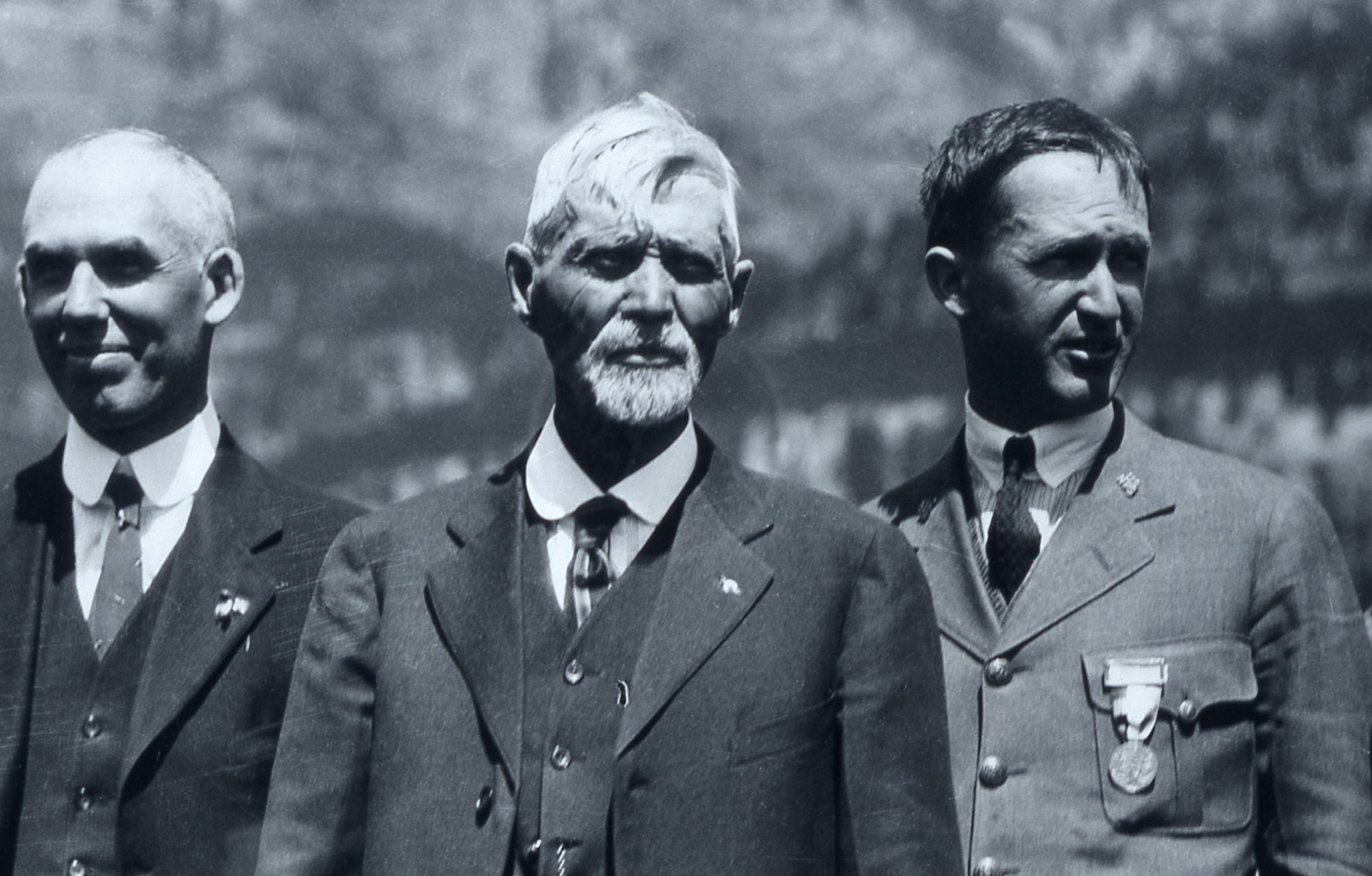
Although the Organic Act was signed in 1916, Stephen Mather formally became the service’s first director in 1917. Horace Albright served as an important associate and later became director himself in 1929. These leaders helped establish staff arrangements, promote park visitation and strengthen the place of historic preservation within the agency’s work. A photograph of them at Yellowstone in the 1920s illustrates their leadership but must not be described as a photo taken during the 1916 signing.,The early service faced practical constraints. Parks required funding, personnel, transport connections and public support. Some relied on infrastructure improvements to make them accessible, while others posed difficult choices about preserving wildlife and limiting disturbances. Mather’s efforts to promote tourism could gain political support for protection, yet tourism itself introduced pressures that required management. These tensions were built into the agency’s mission from the beginning.
Wildlife protection and early management mistakes
Early park managers did not possess all the ecological knowledge or conservation practices associated with later periods. Some policies that officials believed would help visitors or protect particular species disrupted ecosystems. NPS historical accounts describe the introduction of nonnative fish to certain waters and the removal of predators such as wolves and coyotes from some parks. Such examples show why institutional history should not present every early conservation decision as environmentally beneficial simply because it occurred within a protected area.,Scientific study and changing public expectations later produced different approaches to wildlife and habitat. The agency’s long history includes debates over fire, predator management, restoration, visitor limits and infrastructure. A founding law provided a protective mission but did not guarantee that officials would always understand the ecological consequences of specific actions. This distinction helps explain why the National Park Service has repeatedly revised its methods while continuing to refer to the foundational goals of 1916.
Indigenous peoples and the limits of early park narratives
Federal park creation and management intersected with the histories and rights of Native American nations whose lands and cultural landscapes predated the United States. Some protected areas contained sacred places, traditional travel routes, archaeological sites and places connected to longstanding Indigenous stewardship. Park histories that speak only of scenic wilderness and new tourist access can obscure displacement, restricted access and the ways communities were excluded from decisions about their homelands.,The 1916 Organic Act did not erase those histories or resolve their legal and political consequences. The development of the park system needs to be studied alongside treaty obligations, federal land policy and Indigenous accounts of particular places. Modern NPS programs address tribal consultation and cultural resources, but the practices of later decades should not be projected backward without evidence. A historically responsible article recognizes both the agency’s preservation mandate and the unequal experiences of people affected by park policy.
How national monuments differ from national parks
The phrase ‘national park system’ now covers many different kinds of protected and historic sites, but individual designations have distinct legal histories. Yellowstone was established by Congress in 1872. The Antiquities Act gave presidents a different tool for designating national monuments in 1906. The Organic Act of 1916 then established an agency to administer the parks and monuments entrusted to it. These actions address three separate questions: how a place is protected, who designates it and who manages it.,Readers searching for the ‘first U.S. national park’ therefore need a different answer from readers searching for when the National Park Service began. The National Park Service was created to manage existing sites and future additions, not to retroactively designate all of them on one day. Its jurisdiction also expanded and changed over time. Some federally protected landscapes have remained under other agencies, and the name of a protected designation alone does not always establish a particular historical management arrangement.
Legacy of the Organic Act
The 1916 law provided a durable institutional and legal foundation for national park administration. A federal bureau could hire personnel, coordinate policies, advocate for conservation and respond to the increasing public demand for outdoor recreation. Its mission linked protection of natural features and historic resources to public enjoyment, setting a standard that later legislation and professional practice would revisit. It was a turning point in conservation administration, not the birth of every American idea about preserving land.,The history also illustrates that public institutions develop through a sequence of decisions rather than a single completed blueprint. Early leaders promoted access and built managerial capacity, while later generations reevaluated ecological science, cultural preservation and tribal relationships. Comparing the Antiquities Act with the Organic Act reveals the difference between creating protections for places and creating an organization to care for them. That distinction is the key to understanding why August 25, 1916, matters.
Timeline
- 1872: Yellowstone National Park created
- 1906: Antiquities Act signed
- 1915: Mather works to build support for unified management
- August 25, 1916: Organic Act signed by Wilson
- 1917: Stephen Mather becomes first NPS director
- 1929: Horace Albright succeeds Mather
Frequently asked questions
When was the National Park Service founded?
August 25, 1916, when Woodrow Wilson signed the Organic Act.
Was Yellowstone founded in 1916?
No. Yellowstone National Park was established in 1872, long before the NPS.
Who was the first NPS director?
Stephen T. Mather, formally appointed in 1917.
What did the Organic Act require?
It established an agency to conserve natural and historic park resources and provide public enjoyment without impairing them for future generations.
Did the 1906 Antiquities Act create the NPS?
No. It gave presidents a mechanism to designate national monuments; the service came in 1916.
Who was Horace Albright?
An important early administrator and collaborator with Mather who later served as NPS director from 1929 to 1933.
Sources and further reading
Primary documents and specialist historical sources support the dates and legal distinctions in this article.