Battle of Perryville (1862): Bragg, Buell and the Kentucky Campaign
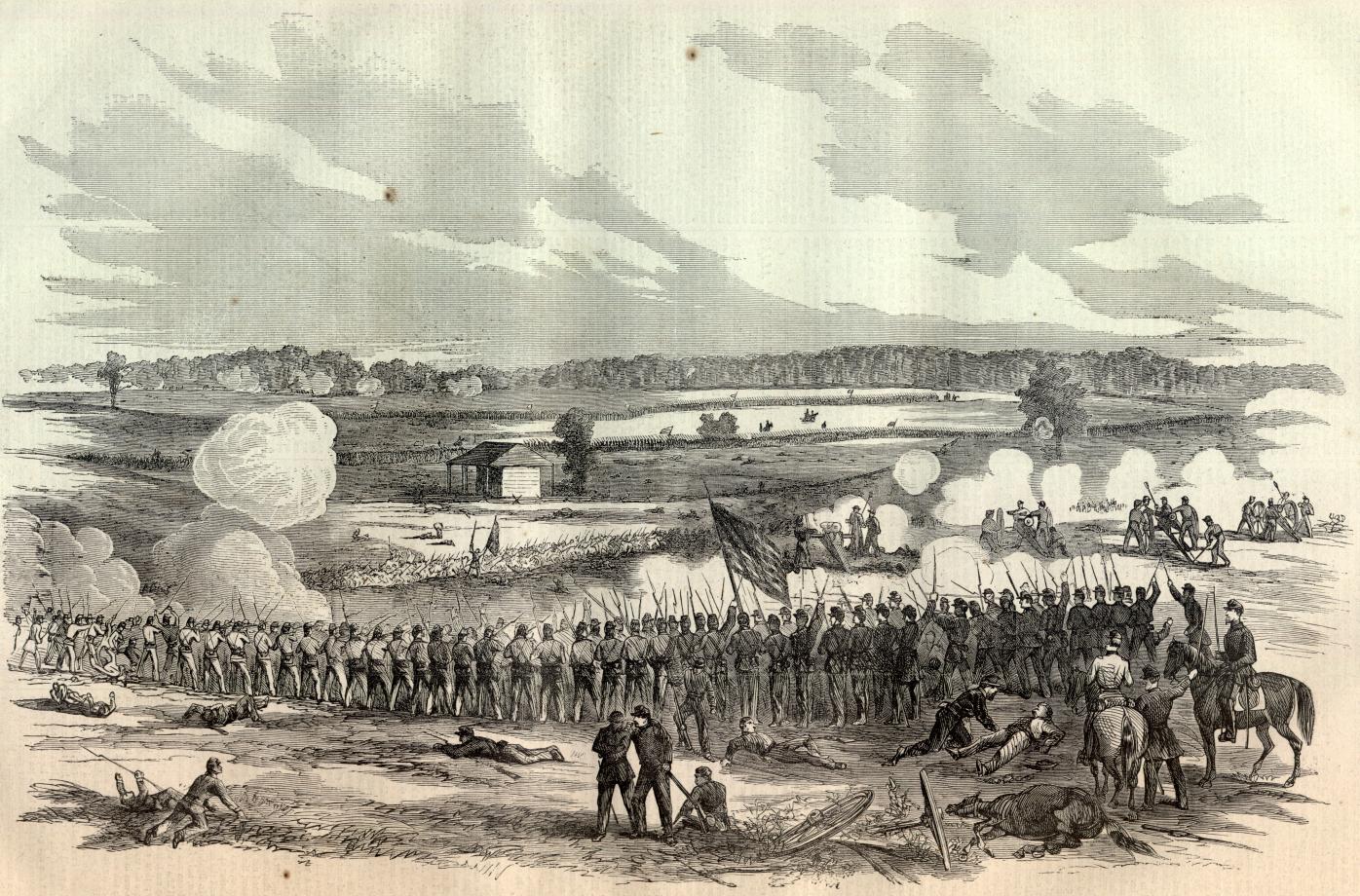
The Battle of Perryville on October 8, 1862, was the climactic engagement of Confederate General Braxton Bragg’s campaign in Kentucky. Confederate forces drove back sections o
The Battle of Perryville on October 8, 1862, was the climactic engagement of Confederate General Braxton Bragg’s campaign in Kentucky. Confederate forces drove back sections of Don Carlos Buell’s Union army, but Bragg withdrew after realizing he faced a larger federal force. The Confederate invasion ended and Kentucky remained under Union control.
Explore the military chronology, historical participants, consequences and evidence behind the event.
On this page — 22 topics
When was the Battle of Perryville?
The Battle of Perryville was fought on October 8, 1862, in central Kentucky. It brought parts of Major General Don Carlos Buell’s Union Army of the Ohio into combat with Confederate General Braxton Bragg’s forces during an attempted invasion of the state. Confederate attacks achieved important tactical gains, but Bragg eventually withdrew rather than face the full federal army. The resulting campaign was a strategic Union success. The battle is less familiar than Antietam, fought in Maryland a few weeks earlier, but both events helped shape the failed Confederate offensives of autumn 1862.
Why did the Confederates invade Kentucky?
Confederate commanders believed that a movement into Kentucky might threaten Union communications, secure food and supplies and attract recruits among residents sympathetic to the Confederacy. The state was politically divided but remained in the Union. Bragg advanced north from Tennessee during late summer 1862 while other Confederate troops maneuvered nearby. His leaders hoped to shift the war into territory they could use as a base for future operations. The gamble was risky because Kentucky’s population did not rise in support on the scale Confederate planners desired, and maintaining an army far from secure supply lines became increasingly difficult.
Why was Kentucky politically important?
Kentucky was a border state with extensive trade connections, access to major rivers and strategic roads linking the Ohio Valley to Tennessee. Its political loyalties were divided, and slavery existed within the state even though it did not secede. Union control helped protect the Midwest and supported operations into Confederate territory. President Lincoln regarded Kentucky’s allegiance as vital. A Confederate takeover might have disrupted Union transportation and encouraged wider resistance. The 1862 campaign therefore had political as well as military aims, and its failure helped confirm that the Confederate government could not easily win control of a key border state.
Who was Confederate commander Braxton Bragg?
Braxton Bragg commanded the Confederate Army of Mississippi, later renamed the Army of Tennessee. He was a professional soldier known for a strict approach to discipline and for sometimes difficult relationships with subordinates. In Kentucky he sought to exploit federal weakness and gain recruits, supplies and favorable ground. His force achieved some battlefield success near Perryville but could not sustain the larger campaign. Bragg’s decision to withdraw has been debated because his troops had pushed back Union formations during the battle. Yet the strategic situation was complicated by enemy numbers, supplies and the failure of hoped-for support.
Who was Union commander Don Carlos Buell?
Major General Don Carlos Buell commanded the Union Army of the Ohio. His task was to protect important northern and central Kentucky positions while pursuing Bragg. Buell’s large force approached Perryville in separate columns, but only part of it became heavily engaged on October 8. His slow communication and coordination have been criticized, particularly because some senior commanders did not grasp the battle’s intensity as it developed. Still, the Union army remained intact, and Bragg’s retreat left Kentucky under federal control. Buell was soon replaced, showing how victory in the campaign did not eliminate dissatisfaction with his performance.
Why was water so important in October 1862?
Kentucky experienced very dry conditions in the weeks leading up to the battle. Soldiers, horses and artillery teams needed water, and access to streams and pools influenced their movements. The drought made gathering near available sources both a military necessity and a cause of skirmishing. Around Perryville, soldiers moved toward Doctor’s Creek and other watercourses that retained some water despite the dry season. The tactical engagements therefore did not occur simply because two generals chose a place on a map. They developed partly from logistical pressure in a landscape where a dependable water supply had become unusually valuable.
What happened on October 7?
Union forces approached Perryville in several columns, while Confederate troops positioned themselves near roads and creek crossings. Skirmishing broke out as the armies tried to secure access to water and favorable ground. Commanders were still gathering information about the strength and location of opponents. By evening, both sides prepared for a possible larger engagement. The dispersed Union formations made it hard to coordinate, and some officers remained unaware that nearby forces would soon fight a major battle. The events of October 7 illustrate how reconnaissance, water access and misunderstood troop movements set conditions for the violence the following day.
How did the battle begin on October 8?
Fighting resumed in the morning near Peters Hill, where Union and Confederate troops contested ground and access to water. The engagement grew as Bragg ordered attacks against Union positions he believed might be part of a smaller force. Confederate units advanced across broken hills, fields and wooded slopes. The battlefield became a series of local struggles rather than one continuous line of combat. Although the Union army in the area was large, its units were dispersed, and many soldiers were not initially involved in the main fighting. The growing battle would be concentrated heavily on the Union left.
What happened at Open Knob?
Open Knob was an important elevation where Union soldiers held a position exposed to repeated Confederate pressure. The terrain offered opportunities for artillery and observation, but it also placed infantry under heavy fire. Units in the vicinity fought at close range as the line shifted. The position has become a key location in park interpretation because it shows how controlling small hills could influence movements across a much larger battlefield. Visitors should not assume that every Union formation attacked or defended this one place. Perryville’s fighting spread among multiple farms and ridges whose relationships shaped the overall result.
What happened near the Cornfield?
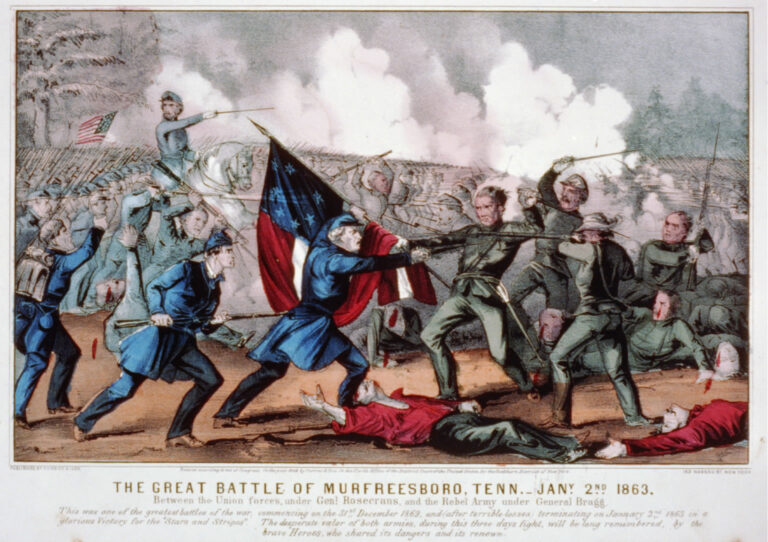
The Cornfield near Perryville was the scene of fierce infantry combat as Confederate units advanced against Union soldiers who attempted to hold farm fields and fences. Smoke, broken terrain and close-range firing created heavy casualties. Like other Civil War cornfields associated with famous battles, its name is descriptive rather than the formal title of an army objective. The fighting was part of a larger series of Confederate attacks that forced Union units to give ground. The agricultural landscape mattered because crops and fences affected visibility and movement. Reconstructing the sequence requires attention to unit locations rather than relying on one dramatic painting.
Why did the Confederate attack initially succeed?
Bragg’s commanders concentrated attacks against parts of the Union line that were not adequately supported by the rest of Buell’s army. Confederate units pressed hard and forced several federal formations to retreat. The defenders struggled with fragmented command, poor communication and the difficulty of bringing reinforcements to threatened ground. Local Confederate success did not mean that the entire Union army had been beaten. Many federal troops remained available elsewhere but were not engaged in time to change the day’s main actions. The difference between local tactical success and the larger campaign would become decisive as Bragg assessed his position afterward.
Why was the battle unusually hard to hear?
A peculiar atmospheric phenomenon limited how clearly sounds of the battle carried to parts of the Union command. Buell and other officers did not initially appreciate the scale of the fighting occurring nearby. The issue compounded existing communication delays among separated Union formations. Historians sometimes emphasize the sound anomaly as though it alone determined the battle, but command decisions and battlefield geography were also important. An army still required riders, reports and planned signals to coordinate movement. At Perryville, the lack of a clear operational picture made it difficult to deploy the full federal force against Bragg’s troops during the crucial hours.
Why did Buell commit only part of his army?
Buell’s troops approached in separate columns over roads leading toward Perryville. Not all were equally close to the fighting, and some commanders lacked timely orders or reliable information. As Confederate attacks intensified, parts of the Union army fought desperately while others remained relatively inactive. This uneven commitment is central to the battle’s tactical outcome. Had the full army been coordinated, Bragg might have faced much greater numerical pressure during the day. But it would be speculative to claim that a different order would have guaranteed complete Confederate destruction. The historical record supports criticism of communication and coordination without proving every counterfactual result.
How many casualties occurred?
The National Park Service estimates approximately 7,607 casualties at Perryville: 4,211 Union and 3,396 Confederate. These figures include killed, wounded, missing and captured soldiers rather than deaths alone. The losses were severe for forces fighting largely on a single day, especially because wounded men faced difficult evacuation and inadequate treatment in nearby communities. Some sources use slightly different totals based on military returns. Precise figures should be reported with a source and definition. Casualty comparisons help show why Perryville was one of the most significant Civil War battles in Kentucky despite its relative obscurity.
Why did Bragg retreat after gaining ground?
Bragg recognized that his troops had fought only a portion of Buell’s larger army and were at risk if the remaining Union formations advanced. Supply difficulties and limited local support also weakened the case for continuing the invasion. Confederate leaders had won tactical ground but had not achieved the objective of establishing durable control of Kentucky. Bragg therefore withdrew, eventually moving south toward Tennessee. The decision has been criticized and defended by historians, but it shows a basic military principle: holding several contested fields is not the same as possessing enough resources and security to sustain a campaign deep inside enemy territory.
Did Perryville end Confederate hopes in Kentucky?
The campaign’s failure made it much harder for the Confederacy to secure Kentucky as a lasting political or military base. The state remained firmly under Union government control, despite ongoing guerrilla activity and local divisions. Bragg’s retreat ended the major 1862 invasion and restored Union initiative in the region. Smaller Confederate raids and military movements occurred afterward, so Perryville did not bring absolute peace to Kentucky. Its significance lies in the broader strategic result: Confederate armies failed to gain the recruits, resources and control they had hoped for when they moved north. The outcome contributed to Union security along the Ohio Valley.
How did the battle affect civilians?
The fighting passed through farms, fields and small communities around Perryville. Soldiers occupied buildings, damaged crops, consumed food and left large numbers of wounded men requiring care. Local families faced the immediate trauma of violence and the lasting burden of burial and damaged property. Kentucky’s political divisions added another layer of uncertainty: neighbors might have different sympathies even though they lived under the same state government. Enslaved people also faced changing opportunities and threats as armies moved through the region. The battlefield was a living agricultural landscape, not simply the empty stage depicted on a military map.
How is Perryville connected with Antietam?
Perryville and the Battle of Antietam occurred within several weeks of each other during Confederate attempts to regain strategic initiative in 1862. Lee invaded Maryland in the east, while Bragg pushed north into Kentucky. Both campaigns ended without achieving their larger political and military objectives. The two armies were not conducting identical operations, and it would overstate the evidence to describe all movements as perfectly synchronized. Nevertheless, their failures limited Confederate opportunities in northern territory. Studying both battles shows how the war’s direction shifted during a critical autumn.
What is preserved at Perryville today?
Perryville Battlefield State Historic Site in Kentucky protects substantial portions of the battlefield landscape and interprets farm fields, ridges and troop movements. The terrain remains particularly useful for understanding why isolated Union formations struggled to support each other. Visitors can follow walking routes and historical markers, with special attention to the positions associated with Open Knob and the Cornfield. The National Park Service battle summary provides a chronology and casualty estimates. Period maps help place the modern landscape within the wider 1862 Confederate invasion of Kentucky.
Timeline
| Date | Event |
|---|---|
| Late August 1862 | Bragg begins advance into Kentucky. |
| October 7 | Skirmishing develops around Perryville and water sources. |
| October 8 | Major battle; Confederate attacks push Union units back. |
| Night of October 8 | Bragg assesses opposing forces and begins withdrawal. |
| Following weeks | Confederates retreat into Tennessee; Kentucky remains Union-held. |