Emergency Quota Act of 1921: The 3% Immigration Rule and Its Effects
How Congress introduced numerical national immigration quotas in 1921 and why the 1910 census became decisive.
Quick answer
President Warren G. Harding approved the Emergency Quota Act on May 19, 1921. It generally limited annual immigration from each nationality to 3% of the foreign-born population of that nationality residing in the United States according to the 1910 census. The rule had exemptions and built upon earlier immigration exclusions. It was initially temporary and differed from the more restrictive Immigration Act of 1924.
Key facts
On this page
- Why the United States introduced nationality quotas
- The law President Harding signed on May 19, 1921
- How the 3% rule was calculated
- Why the census year mattered
- Which immigrants were exempt from the numerical quotas?
- How the quotas were administered at ports
- Preference and family relationships
- How the 1921 act differed from the 1917 law
- What changed in the Immigration Act of 1924?
- Why an ’emergency’ law had a lasting effect
- How to interpret the act today
- Timeline
- Frequently asked questions
- Sources
Why the United States introduced nationality quotas
American immigration rules were restrictive before 1921, but they had not yet used the same general system of annual ceilings allocated to each nationality. Earlier legislation barred or screened many entrants on grounds such as health, literacy, nationality and other classifications. The First World War interrupted transatlantic migration, and its end reopened questions about how many people would seek to enter the United States. Political leaders argued over jobs, wages, public services and national identity during a period of economic and social uncertainty.
Supporters of tighter restrictions claimed that immigration should be sharply limited to protect American workers and institutions. Opponents argued that the plans unfairly divided families, excluded potential contributors and reflected hostility toward particular populations. Nativist and eugenic arguments also influenced the era’s public debate; these were political and pseudoscientific claims, not factual demonstrations of the value of different peoples. The Emergency Quota Act transformed these struggles into a numerical immigration system that would shape national policy well beyond its temporary original design.
The law President Harding signed on May 19, 1921
The Emergency Quota Act was approved on May 19, 1921, during Warren G. Harding’s presidency. Its formal title described an act to limit immigration into the United States, and its text appeared at 42 Stat. 5. The measure emerged from congressional efforts that had been debated before Harding took office. In this sense, its enactment marked the successful culmination of an existing movement for quotas rather than a policy devised from nothing in a single month.
The original statute was explicitly time-limited. Its principal restrictions were scheduled to remain in force through June 30, 1922, although later legislative action extended the arrangement. It also made clear that its provisions were additional to the immigration laws already on the books. That detail prevents a common misunderstanding: the 1921 quota act did not repeal the Immigration Act of 1917 and replace all earlier exclusions with a simple arithmetic test.
How the 3% rule was calculated
The basic formula was three percent of the number of foreign-born residents of each nationality present in the United States according to the 1910 federal census. For example, if the census recorded 100,000 foreign-born residents associated with a particular country, a basic annual quota of 3,000 admissions would result before statutory exemptions and adjustment rules. The formula was based on a population already living in the United States, not on three percent of a country’s population overseas or three percent of all applicants arriving at the border.
Nationality was principally assigned using country of birth, with further provisions for colonies, dependencies and border changes in Europe after World War I. The statute directed the State, Commerce and Labor departments to prepare the population figures needed for administration. In theory the approach was a consistent calculation; in practice it reflected the unequal size of earlier immigrant communities. A country with a comparatively small existing population in the United States received a smaller quota, even if many of its citizens wished to migrate.
Why the census year mattered
The year 1910 was a policy choice with distributional consequences. It measured the foreign-born communities established before the war and allocated future admissions in proportion to their presence. That approach tended to favor countries with larger earlier immigrant populations. It did not assess a particular applicant’s family circumstances, qualifications or reasons for seeking to settle. Two otherwise similar individuals could face sharply different chances of admission because of their countries of birth and the sizes of those national populations in America in 1910.
The quota law therefore built past migration patterns into future admissions. It also created complex cases when political borders had changed since the census. New states emerged or gained recognition after World War I, and the government had to estimate how earlier counts should be assigned. The original statute describes mechanisms for recalculating the population basis in such cases. These administrative details help explain why the quota system was more complicated than multiplying every country’s population by the same percentage.
Which immigrants were exempt from the numerical quotas?
The three-percent formula had important exceptions. The statute excluded from the percentage counts certain officials, temporary visitors, people in transit and individuals with specified connections to neighboring countries or territories. It also contained provisions concerning children of citizens, returning residents and certain occupations. The precise legal categories should be consulted in the 1921 text rather than summarized as a rule that every immigrant from every part of the world was assigned to a quota.
Residents of Canada, Mexico and parts of the Western Hemisphere were treated differently from immigrants coming under the general nationality restrictions. Certain Asian immigration questions were already regulated by separate exclusions and agreements, meaning being outside a numerical quota category did not guarantee admission. The 1921 act therefore overlaid numerical ceilings on a system that was already geographically and racially unequal in its legal treatment of prospective entrants.
How the quotas were administered at ports
Immigration officials had to monitor how many members of a nationality had entered during the fiscal year and compare the tally with the permitted number. The law also imposed a monthly limitation to prevent the annual allowance from being exhausted immediately, subject to specified provisions. Once a nationality’s numerical ceiling was reached, otherwise eligible prospective immigrants could be refused admission. This introduced a time-sensitive administrative obstacle in addition to the earlier screening based on personal eligibility.
The original statute required the government to publish information about remaining quota spaces and distribute it to officials and transportation companies. That system was meant to reduce uncertainty, but travel could take time and ships could arrive after a quota was filled. Families could lose money and face prolonged separation even if they otherwise met immigration requirements. The law changed the practical meaning of admissibility: a person might meet existing entry standards yet be barred because a numerical allocation had run out.
Preference and family relationships
The act included provisions favoring certain family relationships when quotas were administered, including relatives of U.S. citizens and specified other categories. That did not create an unlimited right to family reunification. Preference operated within the statute’s complex quota structure, and the law distinguished between categories exempt from a ceiling and those who received priority when quota spaces were available. The distinction between exemption and preference is important for understanding how an applicant’s circumstances could affect admission.
Family relationships connected immigration statistics to deeply personal decisions. A worker who had entered years earlier might seek to bring a spouse or child to join an established household. Quota limits made that plan depend not simply on resources and documents but also on the applicable nationality allocation and official classification. Historical accounts should recognize this human dimension without suggesting that every family encountered the same administrative result.
How the 1921 act differed from the 1917 law
The Immigration Act of 1917 introduced a literacy test for many immigrants and created the Asiatic Barred Zone, among other restrictions. It focused on exclusion categories and eligibility conditions rather than a general nationwide annual number allocated by nationality. The Emergency Quota Act of 1921 added a separate mechanism: even an otherwise eligible immigrant could be refused once the quota for their nationality had been reached.
These laws were cumulative. An individual might be affected by a nationality-specific exclusion, the literacy requirement and the quota system, depending on the applicable provisions. The existence of numerical limits did not erase racialized restrictions. Distinguishing the rules helps explain the structure of U.S. immigration policy in the early 1920s and avoids attributing the entire restrictive system to one act.
What changed in the Immigration Act of 1924?
Congress adopted a stricter quota framework in 1924. The new law used a two-percent calculation tied to the foreign-born population of each nationality recorded in the 1890 census, a much earlier date that favored established Northern and Western European immigrant populations. The 1924 statute also made other major changes in visa administration and exclusion. It was not merely a renewal of the same three-percent rule with the same 1910 reference year.
Those differences are central to understanding the evolution of national-origins restrictions. The 1921 measure introduced a broad quota mechanism on an emergency basis; the 1924 act entrenched a more systematic and discriminatory allocation structure. The State Department’s official history provides a detailed comparison of these laws. Future readers should not apply the 1924 formula when interpreting 1921 records or use the 1921 rate as a description of later immigration restrictions.
Why an ’emergency’ law had a lasting effect
Although the act was originally temporary, it established the principle that annual immigration could be divided into national allotments based on earlier census populations. Once introduced, numerical quotas became part of the political vocabulary of immigration. Lawmakers, officials and advocacy groups debated how large quotas should be, how nationalities should be defined and which categories deserved exceptions. Those questions persisted beyond the act’s scheduled initial expiration.
The label emergency reflected the political urgency claimed by supporters, not an assurance that the underlying policy would have no long-term consequences. It was passed during a period of postwar anxiety and economic adjustment when restrictive arguments had strong congressional support. The later 1924 legislation demonstrates how an ostensibly provisional measure can help establish a durable approach to regulation.
How to interpret the act today
The Emergency Quota Act is a significant moment in the history of American immigration because it introduced a numerical nationality system that shaped who could enter, who had to wait and who was excluded. Its figures were based on the 1910 census of foreign-born U.S. residents, while legal exceptions meant that the three-percent formula did not apply uniformly to every entrant. Understanding both elements is essential for an accurate explanation.
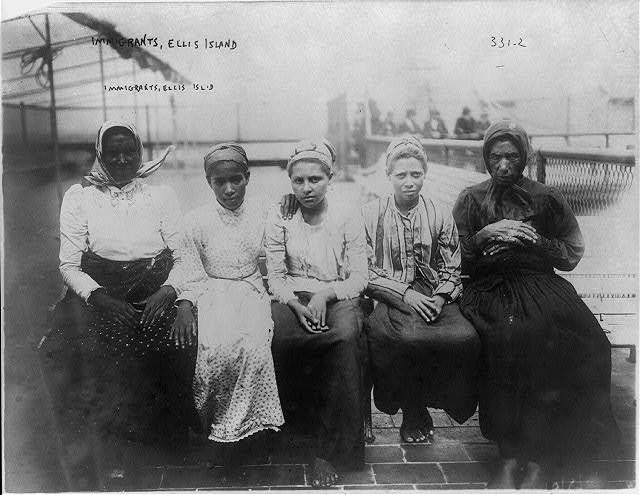
The act also belongs to a longer sequence reaching back to the Chinese Exclusion Act of 1882 and the federal inspection regime at Ellis Island. The accompanying 1910 photograph shows an earlier moment in that history, not a family rejected under the 1921 quotas. Bringing together the statute, dated photographs and administrative records helps readers avoid treating migration as a single policy or a uniform experience.
Timeline
- 1917 — Immigration Act creates literacy test and barred zone
- May 19, 1921 — Emergency Quota Act approved
- June 1921 — Major quota provisions take effect after statutory interval
- 1922 — Temporary quota system extended
- 1924 — New, stricter immigration quota law enacted
- 1965 — Major revision of national-origins restrictions
Frequently asked questions
When was the Emergency Quota Act passed?
President Warren G. Harding approved it on May 19, 1921.
How did the 3% rule work?
It generally capped annual admissions from a nationality at 3% of the foreign-born population of that nationality residing in the United States in the 1910 census.
Did it apply to everyone entering the United States?
No. The act included multiple exemptions and operated alongside existing immigration exclusions and treaty rules.
Did the act use the 1890 census?
No. The 1921 quota law used 1910; the stricter 1924 legislation used an earlier census basis.
Was it supposed to be permanent?
The original law was temporary, with an expiration date later extended before the 1924 system.
Did it replace the Immigration Act of 1917?
No. It expressly supplemented the existing immigration laws.