Immigration Act of 1917: Literacy Test, Asiatic Barred Zone and Wilson’s Veto
How Congress imposed a literacy test and geographic restrictions in 1917 despite President Woodrow Wilson’s opposition.
Quick answer
Congress enacted the Immigration Act of 1917 on February 5, 1917, by overriding President Woodrow Wilson’s veto. The law established a literacy test for many prospective immigrants older than 16 and excluded most immigration from a geographically defined Asiatic Barred Zone, subject to exceptions and earlier laws. It also expanded other grounds for exclusion. The law preceded and differed from the national-origins quota system of 1924.
Key facts
On this page
- Immigration law before 1917
- Why a literacy test became a political issue
- Congress overrides Wilson’s veto
- What the literacy test required
- What the Asiatic Barred Zone covered
- How immigration inspectors applied the new rules
- Other grounds for exclusion
- How the law related to the Chinese Exclusion Act
- The relationship to Ellis Island
- What changed under the Immigration Act of 1924
- Why the Immigration Act of 1917 remains important
- Timeline
- FAQ
- Sources
Immigration law before 1917
Immigration to the United States had long been regulated through a combination of federal law, local administration and restrictions aimed at particular groups. In the nineteenth century, Congress established rules for inspecting arriving passengers and excluding some entrants, while the Chinese Exclusion Act of 1882 imposed a sweeping restriction on Chinese labor immigration. By the early twentieth century, Ellis Island and other inspection stations had become symbols of the federal immigration system. Those institutions did not mean that everybody who arrived could enter freely; inspectors already considered legal grounds for exclusion.
Different migrations brought people from Europe, Asia, the Americas and elsewhere, and public debate often mixed economic concerns with nativism and racial prejudice. Advocates of restriction claimed that tests and exclusions would protect wages, public services or a particular vision of national identity. Critics warned that such measures discriminated against people who could become productive residents and that literacy was an unfair measure of worth. The 1917 law emerged from these contested arguments rather than creating immigration restriction from nothing.
Why a literacy test became a political issue
Congress debated literacy requirements for many years before finally enacting them in 1917. Supporters regarded reading ability as a way to reduce immigration among people they believed would face difficulties in industrial society. Opponents argued that poverty, limited access to schooling and unequal educational opportunity were more important explanations for illiteracy than personal character or an inability to contribute. A test could therefore exclude people because of conditions in the countries and communities they had left.
Several presidents resisted literacy-test bills before Wilson, and efforts to impose such tests became an enduring conflict between lawmakers and the executive branch. The issue also reflected changing patterns of European immigration and broader assumptions about which migrants were desirable. A literacy requirement looked neutral in wording but could have unequal effects depending on where schooling was available and which languages a person had learned. Historians should describe the rule and its consequences without assuming its supporters’ claims about immigrants were established facts.
Congress overrides Wilson’s veto
President Woodrow Wilson opposed the new restriction and vetoed the legislation. Congress nevertheless secured the supermajorities necessary to override his veto, and the Immigration Act became law on February 5, 1917. This is a key constitutional detail: Wilson was the president when the act became law, but he did not approve it by signing the bill. Short timelines that say ‘Wilson signed the Immigration Act of 1917’ reverse the actual sequence of legislative action.
The override also demonstrates that lawmakers could pursue restrictive immigration policies even when the president disagreed. In early 1917 the United States had not yet entered World War I, although the European war and the national-security debate shaped politics. The act was therefore passed just before American entry into the conflict, not after the United States had been fighting for years. Wartime anxieties increased pressure for restrictions, but the literacy-test campaign was much older than the war itself.
What the literacy test required
The statute generally imposed a reading requirement on immigrants older than 16 who fell within its coverage. The test could be administered in a language available under the statute rather than requiring English alone. This detail matters: the law was not a blanket English fluency examination. It tested a defined ability to read and could apply to people who had not received sufficient schooling in their home communities. Certain exemptions and provisions modified its application in particular circumstances.
Passing the literacy test did not automatically entitle a person to admission. Inspectors also applied other grounds for exclusion, and immigration officers needed to evaluate documents, health and legal status. Likewise, an immigrant could fail to qualify under another restriction even if highly literate. The reading test should be understood as one added barrier within a much larger system. The historical importance is that Congress finally enacted a long-debated screening rule after earlier presidential resistance.
What the Asiatic Barred Zone covered
The act also established a geographically defined zone from which immigration was broadly prohibited, with specified exceptions and interactions with other legal arrangements. This so-called Asiatic Barred Zone encompassed substantial areas of Asia and the Pacific but did not operate as a simple ban on everyone who could be described as Asian. Legal distinctions involved place of origin, nationality, territorial status and treaties. The National Archives provides maps and background materials showing why the exact statutory geography matters.
China was not simply covered for the first time in 1917; Chinese exclusion had already developed through earlier statutes. Japan and the Philippines were also treated differently from many places inside the newly defined zone because of existing agreements and the Philippines’ relationship with the United States. A careful article must therefore avoid claiming that the 1917 act newly banned all Chinese, Japanese and Filipino immigrants by an identical rule. Its significance was the expansion of geographic exclusion within a larger preexisting structure of restrictions.
How immigration inspectors applied the new rules
Port officials had to implement the reading test and decide whether applicants were covered by the various categories in the law. Inspectors considered language ability and documentation alongside other legal requirements. These decisions were not made in the abstract: they affected families who had saved money for passage, left homes and anticipated work or reunion in the United States. An exclusion decision could lead to detention, appeal or return transportation, depending on the circumstances and the applicable rules.
Immigration inspection also depended on practical capacity. Translation, record keeping and the presence of different languages complicated the administration of a national literacy test. Although the act created a federal requirement, the experience of individual applicants could vary according to their journey, legal category and the station at which they arrived. Studying personal files alongside the statute can show both what the rule formally required and how administrative decisions shaped real outcomes.
Other grounds for exclusion
The 1917 act addressed more than literacy and geography. It expanded and revised categories of people who could be excluded from admission, including provisions concerning health, criminal history and other legal classifications used at the time. Some of the statutory language reflected assumptions about disability, poverty and morality that differ substantially from present-day understandings. Historians should present those categories as features of a particular law without adopting discriminatory labels as accurate descriptions of people.
These additional provisions can disappear from popular summaries that focus exclusively on the literacy test. Yet they formed part of the practical inspection system and could affect admission independently. They also help explain why the history of immigration restriction cannot be reduced to one headline policy. The 1917 law revised multiple aspects of admission and exclusion, and later lawmakers built on that structure when designing different forms of immigration control.
How the law related to the Chinese Exclusion Act
The Chinese Exclusion Act of 1882 had already imposed nationality-based restrictions decades before the Asiatic Barred Zone was created. Subsequent rules and diplomatic arrangements further complicated immigration from Asia. The 1917 measure thus belongs to a longer sequence in which Congress created and broadened legal barriers affecting different groups. It was not the beginning of anti-Asian exclusion in U.S. law, and its operation cannot be understood without that earlier record.
The National Archives traces the wider history of immigration from Asia and the Pacific through several laws spanning the late nineteenth and twentieth centuries. Such a sequence is necessary because a restriction in 1917 might not have been the controlling rule for an applicant who was already excluded by another statute. The fact that some groups were outside the newly drawn zone did not mean they enjoyed unrestricted access. Legal exceptions and overlapping prohibitions are central to the history.
The relationship to Ellis Island
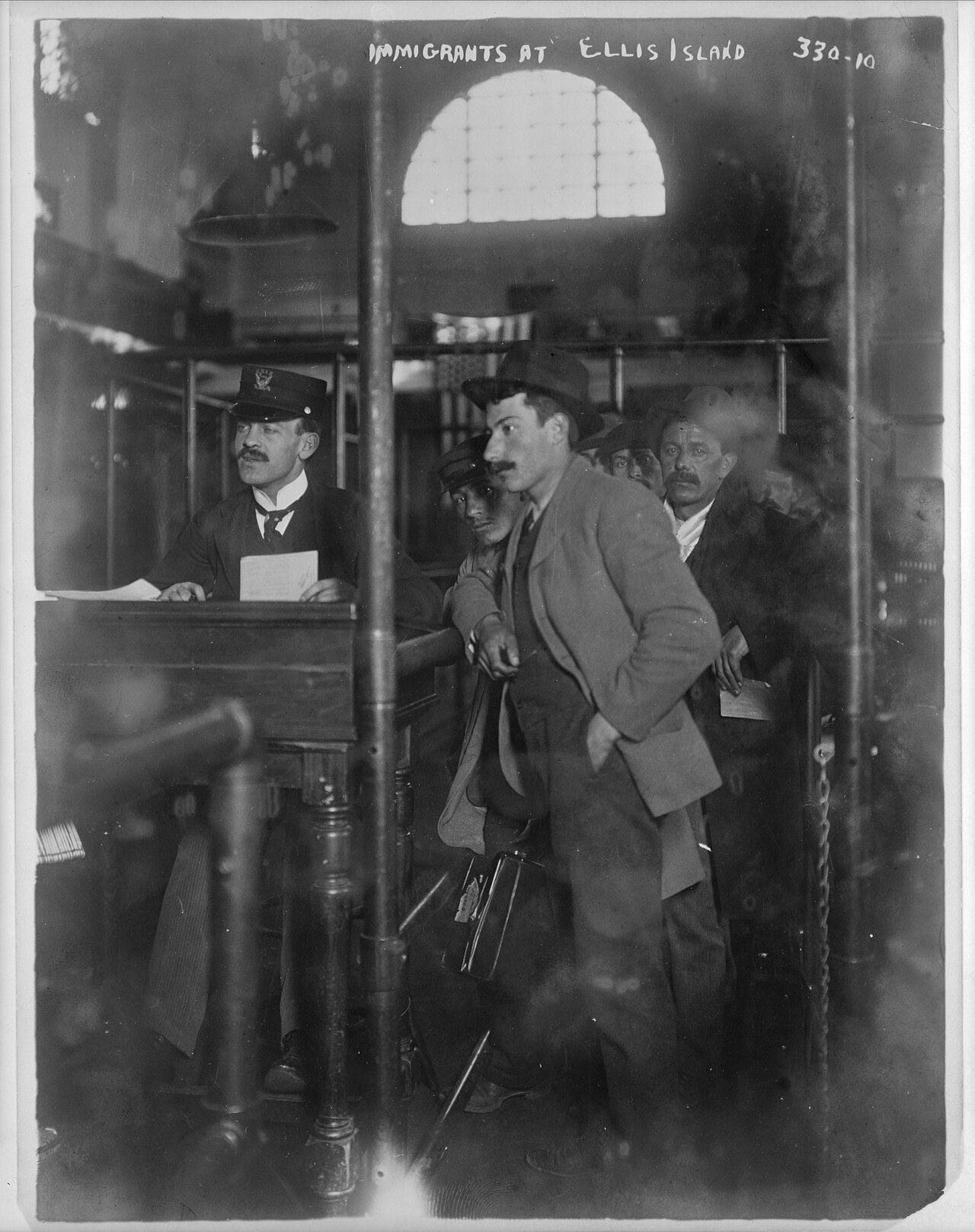
Ellis Island had processed newcomers for many years before 1917. The photograph in this article shows immigrants waiting there in 1907, not people taking the literacy test under the new law. This distinction is important when using historical imagery, because photographs of immigrant crowds are often attached to later laws without careful dates. The station illustrates the institutional setting in which federal inspections occurred, while the 1917 statute changed the rules inspectors could apply.
Immigrants did not all arrive through Ellis Island, and arrival experiences differed by port, route and status. Some entered by land or through Pacific ports where additional policies affecting Asian migrants were highly significant. A law affecting all national ports should not be explained solely through the experience of New York Harbor. The larger federal inspection network helps show how geographic restrictions and reading requirements could have different consequences for communities arriving from different regions.
What changed under the Immigration Act of 1924
The Immigration Act of 1924 introduced a national-origins quota system and strengthened exclusion rules in ways that differed from the 1917 act. Some accounts combine the laws into a single narrative of restrictive immigration in the 1920s, but the dates and mechanisms matter. The 1917 act brought the long-debated literacy test into force and created a broad geographic barred zone. The 1924 law used quotas and restrictions related to nationality and eligibility for citizenship.
World War I and its aftermath transformed the political context between those statutes. New fears, diplomatic disputes and changing public campaigns influenced later legislation. Describing 1917 as the introduction of the 1924 quota system would be a factual error, just as attributing the 1917 literacy test to a law enacted seven years later would be. Distinguishing them helps explain how restrictive immigration policy accumulated through separate legal measures rather than one decision.
Why the Immigration Act of 1917 remains important
The act illustrates the interaction of congressional power, presidential vetoes and contested ideas about membership in the nation. It enacted a literacy barrier despite Wilson’s objections and widened geographic restrictions affecting much of Asia and the Pacific. Its provisions demonstrate how nominally general tests could operate within a larger system structured by racialized and national distinctions. The law also had a lasting administrative impact because port officials had to assess new eligibility conditions.
The central lesson is not that all immigration to the United States stopped in 1917. Admissions continued, exemptions existed and people encountered different rules depending on their circumstances. Rather, federal immigration policy became more restrictive in important, specific ways. Understanding those details allows readers to place the statute between earlier laws such as the Chinese Exclusion Act and the later quota system of 1924 without confusing their mechanisms or dates.
Timeline
- 1882: Chinese Exclusion Act established
- 1892: Ellis Island opens
- Early 1900s: Congress repeatedly debates literacy tests
- February 5, 1917: Congress overrides Wilson’s veto
- April 1917: United States enters World War I
- 1924: Immigration Act introduces national-origins quota system
Frequently asked questions
When was the Immigration Act of 1917 enacted?
February 5, 1917, after Congress overrode President Woodrow Wilson’s veto.
Did Woodrow Wilson sign the act?
No. He vetoed it, but Congress overrode the veto.
Was the literacy test in English only?
No. The requirement generally tested reading ability in an eligible language rather than English fluency alone.
Did the law ban all immigration from Asia?
No. It created a broad Asiatic Barred Zone with legal exceptions and interaction with earlier nationality and treaty arrangements.
Was the 1924 quota system part of the 1917 law?
No. National-origins quotas were enacted in later legislation, particularly in 1924.
Did the act apply only to Ellis Island arrivals?
No. Federal immigration rules applied to entry across relevant U.S. ports and borders, subject to legal definitions and exceptions.
Sources and further reading
National Archives, historical government texts and specialist histories support the key legal and chronological distinctions.