Second Battle of Bull Run (1862): Jackson, Longstreet and Pope’s Defeat
How Lee reunited Jackson and Longstreet, defeated John Pope and moved toward Maryland.
Second Bull Run, or Second Manassas, took place August 28–30, 1862, in Virginia. Lee’s Confederates defeated John Pope’s Union Army of Virginia after Stonewall Jackson held an unfinished railroad line and James Longstreet launched a major counterattack. Pope retreated toward Washington, and Lee soon invaded Maryland.
The guide separates the operational maneuver, three battle days and aftermath to show why the Union army lost.
On this page — 23 topics
When was the Second Battle of Bull Run?
The Second Battle of Bull Run, also called Second Manassas, was fought August 28–30, 1862, in northern Virginia. Confederate General Robert E. Lee defeated the Union Army of Virginia under Major General John Pope. Much of the combat took place near the battlefield of the First Battle of Bull Run, but the campaigns involved different circumstances and commanders. Stonewall Jackson’s movements drew Union forces into battle, while James Longstreet’s wing arrived to complete Lee’s concentration. The Confederate victory opened the way for Lee’s invasion of Maryland and the September Battle of Antietam.
Why is the battle called Second Manassas?
Union and Confederate sources often used different geographic names for the same Civil War battle. “Bull Run” refers to the local watercourse, whereas “Manassas” refers to a nearby railroad junction and community. Both labels identify the August 1862 engagement. The “Second” distinguishes it from the July 1861 First Bull Run, where the Confederates had also defeated a Union army. The two battles should not be merged: the 1862 fight involved a different phase of the war, Lee’s expanding command, Pope’s army and decisions shaped by the earlier Peninsula Campaign.
What was the Northern Virginia Campaign?
After the Union’s Peninsula Campaign failed to capture Richmond, the Lincoln administration sought to strengthen the military position closer to Washington. John Pope commanded the newly organized Army of Virginia, while George B. McClellan’s Army of the Potomac remained involved in withdrawal and reinforcement. Lee saw an opportunity to strike Pope before federal forces could fully combine. His campaign emphasized rapid movement, deception and concentration. The Second Manassas battle was its climactic event, not an isolated confrontation that arose without preceding strategic choices. Control of roads, rail junctions and supply depots shaped the movements.
Who was John Pope?
Major General John Pope had gained experience in western campaigns and was appointed to lead the Union Army of Virginia. His aggressive public statements and approach to operations made him controversial among some eastern officers. Pope attempted to defend river lines and then confront Jackson’s force after Confederate cavalry and infantry disrupted his communications. At Second Manassas he repeatedly misjudged Confederate dispositions, believing that Jackson could be defeated before Longstreet was fully engaged. After the defeat, Pope lost command. The outcome reflected serious intelligence and coordination problems as well as the strengths of the Confederate plan.
What was Robert E. Lee’s strategy?
Lee wanted to defeat Pope before the scattered Union armies could combine against him. He divided Confederate forces, sending Stonewall Jackson on a long flanking march toward the Union rear while James Longstreet followed. The maneuver was risky because separated Confederate wings could have been beaten individually if Pope had responded effectively. Its success depended on Jackson’s speed, the disruption of federal supplies and Lee’s ability to reunite his forces in time. The campaign illustrates how a commander could use operational movement to alter the battlefield’s possibilities, rather than rely entirely on superior firepower at the moment of attack.
Why did Jackson march around the Union right?
Jackson’s wing moved rapidly around Pope’s flank, crossed toward the Union rear and attacked federal supply facilities at Manassas Junction. The action threatened Pope’s communications and forced him to abandon stronger positions along the Rappahannock River. Jackson’s troops damaged or consumed large quantities of supplies before moving toward Groveton near the earlier Bull Run battlefield. The raid disrupted Union planning and gave Lee the chance to bring Pope onto ground chosen by the Confederates. It also required Jackson to survive while relatively isolated until Longstreet could arrive through Thoroughfare Gap.
What happened at Manassas Junction?
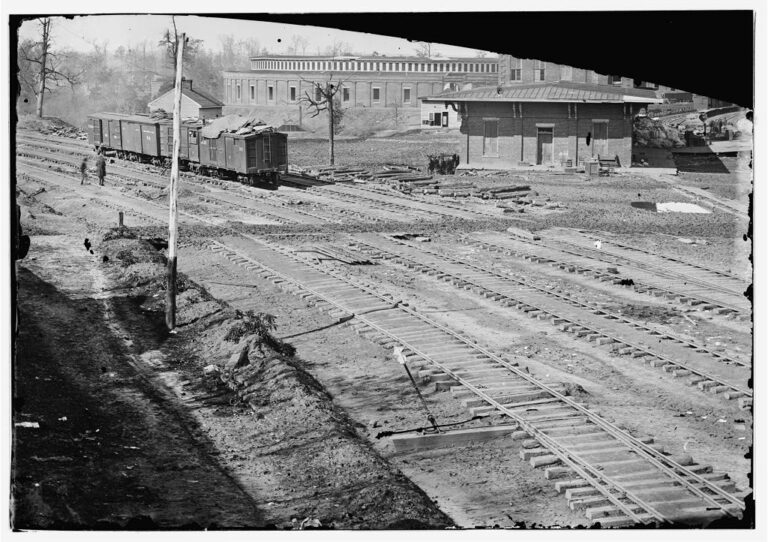
At Manassas Junction, Jackson’s soldiers seized a major Union supply depot in late August 1862. They took provisions and other stores and destroyed what they could not carry. The raid was psychologically important because it placed Confederate troops behind the Union army and suggested that its communications were vulnerable. Pope interpreted the situation as an opportunity to trap Jackson. However, Jackson had already moved away from the depot toward a strong position near an unfinished railroad. That sequence demonstrates why intelligence about an enemy’s last known location can be dangerous when it is mistaken for a current position.
What happened at Thoroughfare Gap?
While Jackson was operating near Groveton, Longstreet’s wing advanced toward the battlefield through Thoroughfare Gap in the Bull Run Mountains. Union forces attempted to block the passage but could not prevent Confederate troops from moving through. The failure allowed Lee to reunite his army during the developing battle. Thoroughfare Gap was not the largest engagement of the campaign, but it was operationally important because it determined whether Jackson would face Pope alone. The geography of mountain passes and roads limited movement, so control of a relatively narrow route could shape the outcome of fighting several miles away.
How did the fighting begin at Brawner Farm?
On August 28, Jackson attacked a Union column moving along the Warrenton Turnpike near Brawner Farm. The fighting involved troops under Union commanders including John Gibbon and became a severe infantry engagement at close range. Both sides suffered heavy losses, and neither achieved a decisive immediate result. The action drew Pope’s attention to Jackson’s position. The men who fought there would later be associated with the famous Iron Brigade, but the battlefield encounter was a bloody contest rather than a ceremonial debut. The fight also helped set the stage for Pope’s assaults on the following day.
Why did Jackson use the unfinished railroad?
Jackson positioned his soldiers along a section of unfinished railroad grade where embankments, cuts and nearby woods provided defensive cover. Union attackers had to cross exposed areas and negotiate irregular ground to reach parts of the Confederate line. The railroad was not functioning as a transportation route at that point; its unfinished earthworks were valuable because they shaped firing positions. The defensive advantage made Jackson’s line difficult to dislodge even when Union troops attacked repeatedly. Visitors to Manassas National Battlefield Park can still study preserved portions of the grade and the infamous Deep Cut.
What happened on August 29?
Pope launched repeated attacks against Jackson’s line on August 29, believing the Confederates might be withdrawing or could be crushed before reinforcements arrived. Jackson’s troops resisted from behind the unfinished railroad. Longstreet arrived on the Confederate right after passing through Thoroughfare Gap. The Union command did not fully grasp how much Confederate strength had assembled. Fighting was confused, with commanders receiving partial reports and units attacking at different times. The day’s result left Pope unable to break Jackson’s position and gave Lee an opportunity to launch a more powerful counterattack on August 30.
What happened at the Deep Cut?
The Deep Cut was a section of the unfinished railroad where a high embankment and exposed approach created extremely difficult conditions for attacking Union infantry. On August 30, federal troops under Fitz John Porter launched a major attack in this sector. Confederate defenders held strong ground while artillery from Longstreet’s wing struck the attackers. The Union assault suffered severe losses and failed to break Jackson’s line. The Deep Cut has become one of the most studied places on the battlefield because its terrain helps explain the tactical disaster. Maps and present-day trail interpretation make its slopes and positions easier to understand.
How did Longstreet’s counterattack unfold?
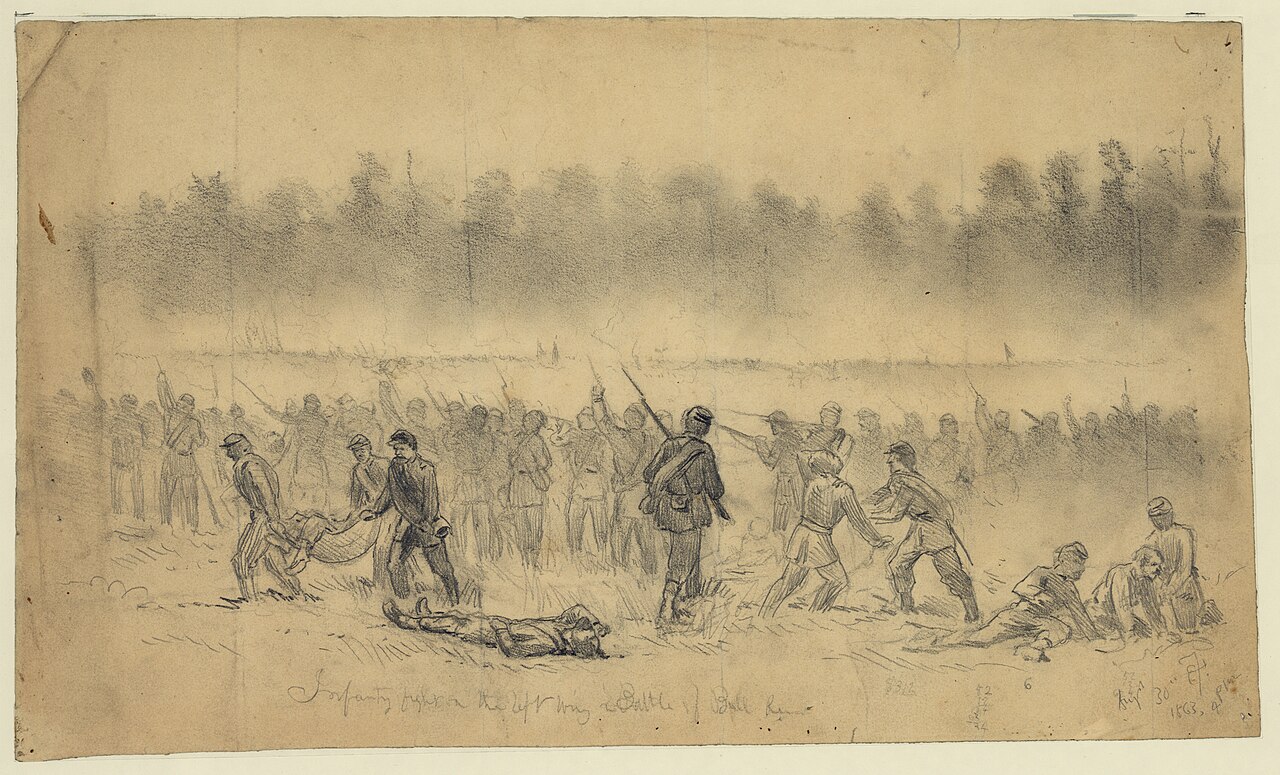
Longstreet’s wing had reached Lee’s army on the right of Jackson’s position. As the Union assault against Jackson failed on August 30, Confederate troops launched a massive counterattack against Pope’s exposed left. The assault involved tens of thousands of men and drove Union formations backward toward Bull Run. It was one of the largest coordinated Confederate infantry attacks of the war. The resulting retreat was serious, but Union troops established rearguard positions that prevented complete destruction. The attack’s success depended on the timing of Pope’s failed offensive and the concentration of Confederate forces on his vulnerable flank.
What happened at Chinn Ridge and Henry Hill?
Union defenders fought at Chinn Ridge and later around Henry Hill to slow the Confederate advance. These positions were important because they protected roads and gave retreating troops time to withdraw. Heavy fighting continued as Confederate units pushed forward and Union soldiers attempted to form new lines. The terrain linked the 1862 battle to the famous 1861 battlefield, but the combat situations were not identical. Without the rearguard stands, Pope’s army might have suffered an even more catastrophic rout. These defensive actions help explain how a decisive Confederate victory nevertheless left much of the Union army intact.
Who won Second Bull Run?
Lee’s Confederates won decisively. Pope’s attacks failed, Longstreet’s counterstroke shattered key Union positions and the federal army retreated toward Washington. The National Park Service estimates more than 22,000 combined casualties in the battle, although precise figures vary among references. Union losses were particularly severe, and the defeat damaged the Lincoln administration’s military position in Virginia. The outcome did not end the war or produce Confederate independence, but it gave Lee enough confidence and operational freedom to move into Maryland. The subsequent Antietam campaign followed directly from that sequence.
How many casualties occurred?
The National Park Service’s Second Manassas battle record estimates approximately 22,179 casualties: 13,826 Union and 8,353 Confederate. These are casualties in military reporting categories, not an estimate that more than twenty-two thousand people were killed. Many were wounded, missing or captured. Such losses imposed enormous demands on temporary hospitals, families and the military organizations that had to replace officers and enlisted men. Historical works sometimes report different totals because they use different documents or exclude certain engagements. The important conclusion is that the Confederate victory was exceptionally costly to both armies.
Why did McClellan’s reinforcements matter?
George B. McClellan’s Army of the Potomac was withdrawing from the Peninsula and gradually returning to northern Virginia. Lee hoped to defeat Pope before the Union could consolidate these forces. Pope’s own operations therefore occurred amid a shifting command structure and uncertain reinforcement schedule. This helps explain why the Confederates took the risk of separating Jackson and Longstreet. It also shows that the Second Manassas defeat was connected to the failure of the earlier Union campaign near Richmond. An interpretation limited to battlefield maneuvers on August 29 and 30 leaves out the strategic pressures driving the battle.
What did the defeat mean for the Union?
Second Manassas undermined Pope’s command and increased pressure on federal leaders to reorganize defenses around Washington. The Union remained militarily powerful, but a second major defeat in the vicinity of Bull Run was politically and psychologically damaging. Command disputes, including controversies surrounding Fitz John Porter, lasted for years. Lincoln again relied on McClellan to help organize the army as Lee moved north. The setback also clarified the difficulty of defeating the Army of Northern Virginia through disconnected operations. Federal leaders would continue debating how to combine manpower, maneuver and leadership against Lee.
How did Second Manassas lead to Antietam?
Following his victory, Lee decided to cross the Potomac River into Maryland in early September 1862. His objectives included relieving pressure on Virginia, gathering supplies and possibly influencing northern politics or diplomacy. The invasion did not unfold as planned. Union forces under McClellan pursued, and the two armies fought at Antietam on September 17. That battle’s result allowed Lincoln to issue the preliminary Emancipation Proclamation. Understanding Second Manassas therefore helps explain how a Confederate success was followed within weeks by an enormous battle and a major change in the political meaning of the war.
What can visitors see at Manassas?
Manassas National Battlefield Park in Virginia preserves important landscapes from both 1861 and 1862. Its Second Manassas Trail follows positions associated with Jackson’s railroad line, the Deep Cut and the Confederate counterattack. Visitors should distinguish trails for the first battle from those for the second, since place names such as Henry Hill appear in both accounts. The National Park Service campaign history explains the military movements, while preserved ground clarifies why roads, fields and heights shaped the battle so strongly.
Second Manassas timeline
| Date | Event |
|---|---|
| August 25, 1862 | Jackson begins his march around Pope’s flank. |
| August 27 | Jackson strikes federal supplies at Manassas Junction. |
| August 28 | Battle begins at Brawner Farm near Groveton. |
| August 29 | Pope attacks Jackson as Longstreet arrives. |
| August 30 | Longstreet’s counterattack breaks the Union left. |
| Early September | Lee advances toward Maryland. |