Battle of Fredericksburg (1862): Marye’s Heights and Burnside’s Defeat
Why a delayed river crossing and strong Confederate positions produced a disastrous Union assault.
At Fredericksburg, Virginia, in December 1862, Union General Ambrose Burnside crossed the Rappahannock River and attacked Robert E. Lee’s prepared Confederate positions. On December 13, repeated Union assaults against the stone wall below Marye’s Heights failed, while a separate advance at Prospect Hill could not be sustained. The Confederates won, inflicting about 12,600 Union casualties compared with roughly 5,300 Confederate losses.
Explore the pontoons, occupied town, Marye’s Heights, Prospect Hill, casualty figures, and Burnside’s later Mud March.
On this page — 23 topics
What happened at the Battle of Fredericksburg?
The Battle of Fredericksburg was fought primarily on December 13, 1862, after Union troops under Ambrose Burnside crossed the Rappahannock River into Fredericksburg, Virginia. Robert E. Lee’s Confederate army held strong defensive positions on hills behind the town, especially Marye’s Heights. Union attacks against the defended slopes failed with enormous casualties.
The Confederates won a decisive tactical victory, forcing Burnside to withdraw back across the river. The defeat damaged Union morale but did not end the Civil War. The battle illustrates the difficulties of attacking prepared infantry and artillery positions across exposed ground, particularly when logistical delays give an opponent time to fortify.
Why did the Union attack Fredericksburg?
President Lincoln and Union commanders wanted the Army of the Potomac to advance against Lee and threaten Richmond. After the Maryland campaign and Antietam, George B. McClellan had been replaced by Ambrose Burnside. Burnside proposed a rapid movement toward Fredericksburg and then southward, hoping to cross the Rappahannock before Lee could concentrate.
The strategy depended on speed, especially the arrival of equipment needed to construct pontoon bridges. When the army reached the river, the bridges were not ready. The delay undermined the central advantage of the plan, allowing Confederate soldiers to establish a formidable defense.
Where is Fredericksburg?
Fredericksburg lies along the Rappahannock River in Virginia, between Washington and Richmond. The river separates the historic town from elevated ground to the north, while ridges west of the town provided Confederate troops with excellent observation and artillery positions.
The battlefield extended beyond a single hill. Union forces attacked near Marye’s Heights and farther south around Prospect Hill and the railroad. A map that shows only the famous stone wall omits a large portion of the fighting. The National Park Service battlefield guide helps distinguish these sectors and the movements of the two armies.
Who were the main commanders?
Major General Ambrose E. Burnside commanded the Union Army of the Potomac. General Robert E. Lee directed the Confederate Army of Northern Virginia, with James Longstreet holding much of the northern Confederate line and Thomas J. ‘Stonewall’ Jackson controlling positions farther south.
Subordinate commanders played essential roles, including Union Generals William B. Franklin, Edwin V. Sumner and Joseph Hooker. The fight was not one continuous duel between Burnside and Lee. Separate attacks developed across a long front, often with difficult communication between headquarters and field units.
Why did pontoon bridges matter?
The Union army needed floating bridges to cross the Rappahannock while keeping artillery, wagons and large numbers of soldiers together. Delays in delivering the pontoons meant Burnside could not cross quickly, and Lee moved Confederate divisions into defensive positions.
Engineers eventually built the bridges under fire on December 11, demonstrating courage and technical skill in dangerous conditions. But by then the opportunity for surprise had largely vanished. The pontoon delay is a central example of how a transportation failure can change the result of a major campaign even before battle begins.
What happened during the river crossing?
Union engineers began constructing bridges on December 11, 1862. Confederate soldiers fired from buildings and positions near the river, slowing the work. Federal artillery bombarded Fredericksburg, and Union infantry crossed the river in boats to clear defenders from the waterfront.
By December 12, major Union formations occupied the town and prepared to attack Lee’s army on the hills. The river crossing was a genuine military achievement, but it did not solve the problem of assaulting a prepared defense. Civilian buildings suffered damage during the fighting and subsequent occupation, showing how a town itself could become part of the battlefield.
What happened to Fredericksburg’s residents?
Many residents fled or sheltered during the fighting as artillery struck buildings and soldiers moved through streets and homes. Union troops occupied the town and engaged in looting and destruction after the river crossing. Property losses and the disruption of daily life imposed hardships on civilians who had little control over commanders’ decisions.
The National Park Service article Fire in the Streets documents the damage and offers contemporary descriptions of the city. A battle narrative focused solely on armies misses the experiences of families, merchants and enslaved people who lived in the area.
Why was Marye’s Heights so strong?
Marye’s Heights stood west of Fredericksburg and dominated the approach across open ground. Confederate infantry held a sunken road protected by a stone wall near the base of the heights, while artillery occupied the ridges above. Union troops attacking from the town crossed a canal ditch and then faced hundreds of yards of exposed slope.
The defensive position combined natural elevation with prepared artillery and protected infantry. Confederate troops could deliver concentrated fire against successive attacking formations. The National Park Service Marye’s Heights analysis explains why the same ground became so deadly for brigade after brigade.
What was the Sunken Road?
The Sunken Road was a well-used road partly cut below the surrounding ground near the base of Marye’s Heights. A stone wall along the road gave Confederate infantry cover while allowing them to fire at Union formations approaching across open fields.
The position is sometimes called ‘the stone wall’ in popular accounts, but it was part of a larger defensive system involving artillery above and infantry throughout the line. The road’s physical characteristics helped the defenders reload and maintain fire while being less exposed to Union weapons. Its location is essential for understanding the casualties of December 13.
Why did Burnside send repeated attacks?
Burnside hoped to break the Confederate defense near the town while other Union forces attacked farther south. When the first brigades failed, additional divisions were ordered forward in succession. Coordination problems and poor information about the defense contributed to the repetition of attacks against nearly the same ground.
Some attackers advanced with extraordinary courage, but determination could not overcome the geometry of a strong position under concentrated artillery and rifle fire. The pattern exposed serious shortcomings in Union command decisions and communication. It also illustrates why bravery alone is not an adequate explanation of military outcomes.
What happened at Prospect Hill?
Farther south, Union troops under William B. Franklin attacked Confederate positions near Prospect Hill and the railroad. A division led by George G. Meade temporarily penetrated Jackson’s line through a gap in the Confederate defenses. However, support was not effectively brought forward, and Confederate counterattacks drove the Union troops back.
This phase is sometimes overlooked because the assaults on Marye’s Heights became famous. Yet it reveals that parts of Lee’s defensive system were vulnerable. Burnside’s failure to exploit the breakthrough and coordinate simultaneous pressure across the field contributed to the defeat.
How many Union assaults reached the wall?
Multiple waves of Union troops advanced toward Marye’s Heights during the afternoon, with the National Park Service describing a long sequence of brigade attacks. None succeeded in storming the defended Sunken Road. Many men fell within sight of the stone wall, and survivors found temporary cover in folds of ground or withdrew.
Accounts of exact numbers of assaults differ because historians may count brigades, divisions or separate advances differently. The essential fact is that repeated frontal attacks inflicted very heavy losses without breaking the Confederate position. This was the battle’s defining tactical failure.
What were the casualties?
Commonly cited battle totals are about 12,600 Union casualties and 5,300 Confederate casualties. These figures include killed, wounded and missing or captured soldiers, not deaths alone. A large share of the Union losses occurred during the attacks against Marye’s Heights.
The NPS battle history gives breakdowns and explains the costly nature of the assaults. Different historical compilations may vary slightly, especially when counting men missing or wounded who later died. The magnitude of the casualties does not change the basic result: Burnside’s army was defeated at disproportionate cost.
How did Robert E. Lee use artillery?
Lee’s positions allowed Confederate cannon to cover the open ground leading out of Fredericksburg. Gunners on the heights could fire at Union formations before infantrymen reached the stone wall, while Confederate batteries farther south covered other approach routes.
Artillery alone did not create the victory. Its effectiveness depended on placement, ammunition supply and cooperation with infantry behind prepared cover. The Confederate army also had to respond to attacks near Prospect Hill and guard against a breach. Fredericksburg is a case study of mutually reinforcing infantry and artillery positions.
Why did Burnside withdraw?
After repeated failures on December 13, Burnside considered renewing the assaults, but senior officers argued against further attacks likely to produce the same result. He eventually withdrew his army across the Rappahannock during the night of December 15–16, dismantling bridges behind the retreat.
The withdrawal ended the campaign without another large engagement. Burnside preserved much of his army, but the defeat damaged his authority. Union soldiers and the public increasingly questioned the conduct of the operation, especially the decisions that sent repeated attacks across exposed fields.
What was the Mud March?
In January 1863 Burnside tried to renew offensive movement, but severe weather turned roads into deep mud and disrupted the army’s advance. The failed operation became known as the Mud March. It worsened perceptions of Burnside’s command after Fredericksburg.
He was replaced by Joseph Hooker later that month. The transition led toward the Chancellorsville campaign in spring 1863. The Mud March illustrates that an army’s ability to operate depends on weather, roads and supply systems even when enemy forces are not actively attacking it.
Was Fredericksburg a decisive Confederate victory?
Fredericksburg was an overwhelming tactical Confederate success, but not a war-ending strategic victory. Lee held the heights and inflicted heavy casualties, yet he did not destroy the Union army or eliminate its ability to recruit and regroup. Northern population and industry provided resources for further campaigns.
The Confederate victory strengthened morale and Lee’s reputation, but the war continued with large engagements in 1863. A useful historical distinction is that an impressive victory on one battlefield does not necessarily overcome an opponent’s greater long-term resources or political determination.
How did the battle affect medicine and burials?
The battlefield was covered with dead and wounded soldiers, many lying between the lines after the attacks. Recovering casualties required temporary truces or risky efforts by comrades and medical workers. Families at home faced incomplete information while military hospitals struggled with injuries and disease.
Fredericksburg National Cemetery was later established to commemorate Union dead from battles and camps in the region. Many remains could not be individually identified. The difficulty of recovering and naming the dead is an important dimension of the battle’s legacy beyond the tactical movements on December 13.
Fredericksburg battle timeline
The chronology shows how delayed bridges enabled Lee to prepare and how the battle then unfolded over several days.
| Date | Event |
|---|---|
| Nov 1862 | Burnside moves toward the Rappahannock. |
| Dec 11 | Union engineers build pontoon bridges under fire. |
| Dec 12 | Union troops occupy Fredericksburg. |
| Dec 13 | Assaults on Marye’s Heights and Prospect Hill. |
| Dec 15–16 | Union army withdraws across river. |
| Jan 1863 | Mud March fails; Hooker replaces Burnside. |
Frequently asked questions about Fredericksburg
When was the battle? December 11–15, 1862, with the major attacks on December 13.
Who won? The Confederacy under Robert E. Lee.
Who commanded the Union? Ambrose Burnside.
What was Marye’s Heights? A fortified ridgeline defended by Confederate artillery and infantry.
Why did Union attacks fail? Exposed ground, strong defenses and poor coordination.
How many Union casualties? Approximately 12,600.
Which sources explain Fredericksburg?
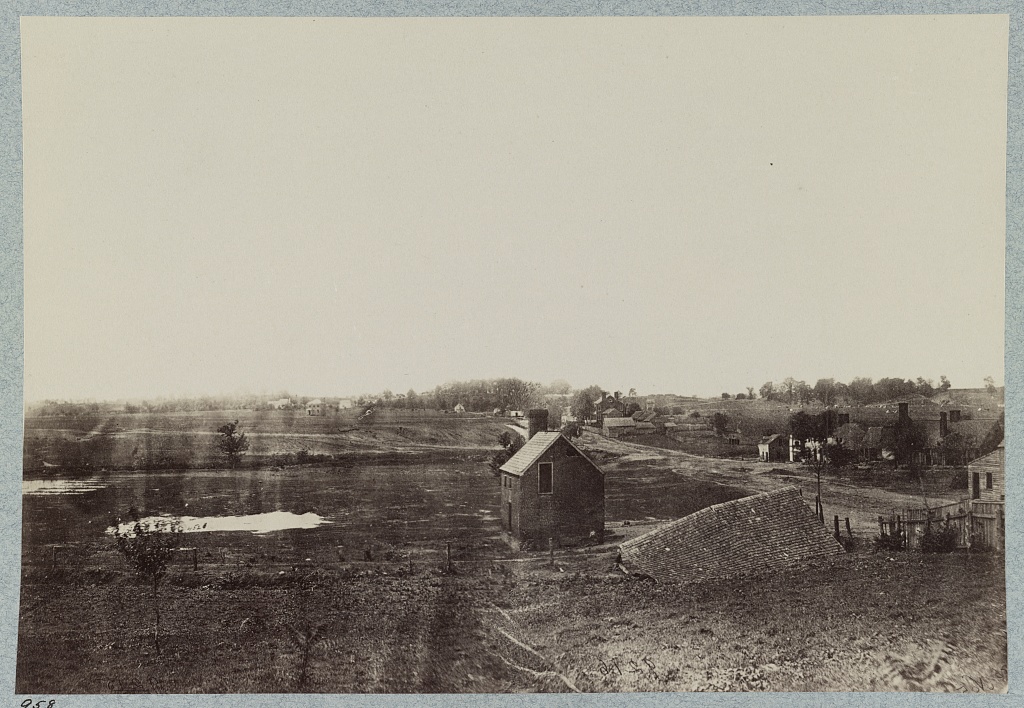
The National Park Service Marye’s Heights study describes the successive assaults and terrain. The battlefield guide also covers Prospect Hill and the wider operation, while Fire in the Streets documents civilian suffering. The Library of Congress historical photograph shows the battlefield landscape after fighting.
Compare commanders’ orders with the situation their subordinates faced. A later tactical map may suggest that a breakthrough was obvious, but the officers on the ground acted amid smoke, poor communications and incomplete knowledge. Separating hindsight from contemporary decisions improves the analysis.