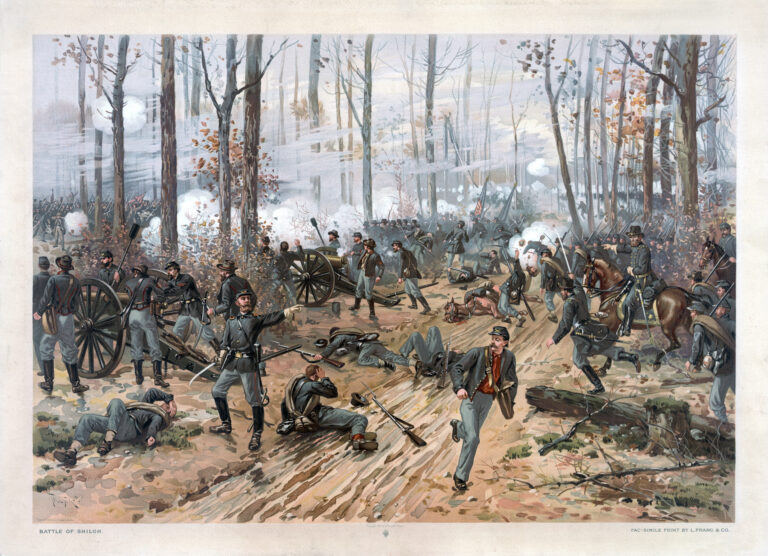
Battle of the Wilderness (1864): Grant, Lee and the Fighting in the Woods
The first major fight of Grant’s 1864 offensive became a confused, destructive struggle in Virginia’s dense forest.
The Battle of the Wilderness took place on May 5–6, 1864, in Virginia, when Ulysses S. Grant’s Union forces clashed with Robert E. Lee’s Army of Northern Virginia. Dense woods, narrow roads and spreading fires made command difficult and increased suffering. Neither army won a clear tactical victory; Grant then continued south toward Spotsylvania rather than withdrawing north.
This guide explains the military decisions, sequence of events, human experiences and historical significance of Battle of the Wilderness 1864.
On this page — 20 topics
What was the Battle of the Wilderness?
The Wilderness was the opening large battle of the Overland Campaign in the spring of 1864. Union soldiers moving south from the Rapidan River encountered Confederate columns in a wooded portion of central Virginia. Fighting developed along a few crucial roads, but trees and brush reduced visibility and made even nearby units difficult to locate.
The battle became famous for the damage inflicted by musketry at close range, the difficulty of using artillery and the fires that spread across the forest floor. It was not simply a collision of two lines on an open field. Many attacks began without a clear picture of the enemy’s position, and commanders struggled to use their superior numbers effectively.
Why was the Union army there?
After his appointment as general-in-chief, Grant accompanied the Army of the Potomac, still commanded by George G. Meade, on a new drive toward the Army of Northern Virginia. The goal was to keep pressure on Lee, prevent him from helping Confederate forces elsewhere and move into a position that endangered Richmond.
Grant crossed the Rapidan hoping to get through the Wilderness and onto ground better suited to the larger Union army. Lee recognized the risk and moved to fight before the federal force could emerge. This explains why a wooded area with little apparent strategic value became a major battlefield: each army was trying to control the timing and location of contact.
What was the Wilderness landscape like?
The Wilderness contained second-growth woodland, thickets, uneven ground and roads that constrained the movement of large formations. The vegetation was not an untouched old-growth forest; timber cutting and earlier economic activity had helped create dense regrowth. Once units left the roads, their alignments became difficult to maintain.
Artillery often lacked clear fields of fire, mounted officers had difficulty observing developments, and wounded soldiers could not always be found promptly. A regiment might hear firing close by but be uncertain whether the noise came from enemy troops or friendly units. The landscape shaped not just where soldiers fought but also how officers understood the battle.
Which commanders faced one another?
On the Union side, Grant directed the wider campaign while Meade commanded the Army of the Potomac. Corps commanders included Winfield Scott Hancock, Gouverneur K. Warren and John Sedgwick; Ambrose Burnside’s IX Corps also participated. These separate commands operated along different roads and struggled to coordinate movements.
Lee’s Confederate army fielded corps under Richard S. Ewell and A. P. Hill, with James Longstreet approaching to reinforce them. The timing of Longstreet’s arrival mattered because parts of Hill’s line came under heavy pressure. Understanding these command relationships prevents the battle from being reduced to two generals personally controlling every regiment in the woods.
How did fighting begin on May 5?
On May 5, Union V Corps troops encountered Confederate forces near the Orange Turnpike. The armies deployed in difficult ground, and the engagement grew as reinforcements moved forward. At the same time, another major front developed farther south along the Orange Plank Road, where Hancock’s infantry and Confederate troops fought intensely.
Neither side could easily move reserves across the wooded battlefield, and the shifting smoke reduced visibility further. Soldiers often advanced in fragmented lines and took fire from unseen positions. The two road corridors became the organizing framework of the day’s fighting, even though units were frequently pushed into the undergrowth on either side.
What happened along the Orange Plank Road?
The Orange Plank Road ran through the southern part of the battleground and became the scene of some of the hardest fighting. Union formations attacked Confederate troops under A. P. Hill, while both sides tried to reinforce exposed positions. The road itself was important as a route for moving men and ammunition in a forest that frustrated maneuver.
At different moments the fighting line bent or broke, but neither army could translate local success into a decisive victory. Officers tried to form fresh lines in terrain where units lost contact with their neighbors. The struggle shows the limitations of offensive coordination when soldiers could not reliably see beyond the next belt of trees.
Why was May 6 especially dangerous?
At dawn on May 6, Hancock’s soldiers mounted a powerful assault against Hill’s depleted line. The Confederate position came close to collapsing before Longstreet’s arriving troops helped steady it. The crisis produced the remembered episode in which Texas soldiers urged Lee to move to the rear rather than expose himself during a counterattack.
Longstreet then directed attacks that threatened the Union flank, but the day again failed to produce a sustained breakthrough. In the confusion, Confederate soldiers accidentally wounded Longstreet, who survived but was removed from command during a critical stage. Fratricide was one of the tragic consequences of combat in a forest where identification was unreliable.
How did forest fires affect wounded soldiers?
Gunfire, shells and other ignition sources started fires in vegetation and debris. As flames spread into contested ground, wounded soldiers who could not move faced a terrifying danger. The fires also obscured movement, interrupted rescues and added smoke to an already confusing environment. Some men died where help could not safely reach them.
Accounts of burning wounded are central to the battle’s memory, but individual stories should be checked against contemporary letters and reports before being repeated as exact quotations. The documented reality was severe enough without embellishment. The episode illustrates how landscape, weaponry and battlefield medical limitations combined to make the suffering worse than casualty statistics alone convey.
Did the armies fight on the same ground as Chancellorsville?
Parts of the Wilderness region had also seen fighting during the Chancellorsville campaign the previous year. Soldiers recognized roads and locations from earlier operations. However, the Wilderness battle of May 1864 was not a simple replay of Chancellorsville: the commanders, strategic setting and operational objectives had changed.
The overlapping geography can confuse readers who see photographs or maps from the two campaigns. Chancellorsville is especially associated with Stonewall Jackson’s 1863 flank march and his mortal wounding. The 1864 Wilderness battle was the start of Grant’s campaign and involved Longstreet’s wounding. Keeping the timelines separate helps avoid mixing two important engagements.
How many casualties were there?
Battle casualty totals vary depending on the historian and the dates included, but the fighting caused tens of thousands of killed, wounded, captured and missing personnel. The National Park Service’s battle database gives an estimated combined total of roughly 28,800. As with other Civil War figures, ‘casualties’ includes categories other than deaths.
Union losses were numerically larger, but the ability to replace experienced soldiers was also vital. Confederate losses placed continued strain on an army with fewer resources, while Union troops had to remain operational for the next advance. Numbers alone cannot determine the tactical result; an inconclusive battle could still change the shape of the subsequent campaign.
Who won the Battle of the Wilderness?
Most histories describe the Wilderness as tactically indecisive. Lee stopped the Union army from quickly passing through the forest, while Grant avoided a decisive defeat and retained the ability to move. Neither commander destroyed the other’s field army or secured an uncontested battlefield outcome that settled the campaign.
The strategic consequences are clearer when looking beyond May 6. Grant continued southward rather than withdrawing to recover. His army remained in contact with Lee, obliging the Confederates to respond again at Spotsylvania. This choice is one reason the Wilderness is often described as an important change in the Union army’s conduct of the war.
What happened immediately after the battle?
During May 7, Grant ordered his forces toward the crossroads at Spotsylvania Court House. Veterans who expected a northward retreat realized the army would continue the offensive. Confederate columns moved rapidly over nearby roads and reached important positions in time to block the Union advance once more.
That night movement did not guarantee a quick Union victory. Delays, exhausted troops and cavalry harassment complicated the march, while Lee benefited from routes that allowed him to move to the next defensive location. The fighting at Spotsylvania began on May 8 and developed into another prolonged engagement marked by assaults against entrenchments.
Why did the battle influence later tactics?
At the Wilderness the dense woods made traditional open-field maneuvers difficult, while gunfire and terrain broke up attacking formations. Commanders saw the need for better coordination, fieldworks and careful use of reserves. Later in the campaign, earthworks became increasingly important as soldiers dug more frequently and defended positions for longer periods.
Lessons were not learned uniformly or immediately. The Union still launched costly attacks at Spotsylvania and Cold Harbor, and Lee continued to seek offensive opportunities. The campaign’s changes emerged from repeated experience under pressure, not from a single order issued after the first battle. The Wilderness is the starting point for examining that evolution.
What did the fighting mean for civilians?
Farms, roads and small settlements in the Wilderness region had to absorb large military movements, property damage and the presence of wounded men. Residents faced disrupted work and uncertainty about which army would occupy their land. The region also lay within a slaveholding society undergoing upheaval as the Union advanced.
Enslaved people sought opportunities for freedom during wartime movements, although outcomes depended on local conditions and access to Union lines. Such experiences are often overshadowed in military narratives. A complete account should place the soldiers’ struggle alongside the material and human consequences for communities that could not simply leave the battlefield when the armies moved on.
What sources help explain the battle?
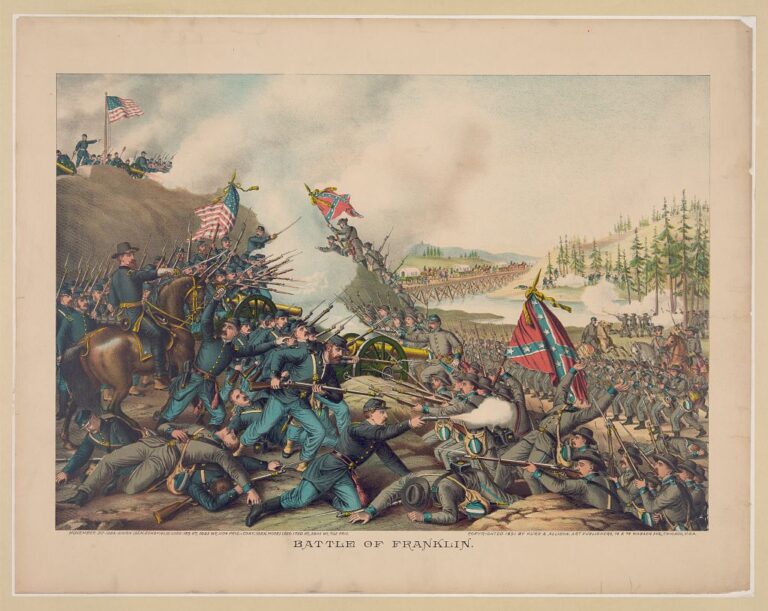
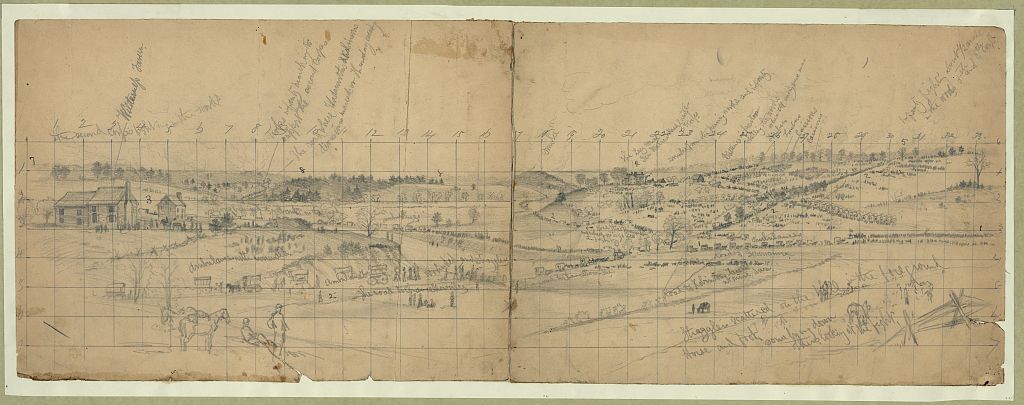
The National Park Service preserves both battlefield interpretation and a searchable battle summary that identifies the major commanders and sequence of events. Edwin Forbes’s sketches offer observations of places and soldiers, but artistic works are not exact photographs of a single instant. Military reports and contemporary correspondence help clarify how units moved and what they understood.
Readers comparing sources should distinguish estimates from documented rolls, period sketches from later commemorative paintings and eyewitness memories from reports made decades afterward. When dates, casualty totals or accounts of a particular officer differ, it is better to note the uncertainty than force a false precision. These practices make a short battle guide useful as a starting point for deeper research.
Why does the Wilderness remain significant?
The fighting displayed both the strengths and weaknesses of the Civil War armies in 1864. Lee exploited terrain and fought the Union to a standstill, while Grant continued the campaign despite losses. Forest fires and confused attacks made the battlefield unusually harrowing, and the decision to march south changed what followed.
The Wilderness is therefore best understood as the first stage of a long operation, not an isolated contest whose meaning ends with the casualty totals. Its legacy continues at the preserved battlefield, in the testimony of soldiers and in debates about whether a commanding general could justify the human cost of sustained offensive pressure.
Battle of the Wilderness 1864 timeline
The chronology below separates the campaign’s stages and shows why dates sometimes differ between short summaries and descriptions of the full operations.
| Date | Event |
|---|---|
| May 4 | Union army moves across the Rapidan River. |
| May 5, morning | Fighting erupts on the Orange Turnpike. |
| May 5, afternoon | Combat spreads along the Orange Plank Road. |
| May 6, dawn | Union attacks threaten A. P. Hill’s position. |
| May 6, morning | Longstreet arrives and stabilizes the Confederate line. |
| May 6, later | A Confederate flank attack falters after Longstreet is wounded. |
| May 7 | Grant orders a move toward Spotsylvania. |
Frequently asked questions
When did it happen? May 5–6, 1864.
Where did it happen? Orange County, Virginia.
Who were the principal commanders? Grant, Meade, Lee.
What was the outcome? Inconclusive; Union advances. The military and political consequences are explained above rather than reduced to a single label.
How does it fit into the Civil War? It forms part of the larger sequence described in our American Civil War overview.
Historical sources and further reading
For accurate study, compare contemporary documents and battlefield records with modern National Park Service historical interpretation. Image captions identify whether a visual is a period sketch or a later representation.