Clayton Antitrust Act of 1914: Provisions, Labor Rights and Competition
How the 1914 legislation attempted to prevent monopoly, regulate corporate conduct and protect labor organizing.
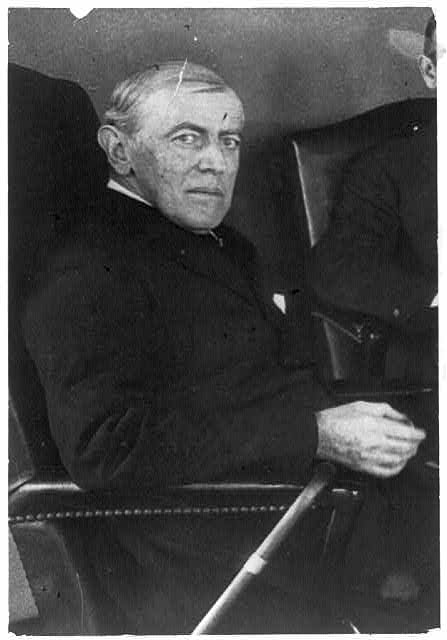
President Woodrow Wilson signed the Clayton Antitrust Act on October 15, 1914, strengthening the Sherman Act by addressing certain price discrimination, exclusive dealing, stock acquisitions and interlocking corporate directors when statutory conditions were met. It also contained provisions intended to protect labor and agricultural organizations and limit certain labor injunctions, although courts later narrowed parts of those protections.
This historical overview separates the original 1914 provisions from judicial interpretations and subsequent amendments.
On this page — 22 topics
What was the Clayton Antitrust Act of 1914?
The Clayton Antitrust Act was a federal statute designed to strengthen American competition law by identifying particular business practices that could lessen competition or lead toward monopoly. President Woodrow Wilson signed it on October 15, 1914. Its provisions addressed certain discriminatory prices, exclusive dealing arrangements, acquisitions of corporate stock and overlapping boards of directors. The act also contained labor-related safeguards, reflecting criticism that earlier antitrust litigation had been directed against unions as well as major corporations. It supplemented rather than replaced the Sherman Antitrust Act of 1890. The law’s practical reach developed through enforcement, judicial interpretation and later amendments, so readers should distinguish the original 1914 language from present-day merger and pricing regulations.
Why did Congress pass another antitrust law?
The Sherman Antitrust Act had prohibited certain restraints of trade and monopolization, but its broad language left courts to decide whether particular practices violated the law. Some business combinations challenged under the statute survived, while others were dissolved after lengthy litigation. Reformers argued that companies and regulators needed clearer guidance before a monopoly became firmly established. During the Progressive Era, concerns about corporate ownership, railroad rates and unequal economic power became national political issues. The 1914 law responded by naming specific forms of conduct and giving enforcement agencies additional authority. It did not establish a universal prohibition on every business agreement or every company large enough to have national customers.
When was the Clayton Act signed?
Woodrow Wilson signed the statute on October 15, 1914, according to the U.S. House of Representatives’ historical record. The date matters because a related measure, the Federal Trade Commission Act, had been signed on September 26 of the same year. They formed part of the administration’s reform program but were separate pieces of legislation with different provisions. Congressional passage followed extensive negotiations about corporate practices, market competition and the rights of labor organizations. The Clayton Act was not a constitutional amendment, and Wilson did not create it by executive order. Congress established its requirements, while federal agencies and courts later determined how those requirements applied to contested commercial activity.
Who was Henry De Lamar Clayton?
Henry De Lamar Clayton Jr. was an Alabama congressman associated with the legislation and served as chairman of the House Judiciary Committee. The act carries his name because he played an important role in congressional consideration, although many other lawmakers, reform groups, lawyers and business interests shaped the final text. A law named for one representative should not be confused with that person’s sole authorship. The proposal was debated during Woodrow Wilson’s presidency as part of a larger plan to establish a more effective federal approach to corporate competition. Recognizing Clayton’s congressional role helps distinguish the statute from Wilson’s speeches and from the related Federal Trade Commission Act adopted shortly before it.
What did Section 2 originally address?
Section 2 addressed certain forms of price discrimination in sales of commodities when the effect could be to substantially lessen competition or tend to create a monopoly. It did not mean that every customer throughout the country had to pay exactly the same price regardless of quantity, distance, services or market conditions. The language imposed legal tests and required attention to the competitive consequences of different prices. Later changes, especially the Robinson–Patman Act of 1936, substantially revised federal law on price discrimination. Descriptions of modern requirements therefore should not be attributed wholly to the 1914 text. The historical problem concerned the possibility that powerful purchasers or sellers could use differential prices to disadvantage competitors.
What is price discrimination in this context?
Price discrimination occurs when a seller charges different purchasers different prices for commodities under circumstances relevant to competition law. Economic price differences can arise for many legitimate reasons, including cost of delivery, quantity and services provided. Antitrust concern becomes important when the statutory conditions are satisfied and differences harm competition in legally relevant ways. Congress was especially attentive to the relationship between large commercial buyers and smaller rivals in national distribution networks. The original act was a response to practices that might reinforce concentrated economic power, not a general consumer guarantee that every person would pay the lowest price offered to anyone. Modern legal rules have changed through later amendments and decisions.
What did Section 3 say about exclusive dealing?
Section 3 targeted certain leases, sales and contracts for goods in which a buyer was required not to use or deal in a competitor’s goods when the effect could substantially lessen competition or tend to create a monopoly. Such agreements can sometimes have business justifications, so their legal significance depends on their terms and competitive effects. The prohibition was not a categorical ban on every exclusive supply contract. In the early twentieth century, manufacturers and distributors increasingly relied on arrangements that could limit rivals’ access to customers. The act gave federal enforcers a more specific way to challenge problematic conditions without waiting until one firm had already achieved complete control of an industry.
What did Section 7 originally prohibit?
Section 7 originally focused on acquisitions of stock in one corporation by another when the acquisition’s effect might substantially lessen competition or tend toward monopoly. The law sought to identify harmful combinations before they destroyed independent rivalry. Its original wording left gaps, particularly where businesses used asset purchases or other structures that did not fit the stock-acquisition framework. Congress later addressed important weaknesses through the Celler–Kefauver Act of 1950. Modern merger law relies heavily on an amended Section 7, not just the text signed in 1914. The distinction is essential: the Clayton Act established an enduring principle about acquisitions, while subsequent legislation broadened what kinds of transactions were subject to federal scrutiny.
Why were interlocking directorates a concern?
Section 8 addressed circumstances in which the same person served as a director of competing corporations under specified conditions. Shared directors could permit exchange of competitively sensitive information or encourage coordination between firms that should make independent decisions. Congress sought to reduce that risk through structural restrictions rather than waiting to prove every instance of harmful agreement. The statutory rules included conditions and have been amended as markets changed. It would be inaccurate to say that no individual may serve on the boards of any two American companies. The concern centered on interlocking positions within competing businesses when the legal requirements were met, reflecting Progressive Era worries about closely connected networks of corporate control.
What did the law mean for mergers and acquisitions?
The Clayton Act developed a preventive approach to competition law by examining transactions that could reduce rivalry before monopoly power became entrenched. It became especially influential in later decades as mergers replaced some older trust arrangements. Courts and agencies have interpreted the statutory phrase about substantially lessening competition in different factual settings. The 1914 act did not establish a universal government approval process for all acquisitions, and the modern premerger notification system arose through later legislation. Its lasting importance was to move antitrust analysis toward potential competitive effects. This perspective complemented the Sherman Act, which had supplied broader rules against unlawful agreements and monopolization rather than a detailed framework for every corporate acquisition.
How did the Act change labor protections?
The law included provisions intended to ensure that organized labor was not automatically treated as an unlawful commercial trust. Reformers criticized the use of antitrust actions and sweeping injunctions against strikes and boycotts, particularly after events such as the Pullman Strike of 1894. Section 6 declared important protections for labor and agricultural organizations, while Section 20 addressed federal injunctions in certain labor disputes. However, the statute did not make every union tactic lawful or prevent all future injunctions. Courts construed some protections narrowly, leading to further legislative campaigns. Its role in labor history is best described as a significant but incomplete reform.
What did Section 6 declare?
Section 6 famously stated that the labor of a human being is not a commodity or article of commerce. It also included provisions directed at protecting the existence and legitimate activities of certain labor, agricultural and horticultural organizations under specified conditions. Labor leaders welcomed the language as recognition that workers associating to bargain were different from corporations combining to restrain trade. But its legal consequences were contested. A court could still consider whether particular conduct fell outside protected activity, and the amendment did not create a general right to collective bargaining on the model of later labor laws. Its importance lay in shifting the framework of the national debate about labor and antitrust.
What did Section 20 do about injunctions?
Section 20 sought to restrict federal court injunctions in specified labor disputes involving employment relations, including certain peaceful activities. Reformers hoped to prevent judges from using broad orders to stop organizing or ordinary strike conduct. Yet judicial interpretations limited the provision’s effectiveness, and employers continued pursuing relief against actions they considered unlawful. The section did not grant blanket immunity for threats, violence or every concerted refusal to deal. The problem of labor injunctions remained so important that Congress enacted the Norris–LaGuardia Act in 1932 to impose more substantial restrictions on federal judicial intervention in labor disputes. This later reform shows that the 1914 protections were not the final settlement of the issue.
Did the Clayton Act exempt all unions from antitrust law?
No. Supporters hoped to protect legitimate union activity, but the original act and later court decisions left important limits. The Supreme Court’s 1921 decision in Duplex Printing Press Co. v. Deering became especially important because it construed aspects of labor protection narrowly, disappointing many union advocates. Subsequent legislation and judicial decisions developed a more substantial labor exemption, but its scope depends on the relationship of the conduct to collective bargaining and other legal conditions. Describing the 1914 act as permanently and unconditionally legalizing every boycott or strike would be inaccurate. Its historical significance is that Congress recognized a distinct place for labor organizations within an economic law originally focused heavily on corporate combinations.
How did the Federal Trade Commission enforce competition laws?
The Federal Trade Commission was established by a separate statute in September 1914. Congress gave it authority to investigate and challenge unfair methods of competition, and the Clayton Act assigned it enforcement responsibilities for specified provisions. The Justice Department and courts also remained important. The FTC was not created by the Clayton Act alone, even though the laws were complementary. Its administrative approach allowed expert investigation and orders alongside judicial antitrust litigation. Understanding the separate roles of agencies is essential because American competition law developed through multiple statutes, each assigning powers and procedures that evolved with changing conditions.
How did the Clayton Act relate to the 1912 election?
The presidential campaign of 1912 featured competing views about how to address large corporations. Woodrow Wilson’s New Freedom emphasized restoring competition, while Theodore Roosevelt’s New Nationalism favored stronger national supervision of large enterprises. Wilson’s victory gave his administration an opportunity to pursue a revised antitrust framework. The 1912 election history explains the differences and the Republican split. The Clayton Act was one legislative result of the subsequent debate, not a statute voted into existence on election day. Congress, labor organizations and business groups helped determine its final wording. Its final provisions reflected political compromises about both commercial competition and workers’ collective action.
Did the law replace the Sherman Act?
No. The Sherman Act remained a central foundation of U.S. antitrust law, and the Clayton Act added more specific restrictions on business practices and acquisitions. The statutes could operate together, with different legal tests and enforcement provisions. For example, a particular merger might raise issues under an amended Clayton Act provision, while concerted conduct might also be examined under the Sherman Act. The Federal Trade Commission Act supplied another complementary framework. Calling the 1914 act the repeal of the 1890 law would erase the legal continuity. Its historical purpose was supplementation and clarification, with an emphasis on addressing practices that could weaken competition before an established monopoly became impossible to challenge.
What were the later amendments?
Important changes followed the 1914 statute. The Robinson–Patman Act of 1936 revised price-discrimination provisions. The Celler–Kefauver Act of 1950 broadened merger rules to address acquisitions of assets as well as stock under defined conditions. The Hart–Scott–Rodino Act of 1976 later established a premerger notification process for certain larger transactions. These measures were responses to changes in corporate organization and perceived gaps in enforcement. They also mean that a current description of the Clayton Act often includes language Congress did not enact in 1914. Historical writing should identify the amendment year when explaining a modern procedure or responsibility, rather than attributing it to President Wilson’s original statute.
Why is the Clayton Act historically important?
The Clayton Antitrust Act strengthened federal efforts to supervise competition through specific statutory rules and provided a framework later generations expanded. Its provisions addressed price discrimination, exclusive dealing, acquisitions and overlapping directors while acknowledging the distinctive place of labor organizations. The law also illustrates the limitations of Progressive reform: protections could be contested in courts, administrative authority required institutions and future Congresses repeatedly altered the rules. A reliable account includes both the original intention and the uneven results. The act’s enduring importance is not that it eliminated every monopoly in 1914, but that it established preventive competition principles and helped shape an evolving body of national economic law.
Clayton Antitrust Act timeline
| Date | Event |
|---|---|
| 1890 | Sherman Antitrust Act establishes broad federal competition prohibitions. |
| 1904 | Northern Securities ruling encourages further enforcement. |
| 1912 | Wilson, Roosevelt and Taft debate corporate power during election. |
| September 26, 1914 | Federal Trade Commission Act signed. |
| October 15, 1914 | Wilson signs Clayton Antitrust Act. |
| 1921 | Duplex Printing decision limits aspects of labor protection. |
| 1932 | Norris–LaGuardia Act imposes further limits on labor injunctions. |
| 1936 | Robinson–Patman Act amends price discrimination law. |
| 1950 | Celler–Kefauver Act amends merger controls. |
| 1976 | Hart–Scott–Rodino Act establishes certain premerger notices. |