Election of 1864: Lincoln vs. McClellan, Electoral Results and Civil War
Voters chose between Lincoln and his former general while the Civil War remained unresolved.
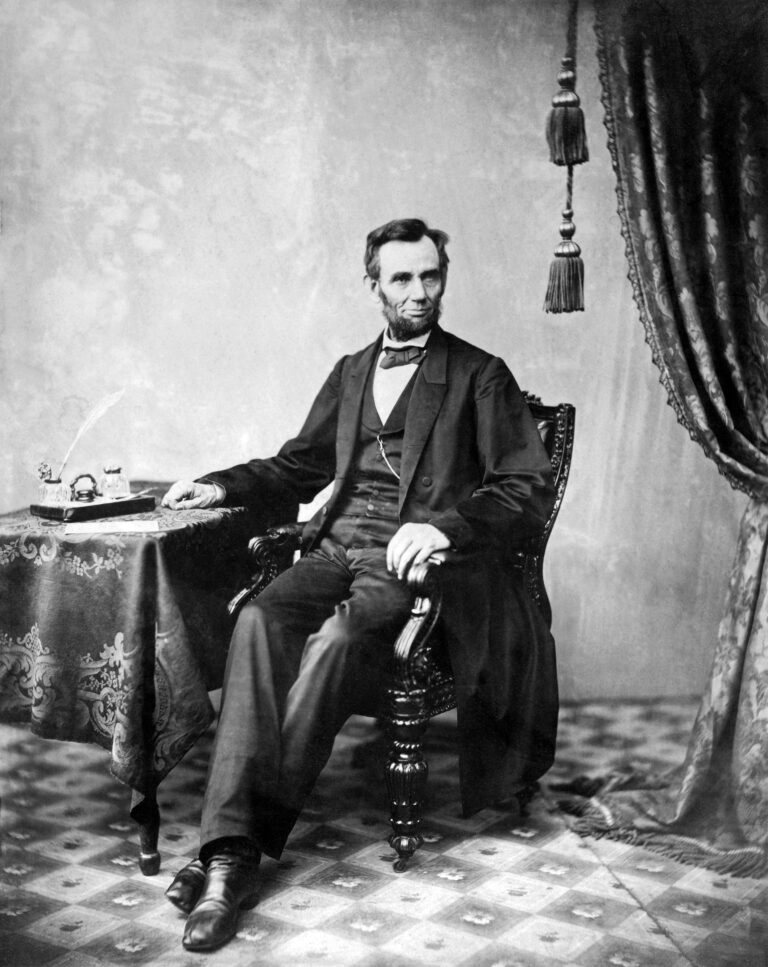
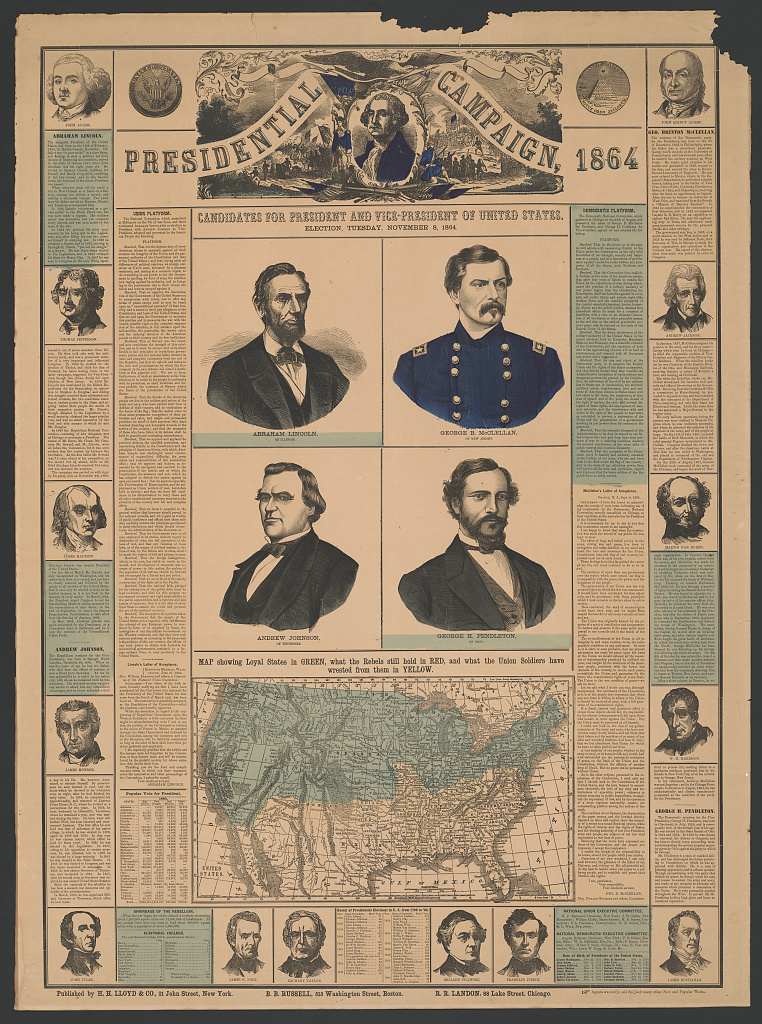
Abraham Lincoln won reelection on November 8, 1864, defeating former Union general George B. McClellan. Lincoln ran on the National Union ticket with Andrew Johnson, while McClellan was the Democratic candidate with George H. Pendleton. The war, emancipation and the prospect of negotiated peace dominated the election. Lincoln received 212 electoral votes to McClellan’s 21, after major Union victories improved confidence in the war effort.
A source-based guide to the sequence, commanders, decisions and historical consequences.
On this page — 20 topics
What happened in the presidential election of 1864?
The 1864 election took place while the American Civil War continued and the future of the United States remained uncertain. President Abraham Lincoln sought a second term against George B. McClellan, a former commander of the Army of the Potomac. Voters weighed military losses, emancipation, civil liberties and differing hopes for ending the war.
Lincoln ultimately won decisively in the Electoral College, receiving 212 votes to McClellan’s 21. The result affirmed a political course that continued the Union war effort and opposed the restoration of slavery’s political power. It did not end the war overnight, but it significantly limited Confederate hopes that Northern voters might abandon Lincoln’s policies.
Who were the two main candidates?
Abraham Lincoln was the incumbent Republican president, running in 1864 under the temporary National Union label, which united Republicans and some War Democrats. His running mate was Andrew Johnson, a Tennessee Democrat loyal to the Union. The choice was intended to broaden wartime support for the administration.
George B. McClellan was a former Union general whom Lincoln had removed from command. The Democratic Party nominated him for president with George H. Pendleton for vice president. McClellan’s personal position on restoring the Union differed in significant ways from portions of his party’s peace-oriented platform, making the Democratic message complicated.
Why did the election matter during a civil war?
The United States held a national election even while armies fought across several states. Political competition continued in much of the North, with newspapers, rallies, party organizations and fierce disputes about the administration. The willingness to vote during the conflict was an important test of whether representative government could endure a prolonged rebellion.
The Confederacy had its own political institutions but did not participate in the US electoral process as a bloc of voting states. The election therefore reflected the Union’s wartime electorate, not a nationwide referendum including all territories and populations. Women generally could not vote, and most Black Americans were excluded from the ballot.
What did the National Union Party support?
Lincoln’s coalition campaigned for continued prosecution of the war until rebellion ended and the Union was restored. The party also supported constitutional action against slavery. Its wartime identity sought to emphasize loyalty to the country rather than narrower partisan divisions at a moment of military crisis.
The platform reflected changes in Union aims since 1861. Saving the Union remained fundamental, but emancipation and the future of slavery had become inseparable from the conflict. Lincoln’s reelection strengthened the political prospects of an amendment abolishing slavery, although formal ratification of the Thirteenth Amendment did not occur until December 1865.
What did the Democrats propose?
The Democratic Party’s 1864 platform criticized Lincoln’s conduct of the war and called for a cessation of hostilities and efforts to restore peace. Different Democrats understood peace differently. Some opposed the war altogether, while others favored preserving the Union but criticized how Lincoln fought and governed.
McClellan did not simply endorse every implication of the platform. In accepting the nomination, he emphasized preservation of the Union, creating tension with the party’s peace language. A proper analysis therefore distinguishes the printed platform, individual candidate statements and the positions of various Democratic factions rather than calling them all identical.
How did emancipation shape the campaign?
The Emancipation Proclamation had changed the war’s purpose by declaring freedom for enslaved people in designated rebellious areas and permitting Black military service. Opponents attacked Lincoln’s policy, while supporters argued that slavery had helped cause the rebellion and must not survive restored national unity.
The future of millions of enslaved Americans was therefore a central issue even though most could not vote. Political language about ending the war had direct implications for whether Confederate slaveholders might regain power and claim property in human beings. The election cannot be understood only through generals, casualties or party slogans.
Why did Lincoln fear defeat in August 1864?
By late summer, Union casualty lists were long, the fighting around Petersburg appeared drawn out and political criticism had intensified. Lincoln privately considered the possibility that he would not win reelection. He understood that a successor taking office during an unfinished war might face pressure to pursue a settlement on different terms.
His August memorandum about the possibility of defeat shows political uncertainty, not a prophecy that the election was unwinnable. Conditions changed during the following weeks. Military success in Georgia and the Shenandoah Valley helped persuade voters that Union victory remained possible. Those events altered the campaign’s atmosphere before ballots were cast.
How did the capture of Atlanta affect the election?
Sherman’s capture of Atlanta in early September 1864 was a major military and symbolic success. The city was an important Confederate rail and industrial center, and its fall challenged the belief that the Union could not achieve further decisive gains. News from Georgia improved Northern confidence at a critical political moment.
Atlanta alone did not determine the election. The Union experienced other successes, political organizations worked to mobilize supporters, and voters held varied opinions about peace and emancipation. Yet the victory gave Lincoln’s supporters concrete evidence for arguing that continuing the war could bring success rather than endless sacrifice without results.
What role did the Shenandoah Valley play?
Union operations under Philip Sheridan during the autumn of 1864 weakened Confederate forces in the Shenandoah Valley. Victories at Third Winchester, Fisher’s Hill and especially Cedar Creek made it harder for the Confederates to threaten Washington or sustain their armies from the region.
The October victory at Cedar Creek came only weeks before the election and strengthened perceptions of Union military momentum. It reinforced the political impact of Atlanta. Military news did not dictate every individual’s ballot, but the timing of victories made it harder for opponents to argue that the administration’s war effort was failing completely.
Could soldiers vote in the election?
Many Union soldiers voted in 1864, though the arrangements differed among states. Some states permitted voting in the field or otherwise organized procedures for military ballots. These measures were important because hundreds of thousands of eligible men were away from their homes in military service.
Soldier voting did not operate under one uniform national rule. State laws varied, and not every member of the army could participate in the same way. The military vote tended to favor Lincoln, but totals and methods should be examined state by state. The election shows how wartime government adapted electoral procedures to extraordinary circumstances.
What were the electoral results?
Lincoln won 212 electoral votes, compared with 21 for McClellan, who carried only three states. The vote totals reflected a decisive Electoral College victory. Lincoln also won the national popular vote among ballots cast, receiving a majority of votes in participating states.
It is important not to mistake the 1864 results for a ballot held across every future state of the United States. States in rebellion generally did not take part in the same way as loyal states, and the map of voting states was different from a modern US electoral map. The meaning of the totals depends on that wartime context.
Which states voted for McClellan?
McClellan carried Delaware, Kentucky and New Jersey. Lincoln won the other participating states, including major Northern electoral prizes. This geographic pattern demonstrates the breadth of Lincoln’s victory while also revealing areas where Democratic opposition remained strong despite Union military successes.
State-by-state results can reflect local politics, party organization, wartime policies and economic conditions. A campaign map can be useful, but it should not be treated as evidence that everyone within a state held the same beliefs. Turnout and the distribution of eligible voters must also be considered when drawing conclusions about popular support.
Why did Andrew Johnson become the running mate?
Lincoln and his allies selected Andrew Johnson, a Southern Democrat who had remained loyal to the United States, as the National Union vice-presidential candidate. The choice signaled a desire to attract War Democrats and emphasize that loyalty to the Union could cross earlier party boundaries.
Johnson had served as military governor of Tennessee and had a political history different from many leading Republicans. His later presidency would expose profound disagreements over Reconstruction, but those conflicts should not be projected backward as the only explanation for the 1864 decision. At the time, broadening the wartime coalition was a major concern.
What did victory mean for the Confederacy?
Confederate leaders had hoped Northern war weariness might weaken the administration and create an opening for negotiations more favorable to independence. Lincoln’s reelection made that outcome less likely. The United States would continue fighting under a president committed to suppressing the rebellion and maintaining the Union.
The election did not instantly force Lee or other generals to surrender. Campaigns continued during the winter and spring of 1865. The political result nonetheless affected morale and strategic expectations on both sides. It strengthened the idea that the Union would not abandon the effort before its military objectives were reached.
How did the election relate to the Thirteenth Amendment?
The National Union platform supported abolishing slavery through constitutional means. The amendment faced political challenges in Congress, but Lincoln’s reelection improved the political environment for its passage. Congress approved the Thirteenth Amendment in January 1865, and enough states ratified it by December.
The amendment’s importance should not be confused with the election itself. Ballots on November 8 did not legally abolish slavery nationwide. Rather, they supported an administration that pursued military victory and a constitutional end to slavery. For details see our Thirteenth Amendment guide.
Why does the 1864 election matter today?
The election illustrates the survival of organized political competition during a national emergency. Lincoln did not cancel voting because he faced a devastating war. Voters evaluated his conduct, rivals campaigned against him and the result shaped the future of emancipation and national reunion.
It also shows the limits of nineteenth-century democracy. Women and most African Americans were excluded from voting, while states under Confederate control did not participate normally. Studying both the achievement of wartime voting and these exclusions yields a fuller understanding of the election’s historical importance.
Election of 1864 timeline
These dates distinguish the main stages of the event; the consequences often continued beyond the date of battle or election.
| Date | Event |
|---|---|
| June 1864 | National Union Party nominates Lincoln and Johnson. |
| August 1864 | Lincoln fears he may lose reelection. |
| Late August | Democrats nominate McClellan and Pendleton. |
| September 2 | News of Atlanta’s capture boosts Union confidence. |
| October 19 | Union victory at Cedar Creek further raises morale. |
| November 8 | Lincoln is reelected, 212 electoral votes to 21. |
| March 4, 1865 | Lincoln begins his second presidential term. |
Frequently asked questions
When did it happen? November 8, 1864.
Where did it happen? United States.
Who were the principal figures? Lincoln, McClellan.
What was the outcome? Lincoln reelected. The sections above explain the immediate result and the wider consequences.
How does it fit into the Civil War? For a broader chronology see our American Civil War guide.
Historical sources and further reading
This article draws on National Park Service history and Library of Congress records. Pictures are labeled as contemporary artifacts or later historical representations.