Emancipation Proclamation (1863): What It Did and Did Not Do
Lincoln’s wartime order and the complicated process of making emancipation real.
Abraham Lincoln’s Emancipation Proclamation of January 1, 1863 declared freedom for enslaved people in specified rebellious areas. It did not apply in every slave state, and freedom often depended on Union military advances. National constitutional abolition followed with the Thirteenth Amendment in 1865.
The Emancipation Proclamation altered the declared objectives of the Civil War. This guide distinguishes what the order legally said, what it achieved in practice and why abolition continued beyond 1863.

On this page — 19 topics
What was the Emancipation Proclamation?
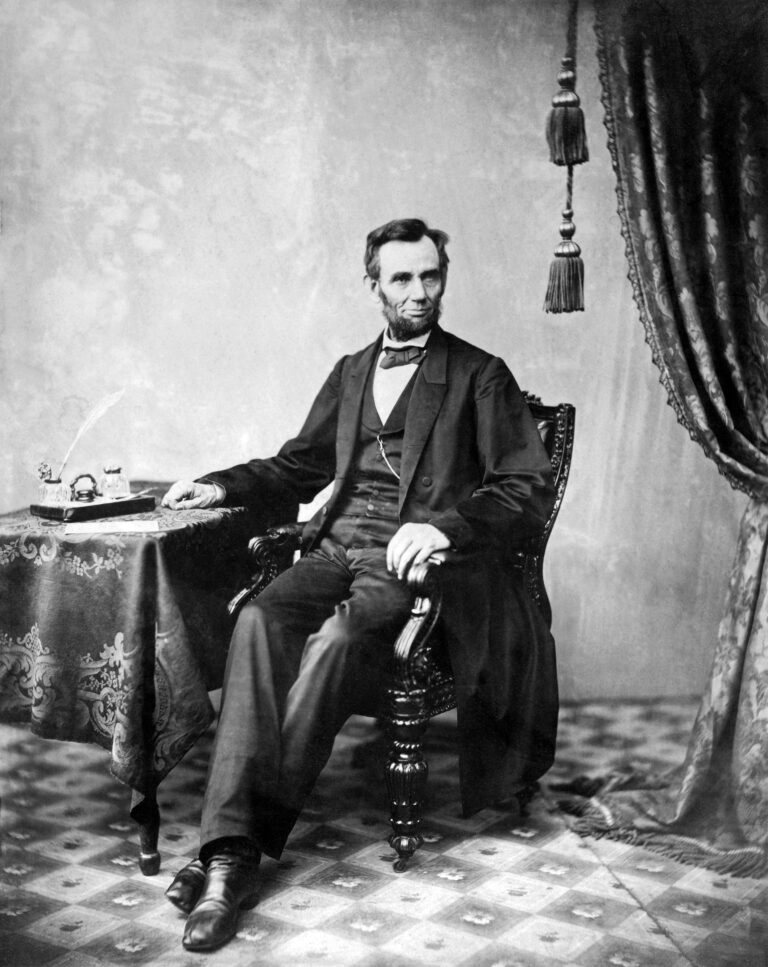
The Emancipation Proclamation was a presidential wartime order issued by Abraham Lincoln during the American Civil War. On January 1, 1863, Lincoln declared freedom for enslaved people in designated states and parts of states then in rebellion against the United States. The proclamation transformed the declared objectives of Union war policy, but it did not establish nationwide abolition on that date. Its wording is tied to the president’s claimed constitutional powers as commander-in-chief in wartime.
The order’s importance cannot be assessed only by what happened on the day it was signed. Much of the territory it covered remained under Confederate control. As Union armies advanced, the government’s recognition of freedom became enforceable in more places. Enslaved people themselves took action by escaping to Union lines, helping federal soldiers, and challenging enslavers’ authority. Their choices were indispensable to the destruction of slavery.
Why was slavery central to the Civil War?
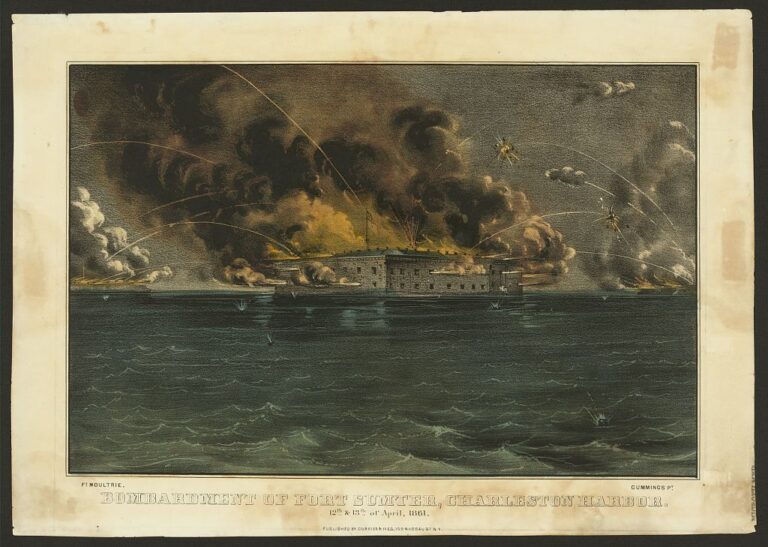
Slavery was fundamental to the conflict that led Southern states to secede in 1860–1861. Secession leaders feared threats to a social and economic order built on enslaved labour and racial domination. The outbreak of hostilities at Fort Sumter in April 1861 made restoring federal authority the immediate Union war objective, even though growing numbers of Northerners demanded emancipation as part of victory.
Lincoln initially confronted constitutional, military, and political constraints. Several slaveholding states remained in the Union, and antislavery measures could threaten political support among people who opposed secession but did not favour immediate abolition. Meanwhile, war itself undermined slavery as enslaved people fled plantations and entered federal-held areas.
A good explanation distinguishes the origins of the war from the changing federal policies adopted during it. The proclamation made emancipation a formal Union policy, but neither the conflict nor the struggle against slavery began in January 1863.
The preliminary proclamation of September 22, 1862
On September 22, 1862, after the Battle of Antietam, Lincoln issued a preliminary proclamation warning that people enslaved in states or parts of states still in rebellion at the beginning of the following year would be declared free. The announcement created a defined date and linked emancipation to the conduct of the war. Antietam was a violent engagement rather than an uncomplicated military triumph, but the Confederate withdrawal gave Lincoln an opportunity to issue the policy from a position of relative strength.
The preliminary proclamation was not identical to the final document. Its purpose included notice to Confederate authorities, a statement to the Union public, and an attempt to change the military value of slavery to the rebellion.
Historians disagree over the relative weight of moral conviction, military necessity, diplomacy, and political timing. What is certain is that the president had moved from debating potential measures to openly announcing a new wartime emancipation policy.
What changed on January 1, 1863?
The final proclamation identified the territories to which emancipation would apply and directed the executive government, including military and naval authorities, to recognise and maintain freedom there. This was a major declaration because the federal government’s military campaign against the Confederacy now explicitly included liberation of enslaved people in the designated places.
The proclamation did not mean that every person it named was instantly beyond the reach of an enslaver. Confederate forces continued to occupy much of the specified territory. The decree could establish federal legal policy without giving a federal soldier immediate access to every farm, community, or plantation. That distinction is central to understanding how emancipation worked.
The full National Archives transcript is worth reading because it carefully lists geographic exceptions and grounds the order in wartime authority. Those details disappear in accounts that reduce the entire proclamation to a single slogan.
Which states and counties did the order cover?
The final order designated numerous Confederate states, including Arkansas, Texas, Mississippi, Alabama, Florida, Georgia, South Carolina, and North Carolina, as well as specified parts of Louisiana and Virginia. It contained explicit exclusions for certain counties and parishes. The borders and military conditions of 1863 are essential to the document’s scope.
The declaration targeted rebellion, not slavery as a legal status everywhere in the United States. In some covered places, the order could be implemented only after Union forces won control. In exempted places, other laws and later constitutional measures would determine how slavery ended.
Maps should therefore distinguish the proclamation’s actual terms from a simplified division between free states and slave states. Reading its geographic list alongside a Civil War map also reveals the dynamic relationship between legal declarations and military realities.
Why did it exclude loyal border states?
The president did not include slaveholding states that remained loyal to the Union, such as Kentucky, Missouri, Maryland, and Delaware, in the proclamation’s wartime order. Lincoln considered their continued loyalty strategically important, and he based the decree on suppression of rebellion rather than a general presidential power to outlaw slavery in every state.
This was a significant limit on the proclamation. It could transform Union war policy and weaken Confederate slavery without directly abolishing slavery in states outside the designated rebellious areas. Emancipation took different legal paths in different jurisdictions; later national abolition required the Thirteenth Amendment.
The exclusions also show that wartime policy resulted from political choices made within constraints, not from the automatic operation of universal principles. People held in slavery in Union states continued to demand liberty even when the January order did not cover them.
Did the proclamation immediately free everyone?
It immediately announced a federal policy for the people and places it named, but actual freedom was not achieved everywhere at once. Confederate officials did not recognise the decree, and many enslaved people lived far beyond Union lines. Military conquest, escape, negotiation, and the collapse of slaveholding authority affected how and when individuals experienced liberation.
Enslaved people were not passive recipients. Families sought safety and reunion; people gathered information, crossed military boundaries, and worked with Union forces in many roles. These experiences shaped emancipation on the ground and influenced decisions by military commanders.
There is a difference between a legal claim, the authority capable of enforcing it, and the freedom a person can exercise in daily life. An accurate history of emancipation addresses all three. It also follows what happened after the war, when freed people struggled to secure wages, land, education, and protection.
Black soldiers and the United States Colored Troops
The final proclamation supported the recruitment of Black men into federal armed service. Black sailors and soldiers had already been involved in the war, and the subsequent expansion of Black military units made their participation an increasingly visible part of the Union effort. The United States Colored Troops helped fight Confederate armies and challenged racist arguments that Black Americans should remain outside military citizenship.
Military service also created new dangers. Captured Black soldiers faced particularly severe threats, while unequal treatment and discrimination continued within federal institutions. Service was not an immediate guarantee of political equality, but it strengthened demands for rights and recognition.
The story is not only about a policy from Washington. Black troops, their families, and Black civilian communities influenced the meaning of the war. Their actions connect the proclamation to later Reconstruction debates over citizenship, voting, and the responsibilities of the federal government.
What did the proclamation say about work and violence?
The order encouraged freed people to abstain from violence except in necessary self-defence, recommended labour for reasonable wages where appropriate, and addressed service in the armed forces. These passages are revealing because they show federal officials trying to manage social and economic change amid a continuing war.
Formerly enslaved people often sought control over their own labour, family life, movement, education, and religious practice. Plantation owners and some military administrators had different expectations about agricultural production and labour discipline. Formal freedom did not automatically produce fair bargaining power or erase the coercive structures surrounding work.
These disagreements continued into Reconstruction. Readers should avoid treating the proclamation only as a statement of political ideals: it was also an administrative order anticipating the practical consequences of emancipation, with assumptions that must be evaluated in their historical context.
How did the Union and Confederacy respond?
Confederate authorities rejected the proclamation and denounced Lincoln’s claim of power over enslaved people in rebellious territory. In the North, opinion was divided. Abolitionists celebrated a major change but often called for stronger measures. Other Union supporters focused primarily on national unity, and some opposed emancipation or feared changes to society and labour.
The responses reflected party conflict, wartime loss, racial prejudice, economic interests, and different conceptions of what restoration of the Union ought to mean. No single political opinion represented every soldier, voter, or civilian.
The proclamation also mattered abroad, where British and French leaders weighed military prospects, trade, diplomatic relations, and public attitudes to slavery. It sharpened the international political meaning of the conflict but did not independently determine every foreign government’s choices.
Why was the Thirteenth Amendment still necessary?
The proclamation relied on Lincoln’s asserted wartime authority and was limited to designated areas in rebellion. A nationwide constitutional solution was a different legal question. The Thirteenth Amendment, passed by Congress in January 1865 and ratified in December 1865, abolished slavery and involuntary servitude throughout the United States, except as punishment for a crime following conviction.
This amendment was needed even though emancipation had become a major Union war goal. Its legal reach extended beyond the proclamation’s geographic limits and established a durable constitutional basis for national abolition. It did not, by itself, secure equal citizenship, voting rights, or freedom from discrimination.
The National Archives’ amendment history explicitly explains the relationship between the two documents. Confusing them erases the distinction between executive wartime orders and constitutional change.
How does emancipation relate to Juneteenth?
Juneteenth commemorates June 19, 1865, when Union forces announced and enforced emancipation in Galveston, Texas. That date is more than two years after the proclamation took effect. The interval illustrates why a presidential decree and the actual dismantling of slavery were not the same event.
Juneteenth does not mean that freedom was legally secured for every enslaved person nationwide on that precise day. Other legal and practical changes were still underway. Nor did liberation immediately end the threats posed by coercive labour systems, racial violence, or denial of political rights.
The multiple dates associated with emancipation—September 1862, January 1863, June 1865, and December 1865—reflect different stages in a prolonged transformation. Rather than choosing one as the only meaningful beginning, historians explain what changed at each stage and whose lives were affected.
What happened after the Civil War?
The end of Confederate military resistance and the ratification of the Thirteenth Amendment transformed the legal status of millions of Americans. Reconstruction then posed enormous questions: who would control Southern governments, how former Confederates would be restored to political life, and whether newly freed people could exercise citizenship and obtain protection against intimidation.
Federal authorities, freedpeople, churches, teachers, and community organisations developed schools and other institutions. At the same time, white supremacist violence and restrictive laws attempted to rebuild racial subordination through different mechanisms. Emancipation was therefore the beginning of major struggles over rights and institutions rather than the neat end of a single problem.
Understanding this history requires following the postwar constitutional amendments, the Freedmen’s Bureau, and the changing relationship between national and state governments. Legal freedom did not guarantee equality in practice.
How did emancipation alter the meaning of the war?
Before the proclamation, supporters of the Union could disagree sharply about whether the war should end slavery. After January 1863, federal policy officially treated emancipation in rebellious territory as an objective of military victory. This changed political arguments, military recruitment, diplomacy, and how later generations remembered the conflict.
The change did not remove every contradiction. Enslaved people in border states remained outside the order, racial inequality persisted, and military necessity influenced decisions. Yet an antislavery objective became inseparable from the Union’s cause in the final phases of the war.
The proclamation is important precisely because it was neither an all-powerful decree nor an empty gesture. It linked policy, military action, and popular struggles for freedom, helping redirect the war toward a constitutional transformation completed through additional political battles.
Timeline: from the Civil War to national abolition
April 1861: The Civil War begins after the attack on Fort Sumter.
1861–1862: Enslaved people flee to Union lines; military practices and congressional measures concerning slavery change.
September 17, 1862: The armies fight at Antietam. September 22: Lincoln issues a preliminary emancipation order.
January 1, 1863: The final Emancipation Proclamation takes effect for designated rebellious territories.
1863–1865: Federal advances increase its practical reach; Black military service expands.
June 19, 1865: Union forces announce emancipation in Galveston, Texas, the event commemorated by Juneteenth.
December 6, 1865: Ratification of the Thirteenth Amendment establishes constitutional abolition across the United States.
Frequent questions and historical misconceptions
Did Lincoln free all enslaved people in America on January 1, 1863? No. The order covered specific rebellious areas, with exceptions, and often required military enforcement.
Was the proclamation a law passed by Congress? No. Lincoln issued it as a presidential wartime order under asserted commander-in-chief powers.
Did it end the Civil War? No. The war continued until 1865.
Did the proclamation have practical effects? Yes. It changed federal policy, reinforced emancipation as armies advanced, and supported Black military recruitment.
Why did abolition require another measure? The Thirteenth Amendment established national constitutional abolition beyond the proclamation’s wartime limits.
Where can I read the original? The National Archives publishes the proclamation and related historic records.
Historical evidence and how to read the document
The original proclamation is best studied as a legal and political document, not merely as a commemorative image. Read its opening statements about authority, the list of territories, instructions to the federal executive, and provisions affecting work and military service. Compare the September 1862 preliminary order with the final text to identify changes in scope.
Then place both documents alongside the Thirteenth Amendment and contemporary records from the experiences of Black soldiers and emancipated communities. A government document establishes what officials publicly ordered; letters, testimony, military records, and local history reveal how that order affected people.
The National Archives transcript and National Park Service Reconstruction overview provide reliable starting points. Their details help distinguish policy, constitutional law, and everyday reality.
Historical sources and further reading
Related guides
Read our Declaration of Independence guide for an earlier expression of political liberty and our Haitian Revolution history for a different struggle against slavery in the Atlantic world.
Explore more United States history
Continue with these connected articles to place this event in its wider historical context.
More United States history
Continue with these connected events and documents to follow the historical sequence.
Continue exploring United States history
Follow these connected events and documents to see the wider historical context.
Explore related United States History
Emancipation was part of the Civil War and a much longer struggle over citizenship and equality.