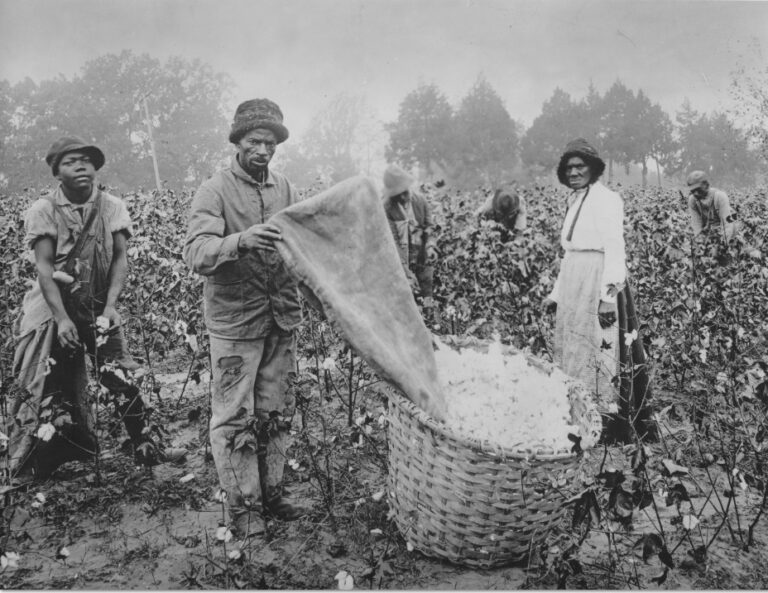
Anthracite Coal Strike (1902): Theodore Roosevelt, Miners and the Commission
Why miners stopped work in 1902 and how President Roosevelt helped settle the crisis.
The Anthracite Coal Strike of 1902 began May 12 when Pennsylvania miners stopped work, demanding higher wages, shorter hours and union recognition. As winter approached, President Theodore Roosevelt brought union and mine representatives to talks and supported an investigative commission. Miners returned October 23; the commission ultimately recommended about a 10% wage increase and a nine-hour day, without formal recognition of their union.
This guide separates the miners’ demands, presidential talks, the October return to work and the 1903 commission’s decision.
On this page — 22 topics
What was the Anthracite Coal Strike of 1902?
The Anthracite Coal Strike was a major work stoppage in eastern Pennsylvania’s hard-coal region during 1902. Organized miners sought better wages, shorter working hours and recognition of the United Mine Workers of America. The strike halted most anthracite production for months, threatening supplies of fuel used by homes, factories and businesses along the eastern seaboard. As the weather turned cold, political pressure mounted for a settlement. President Theodore Roosevelt intervened by convening representatives and encouraging appointment of an independent investigation commission. The miners returned to work on October 23, before the commission’s formal report was completed. The dispute became a landmark example of federal involvement in labor relations, though neither side achieved everything it demanded.
What is anthracite coal?
Anthracite is a hard, high-carbon variety of coal valued for its relatively clean burning and heat. In the early twentieth century many households and industries in the northeastern United States relied on anthracite stoves and furnaces. The most productive American deposits lay in northeastern Pennsylvania, where mining companies operated complex networks of shafts, breakers and railroad connections. An extended strike in this region could therefore create shortages far beyond the mines. This was a major reason the 1902 dispute attracted national attention. The conflict concerned people working in particularly hazardous conditions, but federal officials also worried about the effect of restricted supplies on urban consumers as winter approached.
Why did Pennsylvania miners go on strike?
Miners objected to low or uncertain earnings, long workdays, unsafe conditions and policies that limited their bargaining power. Working underground exposed them to cave-ins, dust, explosions and other dangers, while payment practices could generate disputes over how much coal had been produced and credited. Some workers lived in company-influenced communities where employers controlled important economic opportunities. A wage increase was not their only objective; they wanted a shorter day and an acknowledged union relationship that could help prevent future unilateral changes. Mine owners rejected formal bargaining demands. The strike emerged from accumulated grievances and earlier organizing, not one isolated disagreement between Roosevelt and a railroad executive.
Who was John Mitchell?
John Mitchell was president of the United Mine Workers of America and the most prominent union representative during the 1902 strike. He had experience organizing miners in hard-coal and other regions and sought support from workers who faced significant differences in language, national origin and occupation. Mitchell was willing to negotiate while maintaining the central demands for improved conditions and recognition. His tactics also depended on public opinion because thousands of households would feel the effects of reduced coal production. Newspapers often contrasted his measured public statements with the inflexibility of major mine operators. Mitchell did not control all participants, but his leadership was essential to the negotiations and the final return to work.
When did the strike begin?
The walkout began on May 12, 1902, in the Pennsylvania anthracite districts. Thousands of miners joined the stoppage, and the United Mine Workers tried to maintain solidarity across pits and communities. Coal companies, many tied to railroads, resisted demands and sought to keep some operations active. Early forecasts sometimes suggested the dispute would end quickly, but production remained restricted through the summer. It is important to distinguish May 12, when the main strike began, from the autumn talks and October return to work. The months-long duration gave the miners leverage but also caused financial hardship for their families, who had to survive without regular wages while facing uncertain prospects for victory.
How many miners participated?
The Department of Labor’s historical study describes a strike involving roughly 150,000 miners and other workers in the anthracite industry. The exact count varies with whether particular categories of employees, replacement workers or periods are included. Participants came from diverse immigrant backgrounds as well as American-born mining families, and their wages and jobs differed by occupation. Solidarity across these divisions was difficult to maintain but important for sustaining the shutdown. A national description of the strike should avoid treating every miner as an identical adult male underground worker; boys and men in supporting jobs also formed part of the mining economy. Family and community networks supported workers during months without regular income.
Why were mine owners unwilling to recognize the union?
The large anthracite operators feared that formal recognition would give the United Mine Workers influence over wage bargaining, hiring and management decisions. Some insisted that employees should deal individually with their own company rather than through a union acting across several operators. Railroad ownership and connections contributed to their collective bargaining strength. Operators also argued that higher wages would raise fuel costs or interfere with efficient production. These claims were disputed by miners who viewed the owners’ control as a central cause of unfair conditions. The refusal to recognize the union became one of the hardest parts of the dispute to resolve, and the final settlement did not force the formal recognition Mitchell had sought.
What role did the coal railroads play?
Many Pennsylvania anthracite mines were controlled directly or indirectly by powerful railroad interests that transported coal to major markets. Their economic influence extended across mining, hauling and sales. This organization complicated negotiations because multiple operators coordinated decisions while claiming commercial pressures limited what they could concede. Rail connections were essential to getting coal to the cities, so stopping mining also affected transport and downstream businesses. The anthracite controversy followed earlier disputes over railroad power, including those associated with the Great Railroad Strike of 1877 and the Interstate Commerce Act. These were separate conflicts and laws but part of a wider history of concentrated industrial resources.
Why did the strike become a national emergency?
By late summer and early autumn, depleted anthracite supplies threatened heating needs across northeastern cities. Demand for hard coal normally rose as households prepared for winter, and substitutes were not always available at affordable prices. Employers argued the stoppage endangered the economy, while miners emphasized the human costs of returning to dangerous work without better terms. Politicians feared a fuel crisis severe enough to damage public confidence. Roosevelt took the unusual step of involving the presidency in negotiations between privately owned mines and organized workers. His concern was not solely sympathy for either side; the wider public depended on an industry that neither operators nor miners could restart without some agreement.
When did Theodore Roosevelt meet the opposing sides?
On October 3, 1902, Roosevelt convened a meeting in Washington involving representatives of the union and the anthracite mine operators. The National Park Service and Library of Congress describe the discussion as a turning point in federal labor policy, even though it did not produce an immediate contract. Roosevelt urged resolution because the growing coal shortage threatened the national interest. Several mine executives refused to treat the United Mine Workers as a legitimate bargaining partner. The meeting demonstrated that presidential authority could be used to call major industrial figures together, but Roosevelt lacked modern statutory powers to impose a collective agreement simply by issuing an order. Public opinion became an essential element of the pressure to compromise.
What was Roosevelt’s Square Deal approach?
Roosevelt became associated with the idea of a Square Deal, emphasizing that government should consider the claims of workers, businesses and the public rather than automatically side with one interest. During the strike, officials gathered facts, met both sides and sought a settlement protecting coal supplies. This approach differed from some earlier confrontations in which authorities concentrated on breaking strikes with armed force, such as the Pullman Strike of 1894. However, the 1902 intervention did not establish modern collective bargaining law or guarantee unions the right to negotiate. Roosevelt operated through political mediation, persuasion and a commission. The episode illustrates both an evolving federal role and the limits of presidential power under the law of the time.
Who was J. P. Morgan?
Financier J. P. Morgan had extensive influence in railroads and corporate finance and played a behind-the-scenes role in discussions of a compromise. His connections with operators helped create channels for negotiations when direct talks remained stalled. Some popular accounts portray Morgan as personally solving the entire strike, but the settlement resulted from pressure by workers, the shortage of coal, public concern and decisions by many officials and business leaders. His role nevertheless shows how concentrated financial power affected industrial disputes during the Progressive Era. Government mediation had to account for the fact that railroad investors and mine operators could cooperate through networks that were larger than any one pit or mining community.
What was the Anthracite Coal Strike Commission?
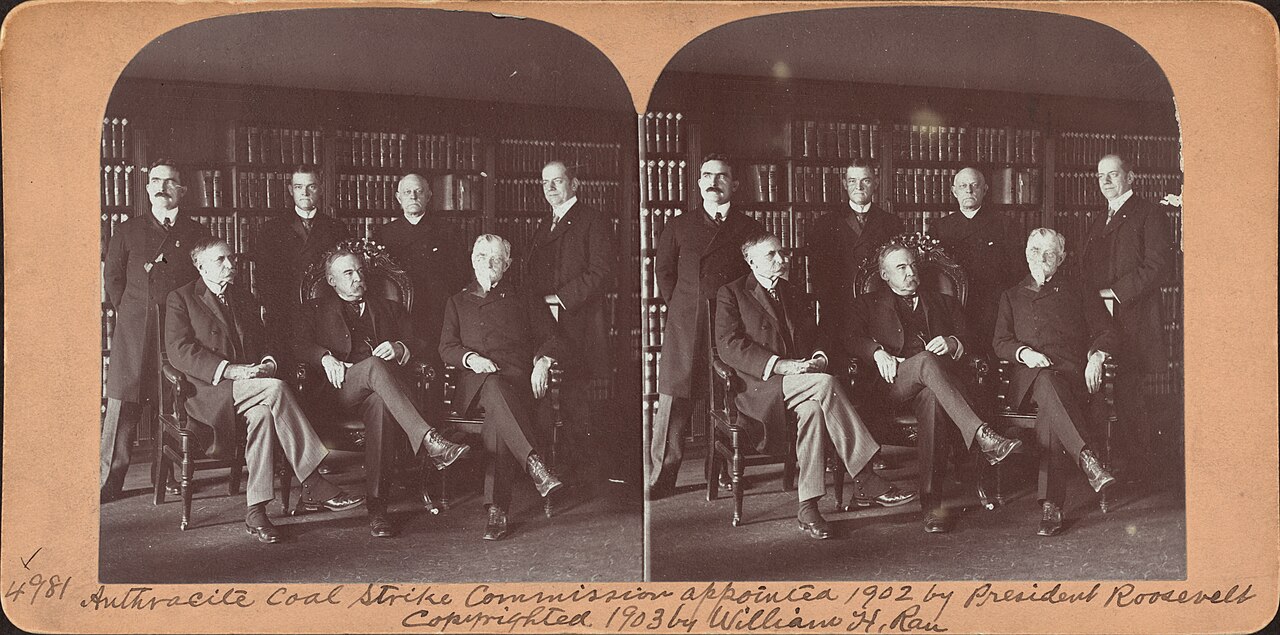
The president appointed an Anthracite Coal Strike Commission in October 1902 to investigate the controversy and propose a settlement. The members included individuals with backgrounds in law, public administration, labor and industry, and they heard testimony from many workers and operators. The historic group photograph accompanying this guide depicts the commission, not a group of striking miners at a particular coal face. The commission’s existence was important because it created a public fact-finding process in a dispute over private business. Its work continued after the miners returned to the pits, and the final report was issued in 1903. The procedure offered a precedent for investigation and mediation, though not a binding labor-court system for all industries.
When did workers return to the mines?
The miners returned to work on October 23, 1902, after agreement that both sides would accept the commission’s findings. The decision restored coal production before winter shortages became still more severe. Importantly, the commission had not yet completed its investigation, so the October return should not be described as the date on which a detailed final wage award was issued. Mine families faced financial problems after months without earnings, and reopening production did not immediately erase the hardship. The compromise allowed the public to obtain fuel while giving workers confidence that an official inquiry would address central grievances. The agreement depended partly on the credibility of the commission’s future judgment.
What did the commission award in 1903?
The commission’s March 1903 report recommended approximately a ten percent increase in wages and a shorter workday for many employees, commonly described as a nine-hour day replacing ten hours. It also provided a mechanism to address certain future disputes. The outcomes varied with job categories and wage structures, so a single simple percentage does not describe every worker’s pay calculation. The award did not grant the formal union recognition that John Mitchell had sought. This mixture of gains and limitations explains why the strike is remembered as a turning point rather than an unconditional victory. Miners achieved measurable improvements after a long stoppage, while the companies retained important aspects of managerial authority.
Did the union win recognition?
No. The United Mine Workers remained central to organizing and negotiation, but the final settlement did not compel formal recognition of the union by all operators. This was a major disappointment compared with one of the original demands. Nevertheless, the strike strengthened the union’s public standing, and workers gained wage and hour improvements through the commission’s award. Distinguishing an agreement negotiated with union participation from a binding legal duty to recognize the union prevents a misleading claim of total victory. The modern framework of legally protected union recognition and collective bargaining developed much later. The 1902 episode was primarily a political and administrative compromise, not an enactment of nationwide collective bargaining rights.
Was federal force used to end the strike?
Roosevelt considered several ways of responding to the threatened fuel shortage, and his administration had to assess the limits of its authority over private coal companies. Public attention centered on mediation, a commission and the pressure of winter demand rather than the army forcibly reopening every mine. Local conflict and threats of violence did occur during the strike, and state authorities also had responsibilities for public order. The distinction from earlier labor confrontations matters: the administration ultimately helped establish a settlement without simply ordering a general military attack on the union. That does not mean federal officials became fully neutral in every later dispute; the episode was a particular choice under particular circumstances.
What was the long-term significance?
The Anthracite Coal Strike of 1902 is often treated as a milestone in the federal government’s willingness to examine industrial disputes as matters of public interest. Roosevelt convened both sides, emphasized fact-finding and helped develop a settlement when an industry essential to heating cities had effectively stopped. The result influenced later views of the presidency and administrative mediation, though it did not create the National Labor Relations Board or modern labor law. It also showed that unions could sometimes attract public support rather than being described exclusively as threats to order. The wider Progressive Era continued to produce debates over corporate concentration, workplace safety and the government’s responsibility to protect ordinary people.
Where can the primary record be found?
The U.S. Department of Labor’s historical study provides detailed background, political context and discussion of the commission. The Library of Congress’s October 3 history highlights Roosevelt’s meeting and the later return to work. A digitized commission report, including testimony and recommendations, allows readers to compare interpretations with evidence recorded in 1902–1903. Those primary materials are especially valuable for understanding why the union recognition demand was not met even though workers obtained some improvements. Local histories of Pennsylvania mining communities add family and occupational perspectives frequently absent from national accounts of presidential action.
1902 coal strike timeline
| Date | Event |
|---|---|
| May 12, 1902 | Major strike begins in Pennsylvania anthracite districts. |
| Summer 1902 | Coal production remains severely restricted; hardship grows. |
| October 3 | Roosevelt convenes union and operator representatives. |
| October 1902 | Presidential coal strike commission organized. |
| October 23 | Miners return to work pending commission findings. |
| March 1903 | Commission’s award gives pay and workday improvements without formal union recognition. |