
In 897, a Dead Pope Was Put on Trial
Medieval politics could be vicious, but the events of Rome in 897 went beyond ordinary rivalry. A pope’s enemies brought him to trial even though he had already been dead for months.
The fact
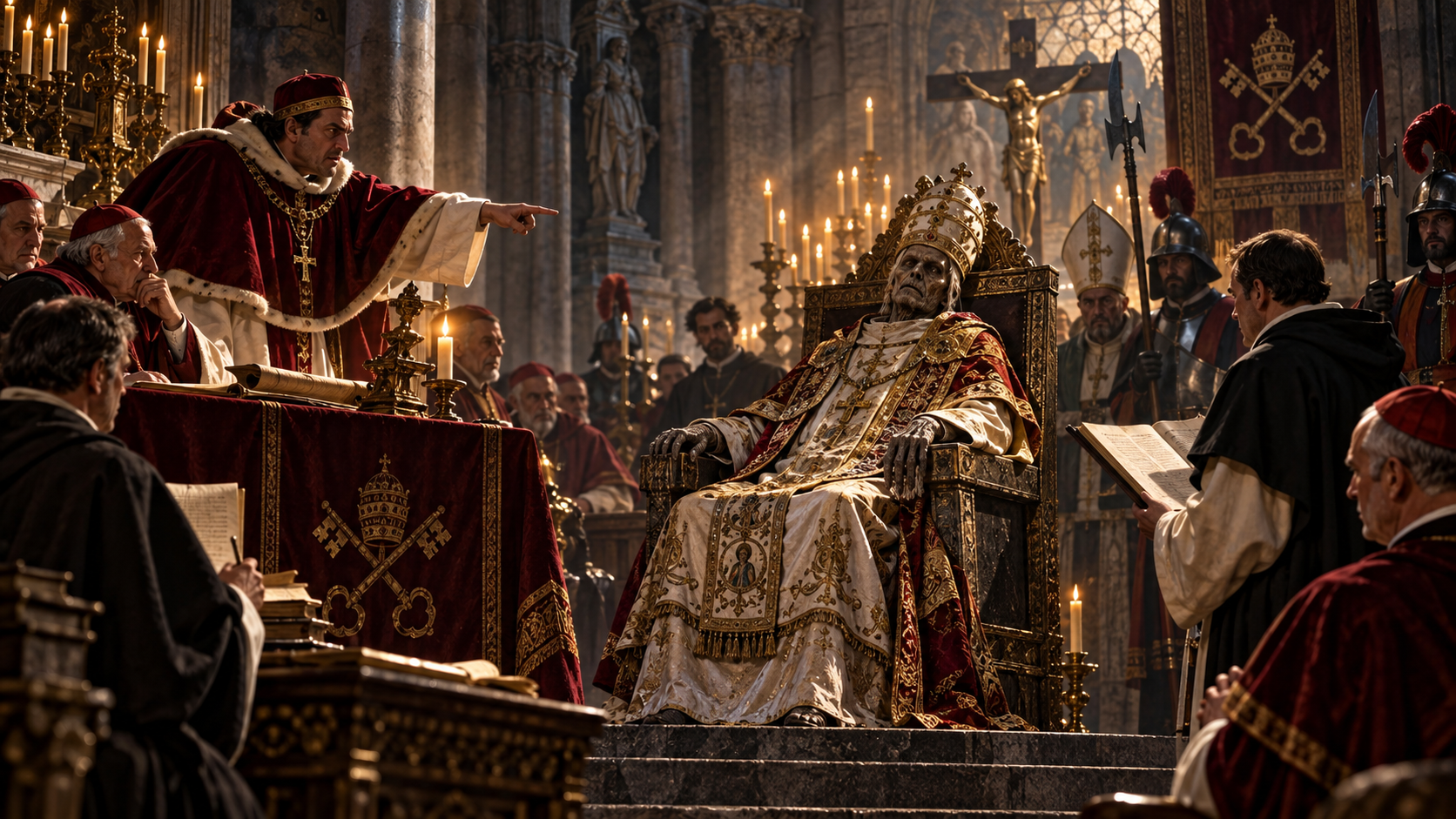
In 897, the body of Pope Formosus was exhumed and placed on trial in an episode now known as the Cadaver Synod.
The corpse was dressed in papal vestments and seated in the Basilica of St. John Lateran. A deacon was assigned to respond on behalf of the dead man while Pope Stephen VI presided over the proceedings.
Why put a corpse on trial?
The spectacle was rooted in fierce political struggles over control of Italy and the papacy. Formosus had become entangled in rival claims involving powerful Italian families and rulers competing for imperial influence.
After his death in 896, his enemies wanted not merely to criticize him but to invalidate his authority and many of the acts he had performed as pope.
The charges
The court accused Formosus of violating church rules, including improperly moving from one episcopal see to another and obtaining the papacy illegitimately.
The outcome was unsurprising. The dead pope was declared guilty. His papal acts were annulled, his vestments were removed and the fingers associated with giving blessings were cut from the corpse.
What happened to the body?
Accounts describe the body being buried and later thrown into the Tiber. It was subsequently recovered and eventually returned to a proper burial.
The treatment of Formosus shocked even a city accustomed to violent political changes.
The backlash
The Cadaver Synod damaged Pope Stephen’s position. Public anger and political upheaval followed, and Stephen was deposed, imprisoned and later killed.
Subsequent church councils reversed the judgment against Formosus and restored the validity of his pontificate. The episode became a symbol of how deeply secular political rivalries had penetrated the papacy in the late ninth century.
A note on Stephen’s numbering
You may see the presiding pope called either Stephen VI or Stephen VII in older and modern sources. The difference comes from historical changes in how an earlier short-lived Stephen was counted in the official sequence of popes.
Why the Cadaver Synod still fascinates historians
The image of a corpse seated for trial is unforgettable, but the episode is more than medieval grotesquerie. It reveals a period when the papacy was vulnerable to competing aristocratic and imperial factions, and when control of religious office carried enormous political consequences.
It is one of history’s clearest examples of political vengeance continuing beyond the grave.