Selective Training and Service Act of 1940: America’s First Peacetime Draft
How Roosevelt signed the 1940 draft law before Pearl Harbor, who registered, how the lottery worked and why the rules changed during World War II.
Quick answer
President Franklin D. Roosevelt signed the Selective Training and Service Act on September 16, 1940, establishing the first peacetime military draft in U.S. history. The original law required registration of men aged 21 through 35, and the first nationwide registration took place October 16, 1940. Local boards classified registrants, and a lottery helped determine the order for military service. The original framework generally provided twelve months of training and service, with important geographic and legal limits. Congress later expanded obligations as the United States approached and entered World War II.
Key facts
On this page
- Why the United States adopted a draft while still at peace
- What Congress enacted on September 16, 1940
- The original registration ages: 21 through 35
- What happened on the first registration day
- The draft lottery and order of selection
- The role of local draft boards
- How long did conscripts serve at first?
- Geographic restrictions and the approach of war
- Conscientious objectors and religious objections
- Race, gender and unequal access to military roles
- From the 1940 law to wartime expansion
- How the 1940 draft changed American history
- Timeline
- FAQs
- Sources
Why the United States adopted a draft while still at peace
By September 1940, World War II had spread across Europe, with France defeated and Britain defending itself against Germany. The United States had not declared war or committed combat forces to the European conflict, but leaders feared that weak military preparedness could leave the country vulnerable. Its regular armed forces were relatively small compared with the armies mobilized overseas, and training recruits required time, equipment and installations. Federal officials increasingly argued that voluntary enlistment alone would not meet near-term planning needs.
The resulting draft was controversial precisely because the nation was still formally at peace. Some Americans believed military training would deter attack and make involvement in combat less likely; others feared conscription could become a step toward foreign war. The argument involved democratic responsibility, individual liberty and the distribution of military obligations. The act arose from that political debate, not from the attack on Pearl Harbor, which occurred more than a year later in December 1941.
What Congress enacted on September 16, 1940
Roosevelt signed the Selective Training and Service Act on September 16, 1940. The statute authorized compulsory registration and selective military training, creating a structure for identifying eligible men and assigning service obligations. It was the first American military draft established in peacetime, though the country had used conscription during earlier wars. The statute and presidential proclamations are preserved in the Federal Register and government archives.
The act contained important limits as well as compulsory provisions. Congress initially prescribed a year of training and service and restricted the locations in which selectees could be required to serve, with the statutory framework adjusted in later legislation. The original requirements must not be confused with broader wartime regulations introduced after Pearl Harbor. At every stage, service obligations were shaped by eligibility, physical fitness, deferments and the resources available to train and house inductees.
The original registration ages: 21 through 35
The initial law generally required male citizens and resident male aliens aged twenty-one through thirty-five to register. The federal proclamation scheduled the first nationwide registration for October 16, 1940. Registration did not mean that every man in the age group immediately joined the Army. The government first recorded identifying information and used local administrative processes to determine who could be called, deferred or exempted under the law.
The distinction between registration and induction is essential. Some men registered but were never ordered to report for military duty; others volunteered, were temporarily deferred or were found unfit. Later laws and proclamations expanded the age groups involved in registration and service during the war. A description that says the initial September 1940 statute automatically drafted all men aged eighteen to forty-five combines later changes with the original law.
What happened on the first registration day
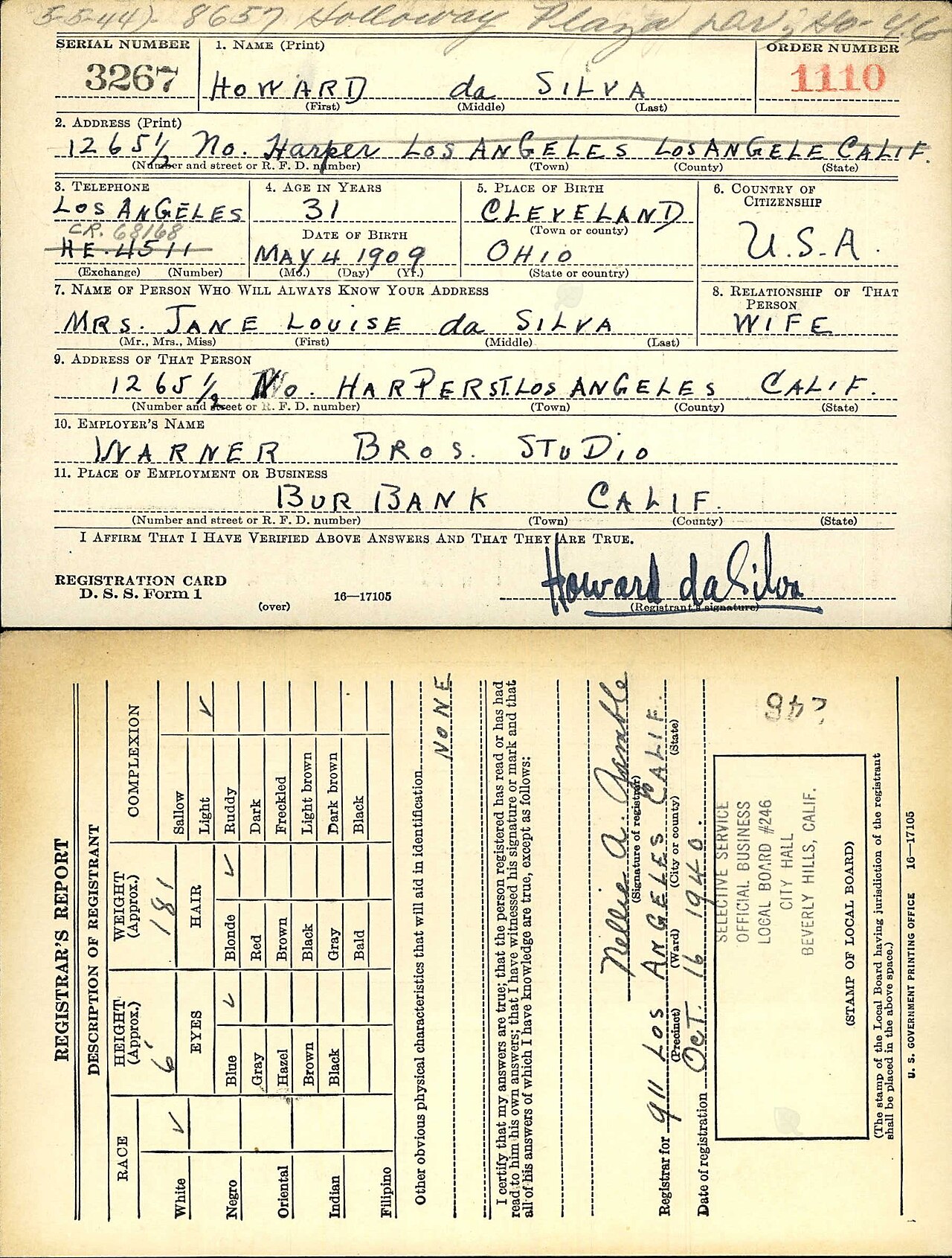
On October 16, 1940, registration sites operated across the United States. Men supplied identifying information such as name, address, birth details and employer or occupation. Clerks and volunteers processed forms under local Selective Service arrangements. The featured image is an original registration card dated that day for Howard da Silva, an actor who later became known for stage and screen work. It illustrates the actual record-keeping process rather than presenting a recreated modern form.
Registration cards became valuable historical sources because they document residences, birthplaces and other details at a specific moment. The National Archives now identifies World War II Selective Service registration materials as an important genealogical collection. Those records should not be misread as proof that the man recorded fought in combat or was sent overseas. The fact that a person registered is separate from later decisions by a draft board and from the individual’s actual service history.
The draft lottery and order of selection
After registration, a national lottery helped determine the order in which eligible men would be considered for induction. Each registrant received a serial number, and numbered capsules were drawn to establish an order. Public ceremonies and newspaper coverage made the process a major national event. The selection process was intended to avoid placing the entire burden on volunteers or on people with little political influence, though the practical system still raised disputes about equity.
A lottery number alone did not decide every person’s fate. Local boards also considered classification, dependency, occupation, medical requirements and legal deferments. Someone with an early number might be deferred or found physically ineligible, while a later number could become relevant as the armed forces required more personnel. The randomness of drawing order therefore operated alongside administrative judgments that could vary across communities.
The role of local draft boards
Local Selective Service boards were responsible for reviewing registrants and applying classification rules. They handled questions about family dependency, occupation and eligibility, among other matters. The administrative structure relied on local knowledge but also exposed the system to possible inconsistency and unequal treatment. Appeals and review procedures became important when registrants challenged classifications.
Every local board operated within a federal legal framework, yet decisions could have profound effects on family income and community life. A farmer, skilled industrial worker, student or married man might face different circumstances under the applicable rules. Policies changed as national manpower needs evolved. The value of original board records lies in showing how a national law affected individual lives, rather than assuming conscription was one identical experience for every registrant.
How long did conscripts serve at first?
The original law generally prescribed a training-and-service period of twelve consecutive months. Congress modified that requirement in August 1941, extending service for selectees during an increasingly dangerous international situation. After the United States entered World War II, subsequent legislation changed the duration and terms of service further. The year-long limit was therefore a feature of the initial peacetime program, not a guarantee that a person inducted in 1940 could never serve longer.
These changes provoked debate because obligations established as limited national preparedness expanded into a mass wartime mobilization. Some families planned around the original service expectation and then faced longer separations. The government had to balance military continuity with the fairness of altering earlier commitments. A chronological presentation of the law’s amendments is more accurate than describing all wartime conscription as if it were fixed in September 1940.
Geographic restrictions and the approach of war
The first peacetime service framework limited the circumstances in which selectees could be required to serve outside the Western Hemisphere. That reflected political concern about sending conscripted Americans into a European or Asian war. Later national-defense decisions changed the legal situation, especially after the Japanese attack on Pearl Harbor and U.S. declarations of war. The original geographic limitations should not be mistaken for a permanent rule applying unchanged throughout the entire conflict.
The distinction also clarifies Roosevelt’s political position during the 1940 election. His administration argued that military readiness was needed even while the United States remained outside the fighting. The draft gave the armed forces a way to train more men before war reached the country directly. Preparedness and actual combat participation were separate steps in this period, despite the fears that many opponents expressed.
Conscientious objectors and religious objections
The act recognized certain claims of conscientious objection based on religious training and belief. Registrants who qualified under statutory standards could receive different treatment, including alternative work obligations or noncombatant military assignments depending on classification and subsequent arrangements. The rules did not allow every person who disliked military policy to opt out automatically. Administrators and courts had to interpret which claims met the legal requirements.
Conscientious objection raised difficult questions about freedom of conscience and the responsibilities of citizens during a national emergency. Different religious communities had longstanding histories of nonviolence, while some individuals argued that their moral opposition was not confined to formal church membership. The 1940 framework became part of a broader legal development extending into later wars. The history deserves attention without implying that all conscientious objectors were treated identically or without hardship.
Race, gender and unequal access to military roles
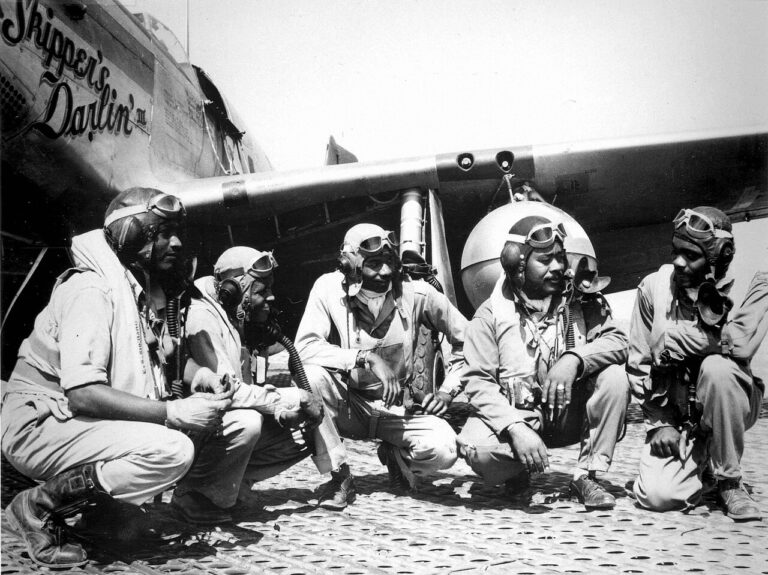
Although the registration obligation applied broadly to eligible men without a general racial exclusion, the American military remained segregated in major respects in 1940. Black Americans faced discrimination in assignment, promotion and training, even as civil-rights advocates pressed for equal military opportunity. Other groups also faced prejudice and restrictive policies. The draft therefore combined a language of shared national obligation with armed forces that did not offer equal opportunities to everyone.
Women were not included in the original compulsory male registration system, although they later served in important military and civilian positions through voluntary and specialized wartime programs. The difference between drafting men and permitting women to participate in particular armed-service roles reflected contemporary social and institutional assumptions. The act’s historical importance includes both the scale of mobilization and the limits of inclusion during its earliest period.
From the 1940 law to wartime expansion
After the attack on Pearl Harbor on December 7, 1941, the United States entered World War II, and Selective Service registration and induction requirements expanded. Federal records document later registration dates covering additional age groups, as well as the millions of records created in the period from 1940 through 1947. Those later registrations did not all impose identical service liability on each age group.
War mobilization required not just manpower but extensive training camps, equipment, transport and a system for assigning people to military or essential civilian roles. The War Production Board illustrates a related but different task: redirecting factories and materials toward defense needs. Selective Service handled the recruitment side of a much larger transformation of American society and government.
How the 1940 draft changed American history
The Selective Training and Service Act was a major step toward military readiness before direct U.S. participation in World War II. It introduced peacetime conscription, established procedures that could expand rapidly and reshaped the personal choices of millions of men and their families. Its significance extends beyond the military because the draft raised questions about constitutional government, equal treatment, family obligations and conscience.
The statute was not America’s first draft ever: the 1917 Selective Service Act had created an earlier wartime system. What made 1940 distinctive was the timing and political circumstances of compulsory training in peace. Reading the original law, registration records and later amendments shows how a limited national-preparedness measure became part of the enormous mobilization required during World War II.
Timeline
- September 1, 1939: Germany invades Poland; European war begins
- June 1940: France falls; American preparedness debate intensifies
- September 16, 1940: Roosevelt signs Selective Training and Service Act
- October 16, 1940: First nationwide registration day
- Late October 1940: First lottery selections
- August 1941: Congress extends initial service obligations
- December 1941: United States enters World War II and draft requirements expand
Frequently asked questions
When was the first peacetime draft law signed?
September 16, 1940.
What ages had to register initially?
The original registration generally covered men aged 21 through 35.
When was the first registration day?
October 16, 1940.
Did registration mean immediate induction?
No. Registration was followed by selection, classifications, medical review and possible deferment.
How long was original military service?
Generally twelve months, before later amendments extended obligations.
Was the draft started because of Pearl Harbor?
No. The law preceded the December 1941 attack by more than a year.
Was it the first draft in U.S. history?
No. It was the first peacetime draft; wartime conscription had existed earlier.
Did women have to register in 1940?
No. The initial program registered eligible men.
Sources and further reading
- Federal Register — 1940 Selective Service Proclamation
- National Archives — World War II Selective Service Records
- National Park Service — Selective Service and the Arsenal of Democracy
- FDR Presidential Library — September 1940 Signing
- Library of Congress — U.S. Code Selective Training Act 1940
- U.S. Department of Defense — Original Signing Photo