Presidential Election of 1932: Roosevelt vs. Hoover, Results and the New Deal
Why Franklin D. Roosevelt defeated Herbert Hoover in a Depression-era landslide, how the electoral map changed and what voters knew about the New Deal.
Quick answer
Democrat Franklin D. Roosevelt defeated incumbent Republican Herbert Hoover on November 8, 1932, winning 472 electoral votes to Hoover’s 59. Roosevelt earned approximately 57.4% of the popular vote to Hoover’s 39.7%. The Great Depression, high unemployment and discontent with the administration dominated the campaign, while Roosevelt promised a ‘new deal’ for the American people. His election authorized a change of leadership but did not itself enact the New Deal laws passed after his March 4, 1933 inauguration.
Key facts
On this page
- An election amid the worst economic downturn in generations
- Hoover’s record and the Republican campaign
- Franklin Roosevelt’s nomination and political appeal
- What ‘New Deal’ meant during the campaign
- The Democratic and Republican running mates
- Campaign speeches, travel and radio coverage
- The election results: 472 electoral votes to 59
- The changing map and Democratic coalition
- What the Bonus Army revealed about political confidence
- The transition from election to inauguration
- Why the 1932 election remains a turning point
- Timeline
- FAQs
- Sources
An election amid the worst economic downturn in generations
The 1932 presidential contest occurred in the fourth year of a devastating economic crisis that began in 1929 and continued to deepen. Banks failed, factories reduced production, businesses closed and millions of Americans could not find work. Falling agricultural prices harmed communities that had already endured difficult conditions throughout the 1920s. The economic emergency shaped ordinary decisions about food, housing, employment and savings, making the performance of the federal government a central election issue.
Incumbent Herbert Hoover had won decisively in 1928 during an era many associated with prosperity. His administration then confronted conditions that were far more severe than anticipated. Government action did occur: Hoover supported the Reconstruction Finance Corporation, farm relief and other measures. Yet those interventions did not restore broad public confidence before the election. The contrast between campaign expectations in 1928 and the suffering evident in 1932 was a major political burden.
Hoover’s record and the Republican campaign
Herbert Hoover had built a reputation as an engineer, administrator and organizer of humanitarian efforts. As president he preferred cooperation among businesses and public authorities and resisted certain forms of direct federal relief that he believed could weaken local responsibility. He nevertheless took emergency steps, including support for the Reconstruction Finance Corporation, which supplied credit to banks and other institutions beginning in 1932.
Hoover argued that recovery required preserving confidence, balanced finances and productive enterprise rather than adopting expensive untested proposals. Critics portrayed his response as inadequate for the scale of unemployment and household distress. He also faced outrage over the Bonus Army eviction in Washington that summer. The administration’s policies deserve historical analysis on their own terms, but the electorate judged them under unprecedented economic pressure.
Franklin Roosevelt’s nomination and political appeal
Franklin D. Roosevelt was governor of New York when Democrats selected him as their presidential candidate in 1932. His record included state relief initiatives and a political style that emphasized experimentation, executive leadership and reassurance. His nomination came through a contested Democratic convention in Chicago. After several ballots, Roosevelt secured the party’s support, while John Nance Garner of Texas became the vice-presidential nominee.
Roosevelt departed from some political traditions by traveling to Chicago to accept the nomination in person. His acceptance speech promised a ‘new deal for the American people,’ a phrase that became attached to the policies of his presidency. At that point the term was broader than a fixed list of laws. Voters could support Roosevelt’s promise of energetic government without knowing the detailed banking, labor and agricultural legislation that would be negotiated after inauguration.
What ‘New Deal’ meant during the campaign
During 1932 Roosevelt called for recovery, relief and a new approach to national government, but the campaign was not a completed legislative program. His speeches combined support for economic reform with warnings about excessive spending and the need for sound administration. The policies eventually grouped under the New Deal developed through legislation, political compromise, emergency decisions and changing conditions after he took office.
The distinction prevents an easy mistake: attributing the Civilian Conservation Corps, federal deposit insurance, the Tennessee Valley Authority and later Social Security directly to ballots cast in November 1932. Those programs were adopted through separate processes in 1933 and afterward. The election changed who would lead the executive branch and helped create a political opening. The New Deal overview traces the resulting legislative history.
The Democratic and Republican running mates
John Nance Garner, the Democratic vice-presidential nominee, was Speaker of the House and a powerful figure in congressional politics. His selection offered Roosevelt important party support, especially among southern Democrats. Charles Curtis, Hoover’s running mate, was the sitting vice president and a former senator from Kansas. Curtis had Kaw ancestry and was the first U.S. vice president with acknowledged Native American ancestry.
The choice of running mates mattered because presidents relied on congressional coalitions to pass legislation. Garner could assist Roosevelt in building support among Democrats who did not agree on every economic reform. Curtis represented experience and continuity for Republicans. Although presidential candidates dominated campaign publicity, the vice-presidential nominees reflected the structure of parties divided by region, ideology and their preferred response to the Depression.
Campaign speeches, travel and radio coverage
Radio expanded the ability of national candidates to speak directly to listeners in their homes. Newspapers remained powerful, and rallies and whistle-stop events drew large crowds, but the election belonged to a changing communications environment. Roosevelt’s speaking style emphasized confidence and action, while Hoover appealed to his experience and questioned the risk of Democratic proposals. Each campaign presented its economic program as a path to recovery.
Modern observers sometimes assume every voter heard both candidates equally. Access to radio, newspaper readership, local party organizations and regional interests influenced which messages reached particular communities. Political cartoons and campaign leaflets often compressed difficult issues into emotional images. Contemporary campaign material is valuable evidence of how each party sought votes, but it should not be accepted without criticism as an objective description of the opponents.
The election results: 472 electoral votes to 59
Roosevelt carried forty-two states and received 472 electoral votes; Hoover won six states and 59 electoral votes. The National Archives confirms those totals. The American Presidency Project gives Roosevelt approximately 22.8 million popular votes, or 57.4%, against Hoover’s roughly 15.8 million, or 39.6–39.7%. Exact national vote totals vary slightly among historical compilations because of differences in tabulation and reporting, but the landslide margin is beyond dispute.
Hoover’s surviving support was concentrated in a small northeastern group of states, while Roosevelt won much of the rest of the country. This result was a remarkable reversal from Hoover’s victory four years earlier. However, the electoral margin should not be mistaken for unanimous endorsement of every future New Deal policy. Millions still voted Republican, and Democratic voters held different views about farm relief, industrial policy, public spending and national authority.
The changing map and Democratic coalition
Roosevelt’s victory brought together urban workers, white southern Democrats, farmers, immigrant communities and many voters disillusioned with Republican leadership. That coalition contained conflicting interests. Southern party organizations supported economic reform while often defending racial segregation, and not all Black Americans immediately shifted party loyalty in 1932. The realignment commonly associated with the New Deal unfolded across several elections and political struggles.
The results show the beginning of a stronger national Democratic position but not the instant arrival of the coalition familiar from later decades. State-level election records reveal variations in turnout and local issues. Political scientists and historians use those patterns to understand how economic crisis can weaken longstanding party loyalties. A national vote count is important, but regional voting systems and unequal access to the ballot affected which opinions could become votes.
What the Bonus Army revealed about political confidence
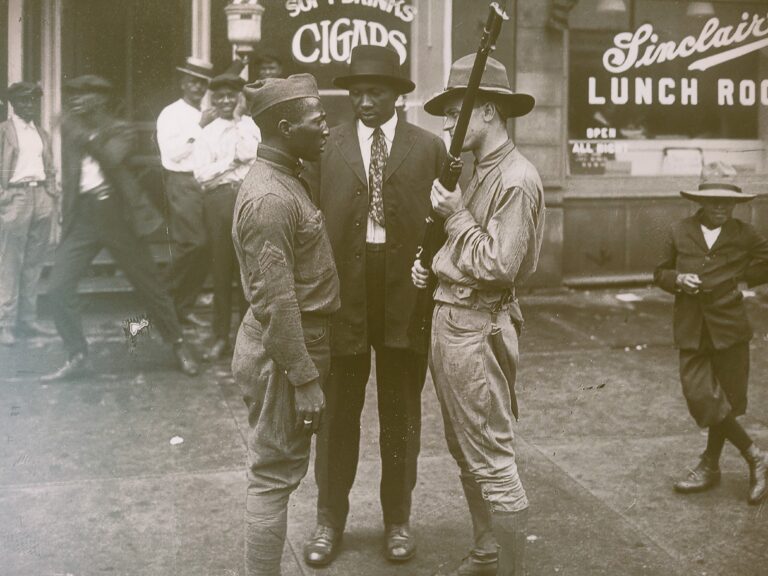
The confrontation involving the Bonus Army in July 1932 became a vivid symbol of the country’s distress. World War I veterans had traveled to Washington to demand early payment of promised compensation. After a confrontation between police and demonstrators, Hoover authorized Army involvement, and troops commanded by Douglas MacArthur cleared encampments. The destruction received widespread publicity and deepened criticism of the administration.
The incident did not single-handedly determine the election. Bank failures, unemployment and falling incomes were far larger problems affecting people across the country. Yet the images of soldiers removing veterans made government priorities a central emotional question. The episode helped opponents argue that the administration was detached from ordinary hardship. The Bonus Army history provides the chronology and the distinction between Hoover’s instructions and MacArthur’s conduct.
The transition from election to inauguration
Roosevelt won in November 1932 but did not enter office until March 4, 1933. At the time, the Twentieth Amendment’s new January presidential inauguration schedule had not yet taken effect. The long interval became important because bank failures and public anxiety continued while the incumbent administration remained in charge. Hoover and Roosevelt disagreed over policy and the terms on which they might cooperate during the transition.
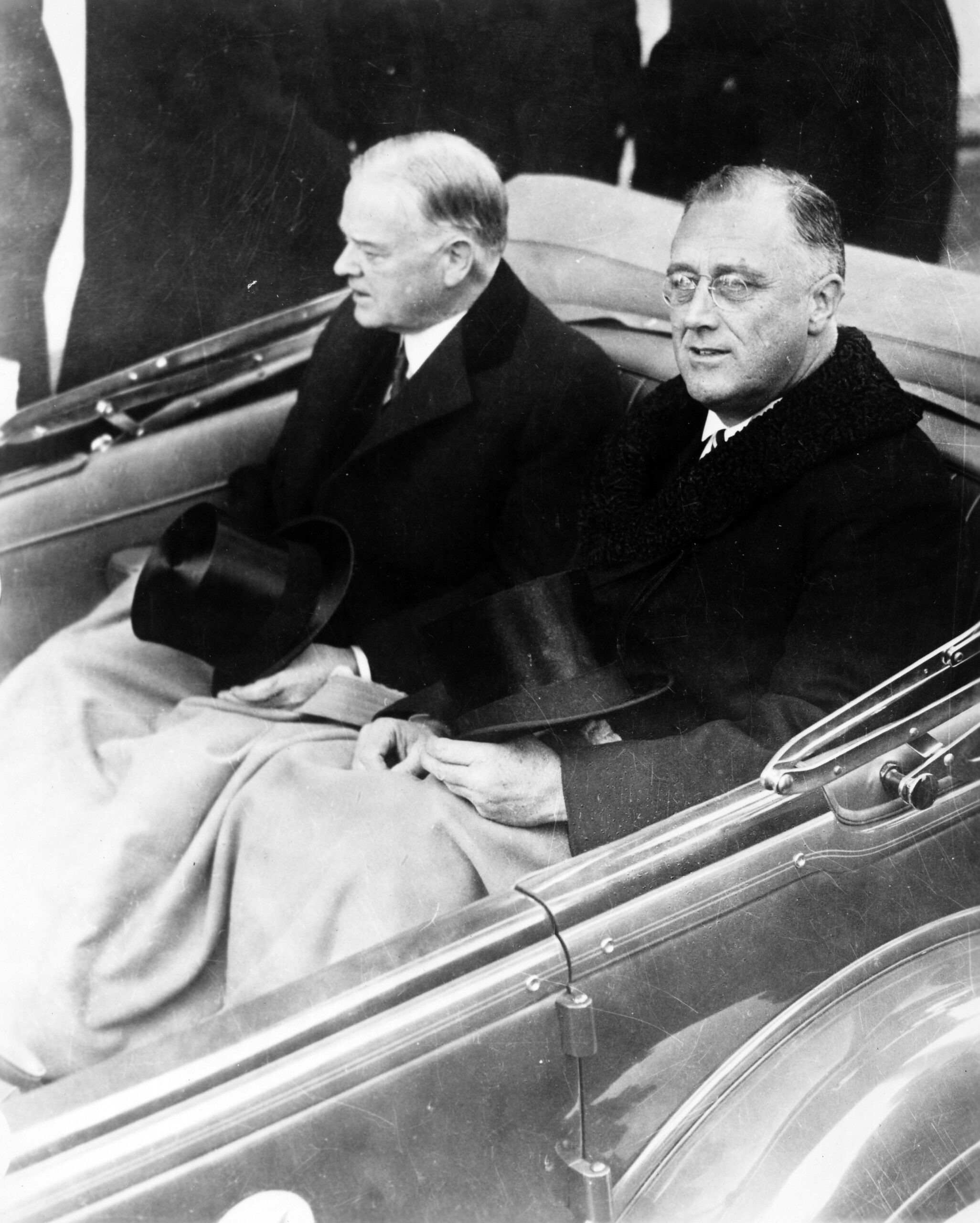
On inauguration day, the two men traveled together to the Capitol, as shown in the accompanying Library of Congress photograph. The image is dated March 4, 1933, not election night in 1932. Roosevelt inherited a deepening financial emergency and soon proclaimed a nationwide bank holiday. Congress passed the Emergency Banking Act of 1933 within days, illustrating how quickly policy shifted after the transfer of power.
Why the 1932 election remains a turning point
The 1932 election transferred the presidency from Republicans to Democrats in the midst of an economic catastrophe. It gave Roosevelt the political opportunity to propose a much larger federal role in economic relief, recovery and financial regulation. Its significance lies in both the scale of the electoral defeat for Hoover and the subsequent legislative developments enabled by the new administration and Congress.
Careful historical analysis separates what voters were deciding in November 1932 from the programs later created. The 1932 vote did not end unemployment or resolve bank failures by itself. It changed leadership, expectations and the political direction of federal government. The election connects directly to the Great Depression and the early New Deal legislation that followed.
Timeline
- 1928: Hoover wins the presidency
- October 1929: Stock market crash
- 1930–1932: Bank failures and unemployment worsen
- July 1932: Democrats nominate Roosevelt
- November 8, 1932: Roosevelt wins 472–59
- March 4, 1933: Roosevelt inaugurated
- March 1933: Bank holiday and Emergency Banking Act
Frequently asked questions
When was the 1932 presidential election?
November 8, 1932.
Who won the election?
Democrat Franklin D. Roosevelt defeated incumbent Republican Herbert Hoover.
What was the electoral vote?
Roosevelt 472; Hoover 59.
What share of the popular vote did Roosevelt win?
About 57.4%, compared with roughly 39.7% for Hoover.
Who were the vice-presidential nominees?
John Nance Garner ran with Roosevelt; Charles Curtis with Hoover.
Did the New Deal begin before the election?
No. Roosevelt used the phrase in campaigning, but most New Deal programs were enacted after he entered office in March 1933.
Why was Roosevelt inaugurated in March rather than January?
The new inauguration date under the Twentieth Amendment had not yet taken effect for the 1933 transition.