Immigration Act of 1924: Johnson–Reed Quotas and Asian Exclusion
Why Congress introduced the Johnson–Reed Act’s two-percent national quotas in 1924 and how it changed immigration from Europe and Asia.
Quick answer
The Immigration Act of 1924, known as the Johnson–Reed Act, was signed by President Calvin Coolidge on May 26, 1924. It established an interim immigration quota of 2% of the foreign-born population of each nationality recorded in the 1890 census and excluded most immigrants ineligible for U.S. citizenship, severely restricting Asian immigration. It also introduced a consular immigration-visa system and provided for a later national-origins allocation method that took effect in 1929.
Key facts
On this page
- What was the Immigration Act of 1924?
- The years of restriction leading to 1924
- Why the 1890 census was chosen
- How the two-percent quota worked
- The national-origins formula scheduled for later use
- The exclusion of immigrants ineligible for citizenship
- Immigration visas and consular administration
- Families, exceptions and those outside the quotas
- Consequences for European immigration
- How the legislation differed from the 1921 quotas
- What changed after the 1924 system
- Why Johnson–Reed remains a turning point
- Timeline
- FAQs
- Sources
What was the Immigration Act of 1924?
The Johnson–Reed Act was one of the most consequential restrictive immigration laws in United States history. Congress used it to reduce and redistribute admission opportunities by national origin, with a new quota calculation that strongly favored countries whose immigrants had been established in the United States before 1890. The statute also prohibited admission of many immigrants considered ineligible to become U.S. citizens, a rule with devastating consequences for migration from Asia.
The law did not mean no one could enter the United States after May 1924. It included exempt and non-quota categories and created complex administrative rules. The actual treatment of an applicant depended on nationality, place of birth, visa type, family circumstances and existing exclusions. Explaining those categories is necessary to understand the law, rather than describing it as a single universal ban on all foreign arrivals.
The years of restriction leading to 1924
Congress had imposed immigration controls long before Johnson–Reed. The Chinese Exclusion Act of 1882 established racialized restrictions affecting Chinese labor migration, while the 1917 Immigration Act introduced a literacy test and a broad Asiatic Barred Zone. These laws did not apply identically to all applicants. Their combined effect was an increasingly restrictive system built over decades.
The Emergency Quota Act of 1921 then imposed a general numerical mechanism using three percent of the foreign-born population by nationality shown in the 1910 census. That approach was initially temporary. In 1924 Congress replaced the main calculation with an even more restrictive framework while extending exclusion rules. The sequence matters because the two percentage figures and census years belonged to distinct statutes.
Why the 1890 census was chosen
The interim 1924 formula used two percent of the number of foreign-born people of each nationality living in the United States according to the 1890 census. The earlier reference year meant that immigrant communities that grew greatly after 1890 did not receive corresponding increases in quota allocations. Migrants from Southern and Eastern Europe were especially affected, while many Northern and Western European countries retained comparatively larger allotments.
This was not a neutral estimate of how many people wanted to migrate. It used a past population pattern to shape the future composition of immigration. Contemporary restrictionists explicitly favored preserving a particular national and ethnic balance, and ideas about racial hierarchy and eugenics influenced the public campaign. Those arguments were political and pseudoscientific claims, not evidence that people from disfavored regions were less capable or worthy. Historians should identify the discriminatory design rather than repeat its assumptions.
How the two-percent quota worked
The numerical formula initially limited annual admissions subject to the quota from a particular nationality to two percent of its foreign-born population in the United States in 1890. If a nationality had 100,000 such residents, a simple application would produce 2,000 annual spaces before statutory adjustments and minimum quotas. The base was not two percent of the current population of that country overseas or two percent of all people who applied.
The statute also contained rules for assigning nationality, dividing quotas and treating exceptions. Not every person arriving at a U.S. port counted against the same pool. Some classes were exempt, and immigrants from certain Western Hemisphere countries were generally outside the quota restrictions. The apparent simplicity of a percentage therefore concealed a much more complex administrative system. Numbers in contemporary tables should be checked against their fiscal year and the specific legal method in force.
The national-origins formula scheduled for later use
The Johnson–Reed legislation also provided for a national-origins allocation method intended to distribute a fixed number of quota spaces according to calculations of the ancestral origins of the broader American population. This differed from the initial method based only on foreign-born residents in the 1890 census. The change was scheduled for a later date and, after postponements, the national-origins system took effect in 1929.
One common historical mistake is to apply the later national-origins formula as though it had already governed every arrival immediately after May 26, 1924. The distinction between the interim formula and the later implementation explains why different sources describe more than one calculation associated with the act. Contemporary census and immigration statistics can be used to check when each method applied.
The exclusion of immigrants ineligible for citizenship
Another central provision restricted admission of immigrants ineligible for naturalization. U.S. citizenship law at the time barred naturalization for many Asian nationalities, meaning that the provision extended the reach of existing racial restrictions. The law was especially consequential for Japanese immigration, which had previously been shaped partly through diplomatic arrangements rather than the same direct statutory exclusion.
Japan protested the 1924 law, and the State Department’s official history documents the diplomatic friction that followed. The measure did not suddenly invent anti-Asian discrimination; it intensified and expanded a long-established exclusionary structure. National-origin quotas and racial eligibility rules worked together but were legally distinct mechanisms. A nationality might have an issue under an exclusion rule even if its hypothetical quota count had not been exhausted.
Immigration visas and consular administration
The act strengthened the process of obtaining immigration visas from U.S. consular officers abroad before traveling. This moved an important part of screening earlier in the journey, rather than relying only on inspectors at ports after a person had paid for transatlantic passage. Quota availability and personal documentation became part of a more elaborate administrative process. A visa did not necessarily guarantee final admission, and port inspectors still performed legal functions.
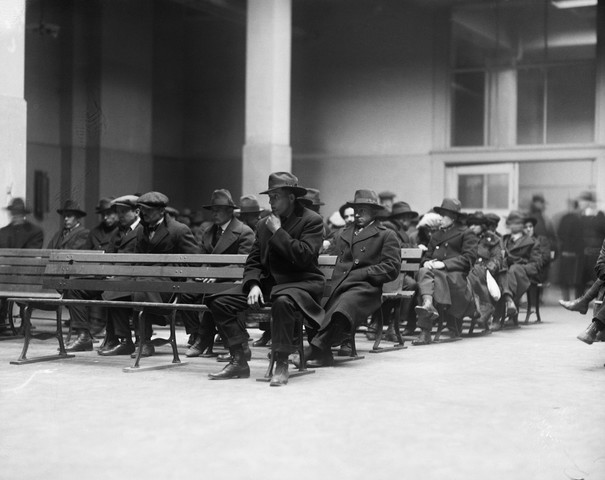
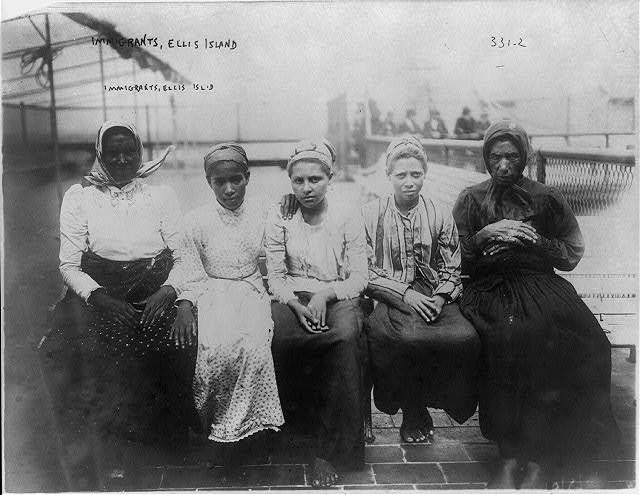
The system shaped decisions long before an immigrant reached Ellis Island or another port. People might wait for a visa number, gather civil records or discover that no quota space was available. Shipping companies also had to take account of the new rules. The familiar image of passengers standing at an American inspection hall therefore illustrates only one stage of the migration process. Much of the legal gatekeeping increasingly occurred through documents and consular offices outside the United States.
Families, exceptions and those outside the quotas
The act made provisions for certain non-quota immigrants and family relationships, but these did not amount to unlimited family reunification. The law distinguished categories that did not use a nationality quota from those eligible for preferences within quotas. Some relatives of U.S. citizens received specific treatment, while other family members remained subject to numerical restrictions. Age, marriage and legal status could alter the rule applicable to an applicant.
Immigrants from Canada, Mexico and other designated parts of the Western Hemisphere were generally not subject to the same quotas, but they were not automatically exempt from all immigration law. Asian exclusion provisions and other eligibility rules continued to matter. That unevenness is important in understanding the law’s geographic effects. Saying the 1924 act restricted every immigrant equally would conceal both its exemptions and its discriminatory design.
Consequences for European immigration
The new quotas sharply constrained immigration from countries whose U.S. communities had expanded during the decades after 1890. Italy, Poland and many other parts of Southern and Eastern Europe were affected. Families seeking to reunite with relatives in the United States encountered limits that could delay or prevent travel. The law also reflected concerns about labor markets and national identity during the early 1920s, when political arguments frequently treated immigration as a threat rather than a normal part of American history.
Actual migration patterns depended on more than the law alone. Economic conditions, political instability abroad, transport costs and existing family networks influenced decisions. However, a binding numerical ceiling created a distinct legal obstacle even for an applicant who otherwise satisfied the rules. The resulting changes in immigration are evidence of a deliberate national policy choice, not an inevitable demographic trend independent of government action.
How the legislation differed from the 1921 quotas
The comparison with 1921 is direct and useful. The earlier law used a three-percent calculation and the 1910 foreign-born census; the 1924 act used two percent and 1890 for its initial quota formula. Moving to the earlier census strengthened the preference for established Northern and Western European immigrant populations. The 1924 measure also imposed additional exclusion rules and formalized visa administration.
Readers should not combine the two laws into a hypothetical ‘three-percent 1890 rule’ or claim that the 1921 act had already banned all Asian immigration in the way the 1924 statute did. There were existing exclusions, but the laws had different text and consequences. Keeping their original dates, census bases and exceptions distinct is essential for family-history research and historical interpretation.
What changed after the 1924 system
The national-origins quota framework continued for decades, although later legislation modified particular aspects of immigration and naturalization. The Immigration and Nationality Act of 1952 reorganized federal immigration law while retaining important quota features. In 1965 Congress enacted major reforms that dismantled the national-origins quota system and established different principles for immigration selection, including family and employment categories.
The longevity of the restrictive framework makes the 1924 law more than an isolated episode in the Roaring Twenties. It influenced who could immigrate, which families could reunite and the composition of communities across generations. The later changes show that immigration law is not static, and they also caution against projecting present rules back into the 1920s. A historical guide should distinguish what was enacted in 1924, what became operative in 1929 and what was revised decades later.
Why Johnson–Reed remains a turning point
The Immigration Act of 1924 translated restrictive national-origin ideas into a long-lasting system of legal admissions. Its initial two-percent formula tied quotas to an 1890 census that favored older immigration patterns, and its citizenship-eligibility exclusion intensified restrictions on Asian migrants. Visa rules also reshaped the practical process of reaching the United States. These were distinct elements of a coordinated restrictionist program.
The law belongs alongside the 1917 Immigration Act and 1921 Emergency Quota Act, but it should have its own article because the mechanism and long-term effects were substantially different. Understanding those differences helps readers move beyond a general story of immigration restriction to examine how particular statutes altered people’s opportunities and the nation’s population.
Timeline
- 1882: Chinese Exclusion Act
- 1917: Literacy test and Asiatic Barred Zone law
- 1921: Emergency Quota Act sets 3% formula based on 1910
- May 26, 1924: Johnson–Reed Act signed
- 1929: Later national-origins quota method becomes operative
- 1965: National-origins quota system dismantled by new legislation
Frequently asked questions
When was the Immigration Act of 1924 signed?
May 26, 1924, by President Calvin Coolidge.
What was the Johnson–Reed Act?
Another name for the Immigration Act of 1924, which established restrictive quotas and additional exclusion rules.
What was the initial quota calculation?
Generally two percent of the foreign-born population of each nationality recorded in the 1890 census.
How did this differ from the 1921 act?
The 1921 act used three percent and the 1910 census; the 1924 act used two percent and the earlier 1890 census.
Did the act restrict immigration from Japan?
Yes. The bar on many immigrants ineligible for citizenship sharply restricted Japanese immigration and provoked diplomatic protest.
Did all nationalities have the same restrictions?
No. Quotas, non-quota categories, exemptions and other legal exclusions treated groups differently.
When did the later national-origins formula take effect?
1929, after postponements.