Federal Trade Commission Act of 1914: Why the FTC Was Created
How Congress created a permanent regulator of unfair business competition—and how its mission expanded.
President Woodrow Wilson signed the Federal Trade Commission Act on September 26, 1914, creating a five-member independent federal commission charged initially with preventing unfair methods of competition. The FTC began work on March 16, 1915, with Joseph E. Davies as its first chairman. Later amendments expanded its consumer-protection powers; the modern prohibition on unfair or deceptive acts or practices was not present in its original 1914 form.
A sourced overview of the 1914 legislation, founding commissioners, 1915 opening, administrative powers and later reforms.
On this page — 23 topics
What was the Federal Trade Commission Act?
The Federal Trade Commission Act was a federal law establishing a permanent independent agency to investigate and prevent unfair methods of competition in interstate commerce. President Woodrow Wilson signed it on September 26, 1914. The new commission could gather information about businesses, examine suspected misconduct and issue administrative orders under defined legal procedures. It was meant to provide specialized and continuing supervision beyond occasional lawsuits against giant corporations. The original legislation focused on competition. Later amendments expanded the agency’s role in protecting consumers against unfair or deceptive acts or practices. Conflating the modern FTC’s responsibilities with everything authorized in 1914 would misrepresent how federal regulatory power developed during the Progressive Era.
Why did Congress create the FTC?
The American economy had become national in scale, with large manufacturers, retailers, railroads and corporate combinations conducting business across many states. The Sherman Antitrust Act of 1890 prohibited unlawful restraints of trade, but courts had to interpret broad language through lengthy litigation. Some reformers sought an expert commission that could monitor business practices and act before market concentration became irreversible. A standing agency could investigate patterns that one court case might not reveal. Congress also debated the need to reassure lawful companies about acceptable conduct. The FTC Act reflected those competing goals and was part of a larger Progressive Era movement that supported administrative expertise and public-interest regulation of private economic activity.
When did Woodrow Wilson sign the law?
Wilson signed the Federal Trade Commission Act on September 26, 1914, a date confirmed by the FTC’s official institutional history. A related law, the Clayton Antitrust Act, was signed on October 15 of that year. The statutes were complementary but not identical. One created an investigative and enforcement commission, while the other specified additional unlawful business practices and addressed labor concerns. Congress enacted them after debates influenced by the presidential election of 1912 and dissatisfaction with the previous system of corporate regulation. They did not become effective through one combined presidential decree. Correct dates help readers distinguish the creation of an agency from the passage of related substantive rules.
Why did the FTC not open in September 1914?
The law created a commission on paper, but officials first had to appoint members, establish procedures, assemble staff and arrange its organization. The Federal Trade Commission began work on March 16, 1915, according to its official 90th-anniversary history. That six-month interval separates the enactment date from the start of actual operations. The distinction matters because some summaries state that the agency opened in 1914, confusing a statutory founding with business operations. The FTC inherited investigative responsibilities and records from the Bureau of Corporations as its work expanded. Early commissioners faced an unfamiliar task: applying a broad statutory standard to complicated commercial practices without the fully developed precedents later generations would possess.
Who was Joseph E. Davies?
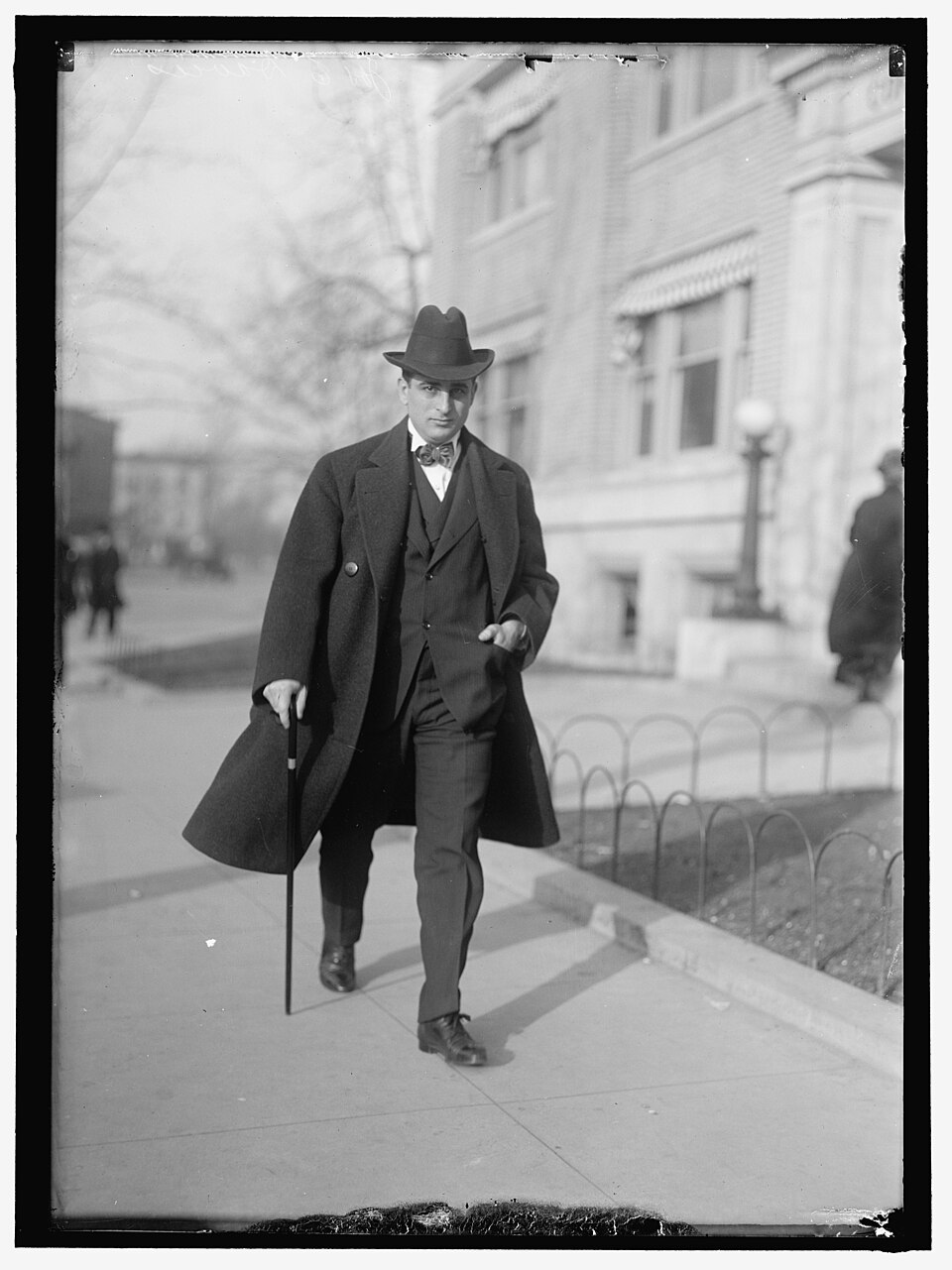
Joseph Edward Davies was a lawyer and public official who had headed the Bureau of Corporations before becoming the FTC’s first chairman in 1915. His experience with federal corporate investigations made him an important figure in the transition from the earlier bureau to the new independent commission. The period photograph accompanying this article depicts Davies in 1915. It does not show Wilson signing the FTC Act, nor is it an image of all commissioners gathered together. Davies later pursued other diplomatic and political roles, but his 1915 work is significant for the agency’s beginnings. Historians should credit the broader staff and commission for establishing early procedures rather than attributing every enforcement decision solely to one chairman.
Who were the five founding commissioners?
The FTC’s official anniversary program identifies the original five commissioners as Joseph E. Davies, Edward N. Hurley, William J. Harris, William H. Parry and George Rublee, who took their oaths as the agency began operations in March 1915. Their backgrounds reflected politics, law and public administration. The commission was intended to be a multi-member institution rather than a cabinet department controlled by one secretary. Rules on appointments, terms and political balance helped shape its independence from immediate partisan swings. The members still acted under federal statutes and judicial review. Their founding task was to translate broad language about unfair competition into investigatory practice, administrative proceedings and policies businesses and courts could understand.
What was the Bureau of Corporations?
The Bureau of Corporations had been created in 1903 within the Department of Commerce and Labor as part of Theodore Roosevelt’s program of economic oversight. It investigated corporate practices and gathered information about industries involved in interstate commerce. When the FTC began operations, its work built on the bureau’s experience, research methods and some personnel. The agency was not a brand-new discovery that companies could be studied systematically; it institutionalized and expanded an existing federal interest in economic evidence. The Square Deal history explains the earlier administration’s views on corporate supervision. The FTC’s separate status, enforcement authority and continuous institutional structure were important differences from the bureau that preceded it.
What were unfair methods of competition?
Section 5 of the original act declared unfair methods of competition in commerce unlawful and empowered the FTC to address them through administrative procedures. Congress deliberately used a broad phrase rather than listing every conceivable scheme by which businesses might suppress rivalry. That flexibility created room for experts to examine new practices but also required legal boundaries to be developed through decisions and court review. The law did not automatically outlaw all aggressive price cutting, advertising or business success. An enforcement case needed a factual basis and compliance with statutory procedures. Early debates turned on how broadly the commission could act beyond conduct already condemned by the Sherman Act.
How did the FTC investigate businesses?
The commission received authority to gather corporate information, study industries, seek records and examine alleged misconduct within its jurisdiction. Investigations could reveal commercial arrangements and patterns not easily observed by customers or smaller competitors. The process also required attention to confidentiality, fairness and the limits of legal power. The FTC could not simply enter every private home or demand any document without authority. Its research role was a major part of why Congress preferred a permanent commission in addition to ordinary litigation. Investigatory reports also supplied Congress and the public with information about concentrated markets, making the agency relevant to policy even when no immediate enforcement order resulted.
What was a cease-and-desist order?
One important enforcement tool was an administrative order directing a business to stop a practice the commission found unlawful under its statute. The original FTC Act established a procedure involving notice, a hearing and the commission’s determination, followed by mechanisms for judicial review. This was different from a criminal conviction and not the same as a court instantly ordering the dissolution of a corporation. The agency’s decisions could be challenged, and courts played an important role in determining the scope of its powers. The process reflected Progressive Era interest in expert administrative adjudication while preserving legal avenues for businesses to contest official findings.
How did the FTC differ from the Justice Department?
The Department of Justice brought civil and criminal proceedings under federal antitrust laws through the courts, while the FTC combined investigations and administrative proceedings under its own statute. The two institutions could address related competitive problems using different procedures and authority. The FTC was not created to abolish the Justice Department’s antitrust role. Congress intended specialized regulatory expertise to complement existing legal enforcement. Their jurisdictions and cooperation developed over time, especially as later merger law and additional statutes expanded their responsibilities. A historical guide should therefore distinguish a federal prosecutor’s case under the Sherman Act from an administrative proceeding before the FTC, even when both concerned powerful corporate conduct.
How was the FTC connected to the Clayton Act?
Congress adopted the Clayton Antitrust Act just weeks after the FTC Act. The Clayton statute addressed specific business practices, including certain discriminatory pricing, exclusive dealing, stock acquisitions and interlocking directorates, while the FTC Act created an agency focused on unfair competition. The commission received enforcement responsibility for specified Clayton Act provisions. The two laws therefore formed complementary elements of Wilson’s domestic reform program. They should not be merged into one law or assigned the same signing date. Different sections created different kinds of legal authority, and the Justice Department retained important antitrust responsibilities. Together they strengthened the federal regulatory framework established in the late nineteenth century.
Was the FTC part of Roosevelt’s Square Deal?
The FTC was created under Woodrow Wilson, not under Theodore Roosevelt. But its intellectual and administrative roots extended into the Roosevelt administration’s effort to investigate corporations and supervise economic power. The Bureau of Corporations was one predecessor, and arguments over whether large enterprises should be supervised or broken into competing firms shaped the 1912 election. Wilson’s New Freedom emphasized restoring competition, while Roosevelt’s New Nationalism favored stronger oversight of major corporations. The resulting FTC borrowed some ideas from both approaches. Calling it a direct Roosevelt executive agency would be inaccurate, but ignoring earlier reform programs would conceal the political and institutional history that made the 1914 compromise possible.
Did the FTC regulate deceptive advertising in 1914?
The modern FTC is widely associated with protecting consumers from deceptive advertising and other unfair commercial practices, but the original 1914 statute was framed chiefly around unfair methods of competition. Over time the commission challenged misleading practices when they affected competition, yet broader consumer-protection authority developed through later statutory changes. The Wheeler–Lea Act of 1938 expressly expanded Section 5 to cover unfair or deceptive acts or practices, an important legal milestone. A description that treats the entire present-day consumer-protection system as having appeared with Wilson’s signature in September 1914 is anachronistic. The evolution illustrates how an agency founded to regulate competition acquired a much broader public-facing mission.
What changed in 1938 under Wheeler–Lea?
The Wheeler–Lea Act amended the FTC Act in 1938, giving the commission explicit authority against unfair or deceptive acts or practices, rather than concentrating solely on unfair competition. It also strengthened powers concerning misleading advertisements for certain consumer goods. This shift mattered because consumer injury could occur without evidence that a competing business had suffered a conventional antitrust harm. The amendment helped transform the FTC into a central national consumer-protection institution. The later development of rules, orders and statutory responsibilities continued for decades. The 1938 change should be distinguished from the separate 1938 Federal Food, Drug, and Cosmetic Act, which strengthened the regulatory framework administered by the agency now known as the FDA.
How did the FTC relate to the FDA?
The Federal Trade Commission and the Food and Drug Administration developed different but sometimes overlapping responsibilities. The FTC’s work increasingly encompassed advertising and commercial deception, while the FDA’s statutory framework dealt with food, drug and other regulated product safety and labeling. The Pure Food and Drugs Act of 1906 preceded both the FTC’s creation and the modern FDA name. Later laws allocated responsibilities between agencies in particular contexts. Neither institution can accurately be described as a branch of the other. Their distinct histories show how federal consumer protection grew through several institutions responding to different problems, including competition, claims made in advertising and the content or safety of products.
What were the FTC’s earliest challenges?
The commission had to decide how to interpret a broad and unfamiliar statutory standard, establish investigative methods and defend its decisions in federal courts. Businesses argued about the limits of agency jurisdiction, and judges sometimes resisted interpretations that appeared to go beyond existing antitrust principles. The commission also had to balance careful evidence collection with public expectations for rapid action against abusive corporations. Its early work was affected by World War I, which changed business priorities and led to additional investigations. The history is therefore not a simple sequence of immediate victories. Administrative authority develops through staffing, procedural rules, hearings, judicial decisions and repeated interaction with the industries subject to oversight.
Why was an independent commission unusual?
A multi-member independent regulatory commission offered a model different from a government department directly led by a cabinet secretary. Commissioners served statutory terms and exercised defined authority across changes of presidential administration, although they remained subject to law, funding and judicial review. The model was intended to encourage expertise, continuity and a more deliberate approach to technical commercial disputes. Independence did not make the commission a fourth branch of government or free it from accountability. Congress could amend its duties, courts could review actions and the executive branch had roles in appointments. The FTC became an important example of the expanding federal administrative institutions associated with the Progressive Era.
Did the FTC eliminate monopolies?
The commission did not instantly dismantle all major corporate combinations when it opened in March 1915. American economic life continued to contain large corporations, new mergers and disputes over business practices. Some activities might violate antitrust rules, while others were permissible under changing law and evidence. The FTC’s investigative and administrative procedures complemented the Department of Justice’s court-based antitrust actions. Enforcement outcomes depended on jurisdiction, legal standards and resources. The FTC’s historical significance is not that corporate concentration disappeared but that the federal government acquired a permanent institution for collecting evidence and addressing unfair methods of competition. Later legislation expanded that responsibility to consumer protection and other commercial practices.
Where can the agency’s history be verified?
The FTC’s official history confirms the September 26, 1914 enactment. Its anniversary records identify March 16, 1915 as the date the agency began operations and Joseph E. Davies as the first chairman. The FTC’s legal library preserves statutory text, amendments and guidance on the agency’s authority. The Library of Congress holds a 1915 portrait of Davies and collections documenting the era’s corporate debates. A reliable account compares these sources and identifies later expansions rather than assuming modern agency powers existed from the outset. The related Clayton Act and the earlier Bureau of Corporations explain how the FTC fitted into the larger history of federal economic regulation.
FTC creation timeline
| Date | Event |
|---|---|
| 1890 | Sherman Antitrust Act provides broad statutory competition rules. |
| 1903 | Roosevelt-era Bureau of Corporations founded. |
| 1912 | Election debate centers on corporate power and federal reform. |
| September 26, 1914 | Wilson signs Federal Trade Commission Act. |
| October 15, 1914 | Clayton Antitrust Act signed. |
| March 16, 1915 | FTC begins operations with five commissioners. |
| 1938 | Wheeler–Lea Act expands consumer-protection jurisdiction. |
| Later decades | FTC acquires further responsibilities through laws and rules. |