Triangle Shirtwaist Factory Fire (1911): 146 Victims, Causes and Labor Reforms
How a deadly garment factory fire reshaped workplace safety debates.
On March 25, 1911, a fire swept through the Triangle Waist Company’s factory on the upper floors of New York City’s Asch Building, killing 146 workers, most of them young immigrant women. Restricted escape routes, dangerous working conditions and a collapsing fire escape made the disaster especially deadly. Public anger helped accelerate New York workplace safety and labor reforms.
The guide documents the people, building, escape routes, trials, and reforms, with primary-source references from Cornell.
On this page — 24 topics
What happened in the Triangle Shirtwaist fire?
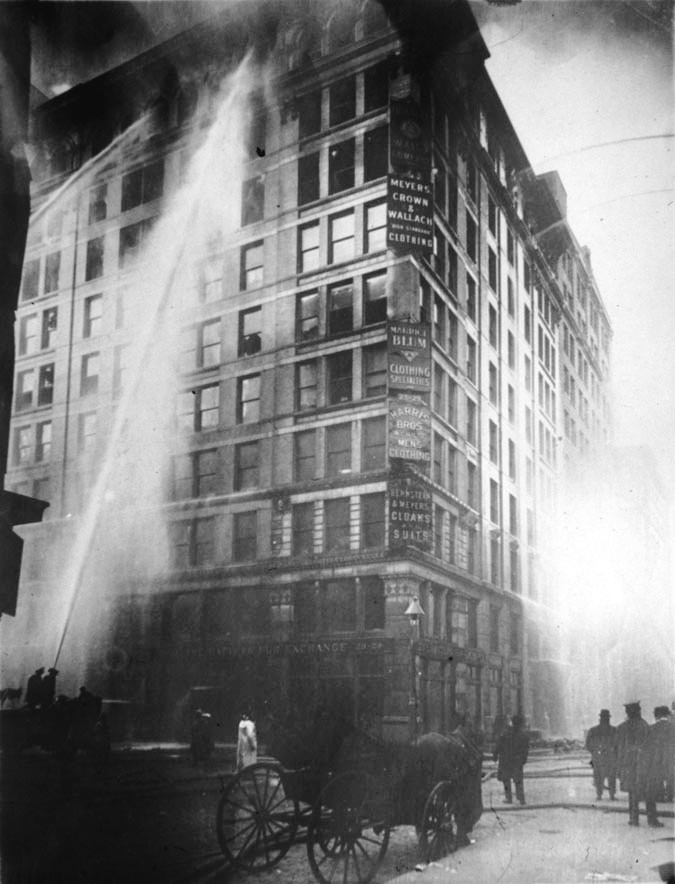
Near closing time on Saturday, March 25, 1911, fire broke out at the Triangle Waist Company’s garment factory in New York City. Employees worked on upper floors of the ten-story Asch Building near Washington Square. Flames spread rapidly among fabric and other combustible material, trapping people who could not reach usable exits. Some escaped through stairways or elevators, while others died inside or jumped from windows in desperate attempts to survive. In all, 146 workers were killed. The disaster became a defining event in American labor history because so many victims were young immigrant women and because investigators found dangerous conditions that could have been prevented through stronger safety standards.
Where was the factory located?
The Triangle factory occupied portions of the eighth, ninth and tenth floors of the Asch Building at Washington Place and Greene Street in Manhattan. The ten-story structure stood in a busy garment-manufacturing area near what is now New York University. The height of the factory floors mattered because fire department ladders and rescue equipment could not reach everyone trapped at the top. A later landmark designation recognized the building’s historical importance, and today the structure is known as the Brown Building. The building survived the fire, unlike many employees inside it. Visitors should distinguish the original factory premises from nearby memorials and later interpretations of the event.
Who worked at the Triangle Waist Company?
The factory employed hundreds of workers who produced fashionable women’s shirtwaists, a kind of blouse popular in the early twentieth century. Many workers were young women from immigrant families, particularly Jewish and Italian communities, although the workforce included others and cannot be described as belonging to only one background. Some were teenagers. Their employment supported households in a city where living costs and job insecurity created pressure to accept difficult conditions. Sewing and finishing garments required long periods of repetitive work, and pay arrangements varied by task. Describing victims only as nameless girls can erase their experience, families, organizing efforts and the individual identities preserved by historians and descendants.
What was a shirtwaist?
A shirtwaist was a women’s blouse that could be worn with a skirt, combining the appearance of a tailored shirt with contemporary fashion. The garment became a popular item for working and middle-class women, helping sustain large factories devoted to its manufacture. Production required cutting, sewing, pressing and handling substantial quantities of fabric. Such work created fire risks when scraps accumulated and workers used lamps, irons or other equipment in crowded rooms. Triangle’s product may now seem unfamiliar, but the company belonged to a rapidly expanding apparel industry. Its business model depended on workers producing large quantities of garments for sale through growing urban and national markets.
How did the fire start?
The precise ignition source cannot be established with absolute certainty from surviving evidence. Contemporary investigations and later reconstructions often identify a fire beginning among scraps of fabric in the eighth-floor cutting area, possibly ignited by a discarded match or cigarette. The room contained combustible material, and the flames spread rapidly. The cause of ignition should be distinguished from the factors that made the fire deadly. Regardless of the initial spark, the limited escape options, overcrowded conditions and difficulty reaching upper floors produced the catastrophic loss of life. Blaming an individual worker for the spark alone would conceal the broader safety failures that made a small beginning so destructive.
Why did the fire spread so quickly?
Clothing factories stored and processed fabric, thread, patterns and discarded scraps, many of which could burn rapidly in a dry workroom. The factory’s high floors contained numerous sewing tables and equipment, reducing easy movement once smoke and flames spread. A fire beginning in one area could quickly cut off routes before everyone learned what was happening. Communication among floors was imperfect, and employees on higher levels did not necessarily receive adequate warning. The blaze exposed the hazards of placing large numbers of workers and combustible material high above the street without dependable emergency exits and fire-prevention procedures. Those conditions were shaped by employer choices and the city’s regulatory system.
Were the factory exits locked?
Evidence from the fire and later trial indicated that certain doors were locked or otherwise unusable during working hours. Managers sometimes argued that restricting exits prevented theft or unauthorized breaks, but such practices created a lethal danger during an emergency. Investigators and witnesses disputed exactly which doors were locked at particular moments, so it would be misleading to assert that every door in the building was locked. The documented limitations on escape remained central to the disaster. Cornell University’s trial record contains testimony from survivors and witnesses concerning the doors, stairways and attempts to flee. The lesson was not simply that a door existed on a plan but that people needed reliably accessible exits.
What happened to the fire escape?
The exterior fire escape was inadequate for the number of people trying to leave the building. Under the pressure of fleeing workers and heat from the blaze, sections collapsed, causing additional deaths. Some people were trapped above or below the damaged structure. The collapse demonstrated that installing a fire escape was not enough if it could not support safe evacuation during a genuine emergency. Witnesses and photographs recorded the damage afterward. The period imagery is distressing, but the structure’s failure is an important engineering and regulatory fact. Safety reformers later demanded stronger requirements for fire exits, stairways and inspection rather than relying on fragile exterior access routes.
Why couldn’t firefighters reach all the floors?
Firefighters arrived with ladders, hoses and other equipment, but their ladders could not reach many workers on the high factory floors. The height of the building exposed limitations in the city’s early twentieth-century rescue capabilities. Safety nets proved unable to protect people falling or jumping from such great distances, and onlookers witnessed horrific scenes. Some employees survived because elevators made repeated trips; others were trapped when elevators stopped operating safely. It is inaccurate to claim that firefighters did nothing. They responded under severely constrained conditions, but even a determined rescue effort could not overcome the combination of rapid fire spread, high floors and unusable escape routes.
How did some workers escape?
Employees used stairways where they remained accessible, and elevator operators helped carry groups of workers down during the early stages of the blaze. Some escaped by reaching the roof and moving to neighboring buildings, assisted by people nearby. These routes were available only to certain groups and became increasingly dangerous as smoke and fire spread. The different outcomes show why a single dramatic photograph cannot describe every person’s experience. Survivors carried traumatic memories of colleagues and friends they could not rescue. Studying their testimony gives a more complete picture of the emergency and reveals that chances of escape often depended on which floor or part of the workroom an employee occupied.
How many people died in the Triangle fire?
The accepted death toll is 146 workers. Cornell University’s Triangle Fire archive has helped historians identify victims through official records, newspapers, family histories and other surviving documents. Most of the people killed were young immigrant women, though men were among the victims. Newspaper headlines published immediately afterward sometimes reported different totals because information was incomplete and bodies were still being identified. Those provisional numbers should not replace the confirmed count of 146 in a historical guide. The catastrophe affected families and neighborhoods far beyond the factory. Individual names and life stories are more meaningful than treating the death toll only as an abstract statistic.
Who owned the factory?
The Triangle Waist Company was owned by Max Blanck and Isaac Harris, entrepreneurs in New York’s growing garment industry. Their company employed hundreds of workers and had been involved in disputes over working conditions and labor organizing. After the fire they faced public criticism, investigations and criminal prosecution concerning the deaths. It is important to distinguish ownership and workplace responsibility from criminal convictions: a jury later acquitted the two men of the specific criminal charges tried. Their acquittal did not establish that the factory had been safe or that the tragedy was unavoidable. Civil litigation and public debate continued after the criminal proceeding ended.
What happened at the criminal trial?
Max Blanck and Isaac Harris were tried on charges linked to the deaths after the fire, with prosecutors focusing in part on a door alleged to have been locked. Testimony examined whether the owners knew about the condition and whether it contributed to deaths. The jury acquitted them in December 1911. Cornell’s archive preserves substantial trial testimony that makes it possible to evaluate the evidence without reducing the case to a simple slogan. Criminal law required prosecutors to prove specific elements beyond reasonable doubt. A verdict of acquittal did not erase workplace safety concerns or public demands for changes to inspection, building exits and employer obligations.
What had garment workers protested before the fire?
New York garment workers had already organized major strikes, including the 1909–1910 uprising of shirtwaist makers, often called the Uprising of the 20,000. They protested wages, long hours and treatment by employers and sought stronger collective bargaining rights. The Triangle company was involved in that labor environment. This earlier activism matters because workers and unions had warned about dangerous conditions before the fatal blaze. The event did not create concerns about sweatshops from nothing. Rather, it gave shocking visibility to problems long raised by employees, immigrant communities and reformers. Organized labor drew on years of experience to demand change after the funerals and investigations.
How did immigrant communities respond?
Many victims belonged to Jewish and Italian immigrant families, and their deaths devastated neighborhoods where relatives and friends depended on factory wages. Funeral processions, public meetings and campaigns for assistance brought large crowds together. Relief committees helped families manage immediate financial hardship and burial costs. The tragedy became closely connected with the wider history of migration and urban labor, including the experiences of people who had passed through Ellis Island or other entry points. Their struggle to build secure lives in America should not be reduced to a sentimental story of opportunity. The economic pressure to accept risky work was an essential part of the city’s immigrant experience.
Who was Frances Perkins?
Frances Perkins, a social reformer who later became the first woman to serve in a U.S. presidential cabinet, witnessed the Triangle fire and considered it formative in her career. She worked in New York labor reform, supporting safer conditions and stronger laws. Perkins later served as secretary of labor under President Franklin D. Roosevelt, helping shape the New Deal era. It would be inaccurate to credit her alone with every reform prompted by the fire; unions, investigators, legislators and many other reformers also played central roles. Her life nevertheless connects the tragedy of 1911 with the development of national labor standards and government responsibility for worker safety decades afterward.
What was the New York Factory Investigating Commission?
The New York State Legislature created a Factory Investigating Commission in 1911 in the wake of concern about factory conditions, including the Triangle fire. It examined workplaces, heard testimony and documented hazards across industries. Legislators including Robert F. Wagner and Alfred E. Smith participated in the reform process. The commission’s work led to a series of changes concerning fire prevention, sanitation, building exits and other labor protections. The reforms were not all enacted on March 26, the day after the fire. They emerged from investigation and legislation over subsequent years. The commission illustrates how public outrage could be translated into sustained government oversight rather than remaining a short-lived response to disaster.
What safety laws changed?
New York introduced a range of workplace protections after the tragedy, including improvements to fire exits, safety inspections, equipment and procedures. The reforms developed over several legislative sessions and affected many workplaces beyond the garment industry. Some accounts attribute every modern fire code to one event, which exaggerates the causal chain. Triangle was an important catalyst alongside existing activism, earlier fires and reform campaigns. The enduring principle was that employers and governments had responsibilities to prevent predictable disasters rather than assume that workers could escape by individual courage. Later federal occupational safety rules arose through a separate history and should not be dated directly to 1911.
How did the fire influence labor organizing?
The catastrophe strengthened demands for union representation and safer work, especially among immigrant garment workers. Organizations such as the International Ladies’ Garment Workers’ Union used the public attention to argue that collective bargaining and strong legal standards were necessary. The event also changed some middle-class reformers’ understanding of factory labor. However, the fire did not immediately make unions universally recognized or end sweatshops. Employers continued resisting organization, and workers faced discrimination and economic pressure. The longer history includes struggles over the right to bargain, child labor, hours and compensation. Triangle became a symbol because its victims made visible the deadly consequences of inadequate protections.
How is the Triangle Fire remembered?
The building survives in Manhattan, and a memorial commemorates the workers who died. Each year public ceremonies and educational programs help preserve their names and stories. Cornell University’s Kheel Center maintains an extensive digital archive containing photographs, documents, original reports, trial testimony and lists of victims. The National Park Service identifies the Brown Building as the site of the 1911 fire. Modern remembrance combines grief with questions about accountability, immigration and labor protection. Preserving victims’ identities avoids treating them as anonymous evidence of progress. The tragedy is remembered not because it produced change automatically, but because families, unions and reformers continued demanding change afterward.
Where can historical sources be checked?
The Cornell Triangle Fire archive is an important starting point because it brings original reports, photographs and survivor testimony together. Its trial transcript collection provides evidence about exits, management practices and the owners’ acquittal. The Library of Congress offers contemporary newspaper coverage, while the National Park Service identifies the historic building and its significance. Source comparison is particularly useful because early headlines give inconsistent death counts and dramatic illustrations may combine scenes. The accepted toll is 146. Careful historical writing separates eyewitness testimony, investigative findings and later interpretation while keeping the victims’ lives at the center.
Triangle Factory Fire timeline
| Date | Event |
|---|---|
| 1909–1910 | Mass shirtwaist workers’ strike raises workplace grievances. |
| March 25, 1911 | Fire sweeps upper floors of the Asch Building; 146 die. |
| March–April 1911 | Funerals, relief efforts and public demands for action. |
| 1911 | New York establishes Factory Investigating Commission. |
| December 1911 | Owners acquitted of criminal manslaughter charges. |
| 1912 onward | Commission research supports workplace-safety legislation. |
| Later decades | Frances Perkins helps carry labor reforms into national policy. |