Homestead Strike (1892): Carnegie Steel, Frick and the Pinkerton Battle
How a wage dispute became a deadly confrontation and why management ultimately defeated the union.
The 1892 Homestead Strike was a labor conflict at Carnegie Steel near Pittsburgh. After failed wage negotiations and a lockout, workers clashed with Pinkerton guards arriving by river on July 6. The guards surrendered, but Pennsylvania militia later secured the plant for management. The strike ended months later with the union defeated.
The article distinguishes the July 6 battle, state intervention and the long-term outcome for steelworkers.
On this page — 23 topics
What was the Homestead Strike of 1892?
The Homestead Strike was a major conflict between employees at Carnegie Steel’s plant near Pittsburgh, Pennsylvania, and company management during 1892. A dispute over wages and union recognition escalated into a lockout and a violent confrontation on July 6 when private Pinkerton guards attempted to enter the works by river. Workers and supporters resisted, and people on both sides were killed. The state militia later occupied the area, enabling management to reopen the mill with replacement workers. The union was defeated. The events became a defining example of the power of large industrial corporations and the limits of collective bargaining in the Gilded Age.
Where was the Homestead steel mill?
The Homestead Works stood beside the Monongahela River southeast of Pittsburgh. Its large mills produced steel used in rails and other industrial products at a time when the American steel industry was expanding. The river provided a transportation route, and its proximity to the plant shaped the July confrontation. The town’s residents included mill workers and their families, whose homes, businesses and local institutions were closely connected to the employer. The plant was not simply an isolated factory. It formed the economic center of a community where wage reductions and control over employment could affect thousands of people beyond those working directly on the production lines.
Who owned Carnegie Steel?
Andrew Carnegie was the leading owner and public face of the Carnegie Steel enterprise. He had built a reputation as a successful industrialist and philanthropist, and he sometimes made statements sympathetic to labor organization. In 1892, however, his company’s leadership moved to defeat the powerful union at Homestead. Carnegie was in Scotland during the main confrontation, while Henry Clay Frick directed company policy in Pennsylvania. His absence from the site did not remove his connection to the business decisions being taken. Historical accounts distinguish Carnegie’s broad ownership and strategy from Frick’s management of negotiations and security.
Who was Henry Clay Frick?
Henry Clay Frick was chairman of Carnegie Steel and a key executive in the dispute. He took a hard position against the Amalgamated Association, seeking to weaken or eliminate its bargaining power at Homestead. He ordered construction of a defensive fence around the mill and arranged for Pinkerton guards to secure the property when replacement workers arrived. Frick’s actions made him a central figure in the confrontation, though broader management and financial interests were also involved. Later in July, an anarchist attempted to kill him, an event distinct from the organized union’s dispute. Frick survived and continued directing the company’s strategy.
What was the Amalgamated Association?
The Amalgamated Association of Iron and Steel Workers represented skilled employees in important parts of the steel industry. Its contracts helped workers negotiate wages and conditions at plants where union organization was established. Membership did not encompass every employee at Homestead; some laborers were outside the union and experienced different bargaining power. The union’s influence at the plant made it a particular obstacle to management’s efforts to determine pay unilaterally. The 1892 conflict therefore concerned more than a proposed wage scale. It was also a contest over whether the company would continue to recognize collective bargaining by an organization with a strong local presence.
Why did negotiations fail?
Management sought changes to the wage scale and a reduction in union influence. Workers feared that accepting the proposed terms would leave them exposed to further cuts and undermine their ability to negotiate collectively. The sides disagreed over the wage schedule, the duration of agreements and who had authority to represent employees. Frick’s position hardened as the contract deadline approached. The company prepared to operate without the union, while workers organized to prevent replacement crews from entering the mill. Those preparations helped transform an ordinary bargaining dispute into a crisis involving property control, private security forces and the possibility of violence.
What happened in late June?
The collective agreement approached expiration in June 1892, and the company locked out workers at the Homestead Works. Management erected a high fence around the property, which critics called Fort Frick, and made arrangements to secure the premises. Employees and their supporters maintained watch around access points. Because the plant lay directly beside the Monongahela River, company officials planned to move armed guards to the site by water. The lockout was a management action, while the continuing workers’ resistance was described as a strike. Both aspects matter to the chronology: the conflict did not begin with the gunfire of July 6.
What was Fort Frick?
Fort Frick was the nickname given to a high fence and protective structures erected around the Homestead mill. The barrier symbolized management’s determination to control the plant without the union. It also changed the physical setting by restricting access and separating company property from the neighboring town. The nickname reflected the adversarial atmosphere and was not the name of a military fortress. Workers interpreted the preparations as evidence that Frick intended to bring in outsiders. In the July crisis, the fence and river landing became important as Pinkerton guards attempted to reach the works. Contemporary drawings emphasized these features to dramatize the conflict.
Who were the Pinkerton guards?
The Pinkerton National Detective Agency supplied private security personnel used by businesses for investigations and labor disputes. Carnegie Steel arranged for hundreds of armed Pinkerton agents to enter the Homestead works and secure the facility. They traveled on barges along the Monongahela River, intending to land before workers could prevent access. The use of private armed guards was controversial because they were employed by management yet expected to exercise coercive control in a densely populated industrial town. The guards were not regular U.S. Army soldiers. Their deployment showed how labor disputes could become violent when corporate security arrangements collided with organized workers and local residents.
What happened on July 6, 1892?
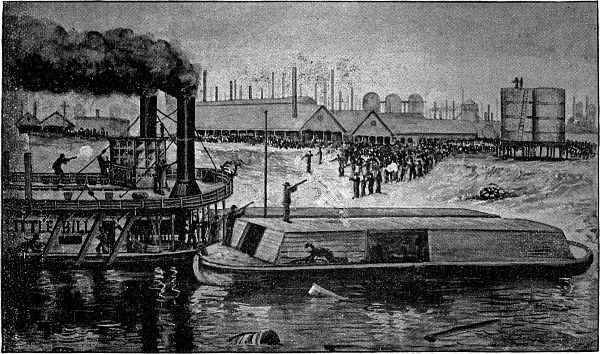
Early on July 6, Pinkerton guards arrived by barge at the mill’s river landing. Workers and supporters had learned of the plan and gathered to block them. Gunfire erupted during the confrontation, and fighting continued for much of the day. People on both sides were killed or wounded. The agents ultimately surrendered rather than seize the works. During their departure, some were assaulted by members of the crowd despite the surrender. The event became one of the most widely reported labor battles of the nineteenth century. Accounts differ about who fired first, and historians should not claim certainty where contemporary evidence is contradictory.
How many people were killed?
Several workers and Pinkerton agents died in the July 6 battle, and many more people suffered injuries. The precise number depends on whether later deaths from wounds are included and which accounts are consulted. Published summaries vary, so using an unexplained exact count risks creating false precision. The confrontation was deadly for both sides, and the violence continued to shape the community long afterward. It is important to distinguish deaths during the river battle from later incidents, including an attack on Henry Clay Frick. The casualty total alone cannot capture the injuries, fear and economic hardship experienced by workers and their families.
How did the Pinkertons surrender?
By the end of the confrontation the Pinkerton guards could not secure the steelworks and agreed to surrender. Workers and other people in the town escorted the agents out, but some members of the crowd beat or threatened them. The mistreatment of surrendered guards intensified public controversy and gave opponents of the strike powerful material for condemning workers. The surrender did not mean the union had won a final victory over the company. Management retained financial resources and could call upon state authority. The event shows why immediate control of a river landing was different from control of the plant’s future operating arrangements.
When did the state militia arrive?
Pennsylvania’s governor deployed the state militia, which entered Homestead on July 12, 1892. Its arrival shifted the balance of force. State soldiers secured the area, allowing the company to reopen and bring in replacement employees. The intervention did not settle the wage dispute through negotiation; it created conditions in which management could resume operations despite union opposition. Supporters of the company emphasized the restoration of order, while workers regarded the soldiers as facilitating the defeat of collective bargaining. The role of state forces is central to understanding why the union’s success against the Pinkertons on July 6 did not determine the eventual outcome.
What happened to replacement workers?
Carnegie Steel hired replacement workers to restart production once access to the plant was secured. Their arrival was controversial because union members saw it as an attempt to break the organization and replace those resisting new conditions. Some replacements faced hostility, while others accepted jobs because they needed income or had not shared the union’s commitments. Management used replacement labor to reduce its dependence on the organized skilled workforce. The dispute was not resolved by management conceding its initial bargaining position. The ability to maintain production without the existing union became a major factor in the strike’s failure.
What happened when Alexander Berkman attacked Frick?
On July 23, 1892, anarchist Alexander Berkman attempted to assassinate Henry Clay Frick at the company’s office in Pittsburgh. Frick was wounded but survived. Berkman was not acting as an authorized representative of the union, and the attack should not be treated as part of a negotiated strike strategy. Nevertheless, the incident damaged public sympathy for the labor cause and intensified the portrayal of industrial protest as dangerous radicalism. The attempt took place more than two weeks after the river battle and is a separate event. Its chronology matters because later retellings sometimes merge the two episodes into one continuous shootout.
Did Andrew Carnegie support the union?
Carnegie’s public statements at times expressed sympathy for workers, but his management of the Homestead enterprise and his support for Frick’s approach in 1892 are not consistent with the idea that the owner protected union recognition. He remained away from the site during the crisis, creating room for later claims that Frick alone was responsible. Historians examine company correspondence, financial priorities and the owners’ subsequent statements to assess their roles. Carnegie’s philanthropic legacy does not erase his connection to a decisive defeat for organized steelworkers. The case illustrates the difference between public language about labor and actual corporate policies during a dispute.
How did the strike end?
The strike continued for months after the July confrontation, but workers’ resources diminished while management resumed operations using replacement labor. The Amalgamated Association ultimately lost its position at Homestead, and the dispute ended in November 1892. Union membership and bargaining power in much of the steel industry weakened significantly. A short account that describes July 6 as a victory for the strikers is therefore incomplete. Workers had prevented the initial private security landing, but they did not secure a lasting agreement. The long-term result was a company victory achieved through industrial resources and the support of state intervention.
What did the Homestead Strike mean for American labor?
The strike showed the difficulties faced by industrial unions when major companies could coordinate security, replacement hiring and legal measures to withstand a work stoppage. It also exposed the use of private force and the political influence surrounding large corporations. The labor movement remembered Homestead as a cautionary example of how hard collective bargaining could be without a stronger legal framework. The conflict did not end union organization nationwide; workers continued campaigning elsewhere. The later Haymarket memory and the eventual expansion of federal labor protections belong to a broader history in which conflicts shaped public attitudes and reform efforts.
How did Homestead compare with the Pullman Strike?
Homestead centered on a steelworks and a violent struggle over control of company property, while the 1894 Pullman conflict began with manufacturing employees but expanded through a nationwide railroad boycott. Both involved management resisting union demands and state or federal authority intervening in ways that helped end labor action. Their structures were not identical: the Homestead confrontation included private Pinkerton guards, while Pullman became closely associated with an injunction and federal troops. Comparing them helps explain why industrial labor disputes became national political questions. It also shows the diverse strategies employers and unions used before the emergence of stronger twentieth-century collective bargaining laws.
Where can readers research the strike?
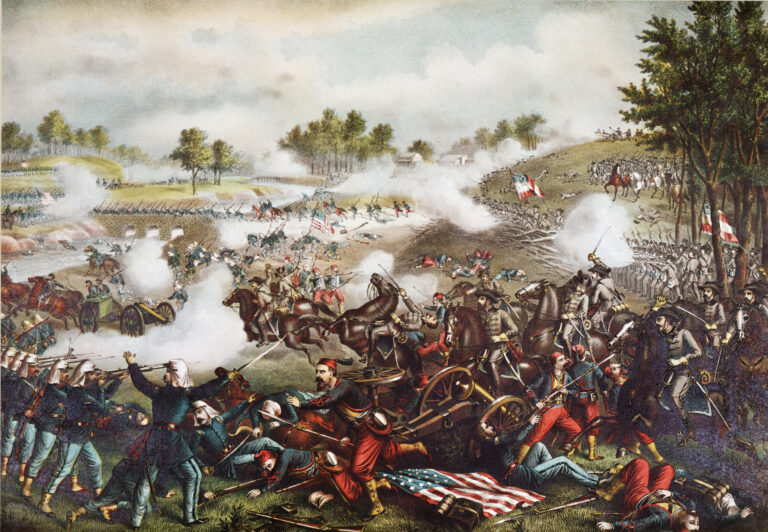
The Library of Congress business history guide explains the chronology and links to contemporary sources. The Digital Public Library of America offers a collection of photographs, documents and interpretation. Period illustrations, like the image accompanying this guide, show how the confrontation was represented to newspaper readers rather than serving as perfectly accurate photographs. Historians compare company letters, worker testimony, police reports and political responses to understand responsibility and outcomes. The main question is not simply which side won a day of fighting, but how a strike that captured a mill entrance ended in the collapse of union bargaining power.
Homestead Strike timeline
| Date | Event |
|---|---|
| Early 1892 | Carnegie Steel management and union disagree over wage agreement. |
| Late June | Lockout and security preparations around Homestead works. |
| July 6 | Pinkerton guards and workers clash at river landing. |
| July 12 | Pennsylvania militia enters Homestead. |
| July 23 | Alexander Berkman attempts to assassinate Frick. |
| November 1892 | Strike fails; union loses bargaining position. |