Wounded Knee Massacre (1890): Spotted Elk and the Ghost Dance
Why federal troops fired on Spotted Elk’s community and how the massacre is remembered.
On December 29, 1890, U.S. Seventh Cavalry soldiers killed many Lakota men, women and children near Wounded Knee Creek in South Dakota while attempting to disarm Spotted Elk’s band. It followed federal alarm over the Ghost Dance movement and the killing of Sitting Bull. Estimates vary, with more than 150 to as many as 300 Lakota deaths reported.
A source-based guide to the people, events and aftermath, distinguishing contested opening moments from the documented deaths of civilians.
On this page — 21 topics
What happened at Wounded Knee?
On December 29, 1890, U.S. Seventh Cavalry soldiers tried to disarm a Lakota encampment near Wounded Knee Creek in South Dakota. A shot was fired during the tense confrontation, though eyewitness accounts differ about precisely how it began. Soldiers then opened extensive fire, killing numerous men, women and children, including people fleeing the camp. Some U.S. soldiers also died. The event is widely described as a massacre because of the scale of noncombatant deaths. It occurred during a military mobilization driven by fears of the Ghost Dance movement and cannot be understood apart from decades of land loss, reservation restrictions and federal coercion against Lakota communities.
Where did the massacre take place?
The violence occurred near Wounded Knee Creek on the Pine Ridge Reservation in southwestern South Dakota. The landscape of draws, low hills and open winter prairie shaped the movements of soldiers and people attempting to escape. A Lakota community was camped there with tipis, supplies, families and livestock, not assembled as a conventional army preparing for a pitched battle. U.S. troops surrounded the camp and positioned weapons nearby. That deployment increased the danger when shooting began. The place is now a site of mourning and living Lakota memory. Visitors and researchers should distinguish photographs made after the killing from evidence recorded during the event itself.
Who was Spotted Elk?
Spotted Elk, known as Big Foot in many nineteenth-century English-language sources, was a Miniconjou Lakota leader. He was ill, reportedly with pneumonia, when his band was intercepted by soldiers. His followers included elders, children and other people who were not combatants. Spotted Elk was killed at Wounded Knee. Accounts using inconsistent translations of Lakota names can make research confusing, so the identification of individuals and families deserves careful attention. He was not merely a subordinate in a story centered on army officers: he led a community seeking security under extremely difficult conditions. His death represents part of a larger loss of life and leadership.
What was the Ghost Dance?
The Ghost Dance was a religious movement associated with the Northern Paiute prophet Wovoka that spread among several Indigenous peoples in the late nineteenth century. Followers hoped for renewal, restoration of loved ones and a better future after years of hardship. The meaning and practices differed among groups. U.S. agents and newspapers sometimes treated the ceremonies as a conspiracy to launch an uprising, overlooking the movement’s spiritual nature. Federal anxiety about the Ghost Dance helped drive troop deployments in 1890. Historical accounts should not present every participant as an armed rebel or assume that religious gatherings automatically meant preparation for violence against nearby settlers.
Why had tensions grown in 1890?
Lakota communities faced restricted movement, inadequate resources, land losses and intrusive federal oversight. The Dawes Act era strengthened efforts to transform Indigenous political and economic life through allotment and assimilation. Government officials were alarmed by large religious gatherings and feared that their authority was weakening. Reports were sometimes distorted by cultural misunderstanding and sensational newspapers. The military response brought troops into a region already suffering from anxiety and deprivation. None of these pressures began in the final week of December. The massacre was the culmination of a wider crisis over sovereignty, religion and reservation policy, not a spontaneous misunderstanding that can be explained solely by a disputed gunshot.
What happened to Sitting Bull?
Sitting Bull, a Hunkpapa Lakota leader who had resisted federal expansion, was killed on December 15, 1890, during an attempted arrest at Standing Rock. The confrontation caused other deaths and increased fear throughout nearby Lakota communities. Sitting Bull had been an important political and spiritual leader associated with Indigenous resistance during the 1876 Little Bighorn campaign. His killing occurred fourteen years later under different circumstances. The connection is historical but should not be described as one unbroken battlefield engagement. It contributed to the movement of people who feared detention and sought safety, including Spotted Elk’s band.
Why was Spotted Elk’s band moving?
Members of Spotted Elk’s community traveled amid rumors, military deployments and growing anxiety after Sitting Bull’s death. Their goal was to seek greater security, and the group included vulnerable people moving in winter conditions. U.S. cavalry intercepted the band and escorted it toward Wounded Knee Creek. The presence of some firearms did not make every individual a combatant, and movement between reservations or communities was not itself proof of a plan to attack soldiers. Military accounts written from the authorities’ viewpoint often represented such movement as suspicious. The composition of the group and its actual circumstances should be considered before characterizing the encounter as an ordinary military confrontation.
What happened during the disarmament?
On the morning of December 29, soldiers gathered Lakota men and began collecting or searching for weapons. Accounts differ concerning individual movements, arguments and the initial shot. Because witnesses contradicted one another, it is unsafe to reconstruct every second as a certain sequence. What followed is more clearly established: extensive shooting spread through the camp, and numerous civilians were killed. Federal forces had substantial military superiority and had positioned artillery around the site. Whether the first discharge was deliberate or accidental does not settle the separate question of how soldiers used force afterward. This distinction is central to understanding the event as a massacre.
What was the role of Hotchkiss guns?
The Seventh Cavalry deployed Hotchkiss guns near the Lakota camp. These light artillery weapons could fire explosive shells and were capable of causing devastating harm to people in a confined encampment. Their placement showed that soldiers anticipated possible resistance even while the group included families and people who could not readily escape. Historical accounts describe widespread fire after the initial confrontation, with artillery contributing to the destruction. There is no need to invent a detailed sequence for each gun to recognize that such weapons created a serious imbalance. The military preparations and the camp’s physical vulnerability help explain why the casualty toll was so high.
How were women and children affected?
Women and children died inside the camp and while fleeing into the surrounding winter landscape. These deaths are among the strongest reasons historians distinguish Wounded Knee from a conventional battle between armed units. Many people were not carrying weapons or taking part in organized combat. Surviving testimony records efforts to escape and the deaths of relatives. The exact number of noncombatants cannot be determined with complete certainty, and some records contain inconsistent identifications. Nevertheless, the scale of civilian killing is well documented. An account that reports only soldiers’ casualties or depicts everyone present as an enemy fighter misrepresents the human consequences of the operation.
How many Lakota people were killed?
Historical estimates vary because not every body was identified, some wounded people died later and the records were compiled under difficult conditions. Commonly cited estimates range from more than 150 Lakota deaths to approximately 250–300. The University of Nebraska’s Encyclopedia of the Great Plains describes more than 250 and possibly 300 Native fatalities. About twenty-five U.S. soldiers were killed, with some potentially struck by friendly fire. These figures are not interchangeable with the total number wounded or displaced. Reporting an unsupported exact death toll creates false precision. The loss also included survivors whose families, livelihoods and sense of security were devastated.
What happened after the soldiers withdrew?
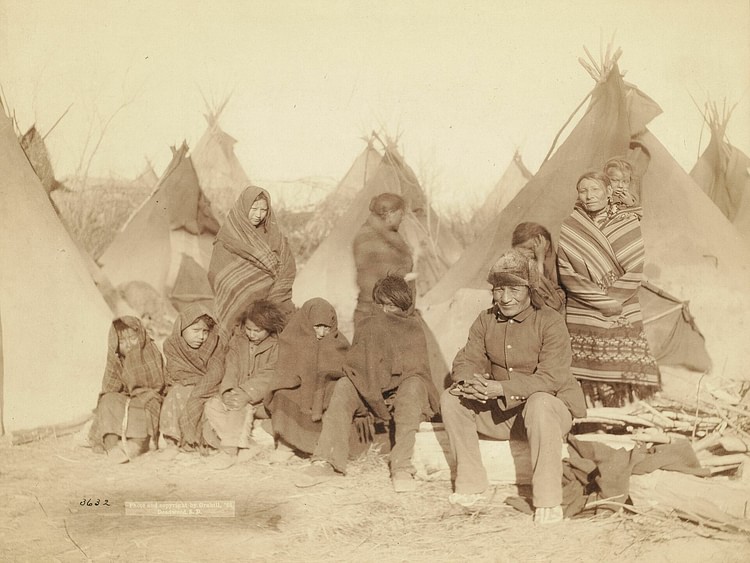
The dead and wounded were left in severe winter conditions, and recovery and burial operations took place after a delay. Photographs made in the aftermath circulated widely and became part of public arguments over the event. Some images show bodies and should be handled sensitively rather than used for spectacle. The photograph accompanying this article shows survivors of Spotted Elk’s band in January 1891, not the moment of the massacre. That distinction in date and subject matters. The full aftermath included grief, medical care, inquiries and efforts to record the names of victims. Later photographs cannot substitute for the voices of those who lived through the violence.
How was the killing reported in newspapers?
Contemporary newspapers drew heavily on army statements and reports from the region, some of which framed the incident as suppressing an uprising. Others questioned the conduct of soldiers and emphasized the killing of women and children. Rumors and anti-Indigenous stereotypes shaped early coverage. The Library of Congress’s historical newspaper guide allows readers to examine how accounts changed as more information emerged. Such stories are valuable evidence of public opinion, but they must be compared with Lakota testimony and later historical investigation. The language used in an 1890 headline should not be copied uncritically as an authoritative description of the people attacked.
Why were soldiers awarded Medals of Honor?
Several U.S. soldiers received Medals of Honor for actions associated with Wounded Knee. Those decorations reflect the military award decisions of the period and have become subjects of demands for review or rescission. The fact that medals were presented does not prove the operation was morally justified or that the victims were all legitimate military targets. Historical discussion should distinguish the original wording of an award citation from subsequent evaluation of the massacre. Descendants of Lakota victims have argued that the decorations conflict with recognition of civilian suffering. The controversy is part of a continuing debate over memory, federal accountability and the ways military institutions commemorate violent events.
Did Wounded Knee end the Indian Wars?
Wounded Knee is often called the last major confrontation of the Plains Indian Wars, but no single date ended the federal government’s conflicts with Indigenous nations or the struggle over land and rights. Other forms of coercion and resistance continued after 1890. The massacre is nevertheless a symbolic endpoint for a long era of military campaigns on the northern Great Plains. It should not be described as a final victory that brought peaceful equality. The event illustrated how reservation control and assimilation policy could culminate in mass violence. Native nations continued preserving their languages, cultures and political institutions despite the losses experienced by their communities.
How is Wounded Knee remembered today?
The site remains significant to Lakota families and descendants, who commemorate those killed and preserve accounts handed down within communities. Wounded Knee also became the site of another major event in 1973 involving the American Indian Movement and federal authorities. The two dates should not be confused, and historical photographs must be identified accurately. Memorials and public histories have changed as more attention has been given to Indigenous testimony and the deaths of civilians. The most respectful interpretation does not treat Lakota people only as victims of a completed past, but recognizes ongoing community life, sovereignty and the right of descendants to explain their own history.
How does the event connect to federal land policy?
Wounded Knee occurred during a period when laws such as the Dawes Act were reshaping reservation landholding and federal authorities were attempting to suppress cultural autonomy. The Dawes Act did not order the massacre, but it formed part of a larger assimilation system that denied Native nations meaningful control over many aspects of life. The troops’ actions arose amid suspicion toward the Ghost Dance, disputes over movement and a history of coercion. A comprehensive explanation connects military events with those political conditions without reducing every cause to a single statute. The consequences were borne by families as well as tribal communities.
Where can the history be verified?
The Library of Congress Wounded Knee guide identifies contemporary newspaper records, while the University of Nebraska’s Encyclopedia of the Great Plains supplies a researched chronology and casualty discussion. Smithsonian collections preserve material relating to Native communities and the event. The sources do not always agree about individual actions in the first moments, so readers should be wary of reconstructions claiming complete certainty. Historical research is strongest when it considers Lakota accounts alongside military documents, photographs and the conditions that preceded the massacre.
Timeline
| Date | Event |
|---|---|
| December 15, 1890 | Sitting Bull killed during attempted arrest. |
| December 28 | Spotted Elk’s band reaches Wounded Knee under escort. |
| December 29 | Disarmament attempt leads to mass killing. |
| January 1891 | Burials and documentation follow. |