Shenandoah Valley Campaign (1864): Sheridan, Early and the Burning
Sheridan’s army defeated Confederate forces in the Valley and destroyed resources used to supply them.
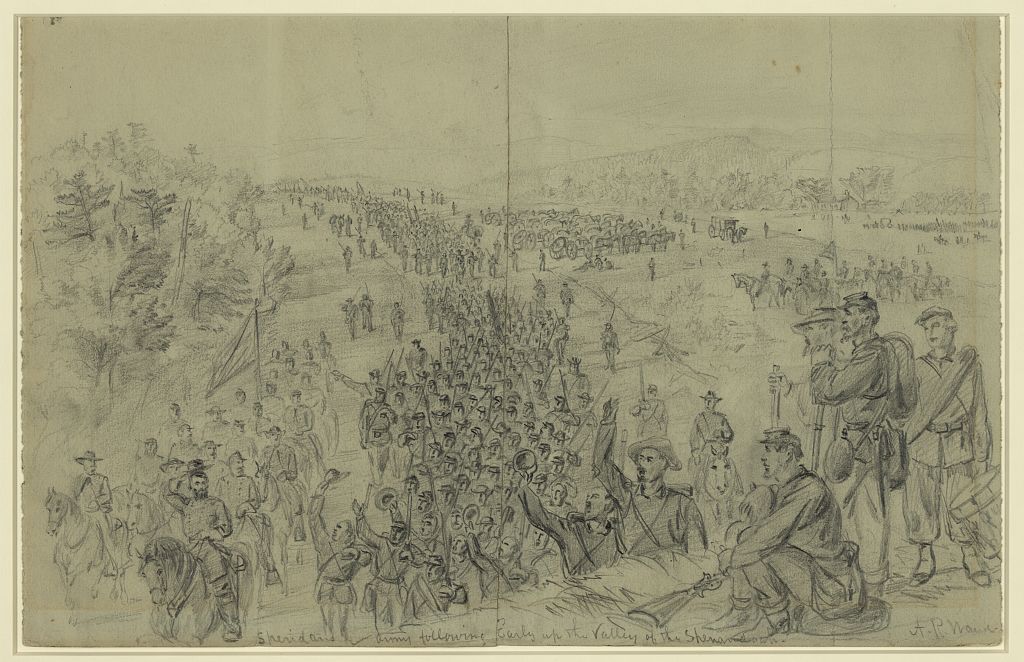
The 1864 Shenandoah Valley Campaign pitted Union general Philip Sheridan against Confederate general Jubal A. Early in Virginia. After Early’s threats toward Washington, Sheridan took command in August and defeated Confederate forces at Third Winchester on September 19 and Fisher’s Hill on September 22. Union troops then destroyed farms, barns, mills and supplies during the Burning. A surprise Confederate attack at Cedar Creek on October 19 was reversed by a Union counterattack.
A source-based guide to the sequence, commanders, decisions and historical consequences.
On this page — 20 topics
What was the 1864 Shenandoah Valley Campaign?
The Shenandoah Valley Campaign in the second half of 1864 was an effort by Union troops to end the Confederate army’s ability to threaten the northern states from western Virginia. The Valley was both a geographic corridor for movement toward Maryland and Pennsylvania and an agricultural region capable of providing food and fodder to Confederate forces.
Philip Sheridan took charge of a new federal army and pushed against Jubal Early’s Confederate command. The campaign featured conventional battles, cavalry operations and deliberate destruction of agricultural resources. Its main results were a major reduction in Confederate military power in the Valley and a severe economic blow to many residents.
Why did the Shenandoah Valley matter strategically?
The Shenandoah Valley extended southwest to northeast, bounded by mountain ranges and connected to routes toward the Potomac River. A Confederate army operating there could threaten northern transportation and settlements while avoiding some of the stronger Union positions around Washington. The corridor had been used repeatedly during the war.
The fertile region also provided grain, livestock and other resources important for armies. Railroads and turnpikes affected the speed of troop movements, while mountain gaps shaped approaches from the east. Its strategic value was not simply that commanders could march through it; the resources and access routes made the Valley difficult for Union leaders to ignore.
How did Jubal Early threaten Washington?
In the summer of 1864, Lee sent Early’s force north in an attempt to ease pressure on Richmond and Petersburg. Early moved through the Valley and into Maryland, fighting Union troops at Monocacy on July 9. The delay created by that battle helped protect Washington, even though the Confederates won the field.
Early approached the federal capital’s defenses, creating alarm before retreating. His raid demonstrated that Union control of the Valley was incomplete. The threat also frustrated a national strategy intended to keep pressure on Lee. Federal commanders needed a force that could defeat Early and prevent another raid from becoming a serious danger.
Who was Philip Sheridan?
Philip H. Sheridan was a Union general known for energetic command of cavalry and combined forces. Grant chose him to direct operations against Early in the Shenandoah Valley. He assembled infantry and cavalry under a unified command and worked to establish a favorable moment to attack rather than rush into strongly defended terrain.
Sheridan’s reputation grew after his autumn victories, but those results depended on subordinate officers, logistics and troops who had already endured years of war. His campaign also included systematic destruction of civilian agricultural property, a controversial dimension that needs to be assessed alongside the conventional battlefield successes.
Who was Jubal Early?
Jubal A. Early was a Confederate general commanding a smaller force tasked with distracting Union armies and maintaining control of valuable territory. He had participated in earlier Virginia campaigns and conducted the 1864 raid toward Washington. His mobility was an advantage, but his army lacked the resources available to Sheridan.
Early relied on defensive positions, aggressive movements and knowledge of the Valley road network. As reinforcements were drawn away and Union forces concentrated, his army struggled to match the size and equipment of its opponent. His eventual defeat was not the product of one error alone, but of sustained military pressure and reduced Confederate options.
What happened at Third Winchester?
On September 19, Sheridan attacked Early near Winchester in a battle also known as Opequon. Union infantry moved along the Berryville Pike and engaged Confederates who had time to concentrate. The fighting was severe before Union cavalry and additional infantry struck against exposed parts of Early’s line.
Early’s force eventually withdrew southward. The National Park Service regards Third Winchester as one of the Valley’s most significant battles because of its scale and outcome. The victory changed the campaign’s momentum and forced Confederate troops toward another defensive position rather than allowing them to threaten the northern end of the Valley freely.
Why was Fisher’s Hill important?
Early attempted to establish a new defense at Fisher’s Hill after the defeat at Winchester. The position appeared strong because high ground and nearby mountains restricted the approaches. Sheridan’s army, however, identified an opportunity to strike a vulnerable part of the line with a turning movement.
On September 22, Union attacks broke the Confederate defense and compelled another retreat. The victory made it easier for Sheridan to move south and prevented Early from rebuilding a stable line quickly. Studying Fisher’s Hill alongside Third Winchester shows that battlefield defeats could have cumulative effects even when an army escaped immediate destruction.
What was the Burning?
Following his battlefield successes, Sheridan carried out orders to damage the Valley’s capacity to supply Confederate armies. Union troops destroyed or seized barns, mills, stored grain, livestock and other agricultural resources in a campaign remembered as the Burning. The destruction focused on infrastructure and supplies considered militarily useful.
For civilians, the consequences went far beyond a temporary shortage of food for Confederate soldiers. Farmers lost property and winter provisions, and households faced substantial hardship. It is therefore misleading to discuss the Burning only as a clever logistical maneuver. Its military purpose and human consequences must be considered together.
Was the Burning the same as Sherman’s March?
No. Sheridan’s destruction in Virginia and Sherman’s March through Georgia both attacked resources supporting Confederate war-making, but the campaigns occurred in different regions and had different immediate objectives. Sheridan was fighting Early and seeking to deny the Valley’s supplies to Confederate forces.
Sherman moved from Atlanta toward Savannah in November and December 1864. Sheridan’s operations in the Valley concentrated on destroying local agricultural capacity following September victories. Comparing the campaigns is useful for understanding Union strategy, but dates, commanders and civilian experiences should not be merged into a single event.
What happened at Tom’s Brook?
After destructive operations farther south, Sheridan began pulling his army back toward the lower Valley. Confederate cavalry pursued and harassed the retreat. On October 9, Union cavalry attacked its Confederate opponents at Tom’s Brook and inflicted a severe defeat, damaging the latter’s ability to challenge mounted federal forces.
The action became known as the Woodstock Races because of the distance some Confederate horsemen fled. It matters beyond its colorful nickname: control of reconnaissance and the roads helped determine where armies could move and how much information commanders received. Sheridan’s mounted troops became more confident as Early’s ability to interfere declined.
How did the Confederates plan the Cedar Creek attack?
Early looked for a way to surprise Sheridan’s larger army encamped near Cedar Creek and Belle Grove. Confederate officers investigated the Union positions and developed a plan that used difficult routes and predawn movement. The goal was to strike exposed federal troops before the full Union army could respond.
On October 19, Confederate columns crossed streams and approached in darkness and fog. The early attack routed parts of the federal army and briefly threatened to reverse the campaign’s results. It demonstrated that Early’s command retained the capacity for a dangerous offensive despite defeats in September.
How did Sheridan reverse the battle?
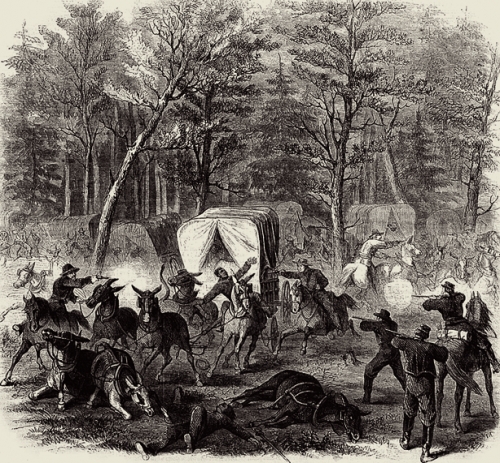
Sheridan was absent from the battlefield at the start of the Confederate attack and returned from Winchester after receiving news of the fighting. Union officers attempted to reorganize their soldiers, and Sheridan’s arrival helped restore confidence and direction. The federal army eventually mounted a strong afternoon counterattack.
Early’s forces were driven from positions gained earlier in the day, losing much of their remaining effectiveness as a field army in the Valley. The victory at Cedar Creek became a memorable example of a battle whose apparent outcome changed dramatically. Its significance is clearer when it is understood as the culmination of the September and October campaign.
How did these victories affect Lincoln’s reelection?
The Union experienced severe losses in 1864, and many voters doubted whether the war could be won. The capture of Atlanta in September and victories in the Valley offered evidence that federal armies were achieving important results. Cedar Creek’s timing, just weeks before the presidential election, made its news especially prominent.
Lincoln defeated George B. McClellan in November. Military successes did not determine every voter’s choice, but they weakened claims that Union victory was impossible. Our 1864 election guide examines the candidates, party platforms and voting results in more detail.
How many casualties were there in the campaign?
The Valley Campaign caused substantial losses across several separate battles. Third Winchester alone produced thousands of killed, wounded, captured and missing soldiers, while Cedar Creek inflicted thousands more. It would be misleading to add estimates from different studies without checking that the dates and definitions match.
Historical casualty totals are particularly sensitive to whether cavalry skirmishes, prisoners and smaller engagements are included. The National Park Service publishes estimates for individual battles, which are more useful than an unexplained total for the entire autumn. Casualties are not equivalent to deaths, and figures should be presented with their source.
How did the campaign affect enslaved people?
The Shenandoah Valley was a slaveholding region, and military operations altered the balance of power between enslavers and enslaved people. The approach of Union forces offered some people routes toward freedom. At the same time, armies requisitioned goods, destroyed property and displaced communities of different backgrounds.
An account limited to white generals and famous cavalry charges overlooks those experiences. Black Americans were not merely observers of military victories; emancipation, movement and wartime labor changed their prospects. The campaign belonged to the larger Civil War struggle over slavery, a central cause of the conflict and a defining issue for Reconstruction.
Why is Sheridan’s campaign historically important?
The Union’s autumn victories substantially reduced the Confederate army’s ability to operate in the Valley and to threaten Washington. They also helped the Union effort to wear down Confederate logistical resources. Military and political consequences coincided at a crucial moment before the 1864 election.
The victories came at considerable human cost, especially for residents affected by the Burning. The best understanding therefore avoids treating the campaign either as pure battlefield glory or solely as devastation. Both dimensions belong to a history of how the war’s later campaigns combined conventional combat with pressure against the resources sustaining resistance.
Shenandoah Valley Campaign 1864 timeline
These dates separate the turning points in the campaign or battle from its longer consequences.
| Date | Event |
|---|---|
| July 9 | Early’s forces fight at Monocacy during an offensive toward Washington. |
| August 7 | Sheridan assumes command of the Union Army of the Shenandoah. |
| September 19 | Union victory at Third Winchester/Opequon. |
| September 22 | Union victory at Fisher’s Hill. |
| Late September–early October | Federal troops destroy crops, barns, mills and other resources during the Burning. |
| October 9 | Union cavalry wins at Tom’s Brook. |
| October 19 | Early attacks at Cedar Creek; Sheridan’s army counterattacks and wins. |
| November 8 | Lincoln wins reelection after major Union military victories. |
Frequently asked questions
When did it happen? August–October 1864.
Where did it happen? Shenandoah Valley, Virginia.
Who were the main commanders? Philip Sheridan, Jubal Early.
What was the outcome? Union campaign victory. The sections above distinguish initial battlefield events from the final outcome.
How does it fit into the war? Our Civil War overview explains the larger chronology.
Historical sources and further reading
Sources draw on National Park Service battlefield research and preserved period documents; historical images are identified as contemporary or later artwork.