19th Amendment (1920): Women’s Suffrage, Ratification and Voting Rights
What the amendment changed in 1920, why suffragists fought for it, and which barriers remained.
The Nineteenth Amendment prohibits the United States and states from denying or abridging citizens’ voting rights on account of sex. Congress approved it on June 4, 1919; Tennessee supplied the thirty-sixth state ratification on August 18, 1920, and Secretary of State Bainbridge Colby certified it on August 26. The amendment was a landmark victory for women’s suffrage, although racial discrimination and other barriers continued preventing many women from voting.
This guide explains the exact constitutional language, ratification dates, key suffrage organizers and limitations after 1920.
On this page — 24 topics
What is the 19th Amendment?
The Nineteenth Amendment to the U.S. Constitution forbids the federal government and individual states from denying or abridging a citizen’s right to vote because of sex. Its adoption in 1920 was the culmination of a long movement involving petitions, speeches, political campaigns and civil disobedience. The amendment did not invent voting rights for every woman; some states and territories had already enfranchised women under local law. Its central achievement was to establish a nationwide constitutional rule against sex-based restrictions. That protection did not automatically erase other voting barriers, including discriminatory racial qualifications and procedures that continued to prevent many women from casting ballots. The original text is short but its historical consequences were profound.
What does the amendment actually say?
The text states that the right of citizens of the United States to vote shall not be denied or abridged by the United States or by any state on account of sex. A second section gives Congress power to enforce the article through appropriate legislation. The wording focuses on a specific reason for restricting access to the ballot: sex. It does not state that every resident is a citizen, that every person can vote regardless of age, or that all existing election procedures became invalid. This distinction is crucial to understanding both the amendment’s success and its limitations. For the exact wording, the National Archives reproduces the official document.
When did Congress pass the amendment?
After decades of failed proposals and legislative campaigns, Congress approved the constitutional amendment on June 4, 1919. The approval sent it to state legislatures for ratification, requiring support from three quarters of the states. Passage in Congress was therefore not the same as final adoption. Suffrage organizations immediately intensified pressure on state governments, while opponents continued to organize. In the period’s forty-eight-state union, thirty-six ratifications were needed. Congressional votes came after repeated campaigns and changing political alignments, including President Woodrow Wilson’s eventual endorsement of a federal amendment. The sequence is important for distinguishing a congressional milestone from the summer of 1920, when the rule became part of the Constitution.
What happened on August 18, 1920?
Tennessee’s legislature approved ratification on August 18, 1920, becoming the thirty-sixth state to ratify. That provided the required three-quarters majority under Article V of the Constitution. The vote followed political pressure from national organizers and local activists on both sides. The outcome became famous because one state could decide whether the amendment had enough approvals to become effective nationwide. Some popular accounts attribute the result to a single legislator changing his mind because of a letter from his mother; family correspondence is part of the public memory, but the state’s vote involved many participants and years of organizing. The result should not erase the work of generations of women before 1920.
Why is August 26 celebrated as Women’s Equality Day?
Secretary of State Bainbridge Colby certified the ratification of the Nineteenth Amendment on August 26, 1920, formally announcing the constitutional change. That date is commemorated as Women’s Equality Day in the United States. It differs from August 18, the Tennessee vote that completed the necessary number of state ratifications. Both dates belong in an accurate chronology. Certification also should not be confused with the congressional passage of June 4, 1919. Some accounts compress all three events into one day, which makes it harder to understand the amendment process. The distinction reflects how constitutional amendments require action by Congress, the states and the federal government to record the result.
Where did the women’s suffrage movement begin?
Women’s voting-rights activism in the United States developed through many local and national campaigns, and it cannot be traced to one single founding moment. The Seneca Falls Convention of 1848 became a major landmark because participants adopted the Declaration of Sentiments and demanded political equality, including voting rights. Women also organized in abolitionism, religious reform and other movements before and after the convention. Native, Black and other women had political traditions and campaigns not captured by a single northeastern gathering. The constitutional victory of 1920 therefore followed many decades of collective organizing, argument and changing views about citizenship and political representation.
Who were Elizabeth Cady Stanton and Susan B. Anthony?
Elizabeth Cady Stanton and Susan B. Anthony became major nineteenth-century leaders of organized women’s suffrage. They helped build organizations, circulate arguments and pressure legislatures to expand political rights. Stanton was closely associated with Seneca Falls, while Anthony became especially prominent for traveling, speaking and organizing over decades. Their work also contained disagreements and exclusionary rhetoric about race, particularly during conflicts over the Fifteenth Amendment after the Civil War. A balanced account recognizes their importance without presenting them as the only founders or as representatives of every woman. Many lesser-known activists made crucial contributions across different communities, states and generations.
How did the Fifteenth Amendment relate to women’s suffrage?
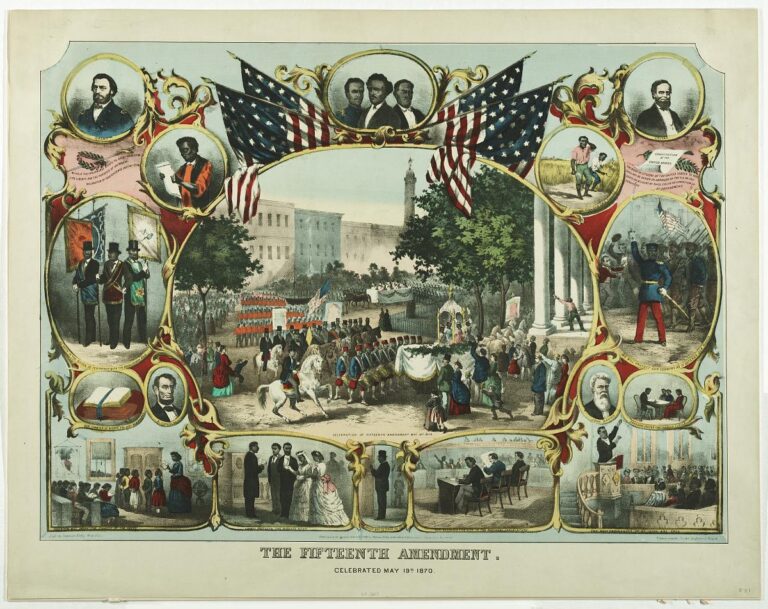
The Fifteenth Amendment, ratified in 1870, forbade voting discrimination on account of race, color or previous condition of servitude but did not prohibit sex-based restrictions. Its adoption created debates within the women’s rights movement about whether to support a voting-rights amendment that did not explicitly enfranchise women. Some activists prioritized racial justice and supported the measure, while others used racist arguments against it. These conflicts influenced later suffrage organizations and alliances. Our Fifteenth Amendment guide explains its historical text and limits. The eventual Nineteenth Amendment adopted a similar constitutional approach, targeting a specific ground of exclusion rather than establishing a completely uniform voting system.
Which states allowed women to vote before 1920?
Women in certain western states and territories obtained voting rights well before nationwide ratification. Wyoming Territory granted women suffrage in 1869 and retained it upon statehood in 1890. Colorado approved women’s suffrage by referendum in 1893, and other western jurisdictions followed. In some eastern states women could vote in school board elections or other limited contexts before being eligible for all elections. These varied arrangements demonstrate that women’s voting rights expanded unevenly by place and office. The national amendment standardized protection from sex-based exclusion, but women in earlier-suffrage states already had experience participating in elections, campaigning and holding public office.
What was the National American Woman Suffrage Association?
The National American Woman Suffrage Association, or NAWSA, became a major organization campaigning for suffrage through state and federal action. Leaders including Carrie Chapman Catt coordinated electoral efforts, lobbying and public communication. Its approach evolved as national momentum increased. NAWSA included many women from different backgrounds but also reflected the racism and regional politics of its era, sometimes compromising with segregationist views. Its achievements therefore cannot be equated with a fully inclusive movement. The organization helped build the political support needed for congressional approval and state ratification. Its work was one among several streams, including more confrontational organizing by the National Woman’s Party and Black women’s organizations.
Who was Carrie Chapman Catt?
Carrie Chapman Catt was a leading suffrage organizer and president of NAWSA during the final campaign for ratification. She promoted strategic lobbying and coordinated efforts across states, including an organized plan to secure support in legislatures and elections. Her leadership was influential in the years before and after Congress passed the amendment. Catt’s political strategy also involved choices that historians have criticized for accommodating racial prejudice in attempts to win support among white voters. Presenting her as one of the movement’s central leaders is justified, but it is important to examine whose rights were prioritized and which women faced continuing obstacles. The movement’s victory was broader than one person’s biography.
Who was Alice Paul?
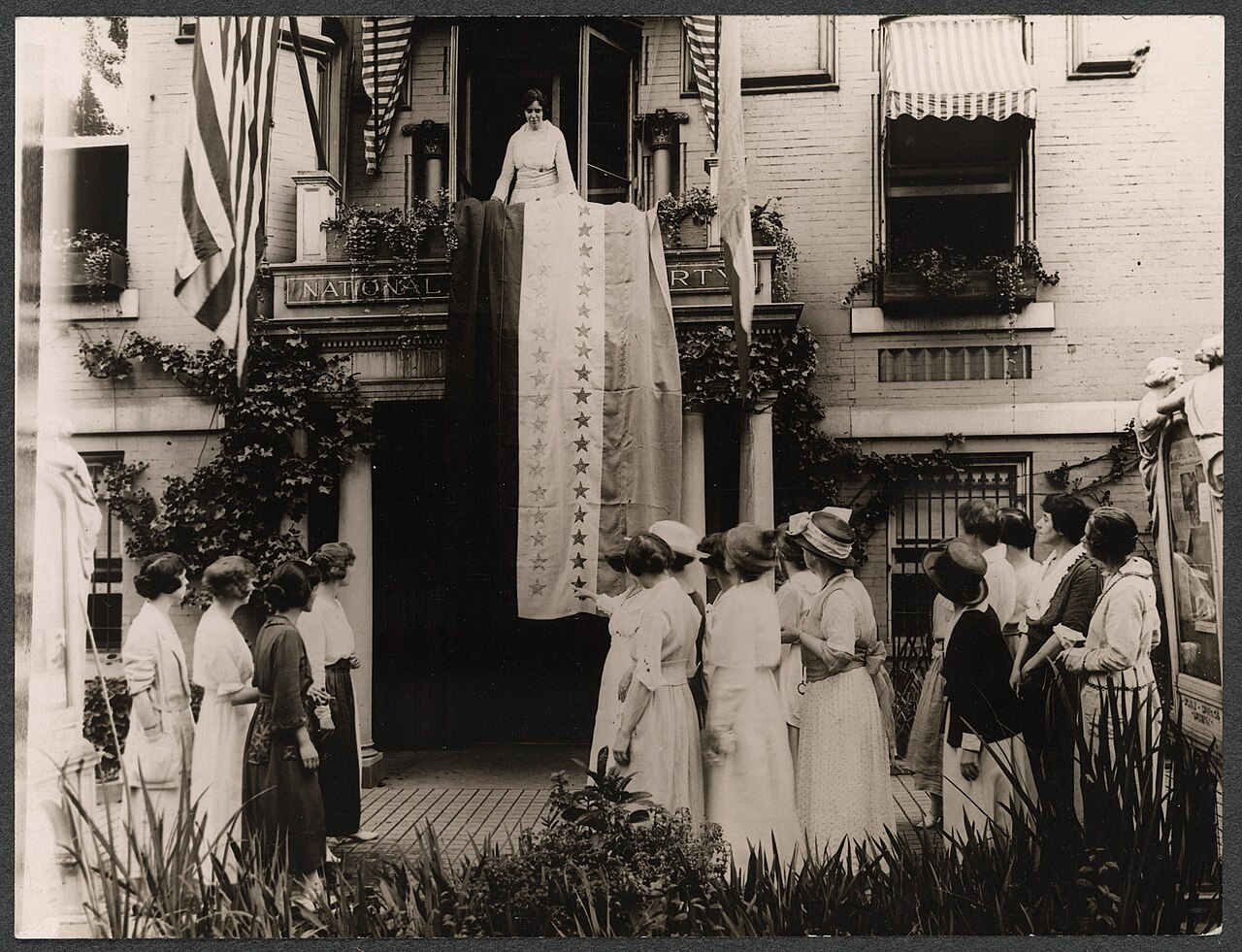
Alice Paul helped establish the Congressional Union and later led the National Woman’s Party, favoring sustained federal pressure for a constitutional amendment. She was associated with major marches, White House picketing and public demonstrations that drew attention to women’s exclusion from politics. Alice Paul is pictured with the National Woman’s Party ratification banner after Tennessee’s approval in 1920. The banner’s thirty-six stars represented the states needed for adoption, making it a carefully documented historic object rather than a decorative slogan. Her activism played an important role, but the movement included disagreements over tactics and racial inclusion. Many others organized at local, state and national levels.
What was the 1913 Woman Suffrage Procession?
In March 1913 a major suffrage procession marched in Washington, D.C., on the eve of Woodrow Wilson’s presidential inauguration. It gathered supporters from many places and made a national spectacle of the demand for votes. Crowds, harassment and inadequate protection created chaos, prompting criticism of authorities and further press coverage. The event demonstrated the ability of women’s political organizations to mobilize publicly in the nation’s capital. However, decisions about march order and racial participation reflected contemporary discrimination and caused tensions among suffragists. The procession helped shift public attention toward a federal amendment while revealing that the movement was not united on every question about social equality.
What were the Silent Sentinels?
Beginning in January 1917, women associated with the National Woman’s Party picketed outside the White House in a campaign known as the Silent Sentinels. They displayed banners challenging President Wilson and demanding support for a constitutional amendment. During wartime the demonstrations became especially controversial, with arrests and imprisonment of some activists. Accounts of conditions in jail, including hunger strikes and forced feeding, drew public attention. The campaign was one strategy among several used by different suffrage groups. It did not by itself change the Constitution, but it increased political pressure and helped make the denial of voting rights more visible as a national issue.
How did Black women shape the movement?
Black women such as Ida B. Wells-Barnett, Mary Church Terrell and many local organizers campaigned for voting rights while confronting both sexism and racial discrimination. They built clubs, challenged exclusion and argued that political participation was essential to protecting civil rights. Their efforts were sometimes marginalized by predominantly white suffrage organizations, and their concerns were not always included in national strategies. Black women’s activism connected the suffrage campaign with broader struggles against segregation and violence. The history of the Nineteenth Amendment is incomplete when only a few white leaders are named. The political work of Black women continued after ratification because Jim Crow barriers still obstructed access to the ballot.
Did the Nineteenth Amendment give all women the vote?
No. It prohibited voting discrimination based on sex but did not eliminate all other obstacles. Many Black women in the South continued facing poll taxes, literacy tests, intimidation and discriminatory election administration. Some Native women lacked U.S. citizenship under existing rules until Congress broadened citizenship in 1924, and additional barriers persisted. Asian immigrant women faced nationality and naturalization restrictions, while many residents of U.S. territories lacked the same political rights as citizens in states. Some women had already voted under state law before 1920. The victory was therefore a major constitutional protection, not universal and equal access to the polls for every woman in the United States.
What barriers affected Black women after 1920?
Even after the sex-based restriction was unconstitutional, Southern states used racially discriminatory voting requirements and intimidation to prevent many Black citizens from registering or voting. These practices affected women and men and were sustained through local administration and threats of violence. Black women organized voter education, community campaigns and civil rights advocacy despite these obstacles. The Voting Rights Act of 1965 later created stronger federal mechanisms to challenge racial discrimination, although political and legal disputes over voting access continued. The Voting Rights Act history connects the 1920 amendment with the longer civil rights struggle. A story that ends with nationwide equality in 1920 would overlook decades of exclusion.
When could Native American women vote?
The voting rights of Native American women depended on citizenship, residence, state law and federal policy. Some Native people had acquired U.S. citizenship through earlier laws or individual circumstances, but the Indian Citizenship Act of 1924 extended citizenship to all Native Americans born in the United States who had not already obtained it. That law did not instantly end state barriers or discrimination against Native voters. In some jurisdictions registration and voting remained restricted for decades. Native women also had political roles within their nations that were not dependent on participation in U.S. elections. Their experience shows why women’s suffrage history cannot be reduced to an exclusively white national campaign ending on a single day.
How did the amendment affect the 1920 election?
The 1920 presidential election was the first national election held after ratification of the Nineteenth Amendment. Millions of women were newly able to vote under the federal constitutional rule, while others already had suffrage through state law or still faced exclusion through racial and other barriers. Warren G. Harding won the presidency that year. The size and composition of the electorate changed significantly, but claims that all women voted as a single political bloc are unfounded. Women held diverse opinions about candidates, economic policy and reform. The amendment widened formal participation without eliminating differences in access, political priorities or the social pressures experienced by women in public life.
Why does the Nineteenth Amendment matter today?
The amendment is a central achievement in the constitutional history of the United States because it established that governments could not deny voting rights on account of sex. It represented generations of organizing, public protest, legal argument and state-level experimentation. Its limitations also demonstrate that eliminating one form of formal discrimination is not identical with guaranteeing everyone equal political power. The amendment’s history intersects with the Fifteenth Amendment, Indigenous citizenship, Jim Crow restrictions and later federal voting protections. Teaching both the victory and the continuing barriers gives a fuller account than portraying August 1920 as the moment at which all American women gained equal access to elections.
Where can the ratification history be verified?
The National Archives’ Nineteenth Amendment record confirms the congressional passage of June 4, 1919, the Tennessee ratification milestone of August 18, 1920, and Secretary of State Bainbridge Colby’s certification on August 26. The Library of Congress preserves photographs of Alice Paul and the ratification banner, together with collections about suffrage leaders, marches and organizations. National Park Service histories help recover the diversity of activists and the uneven effects of ratification. Primary sources show how the wording was negotiated, while later research explains why racial discrimination and citizenship barriers persisted. Both kinds of evidence are necessary to interpret the amendment responsibly.
Nineteenth Amendment timeline
| Date | Event |
|---|---|
| 1848 | Seneca Falls Convention demands political equality and voting rights. |
| 1869 | Wyoming Territory adopts women’s suffrage. |
| 1870 | Fifteenth Amendment prohibits certain race-based voting restrictions but not sex-based restrictions. |
| 1913 | Major Woman Suffrage Procession in Washington. |
| 1917 | Silent Sentinels picket White House; activists imprisoned. |
| June 4, 1919 | Congress approves Nineteenth Amendment. |
| August 18, 1920 | Tennessee becomes thirty-sixth state to ratify. |
| August 26, 1920 | Secretary of State Colby certifies amendment. |
| November 1920 | First presidential election after nationwide sex-based ban ends. |
| 1924 | Indian Citizenship Act broadens citizenship; barriers remain. |
| 1965 | Voting Rights Act addresses racial restrictions affecting women and men. |
Historical sources
- National Archives — 19th Amendment Original Document
- National Archives — Historical Suffrage Documents
- Library of Congress — Celebrating a Voting Victory
- National Park Service — 19th Amendment Interpretation
- U.S. Capitol Visitor Center — Alice Paul Banner
- Original Alice Paul Photograph — Library of Congress
- Library of Congress — Women’s Suffrage Collection