Emergency Banking Act of 1933: Bank Holiday, Reopening and Fireside Chat
How Roosevelt closed the banks in March 1933, what Congress authorized on March 9 and why confidence returned as institutions reopened.
Quick answer
President Franklin D. Roosevelt proclaimed a nationwide bank holiday effective March 6, 1933, amid widespread bank runs. Congress enacted the Emergency Banking Relief Act on March 9, giving federal authorities expanded powers to inspect, stabilize and reopen banks. Roosevelt explained the measures in his first fireside chat on March 12. Approved institutions reopened in stages beginning March 13. The March act did not create the Federal Deposit Insurance Corporation; that came with the Banking Act of June 16, 1933.
Key facts
On this page
- Why American banks were failing by 1933
- Why Roosevelt declared a nationwide bank holiday
- The Emergency Banking Relief Act of March 9
- How the government assessed bank condition
- Federal Reserve support and additional currency
- Roosevelt’s first fireside chat on March 12
- The bank reopenings of March 13–15
- What the law did not do: deposit insurance
- The role of gold controls and emergency powers
- How the banking response related to other New Deal measures
- Why March 1933 became a defining moment
- Timeline
- FAQs
- Sources
Why American banks were failing by 1933
During the Great Depression, falling asset values, loan defaults and fear of bank failures caused depositors to withdraw cash. Banks did not ordinarily keep every customer’s full deposits as currency in a vault; much of their funding supported loans or other assets. If many people sought withdrawals simultaneously, even an institution that owned valuable assets could struggle to meet demand immediately. Some banks were insolvent, while others faced a shortage of liquid funds or widespread suspicion.
By early 1933 runs and closures had spread across the country. State governors imposed restrictions or bank holidays in attempts to contain the panic, leaving a patchwork of rules and growing uncertainty. The crisis was not simply a stock market problem that remained within Wall Street. Ordinary families, stores, farmers and employers depended on banking for payroll, savings and everyday transactions. Restoring confidence was therefore central to broader economic recovery.
Why Roosevelt declared a nationwide bank holiday
Franklin D. Roosevelt entered office on March 4, 1933, as the financial emergency escalated. On March 6, he issued a presidential proclamation restricting banking transactions nationwide for several days. The measure is commonly called the bank holiday, although it was not a celebration or a normal public holiday. Its purpose was to pause withdrawals and other activity while federal officials assessed how banks could reopen without immediately triggering renewed runs.
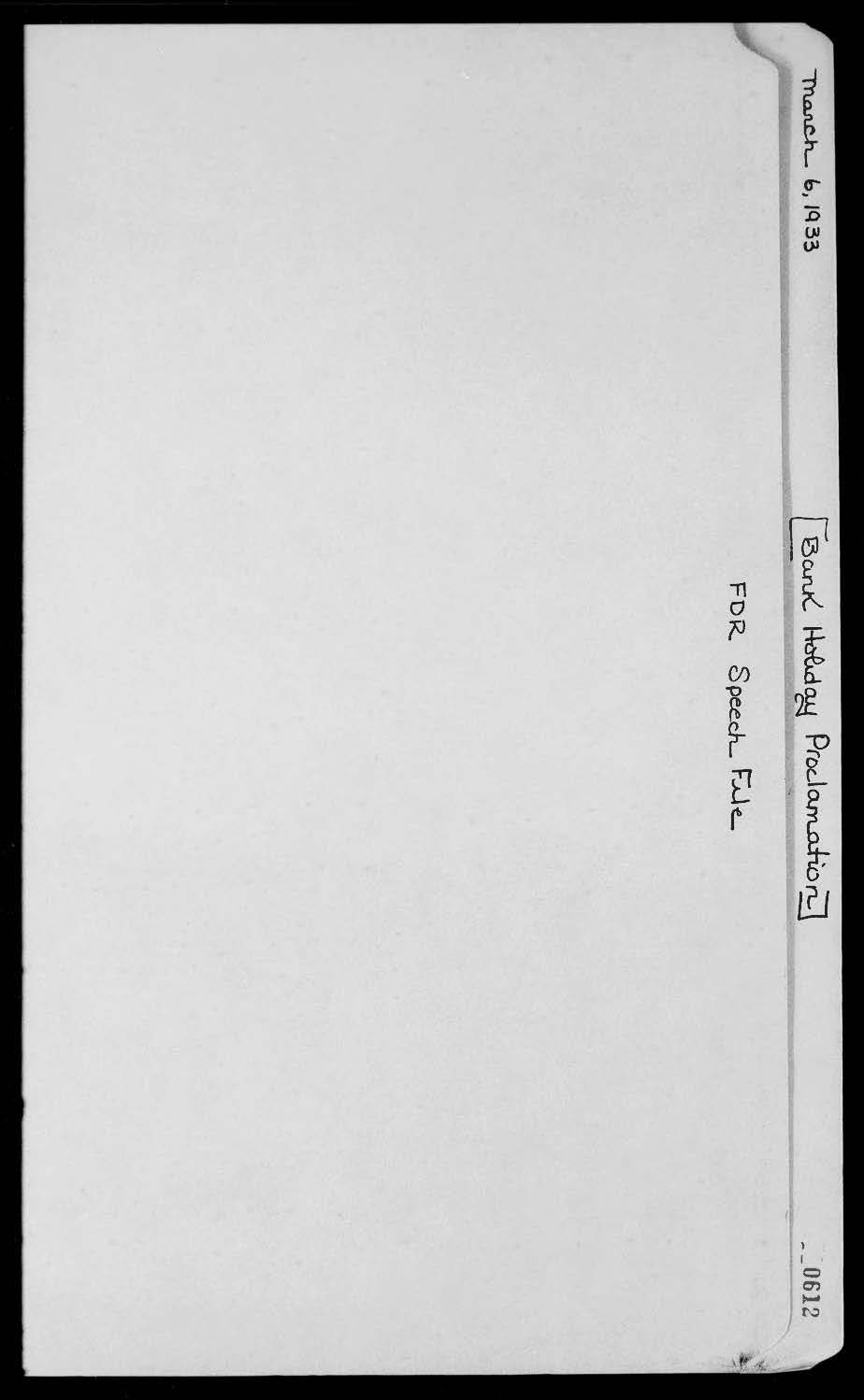
The proclamation, reproduced as this article’s image, was issued before Congress passed the Emergency Banking Act. That sequence matters: the administration used emergency executive authority to impose the initial halt, then sought legislation to clarify and expand the government’s powers. The bank holiday did not mean every bank was permanently nationalized or that all customer deposits had vanished. It was a temporary restriction designed to allow investigation and stabilization.
The Emergency Banking Relief Act of March 9
Congress met in special session and passed the Emergency Banking Relief Act on March 9, 1933, rapidly responding to legislation presented by the administration. The statute amended and strengthened federal authority over emergency banking transactions, provided for the appointment of conservators for certain banks and expanded mechanisms to support institutions able to reopen. Its passage was an extraordinary example of crisis legislation adopted within a short period after a new president took office.
The Federal Reserve’s historical account emphasizes how quickly the act moved through Congress. That speed should not be confused with a single sentence of policy: the law contained several provisions affecting different institutions. It also strengthened the legal basis for emergency controls over gold and financial transactions. The statute did not instantly cure every bank’s solvency problems. Implementation required detailed decisions by the Treasury, regulators and banking officials.
How the government assessed bank condition
The reopening process depended on distinguishing banks deemed sound enough to resume operations from those requiring reorganization or continued restriction. Treasury officials and banking authorities reviewed financial positions and applied emergency rules. Some institutions reopened rapidly, others only after support or restructuring, while many never returned to ordinary business. Banks across different regions did not resume on one identical date.
The criteria and decisions involved imperfect information. A bank might hold assets whose market prices were depressed, or it might suffer real credit losses that temporary liquidity could not solve. Public officials sought to avoid reopening institutions that would immediately fail again. The staged system communicated that a reopened bank had passed review, which was meant to restore depositor confidence. This was an important feature of the strategy alongside the legal power to close banks.
Federal Reserve support and additional currency
The emergency legislation expanded the ability of the financial system to supply currency and credit to banks meeting applicable conditions. Federal Reserve Banks played a role in providing support and allowing withdrawals to resume without exhausting immediately available cash. The government also sought to assure depositors that enough currency could circulate as confidence returned. The availability of cash was part of convincing people that they did not need to withdraw all their money at once.
This was not a simple federal promise to make all deposits risk-free. The March act provided emergency financial and regulatory mechanisms, not the later nationwide deposit-insurance program. The Federal Reserve Act of 1913 had created the central banking structure in an earlier crisis era. The 1933 response showed authorities attempting to strengthen the credit system when existing institutions proved insufficient to halt widespread runs.
Roosevelt’s first fireside chat on March 12
On the evening of March 12, 1933, Roosevelt addressed Americans by radio in a speech remembered as the first of his fireside chats. He explained how banks operated, why withdrawals could produce crises and why the government was reopening institutions selectively. The speech used relatively direct language to reach people anxious about their deposits and livelihoods. The Library of Congress and the FDR Presidential Library preserve the speech and contextual materials.
Communication was an important element of the plan. A depositor needed not only a functioning bank but also a reason to believe that keeping money on deposit was safer than withdrawing it immediately. Roosevelt explained that funds placed in a reopened bank could be safer than money hidden at home. The address did not guarantee that every bank was healthy, but it helped build public understanding of the staged reopening and may have reduced panic withdrawals.
The bank reopenings of March 13–15
Approved banks began reopening in stages on March 13, 1933, with additional institutions following over subsequent days. The schedule varied by region and bank category. At many reopened banks, depositors returned money rather than rushing to withdraw it, an encouraging sign of renewed trust. Contemporary accounts celebrated the change in confidence, but it would be misleading to say every closed bank reopened successfully or every depositor recovered lost savings.
The Federal Reserve’s Bank Holiday history explains why reopening was not uniform. Some institutions required conservatorship or further support, and failures had already caused irretrievable losses in many communities. The most immediate accomplishment was to break the destructive cycle of panic and allow much of the banking system to resume transactions. Full recovery of the wider economy remained distant, and federal reforms continued throughout 1933.
What the law did not do: deposit insurance
A frequent confusion is the claim that the Emergency Banking Act itself established the Federal Deposit Insurance Corporation. In fact, the FDIC was created by the Banking Act of June 16, 1933, also associated with Glass–Steagall. Temporary federal deposit-insurance coverage began in 1934. That system addressed the problem of depositors losing insured funds when a bank failed, rather than relying solely on emergency closures and reopening decisions.
The March and June laws are related but distinct. The March act aimed to stop an immediate crisis, stabilize bank liquidity and help authorities reopen suitable institutions. The June act introduced longer-term banking reforms, including separation of certain commercial and securities activities and deposit insurance. The Banking Act of 1933 article explains those later measures separately.
The role of gold controls and emergency powers
The bank holiday and related measures also operated amid concerns about gold withdrawals and the monetary system. The United States still had a gold-based monetary framework, and loss of gold reserves could constrain policy and public confidence. The Emergency Banking Act amended powers associated with the Trading with the Enemy Act and provided authority for emergency restrictions on specified financial dealings. Later executive orders and legislation changed the treatment of gold and the monetary system further.
These developments should not all be collapsed into one law. The 1933 banking emergency involved the March statute, proclamations, executive orders and subsequent monetary changes. Different legal acts had different dates and effects. A history article about March 9 should therefore discuss the emergency framework without claiming every gold policy of the decade was written into the original act.
How the banking response related to other New Deal measures
Banking stabilization was one of the first acts of Roosevelt’s administration. Congress soon passed legislation on relief, agriculture, conservation and regional development. The government also continued using the Reconstruction Finance Corporation, which Hoover had founded in January 1932 to provide emergency institutional credit. The early New Deal was therefore partly an expansion and redirection of existing tools, not the sudden creation of government finance from nothing.
The bank holiday’s immediate objectives differed from the longer-term aims of industrial recovery or employment programs. Reopening bank payments could make commerce possible again, but it did not automatically create jobs or restore household wealth. That distinction helps explain why policy continued after the initial reopening. Financial reform became one piece of a broader effort to stabilize markets and reduce the hardship of the Depression.
Why March 1933 became a defining moment
The bank holiday and Emergency Banking Act are remembered because they interrupted a severe financial panic and helped restore public confidence at a moment when many institutions seemed close to collapse. The administration combined temporary restrictions, rapid legislation, bank examination, access to liquidity and a persuasive radio address. Each element addressed a different part of the emergency. The effort was significant even though many banks had already failed and economic recovery remained incomplete.
The episode also illustrates a recurring tension: officials must respond quickly to financial panic while protecting legal accountability and avoiding indiscriminate support for institutions that cannot survive. Roosevelt’s actions strengthened the federal government’s role in banking emergencies. Comparing the bank holiday with later deposit insurance reveals how short-term crisis management and long-term structural reform can complement each other while remaining historically distinct.
Timeline
- March 4, 1933: Roosevelt inaugurated
- March 6: Nationwide bank holiday begins
- March 9: Emergency Banking Relief Act enacted
- March 12: First fireside chat
- March 13–15: Approved banks reopen in stages
- June 16: Separate Banking Act creates FDIC
- January 1934: Federal deposit-insurance coverage begins
Frequently asked questions
What date was the Emergency Banking Act signed?
March 9, 1933.
When did Roosevelt declare the bank holiday?
March 6, 1933, before Congress enacted the emergency statute.
Were all U.S. banks permanently closed?
No. Banking transactions were temporarily restricted and suitable institutions reopened in stages beginning March 13.
When was Roosevelt’s first fireside chat?
March 12, 1933, explaining the banking crisis and reopening measures.
Did the Emergency Banking Act establish the FDIC?
No. The FDIC was created by the Banking Act of June 16, 1933.
What was the purpose of the bank holiday?
To stop panic withdrawals temporarily, examine banks and organize a more orderly reopening.
Did every bank reopen?
No. Some institutions required reorganization or remained closed.