Sacco and Vanzetti Case (1920–1927): Trial, Evidence and Executions
Why the Massachusetts murder convictions of Nicola Sacco and Bartolomeo Vanzetti prompted worldwide protests and remain disputed.
Quick answer
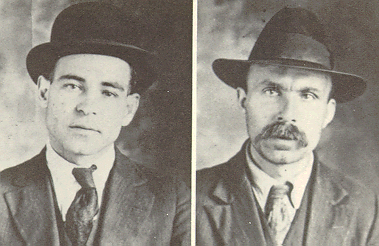
Nicola Sacco and Bartolomeo Vanzetti, Italian-born anarchists living in Massachusetts, were convicted of murder and robbery in 1921 in connection with the April 15, 1920 South Braintree payroll robbery that killed Frederick Parmenter and Alessandro Berardelli. They were executed on August 23, 1927, after extensive appeals. Their prosecution became internationally controversial because of concerns about evidence, prejudice against immigrants and radicals, and the fairness of the proceedings. Their guilt remains debated by historians.
Key facts
On this page
- Who were Nicola Sacco and Bartolomeo Vanzetti?
- The South Braintree robbery and the two deaths
- The arrests in May 1920
- The First Red Scare and the courtroom atmosphere
- What happened at the 1921 trial?
- Eyewitnesses, weapons and ballistic questions
- The alibis and arguments for a new trial
- The 1927 sentence and Lowell Committee
- International protests and the executions
- What later Massachusetts statements did and did not do
- Why the Sacco–Vanzetti case still matters
- Timeline
- FAQs
- Sources
Who were Nicola Sacco and Bartolomeo Vanzetti?
Nicola Sacco and Bartolomeo Vanzetti were immigrants from Italy who lived and worked in Massachusetts during a period of severe political tension. Sacco was a shoemaker, and Vanzetti had worked in several occupations, including selling fish. Both identified with anarchist politics and opposed aspects of American government and wartime mobilization. Their views made them targets of official suspicion during the First Red Scare, when many immigrants and political radicals faced aggressive investigation.
Their political beliefs were important to the public controversy but did not by themselves establish whether they committed a specific robbery. A person can hold unpopular ideas without being guilty of murder; equally, political prejudice does not automatically prove innocence of an unrelated offense. A fair historical account separates documented views, the criminal evidence and the conduct of the trial. This distinction underlies the debate that continued long after the men were executed.
The South Braintree robbery and the two deaths
On April 15, 1920, armed robbers attacked men carrying a payroll in South Braintree, Massachusetts. Paymaster Frederick Parmenter and guard Alessandro Berardelli were fatally shot, and the attackers escaped with a substantial sum of money. Investigators sought to identify the gunmen and their associates through witness statements, weapons and accounts of vehicles used in the escape. The violence was real, and both victims deserve recognition in an account that often focuses primarily on the men later convicted.
The case was difficult because eyewitness observations were made under frightening circumstances, and details about the suspects and getaway vehicle were contested. Investigators considered connections among suspects, weapons and radical networks, while defense lawyers questioned the strength of those associations. The crime must not be treated as a fictional pretext invented entirely for the prosecution; it was a serious murder and robbery case. The unresolved question is whether the evidence established these defendants’ responsibility beyond reasonable doubt.
The arrests in May 1920
Sacco and Vanzetti were arrested in May 1920 after investigators followed leads involving associates and possible vehicles. Both were carrying firearms when detained, and questions about their statements became part of the prosecution’s case. The arrests occurred in the immediate aftermath of raids and deportation campaigns targeting suspected radicals. Officials and newspapers were predisposed to regard anarchist connections with suspicion, making the wider political setting unusually significant.
Their possession of weapons and disputed statements were relevant evidence for prosecutors, but neither fact could settle the identity of the men who committed the South Braintree murders. Defense lawyers argued that fear of political persecution affected how the defendants behaved. The historical record includes different interpretations of the significance of those actions. Readers should distinguish evidence offered to the jury from later claims that an arrest or a radical affiliation constituted proof by itself.
The First Red Scare and the courtroom atmosphere
The United States had experienced wartime restrictions on dissent and the Palmer Raids of 1919–1920, in which authorities targeted suspected anarchists and communists. Anti-immigrant hostility, fear of revolution and public anxiety about bomb attacks remained strong. Sacco and Vanzetti’s political beliefs therefore became conspicuous during the case and contributed to the perception that the proceeding was not only about a robbery.
Supporters of the prosecution argued that the criminal case stood on witness and physical evidence, while critics believed the men’s politics and foreign birth affected the fairness of their treatment. These competing claims deserve analysis rather than a simple declaration that the jury was entirely impartial or that no evidence existed. Contemporary legal records and later historical reviews provide a way to evaluate the proceedings more carefully.
What happened at the 1921 trial?
The murder trial took place in Dedham, Massachusetts, in 1921. Prosecutors presented witness identifications, weapons-related material and arguments about the defendants’ behavior. The defense contested identifications, introduced alibi witnesses and challenged how evidence had been interpreted. Judge Webster Thayer presided over the proceedings, which drew considerable media attention. The Massachusetts Archives holds court records that provide a primary-source basis for understanding the arguments.
The defendants were convicted in July 1921. Historical accounts sometimes give July 13 as the conclusion of proceedings and July 14 as the jury’s verdict, reflecting differences between records and summaries. Boston Public Library and Massachusetts state sources identify the July 14 conviction date. The judgment was not the end of the controversy: extensive motions and appeals followed, and lawyers examined new evidence and allegations of bias during the next several years.
Eyewitnesses, weapons and ballistic questions
The evidence was disputed from the start. Eyewitnesses differed in their descriptions and certainty, while defense counsel challenged whether observations during a fast-moving crime were dependable. The prosecution relied on firearms evidence, including the type of pistol and bullet examinations available at the time. Early forensic techniques were developing, but standards and interpretation differed from modern approaches. A contemporary assertion that a bullet matched a weapon should be examined in light of what the testing actually demonstrated.
Modern writers sometimes treat the ballistic questions as though one decisive result settles every part of the case. The historical debate remains more complicated: witnesses, weapons, possible alternate perpetrators, behavior after arrest and fairness of the proceeding all mattered. A cautious article does not claim that later testing conclusively establishes innocence or guilt without specifying the material, method and experts involved. The original trial record and later analyses need to be considered together.
The alibis and arguments for a new trial
Both defendants presented alibis and supporters criticized the handling of testimony. Over the years the defense filed multiple motions for a new trial, raising doubts about identifications, emerging evidence and alleged judicial prejudice. One prominent later development involved Celestino Madeiros, who said he had participated in the South Braintree crime with other men. Defense supporters saw this as a possible explanation for the robbery, while officials questioned the confession’s reliability.
An alternative confession is an important piece of evidence but does not automatically establish what happened. Investigators and judges must consider motive, consistency and corroboration. In this case the debate about the confession joined wider questions about whether the original defendants had received a fair opportunity to challenge the prosecution. The Massachusetts appellate records show how legal proceedings continued beyond the 1921 verdict and why finality became contested.
The 1927 sentence and Lowell Committee
After repeated efforts to obtain a new trial failed, Judge Thayer imposed death sentences in April 1927. Massachusetts Governor Alvan T. Fuller appointed an advisory committee chaired by Harvard president A. Lawrence Lowell to review the case. The committee concluded that the proceedings did not justify intervention, a decision that opponents challenged. The committee’s existence shows that concerns had reached senior public institutions before the executions.
Critics argued that the review was insufficient and that procedural decisions had left substantial doubts unresolved. Defenders of the result maintained that convictions should stand in light of the judicial process and evidence. Readers should distinguish the committee from a jury or appellate court: it advised the governor in the context of clemency, rather than retrying the complete criminal case under the same rules as the original proceeding.
International protests and the executions
Support for Sacco and Vanzetti grew among labor activists, civil-liberties groups, writers and others around the world. Demonstrations occurred in Europe and elsewhere as newspapers followed the appeals and death sentences. Some supporters were convinced of innocence, while others emphasized fair-trial concerns regardless of guilt. The case became a symbol of the treatment of political radicals and immigrants in American courts.
Nicola Sacco and Bartolomeo Vanzetti were executed in the electric chair at Charlestown State Prison on August 23, 1927. Massachusetts Archives and official state historical resources document the date and the extensive record surrounding the event. Protest did not stop the executions, and the controversy continued through memorials, publications and political debates. A careful account recognizes both the finality of the punishment and the persistence of historical disagreement about the verdict.
What later Massachusetts statements did and did not do
In 1977, on the fiftieth anniversary of the executions, Massachusetts Governor Michael Dukakis issued a proclamation recognizing that the trial and appeals had been permeated by prejudice and that the injustice associated with the case should be remembered. The proclamation did not constitute a judicial acquittal or a formal pardon declaring both defendants innocent. Its significance lay in official recognition of concerns over fairness and the social climate surrounding the proceedings.
The case has continued to be studied through court papers, personal correspondence, photographs and records of protests. Historians differ in assessments of the available evidence, including whether one defendant may have been involved while another was not. Simplifying the historical debate into an unquestioned modern verdict would go beyond the sources. The better lesson is that the state used irreversible punishment in a case where the fairness of the process became internationally contested.
Why the Sacco–Vanzetti case still matters
The case sits at the intersection of criminal justice, immigration, political ideology and public trust. The victims of the 1920 robbery were real individuals whose deaths required investigation, while Sacco and Vanzetti faced accusations amid a society deeply suspicious of immigrants and radicals. The challenge for historians is to examine the evidence without assuming that political sympathy or hostility establishes the answer to a criminal charge.
Archival preservation makes the controversy especially instructive. The Massachusetts Archives provides records of the case, and Boston Public Library preserves materials collected by supporters. Comparing original evidence, trial rulings and later analysis reveals how conflicting interpretations can endure. The story also connects with the wartime speech restrictions and First Red Scare that shaped American public life when the prosecution began.
Timeline
- April 15, 1920: Payroll robbery and two killings in South Braintree
- May 1920: Sacco and Vanzetti arrested
- July 1921: Murder convictions
- 1925: Madeiros confession prompts further arguments
- April 1927: Death sentences imposed
- August 23, 1927: Executions at Charlestown State Prison
- 1977: Massachusetts proclamation addresses historical injustice
Frequently asked questions
Who were Sacco and Vanzetti?
Italian-born immigrants and anarchists living in Massachusetts, convicted in 1921 of robbery and murder.
When did the South Braintree crime occur?
April 15, 1920.
Who were the victims?
Frederick Parmenter and Alessandro Berardelli.
When were Sacco and Vanzetti convicted?
July 1921, with official historical accounts citing a July 14 guilty verdict.
When were they executed?
August 23, 1927, at Charlestown State Prison.
Were they proven innocent afterward?
No later court ruling formally established the innocence of both men. Historians continue to debate evidence and the fairness of the proceedings.
Did Massachusetts pardon them in 1977?
No. Governor Dukakis issued a proclamation addressing prejudice and the historical injustice associated with the case, not a judicial acquittal.