Scopes Trial of 1925: Evolution, Darrow vs. Bryan and the Verdict
How a Tennessee anti-evolution law produced the famous Monkey Trial, what Clarence Darrow and William Jennings Bryan argued and why the conviction was overturned.
Quick answer
The Scopes Trial took place in Dayton, Tennessee, July 10–21, 1925. John T. Scopes was prosecuted for allegedly violating Tennessee’s Butler Act, which prohibited certain teaching of human evolution in state-funded schools. Clarence Darrow joined the defense and William Jennings Bryan assisted the prosecution. A jury found Scopes guilty and a judge fined him $100. In 1927 the Tennessee Supreme Court set aside the fine because the jury, not the judge, should have imposed it; the court did not strike down the Butler Act.
Key facts
On this page
- Why the Scopes Trial became famous
- What the Butler Act prohibited
- How Dayton became the trial’s location
- Clarence Darrow and William Jennings Bryan
- The first days of the trial
- Why scientific expert testimony was limited
- The Bryan–Darrow examination outdoors
- The guilty verdict and the $100 fine
- Bryan’s death and the 1927 appeal
- What the Tennessee Supreme Court did and did not decide
- Radio, newspapers and the making of a national event
- The longer debate about science and public education
- Timeline
- FAQs
- Sources
Why the Scopes Trial became famous
The Scopes Trial, sometimes called the Monkey Trial, became one of the most widely discussed American court cases of the 1920s. It centered on a Tennessee law that restricted teaching human evolution in public educational institutions. The case attracted attention far beyond Dayton because Americans were debating the role of science, religion, educational authority and changing cultural values. The public spectacle brought reporters, visitors and political advocates to a small town, turning a local prosecution into a national conversation.
The trial did not require a court to determine whether evolution was scientifically true. The immediate legal question was whether John T. Scopes had violated a particular state statute and whether that statute was lawful. Those distinctions are important because popular retellings sometimes turn the proceeding into a simple contest in which a jury voted for or against all of modern biology. In reality, the law, the evidence admitted by the judge and the appeals process shaped what the court could decide.
What the Butler Act prohibited
Tennessee enacted the Butler Act in March 1925. It restricted teaching, in state-supported schools, any theory that denied the biblical account of the divine creation of humans and taught instead that humans descended from a lower order of animals. The wording concerned human evolution and the state’s instructional authority; it was not a universal law prohibiting private citizens from reading Darwin or discussing every subject in evolutionary biology.
Supporters of the law argued that public schools should not undermine religious beliefs held by communities, and some presented their position as a defense of parental control or traditional values. Opponents contended that state governments should not prescribe religiously motivated limits on scientific instruction. Those positions reflected a wider debate over modernism and fundamentalism within American religious life. Historians should distinguish the statute’s actual wording from broad slogans about the conflict between science and faith.
How Dayton became the trial’s location
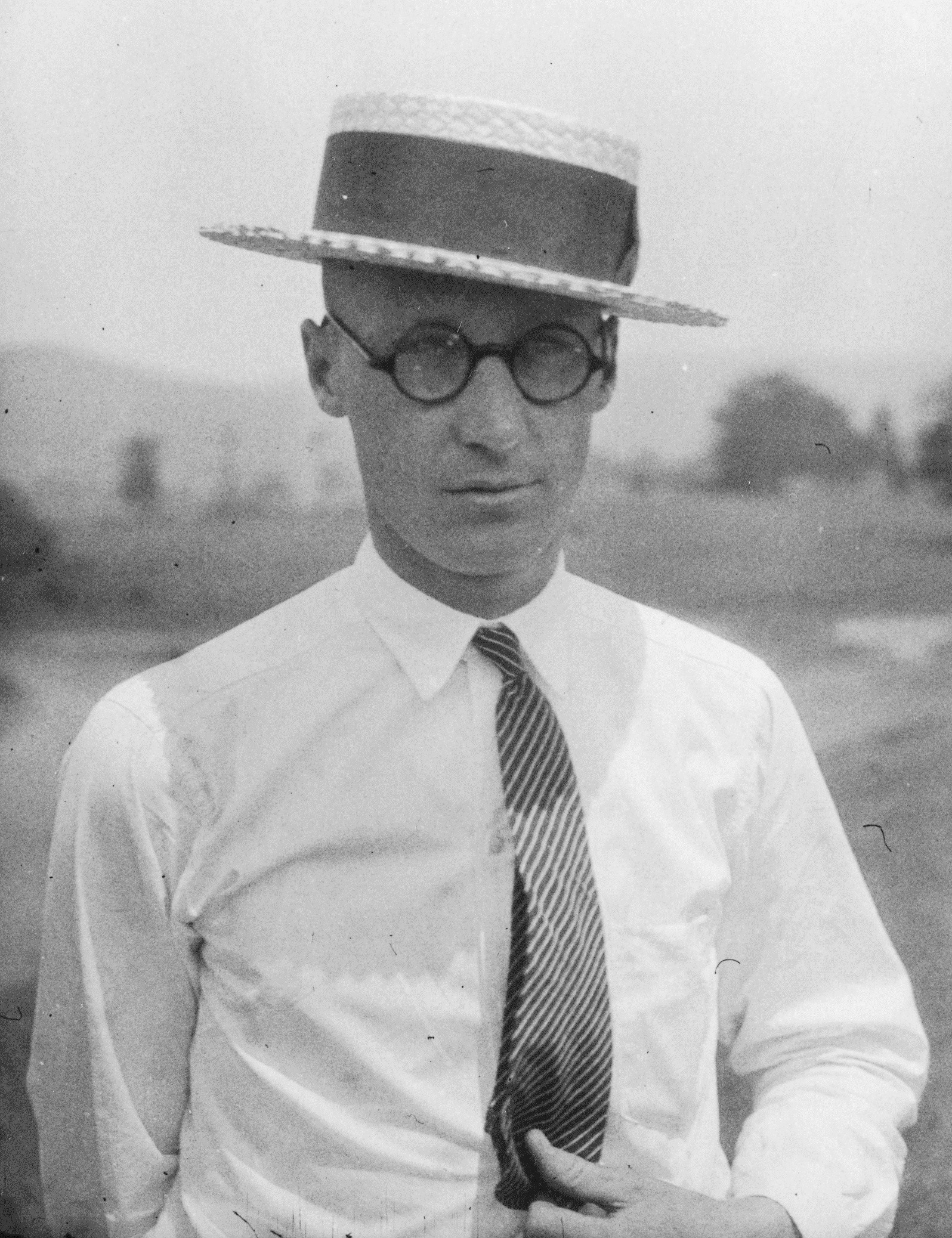
The American Civil Liberties Union announced that it would support a legal challenge to Tennessee’s new law. Dayton community figures, including George Rappleyea, recognized that a test case could attract publicity and perhaps commercial activity to the town. John Scopes, a young teacher and athletic coach who had taught science courses, agreed to become the defendant. The case was therefore partly arranged to test the statute rather than arising solely from an ordinary classroom complaint.
That origin does not make the prosecution fictional, because actual legal proceedings followed and a real judgment was entered. But it affects how the facts should be described. Scopes later expressed uncertainty about whether he had specifically taught the lesson alleged in the charge. The carefully organized character of the case helps explain why national figures became involved almost immediately. The goal was to challenge a new education law publicly and in court.
Clarence Darrow and William Jennings Bryan
Clarence Darrow was a prominent defense lawyer known for controversial criminal and labor cases. He joined the Scopes defense along with other attorneys, including ACLU-linked lawyers. William Jennings Bryan, the former secretary of state and three-time Democratic presidential nominee, became a leading figure for the prosecution. Bryan was a major religious and political voice opposing the teaching of human evolution under the conditions described in the Butler Act.
The courtroom opponents were not simply a scientist and a minister. Both were public figures with long political careers and distinctive views about democracy, religion and social reform. Bryan had supported some progressive causes while strongly opposing aspects of evolutionary instruction; Darrow defended free inquiry but also used theatrical legal strategies. Reducing their roles to a pair of caricatures misses why the trial mattered so much to contemporaries who had followed both men for decades.
The first days of the trial
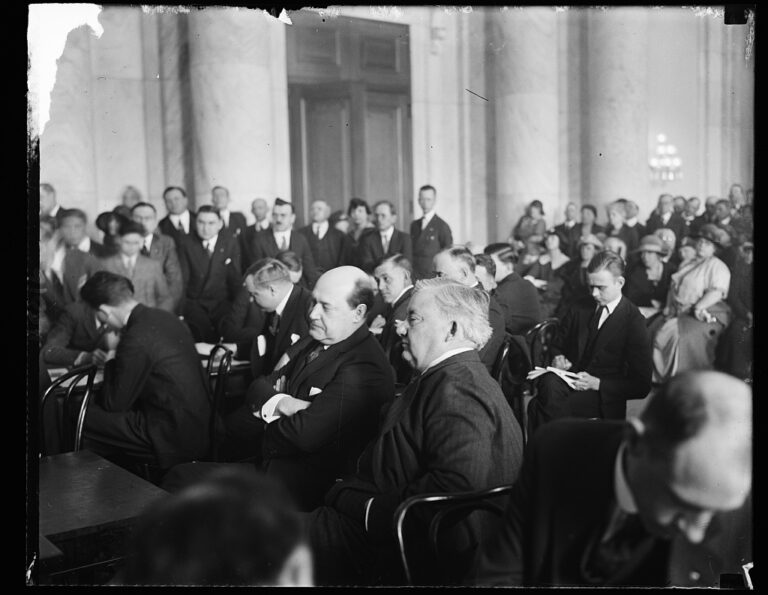
Proceedings began on July 10, 1925, in Rhea County. Lawyers argued over jury selection, motions, the constitutionality of the Butler Act and what evidence the defense should be allowed to present. Dayton became crowded with reporters and visitors. Photographers recorded the lawyers, spectators and defendant, providing a remarkable visual record of a local courthouse temporarily transformed into a national stage.
Scopes’s own guilt was not the only issue the defense sought to raise. His attorneys wanted to show that the law interfered with education and reflected particular religious doctrines. The prosecution emphasized the legislature’s authority to set rules for public schools. The trial judge had to decide how much of the wider debate about religion, science and the Constitution would be admitted as legally relevant evidence. Those decisions largely determined the shape of the public confrontation.
Why scientific expert testimony was limited
The defense planned to introduce testimony from scientific specialists who could explain the evidence for evolution and the meaning of the teaching prohibited by the statute. Judge John T. Raulston excluded much of the proposed expert evidence as irrelevant to the narrow legal question of whether the law had been violated. Some expert material was preserved for the record rather than presented to the jury in the manner the defense wanted.
The exclusion was significant because it narrowed what could be examined in open court. A public audience might have expected a thorough hearing about evolutionary science, but the trial’s evidentiary rules made that impossible. The judge’s ruling did not establish that the scientific evidence had been refuted; it established that he would not allow the testimony to decide the statutory prosecution. Distinguishing scientific debates from courtroom admissibility remains essential to accurate accounts.
The Bryan–Darrow examination outdoors
On July 20, Clarence Darrow questioned William Jennings Bryan about the interpretation of the Bible and religious belief. Because of the heat and concerns about the courtroom, that day’s proceeding took place outdoors near the courthouse. Photographs show the large audience and the two well-known attorneys in an unusual setting. This exchange became the trial’s most famous scene and helped define its public reputation long after the legal details had faded from popular memory.
Bryan answered questions about biblical stories and whether every passage should be read literally, while Darrow sought to demonstrate the difficulties of turning particular religious interpretations into limits on schooling. The examination became a rhetorical confrontation, not the sole issue on which the jury was instructed to decide guilt. A historical retelling should avoid claiming that Bryan’s testimony constituted a formal scientific experiment or that the judge let the jury decide the entire dispute over creation and evolution.
The guilty verdict and the $100 fine
On July 21, 1925, the jury returned a guilty verdict. The trial judge imposed a $100 fine on Scopes, the minimum penalty under the statute. This outcome did not resolve the constitutional disagreement, and supporters of the defense anticipated appealing. The conviction was a legal victory for the prosecution at that stage, while the intense publicity gave opponents of the law a national audience.
The sentence is often summarized as a small fine, but its exact imposition became crucial. Under Tennessee’s constitutional rules, fines above a specified amount had to be assessed by a jury rather than a judge. The 1925 judge imposed the penalty himself. That procedural error would later provide the basis for setting aside the conviction. The distinction between a guilty verdict and the lawful imposition of a fine is therefore not a technical footnote but central to the final outcome.
Bryan’s death and the 1927 appeal
William Jennings Bryan died in Dayton on July 26, 1925, only five days after the trial ended. His death attracted intense attention and helped cement the case’s place in the public imagination. But it did not transform the verdict into a permanent legal settlement. The defense appealed, and the Tennessee Supreme Court issued its decision in January 1927.
The state’s high court set aside the judgment because the $100 fine had been imposed by the judge rather than by the jury. The court did not strike down the Butler Act as unconstitutional. In fact, the law remained on the books for decades. Some popular summaries say Scopes was acquitted because the Supreme Court declared the anti-evolution statute illegal. That is inaccurate. The legal outcome was a reversal grounded in the procedure used to impose punishment.
What the Tennessee Supreme Court did and did not decide
The 1927 decision addressed both constitutional questions and the procedural error that ultimately disposed of the case. The majority found the fine improperly assessed and recommended that the case end rather than continue. The result illustrates how courts can resolve a dispute through procedural rules while leaving the underlying legal policy standing. A reversed conviction is not always equivalent to a ruling that the original statute was void.
Tennessee’s Butler Act continued until repeal in 1967. That long duration should not be confused with evidence of continual successful enforcement; the law’s actual use after the famous trial was limited. The broader legal situation changed as later Supreme Court decisions addressed religion and public-school instruction. In Epperson v. Arkansas in 1968, the U.S. Supreme Court struck down a different state restriction on teaching evolution. The two cases belong to different legal periods and involved different judicial rulings.
Radio, newspapers and the making of a national event
The Scopes case reached millions of Americans through press coverage and radio broadcasts. Reporters portrayed the proceedings as a confrontation between small-town tradition and modern urban culture. Some descriptions emphasized curiosity, tourism and dramatic courtroom exchanges at the expense of more technical legal questions. Political cartoonists and later playwrights further influenced how the event was remembered.
The famous play and film Inherit the Wind drew inspiration from the case but is not a documentary transcript. It adapted personalities and events for artistic and political purposes. Historians should compare dramatizations with trial records, contemporary photographs and the published legal decisions. The Smithsonian, University of Minnesota’s Darrow collection and Tennessee archives preserve materials that allow the real sequence to be separated from later cultural interpretations.
The longer debate about science and public education
The Scopes Trial reflected disputes over which institution should determine what students learn: elected legislatures, professional educators, parents or courts applying constitutional rights. It also demonstrated the diversity of religious responses to scientific knowledge. American Christians did not hold a single position on evolution, and not everyone who supported science agreed on the correct scope of federal or state power over schools.
The case remains significant because it gave those arguments a vivid public form. Its legal result was narrow, while its cultural influence was broad. The trial should be studied alongside the history of the Scientific Revolution, but without pretending scientific discoveries of earlier centuries determined a Tennessee court’s legal ruling. The distinctive story of 1925 is how educational policy, public religion, law and media intersected in one highly publicized case.
Timeline
- March 1925: Tennessee enacts Butler Act
- May 1925: Scopes test case organized in Dayton
- July 10, 1925: Trial begins
- July 20: Darrow questions Bryan in outdoor proceeding
- July 21: Guilty verdict; $100 fine
- July 26: Bryan dies in Dayton
- January 1927: Tennessee Supreme Court reverses judgment on fine
- 1967: Tennessee repeals Butler Act
Frequently asked questions
When was the Scopes Trial?
July 10–21, 1925, in Dayton, Tennessee.
Who was John T. Scopes?
A young teacher and coach who agreed to become the defendant in a legal challenge to Tennessee’s Butler Act.
Who were the famous lawyers?
Clarence Darrow joined the defense and William Jennings Bryan was a leading prosecution figure.
What was the Butler Act?
A Tennessee statute restricting certain teaching of human evolution in state-supported schools.
Was Scopes convicted?
Yes. A jury found him guilty in 1925 and the judge imposed a $100 fine.
Why was the conviction overturned?
In 1927 the Tennessee Supreme Court ruled the judge could not impose the fine; the jury had to assess it.
Was the Butler Act struck down in 1927?
No. It remained in force until repeal in 1967.
When did Bryan die?
July 26, 1925, five days after the trial ended.