Overthrow and Annexation of Hawaii (1893–1898): Queen Liliuokalani and the Newlands Resolution
How the Hawaiian Kingdom lost its independence, and why annexation remained contested.
On January 17, 1893, an armed group of mostly foreign-born residents and businessmen overthrew the Hawaiian Kingdom’s government while U.S. Marines were present in Honolulu. Queen Liliuokalani yielded under protest. President Grover Cleveland opposed annexation, but President William McKinley later supported it. Congress passed the Newlands Resolution in July 1898, and a formal transfer ceremony took place August 12, ending Hawaii’s internationally recognized independence.
This article distinguishes the 1893 overthrow, the republic, the 1898 resolution, territorial government and later statehood.
On this page — 24 topics
What happened to Hawaii in 1893?
A group of businessmen, political activists and other opponents of Queen Liliʻuokalani overthrew the Hawaiian Kingdom’s government on January 17, 1893. Several organizers were American or European residents with strong commercial interests in the islands. A contingent of U.S. Marines had landed in Honolulu the preceding day at the request of American Minister John L. Stevens. The presence of U.S. forces affected the balance of power, and the queen yielded under protest to avoid bloodshed. The new provisional government sought annexation by the United States. This was not a vote in which the Hawaiian electorate chose to abolish the monarchy. The overthrow initiated years of political controversy and resistance.
What was the Kingdom of Hawaii?
The Hawaiian Kingdom was an independent state recognized through international diplomacy in the nineteenth century. Its monarchy, laws and institutions developed through complex relationships among Native Hawaiian leaders, foreign residents and trading partners. Hawaii was not an unclaimed territory when American businessmen sought greater control. Its rulers negotiated treaties and maintained relations with Britain, France, the United States and other powers. The kingdom’s history includes constitutional changes and pressures from foreign commercial interests, particularly sugar planters. Understanding this sovereignty is essential: annexation in 1898 transferred control of an existing nation, not merely an empty island chain to a nearby government.
Who was Queen Liliʻuokalani?
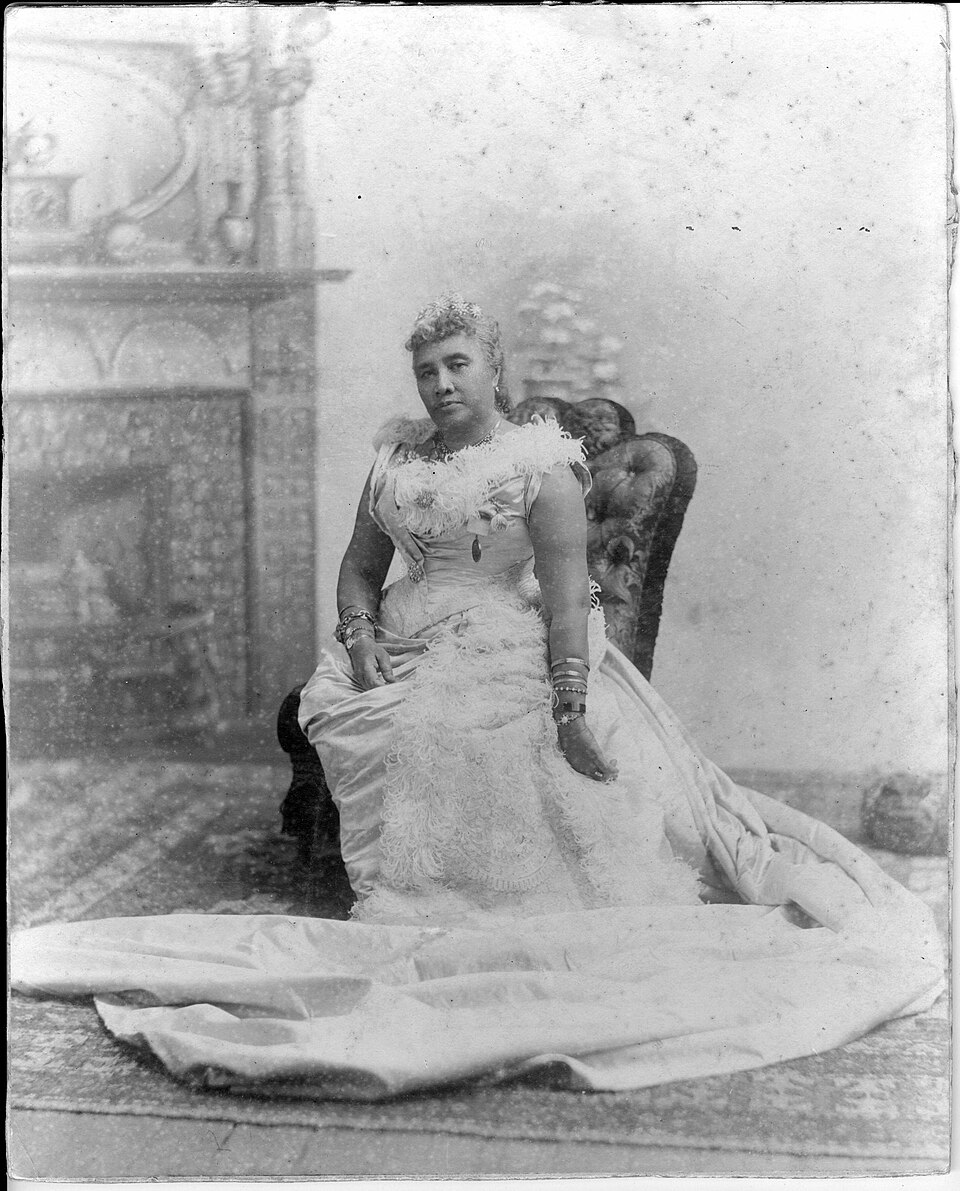
Liliʻuokalani became monarch in 1891 following the death of her brother, King Kalākaua. She was an experienced public figure and composer who sought to restore some authority lost by the monarchy under earlier constitutional restrictions. Her accession-era photograph accompanies this article, but should not be confused with a photograph of the coup itself. Queen Liliʻuokalani’s political aims met strong opposition from groups that benefited from the existing concentration of power. After the overthrow, she continued advocating for Hawaiian rights and opposing annexation. Her later writings and petitions remain important sources, though historians compare them with government reports and the testimony of other participants.
What was the Bayonet Constitution of 1887?
The 1887 constitution was imposed on King Kalākaua amid pressure from an armed militia associated with the Hawaiian League. It reduced royal power, strengthened the legislature and restricted voting through property and income qualifications that favored certain residents. The term Bayonet Constitution reflects the coercive circumstances under which it was adopted. It was not the document written by Queen Liliʻuokalani in 1893. Its limits shaped political conflicts that she inherited when she became sovereign. Understanding the constitution explains why disputes about reform were inseparable from the struggle over who could exercise political authority in Hawaii and whose votes counted under the kingdom’s institutions.
Why did the queen propose a new constitution?
Liliʻuokalani sought a new constitution that would restore greater authority to the monarchy and broaden political participation among Native Hawaiians. Supporters regarded the proposals as a response to the undemocratic restrictions imposed in 1887. Opponents saw the attempt as a threat to their political and economic position. The constitutional question was part of a larger contest over sovereignty, not a purely ceremonial disagreement. The queen’s proposed changes became an immediate occasion for organizing by the Committee of Safety. The subsequent overthrow cannot be explained accurately as simply a neutral intervention to prevent disorder, because its organizers had a clear political objective to replace the existing government.
Who formed the Committee of Safety?
The Committee of Safety was an organization of men opposed to the queen’s government, including influential businessmen and political figures. Lorrin A. Thurston was a prominent leader. Members framed their actions as protecting life and property, but they also sought to establish a provisional government and facilitate U.S. annexation. Their ability to organize rested partly on commercial connections and access to armed supporters. The committee should not be equated with the population of Hawaii or treated as a democratically elected national assembly. Native Hawaiian communities included substantial opposition to the proposed transfer of sovereignty, a fact documented through later petitions and political activism.
Why did U.S. Marines land in Honolulu?
American Minister John L. Stevens requested the landing of Marines from USS Boston on January 16, 1893, claiming the purpose was to protect American lives and property amid unrest. The troops were present during the overthrow the following day. Their location and apparent support for the provisional government became central to subsequent diplomatic investigations. It would overstate the evidence to say that the Marines personally arrested the queen in battle, but it would also be wrong to ignore their effect on the conspirators’ confidence and the monarchy’s options. President Grover Cleveland later concluded that U.S. representatives had improperly aided the overthrow and opposed an immediate annexation.
What happened on January 17, 1893?
The Committee of Safety proclaimed a provisional government on January 17. Queen Liliʻuokalani surrendered authority under protest, expressly looking to the United States to correct what she regarded as wrongdoing by its representatives. The act of yielding was designed to avoid armed conflict and was not a declaration of support for annexation. Sanford B. Dole became president of the provisional government. The organizers promptly sought to transfer the islands to the United States, but a change in American presidential administrations made that goal uncertain. This date marks the loss of the Hawaiian monarchy’s effective control of government, distinct from formal U.S. annexation more than five years later.
Who was Sanford B. Dole?
Sanford Ballard Dole was a lawyer and political figure in Hawaii who headed the provisional government established after the overthrow. He later became president of the Republic of Hawaii when that government was proclaimed in 1894. Dole’s leadership provided continuity between the coup and the regime that negotiated annexation. His name is sometimes confused with the later commercial branding of a related Hawaiian agricultural family, but his political role requires its own account. Dole’s government faced resistance from Native Hawaiian royalists and other opponents. It was recognized diplomatically by foreign states, but international recognition did not demonstrate consent by the Hawaiian people to the original overthrow.
What did President Grover Cleveland do?
Cleveland became president in March 1893 after Benjamin Harrison had supported a proposed annexation treaty. Cleveland withdrew the treaty from Senate consideration and ordered an investigation into the circumstances of the overthrow. James H. Blount gathered testimony and concluded that American diplomatic and military personnel had improperly aided the conspirators. Cleveland criticized the intervention and sought a restoration of the queen under conditions that became politically contentious. Congress did not enact the restoration he wanted, and the provisional government remained in power. His position made the 1893–1898 period more complicated than a simple uninterrupted American plan executed without opposition.
What was the Blount Report?
The Blount Report was a U.S. investigation of the events leading to the overthrow. Special commissioner James H. Blount examined correspondence, interviewed people and reported on the role of American officials and troops. Its findings strongly criticized the actions associated with Minister Stevens. The report became a major historical source, but different political groups challenged its conclusions. A subsequent Senate investigation produced a different emphasis, making the record a subject of sustained debate. A useful approach is to read the primary testimony and distinguish the established sequence of the coup from interpretations of individual officials’ intentions. The Library of Congress preserves the published foreign-relations documentation.
What was the Republic of Hawaii?
The provisional regime proclaimed the Republic of Hawaii in 1894, with Sanford Dole as president. The new government continued to seek annexation to the United States while confronting opposition from supporters of the monarchy. Its constitutional arrangements did not provide an unrestricted vote on whether all residents wanted to join the United States. The republic exercised government authority in the islands from 1894 until annexation in 1898, but its legitimacy remained disputed by many Native Hawaiians. Distinguishing the provisional government of 1893, the republic of 1894 and U.S. territorial government after 1900 prevents a misleading timeline in which Hawaii became an American state immediately after the coup.
What happened to the queen in 1895?
An unsuccessful royalist counterrevolution in 1895 led to arrests and punishment under the republic’s government. Queen Liliʻuokalani was detained and imprisoned for a period in ʻIolani Palace. She was pressured to sign a document of abdication and continued to challenge the legitimacy of the overthrow and annexation. Her imprisonment was separate from the events of January 1893 and should not be dated to the initial coup. The episode demonstrated the new regime’s determination to maintain authority despite substantial royalist opposition. In later years Liliʻuokalani pursued legal and political avenues to defend Hawaiian claims, and her writings became essential accounts of the era.
How did Native Hawaiians oppose annexation?
Native Hawaiian political organizations organized protests, public meetings and petitions against transfer to the United States. In 1897, the Kuʻe petitions gathered more than 20,000 signatures opposing annexation. Those documents challenge the idea that Hawaii joined the United States through an uncontested popular choice. The National Archives preserves a major petition campaign and explains how Hawaiian representatives traveled to Washington to lobby senators. Not all residents held identical views, but resistance was extensive and organized. The petitioners asserted political agency at a time when their independent nation’s future was being decided primarily through negotiations among foreign officials and the republic’s leaders.
Why did annexation fail in the Senate initially?
A proposed annexation treaty negotiated during the final months of Benjamin Harrison’s presidency did not receive ratification before Grover Cleveland took office. Cleveland withdrew it. William McKinley later supported a new treaty in 1897, but opponents blocked the two-thirds Senate approval required for a treaty. Native Hawaiian petitions were an important part of this opposition. Annexation supporters then pursued an alternative congressional route through a joint resolution. The difference between a treaty and a joint resolution matters: the procedure used to transfer authority was politically contested. Historians and legal scholars have debated its constitutional dimensions, and its enactment should not be described as a unanimous diplomatic agreement among equal parties.
What was the Newlands Resolution?
The Newlands Resolution was the joint resolution by which Congress approved the annexation of Hawaii. President William McKinley signed it on July 7, 1898. It followed failed efforts to obtain the necessary Senate votes for an annexation treaty. The resolution provided for the acceptance of the cession offered by the Republic of Hawaii and arrangements for governing the islands under U.S. authority. In Hawaii a formal transfer ceremony took place on August 12. The National Archives preserves the original document. Readers should distinguish July 7, when McKinley signed, from August 12, when American authority was ceremonially proclaimed, and from 1900, when a formal territorial government was established.
How did the Spanish–American War influence annexation?
The Spanish–American War of 1898 emphasized Hawaii’s strategic location between the continental United States and the Philippines. American naval planners valued the islands as a possible supply, coaling and communications center for Pacific operations. President McKinley and other supporters argued that annexation served national security as well as commercial interests. The war did not create the annexation movement, which had been active for years, but it helped strengthen the political case for rapid action. This context explains why a congressional resolution succeeded in 1898 after earlier treaty proposals faced serious resistance. The islands’ own political interests were often subordinated to those broader strategic calculations.
When did Hawaii become a U.S. territory?
Formal American control followed the August 12, 1898 ceremony, but Congress established the organized Territory of Hawaii under the Hawaiian Organic Act of 1900. Before that, the transition involved administration under the new U.S. sovereignty and existing local structures. Hawaii did not become a state in 1898. It remained an American territory for decades, with disputes over political representation, land and the rights of Native Hawaiians continuing. The territory’s legal history is important because annexation, territorial organization and statehood are distinct constitutional and political steps. Confusing them obscures both the duration of territorial rule and the evolution of federal policy toward the islands.
When did Hawaii become the fiftieth state?
Hawaii was admitted as the fiftieth U.S. state in 1959, more than sixty years after annexation. Statehood followed a separate political history involving territorial institutions, debates over representation, economic change and World War II. In a 1959 referendum a large majority of those voting supported statehood, but that vote cannot be retroactively treated as consent to the 1893 overthrow or the 1898 annexation. Native Hawaiian concerns over sovereignty and historical injustice remained. The long gap between the end of the kingdom and statehood shows why the events of the 1890s require their own careful chronology rather than being summarized as one smooth transition into modern America.
What is the meaning of the 1993 Apology Resolution?
In 1993 Congress passed an apology resolution acknowledging the role of U.S. agents and citizens in the overthrow of the Hawaiian Kingdom one hundred years earlier. The resolution recognized that the overthrow occurred without the consent of the Native Hawaiian people. Its language is a significant statement of federal historical acknowledgment, but it did not automatically restore the monarchy or resolve all legal and political questions about sovereignty and land. Legal debates continue over the resolution’s implications. Historians should present it in the context of Native Hawaiian activism and the long campaign to document the overthrow accurately rather than as a substitute for studying primary records from the nineteenth century.
Where can the primary sources be found?
The National Archives collection on the anti-annexation petitions reproduces documents and explains Hawaiian political opposition in 1897. The Archives also provides the text and background of the Newlands Resolution. The State Department’s Office of the Historian gives a diplomatic chronology, while the Library of Congress preserves the 1894 foreign relations documentation containing the Blount investigation. Comparing these sources with writings of Queen Liliʻuokalani and Hawaiian historians allows readers to assess competing perspectives. A source-based account recognizes Hawaii’s independent history and the political actions of the people whose government was overthrown.
Hawaii overthrow and annexation timeline
| Date | Event |
|---|---|
| 1887 | Bayonet Constitution restricts royal authority and voting. |
| 1891 | Liliʻuokalani becomes queen. |
| January 16–17, 1893 | U.S. Marines land; monarchy overthrown. |
| 1893 | Cleveland withdraws annexation treaty and orders investigation. |
| 1894 | Republic of Hawaii proclaimed. |
| 1895 | Royalist counterrevolution fails and queen imprisoned. |
| 1897 | Mass petitions oppose U.S. annexation. |
| July 7, 1898 | McKinley signs Newlands Resolution. |
| August 12, 1898 | Formal U.S. annexation ceremony in Honolulu. |
| 1900 | Hawaiian Organic Act establishes territorial government. |
| 1959 | Hawaii becomes the fiftieth U.S. state. |
| 1993 | Congress issues Apology Resolution. |
Historical sources
- National Archives — Annexation Resolution
- National Archives — 1897 Anti-Annexation Petition
- Office of the Historian — Hawaii Country History
- Library of Congress — Hawaii Annexation Guide
- Library of Congress — Blount Report and Diplomatic Papers
- US Government — Native Hawaiian History Guide
- Historic portrait — Wikimedia Commons