Homestead Act of 1862: How Land Claims Worked and Who Benefited
President Abraham Lincoln signed the Homestead Act on May 20, 1862. Beginning January 1, 1863, qualifying adults could apply for up to 160 acres of surveyed federal publi
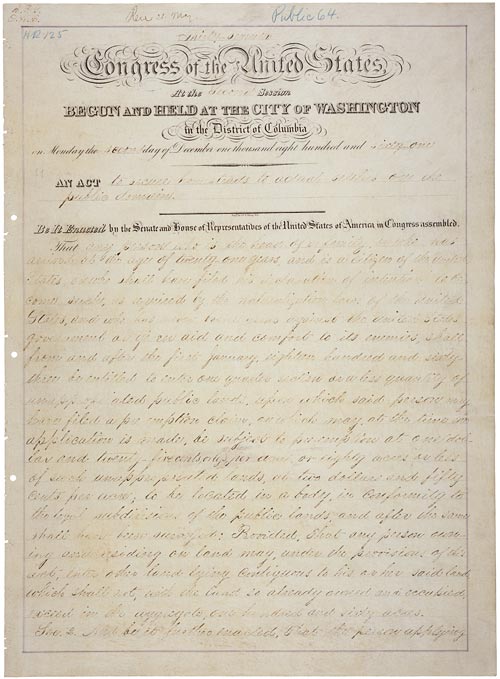
President Abraham Lincoln signed the Homestead Act on May 20, 1862. Beginning January 1, 1863, qualifying adults could apply for up to 160 acres of surveyed federal public land, live on it, improve it, and eventually receive title after meeting statutory requirements. The policy expanded private landownership but also accelerated settlement and dispossession on Native American lands.
A historical guide to the legislation, experiences and longer-term consequences, with primary sources and contextual links.
On this page — 22 topics
What did the Homestead Act actually do?
The Homestead Act created a process through which an eligible applicant could obtain ownership of a parcel of surveyed federal public land. It did not simply give every American a free farm on request. A claimant filed at a local land office, paid fees, occupied the land, made improvements, and later submitted evidence of compliance. The standard maximum area was 160 acres. Congress passed the measure during the Civil War, when Southern opponents of inexpensive public-land distribution had largely left Congress. The law encouraged westward settlement and produced an extensive paper trail now useful to historians and genealogists.
Why did Abraham Lincoln sign it in 1862?
Western land policy had been disputed for decades. Advocates of free or inexpensive homesteads argued that independent farmers would populate federal territories and create economic opportunity; critics objected to costs, labor competition, and other consequences. The secession of Southern states changed the balance in Congress. Lincoln signed the bill on May 20, 1862, the same year as the Pacific Railway Act, in a broader effort to promote national development. The law took effect the following January. Its passage during the Civil War did not mean settlement began in 1862, nor did it eliminate the conflict over who controlled the lands being distributed.
Who was eligible to file a homestead claim?
Under the original statute, applicants generally had to be heads of households or at least twenty-one years old, meet citizenship or declaration-of-intent requirements, and satisfy the law’s loyalty conditions. Women could qualify when they met these rules, including single women and widows, making the act unusual among some nineteenth-century property arrangements. Later amendments and administrative practices changed eligibility. A claim was not open to anyone regardless of status or prior conduct, and many people faced practical barriers even when they qualified legally. The National Archives provides the original statute and an explanation of its conditions, which are better evidence than simplified descriptions of universally free land.
How many acres could a person claim?
A quarter-section, ordinarily 160 acres, was the best-known claim size under the 1862 act. The amount was defined through the federal rectangular survey system, which divided public lands into townships and sections. Not all claims were exactly 160 acres, and later acts adjusted maximum acreage or requirements to reflect dry environments and other circumstances. The legal description of a parcel mattered because applicants filed for a specified surveyed tract rather than claiming any area they liked by marking its corners. Maps and land patents can therefore identify the particular landscape associated with a family or settlement.
Was the land really free?
Homesteaders generally did not pay the ordinary purchase price for land once they fulfilled the residence and improvement requirements, but the process involved filing and administrative fees. More importantly, establishing a viable farm required money or labor for shelter, fencing, equipment, seed, transport, livestock, and food before crops matured. Families might spend savings traveling west only to discover that land was too dry or isolated for their plans. Calling the act free land without these qualifications hides the economic risk. Successful claims depended on personal resources, environmental conditions, and access to transportation and local markets.
What happened when someone filed a claim?
A claimant applied at a federal land office for a surveyed tract and filed the required statements. The process began a probationary period rather than immediately transferring ownership. The applicant typically had to make the parcel a home, cultivate or improve it, and remain for the required time. At the end, the claimant presented proof, commonly supported by witnesses familiar with the property. If the evidence was accepted, the federal government issued a patent establishing title. Cancelled claims also appear in land records, and their existence shows that filing was far more common than successful completion.
Why was five years of residence important?
The standard 1862 route required the claimant to reside on and improve the land for five years. Congress intended to favor actual settlement rather than quick speculative acquisition. Officials did not expect every household to farm the same crops, but proof had to show meaningful occupancy and compliance with the law. The length of the period made the process financially demanding: drought, illness, family death, or repeated crop failures could derail a claim before title was secured. The five-year rule should be separated from alternative purchase provisions and later legislation, which could impose different conditions.
Who was Daniel Freeman?
Daniel Freeman is traditionally associated with one of the first homestead applications, filed in Nebraska when the act took effect in January 1863. His family farm near Beatrice later became the basis of Homestead National Historical Park. Accounts often call his Homestead No. 1, a label linked to the sequence of local applications and later commemoration. Freeman’s story illustrates the official process of claiming a specific parcel, but the experience of one successful applicant does not describe everyone who attempted to settle. The park’s records and exhibits place this individual case within a much wider history of changing land use.
Could women claim land in their own names?
The act’s eligibility rules made it possible for qualifying women to submit claims as individuals. Single women, widows, and women who became heads of households could use the legislation to acquire property. Their experiences varied widely, and married women’s legal and social position could affect access to land and credit. Homesteading was physically demanding, and women contributed to cultivation, household construction, education, and local institutions as well as formal ownership. A woman holding a land patent provides evidence of legal title, but a successful homestead was rarely the result of one person’s labor alone.
How did African Americans use the Homestead Act?
The law was enacted while slavery remained legal in much of the country, so access was unequal at the outset. After emancipation, some African American families used federal land policy to pursue independent farming, including in areas of the Great Plains and elsewhere. They faced racism, financial barriers, and unequal opportunities for credit and supplies. Land ownership could provide autonomy but did not guarantee prosperity or protection. The Exodusters migration later included families seeking opportunities in Kansas, although migration and successful homestead ownership were not identical. Their stories complicate the idea that all settlers experienced the same frontier.
What did the law mean for Native American nations?
The act treated certain federal public lands as available for settlers, but expansion took place amid treaties, military pressure, forced removals, and the loss of Indigenous control over ancestral territories. Federal designations of land as public domain did not make that land historically empty. Native nations had existing land-use systems, political authority, and relationships to the environment. Homesteading increased pressure to open more territory for non-Native settlement and helped transform Native lands into privately held farms and towns. A historically accurate account has to place opportunity for some claimants alongside the coercion and dispossession experienced by others.
What were the environmental challenges?
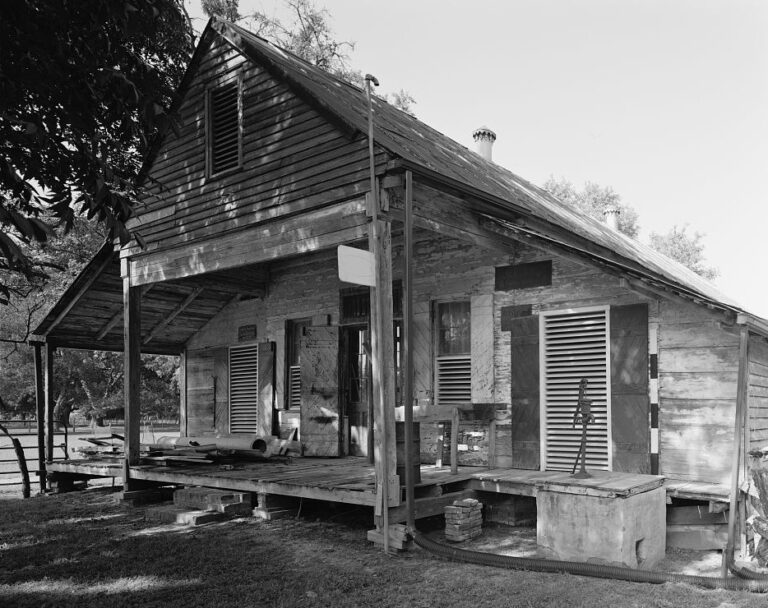
Much of the Great Plains received less reliable rainfall than the farming regions many migrants knew. Drought, high winds, hail, grasshoppers, and harsh winters could make a standard 160-acre holding difficult to sustain. Settlers experimented with different crops, livestock practices, wells, and shelter designs. In areas with little timber, sod houses were a practical solution, not a novelty chosen for picturesque effect. Water access and distance from markets strongly influenced survival. Later federal legislation sought to adapt acreage or rules to arid conditions, reflecting the limitations of a national land policy designed around one standard parcel size.
How did railroads influence homesteading?
Rail companies offered transportation for settlers and products, promoted western land, and benefited from towns and farms forming along their lines. The federal government also granted railroad companies large land areas under separate legislation, which could then be sold to settlers. Railroad grants and homestead claims were related but legally distinct ways of transferring land. The completion of the transcontinental railroad in 1869 shortened travel and improved access to markets, although local branches still mattered more for many farm communities. Promotions sometimes exaggerated how quickly a claimant could make an isolated holding profitable.
Did all applicants receive ownership?
No. Many applicants abandoned claims, failed to meet requirements, or faced cancellations for other reasons. A homestead application and a final land patent are different historical records. Families might occupy a parcel for years and then move without receiving title. Others completed the process but later sold the property because farming remained unprofitable. For genealogical research, cancelled files may be as revealing as successful patents: both can contain witness testimony and details of buildings and cultivation. The distinction prevents readers from counting every application as a farm successfully established through the act.
How much land was transferred?
The National Archives states that the homestead system eventually distributed approximately 270 million acres, a figure covering many decades of legislation and amendments rather than only the first few years after 1862. More than two million claims were filed over the program’s long history, while the number of claims perfected was smaller. Different agencies sometimes report totals using patents, acres or original applications, so statistics should be compared carefully. These cumulative figures show the policy’s scale without proving that every acre produced a sustainable independent family farm. The process continued, under changing rules, well into the twentieth century.
When did the Homestead Act stop operating?
The original act did not suddenly expire after five years or after the nineteenth century. Federal homestead laws changed through amendments and related legislation, and most remaining opportunities ended in the lower forty-eight states in 1976. Alaska retained a later deadline, with the last claims completed in the 1980s. For a particular family, the applicable rules depend on where and when the application was filed. The National Archives holds records created under multiple land laws, so researchers should not assume that a file from 1900 was governed in every detail by exactly the same conditions as a claim filed in 1863.
How can families find homestead records?
The Bureau of Land Management’s General Land Office records can help locate patents and legal descriptions, while the National Archives maintains land-entry case files for many original claims. These files may include applications, testimony, receipts, records of improvements, and final proof. Researchers should begin with the settler’s name, state, county, and approximate date and then match the patent to its legal land description. The National Archives research guide explains where records are held and how to request them. Online patent indexes do not necessarily reproduce every supporting document in a file.
What is the law’s legacy?
The Homestead Act expanded agricultural settlement, reshaped ownership patterns, and encouraged the growth of numerous communities. It also transferred vast amounts of land through federal authority at the expense of Indigenous nations whose territorial claims were undermined. Opportunity was uneven: some families acquired durable farms while others faced environmental disasters or economic failure. The act is best understood as a defining policy of nineteenth-century expansion, not as a simple story of free land producing universal prosperity. Its effects can still be traced in land records, railroad maps, Native treaty history, and the landscapes of the American West.
Timeline
| Date | Event |
|---|---|
| May 20, 1862 | Lincoln signs the Homestead Act. |
| January 1, 1863 | The law takes effect and applications begin. |
| 1860s–1890s | Claims and western settlement expand under multiple land laws. |
| 1976 | Most remaining homestead entry opportunities end in the lower 48 states. |
| 1980s | Last Alaska claims completed under the final provisions. |
Key questions
Why does this matter? President Abraham Lincoln signed the Homestead Act on May 20, 1862. Beginning January 1, 1863, qualifying adults could apply for up to 160 acres of surveyed federal public land, live on it, improve it, and eventually receive title after meeting statutory requirements. The policy expanded private landownership but also accelerated settlement and dispossession on Native American lands.
Where can readers confirm the facts? The cited federal and historical sources below provide the original record and explanatory research.