Civil Rights Act of 1875: Public Accommodations, Equal Rights and the Supreme Court
The Reconstruction law against public-accommodations discrimination and why the Supreme Court struck down key provisions.
Enacted March 1, 1875, the Civil Rights Act sought equal access to specified public accommodations and equal treatment in jury service. The Supreme Court invalidated its principal private-accommodation protections in 1883, sharply limiting its effect.
The law grew from Charles Sumner’s campaign for civil rights and later became central to the constitutional debate over private discrimination.
On this page — 20 topics
What was the Civil Rights Act of 1875?
The Civil Rights Act of 1875 was a federal Reconstruction law intended to protect equal treatment in specified public accommodations and jury service. President Ulysses S. Grant signed it on March 1, 1875. It aimed to prevent racial discrimination at inns, public conveyances, theaters and other places of public amusement, and it addressed exclusion from juries based on race. The law represented an attempt to extend civil rights beyond the contractual and property protections established in 1866. Its importance is also tied to its later fate: the Supreme Court struck down the provisions regulating discrimination by private businesses in the Civil Rights Cases of 1883. The act therefore illustrates the gap between congressional ambitions during Reconstruction and the limits federal courts later placed on those efforts.
Why did Congress consider another civil-rights law?
The Civil Rights Act of 1866 had declared national citizenship and protected certain rights concerning contracts, property and courts. But African Americans continued to face exclusion from hotels, transportation, theaters and other spaces essential to public life. The Fourteenth Amendment had been ratified in 1868, and supporters argued it allowed Congress to intervene against unequal treatment. Violence and political resistance also threatened Reconstruction governments. Congress considered broader legislation because legal emancipation and citizenship did not automatically secure everyday equality. The debates were extensive and contentious, and the final statute was narrower than some sponsors originally sought. The legislation should be understood within this continuing effort rather than as a duplicate of the 1866 act.
Who was Charles Sumner?
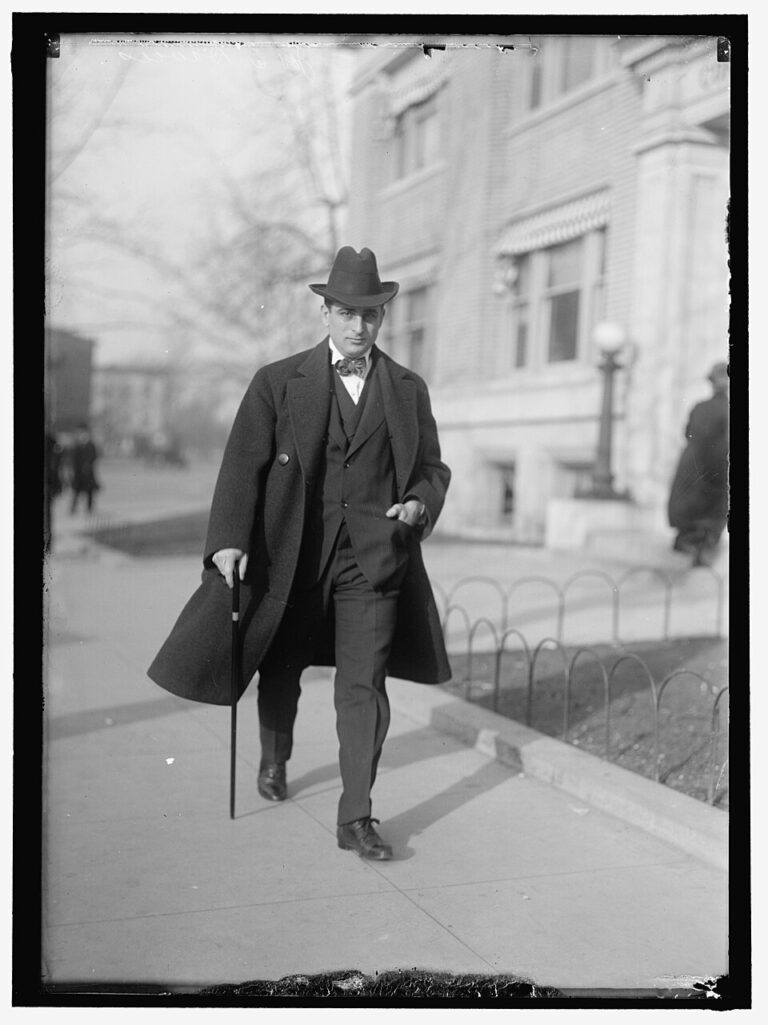
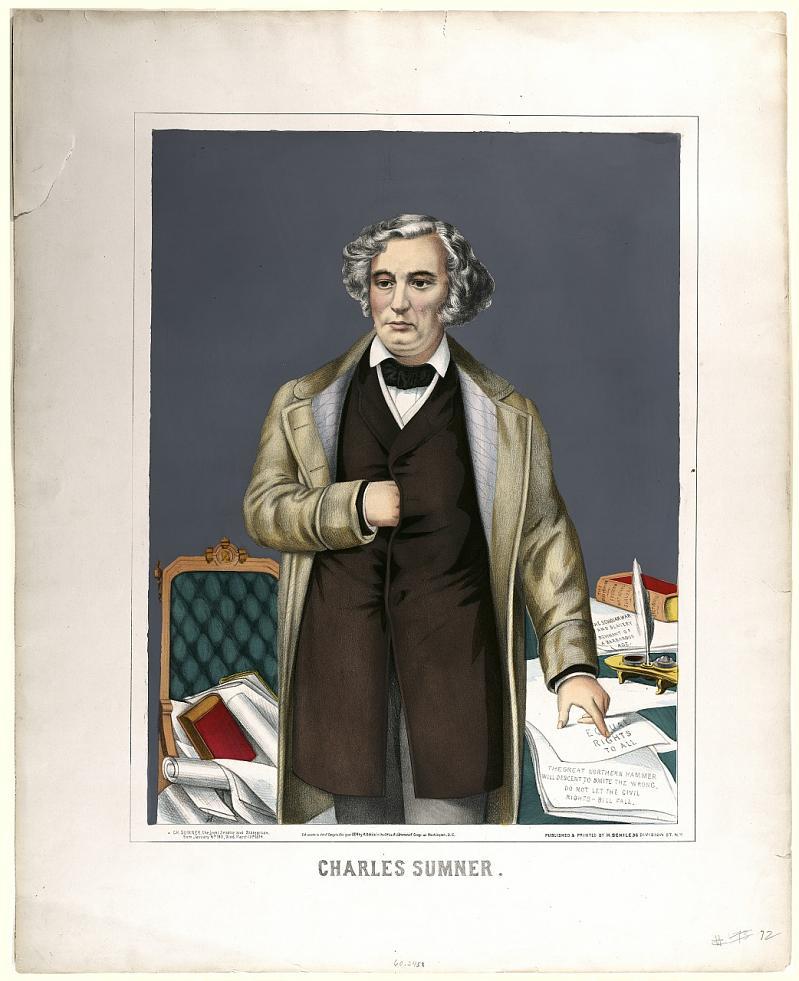
Massachusetts Senator Charles Sumner was a prominent abolitionist and a principal advocate of broader civil rights legislation. He argued that the United States had an obligation to eliminate discriminatory treatment from institutions serving the public. Sumner had pressed for federal protections for years and had been involved in fights over racial equality before the Civil War. He died in March 1874, nearly a year before the final law was enacted. His death made passage a cause of remembrance among supporters, but he did not personally sign or witness the enacted statute. The historical portrait accompanying this article represents Sumner, whose advocacy helped shape the legislative debate. His role is central, though other lawmakers also influenced the final text.
When was the law passed?
The act was approved on March 1, 1875, near the end of the Forty-Third Congress. It followed years of debate and several proposed versions. President Grant signed the measure, making it federal law. Its precise enactment date matters because descriptions sometimes imply that the bill passed immediately after the Civil War or that it was part of the original Reconstruction Acts of 1867. The statute was adopted a decade after emancipation, in a period when political support for federal intervention was weakening. Congressional votes reflected major disagreements about national authority, segregation and the rights of private businesses. The timing also helps explain why the act’s later enforcement faced an increasingly difficult political and judicial environment.
Which public places did the act cover?
The statute addressed inns, public conveyances on land or water, theaters and other places of public amusement. The terms reflected nineteenth-century patterns of travel and commerce rather than the more extensive definitions found in later civil-rights law. A traveler might need an inn or railway carriage, while exclusion from public performances conveyed an unmistakable message of unequal social standing. The act sought equal access without discrimination based on race or a previous condition of servitude. It did not contain the full range of employment, education and public-service protections established in the twentieth century. Readers should examine the actual categories in the statute instead of assuming it regulated every private relationship or business practice.
Did it require equal jury service?
The law also addressed racial exclusion from jury service, a crucial part of civic equality. A person excluded from juries because of race lacked an important form of participation in administering justice. Such exclusions could also affect the fairness of trials involving Black defendants or victims. The jury provision is legally distinct from the public-accommodations sections. Later Supreme Court decisions invalidated much of the federal regulation of private businesses, but the Court recognized federal power to address racial discrimination in jury selection under different circumstances. Conflating all provisions leads to the false claim that the entire effort to secure jury equality vanished in 1883. A careful history separates the law’s different subjects and the subsequent judicial treatment of each.
How was this different from the Civil Rights Act of 1866?
The 1866 act concentrated on citizenship and specified civil rights involving contracts, property, lawsuits and legal protection. The 1875 measure aimed at public facilities and jury service. They addressed related but different problems arising after slavery. A person might legally own property and sue in court while still being refused accommodation at an inn or admission to a theater. Supporters of the 1875 legislation argued that such exclusion perpetuated unequal citizenship. The differences are important for search intent as well as history: readers interested in citizenship definitions should consult the 1866 guide, while those researching public accommodations and the 1883 judicial reversal should focus on the later act.
Was school integration included?
Sumner and other reformers supported broader measures that would have addressed discrimination in education. However, school provisions were removed from the final 1875 bill. The enacted law therefore should not be described as a comprehensive federal school-desegregation statute. Schools remained a contested area of state and local policy, with Black communities advocating funding and equal opportunity while opponents defended segregation. The legal battles that followed extended well beyond Reconstruction, culminating in major twentieth-century cases. The distinction between a proposal and the text that Congress actually passed is essential. Legislative debates can show what reformers wanted, but the enacted statute identifies the obligations that were legally established in 1875.
Why was the act controversial?
Opponents argued that federal regulation of private accommodations exceeded constitutional powers and interfered with state authority or private business decisions. Some also opposed racial equality itself and sought to maintain segregated public spaces. Supporters replied that public-facing businesses performed functions in which discrimination undermined the meaning of citizenship. The dispute reflected competing interpretations of the Fourteenth Amendment and the national government’s role after the Civil War. Economic problems and waning Northern commitment to Reconstruction made federal enforcement politically difficult. These arguments were not merely technical questions detached from everyday life: the outcome affected whether Black travelers, families and theatergoers could demand equal treatment from businesses that served other members of the public.
What happened after the act became law?
The law created federal protections, but implementation was uneven and often challenged. Black Americans continued to encounter exclusions, and litigation over the statute’s validity developed. Local attitudes did not change simply because Congress passed a new law. In some regions people tested the measure by seeking services previously denied, while businesses and political opponents questioned its authority. Judicial proceedings gradually focused attention on whether Congress could prohibit discrimination by private individuals or companies under the Fourteenth Amendment. The law remained significant as a statement of congressional aims, but its practical impact was limited by resistance and the developing constitutional controversy. The gap between passage and enforcement is a recurring theme of Reconstruction-era legislation.
What were the Civil Rights Cases of 1883?
In 1883 the Supreme Court decided a group of cases collectively known as the Civil Rights Cases. The Court held that the public-accommodations provisions of the 1875 act exceeded Congress’s power under the Fourteenth Amendment to regulate private discrimination. The decision treated the amendment principally as a restriction on state action. It also rejected a broader argument under the Thirteenth Amendment for the challenged provisions. This ruling dramatically weakened the statute’s protection against racial exclusion from private establishments. The decision was not an amendment to the Constitution; it was a judicial interpretation with far-reaching consequences. A separate Civil Rights Cases guide examines the Court’s reasoning and dissent in more detail.
What does state action mean?
The state-action distinction concerns whether conduct is attributable to government or to a private individual or business. The Fourteenth Amendment explicitly restricts states in certain ways, and the majority in 1883 concluded that Congress could not use it to impose the 1875 public-accommodations rules on private businesses merely because those businesses discriminated. Supporters of broader protection argued that discrimination by public-facing institutions also harmed the meaning of citizenship. The concept became central to later constitutional law. Readers should not interpret the ruling as saying racial discrimination was harmless; the issue before the Court was the source and scope of federal legislative authority. Its practical consequence nonetheless left many forms of private discrimination beyond the reach of the invalidated provisions.
Who dissented in 1883?
Justice John Marshall Harlan dissented from the Supreme Court’s majority decision. He argued for a broader understanding of federal power to protect equal civil rights, particularly where businesses provided services to the public. His dissent became an important text in later legal commentary, although it did not control the ruling at the time. A dissent records a judge’s legal argument, not the law adopted by the majority. Harlan’s position also developed within nineteenth-century assumptions that do not perfectly mirror modern civil-rights doctrine. Comparing his opinion with the majority helps illuminate the constitutional disagreement without implying that the original law’s protections remained fully enforceable after 1883.
Did the act end segregation?
No. The 1875 statute challenged discrimination in certain public accommodations, but its implementation was inconsistent, and the 1883 ruling invalidated its main private-accommodation provisions. Segregation and exclusion persisted and expanded in many places during the late nineteenth century. Black communities continued organizing, litigating and challenging unequal conditions, but they faced a shrinking federal legal framework. The law therefore represents both an ambitious statement of equal citizenship and a warning about enforcement limits. It did not produce an immediate integrated public sphere. The historical significance lies partly in the contrast between the rights Congress declared and the narrower protection that courts and political institutions allowed in subsequent decades.
How was it different from the Civil Rights Act of 1964?
The Civil Rights Act of 1964 established broad protections against discrimination, including important rules for public accommodations, employment and federally assisted programs. It relied on constitutional powers and enforcement mechanisms developed long after 1875, notably the Commerce Clause for key public-accommodations provisions. The 1875 law was far narrower and was invalidated in substantial part by the 1883 Supreme Court ruling. The two statutes share an important goal but cannot be treated as legally interchangeable. Our 1964 Civil Rights Act guide explains the later law. The long interval shows how political and constitutional approaches to federal protection changed across nearly a century of activism, legislation and litigation.
How do historians evaluate the act?
Historians consider the 1875 act an important expression of what some Reconstruction lawmakers believed national citizenship should mean. It demonstrated that Congress recognized discrimination beyond voting and property ownership. Yet its final provisions were narrower than early proposals, passage occurred amid declining support for Reconstruction, and judicial invalidation limited its effectiveness. These factors make it misleading to call the act an uncomplicated success or an entirely meaningless gesture. Its debates, provisions and legal fate influenced later strategies for protecting civil rights. Evaluating it requires attention to both political aspiration and institutional limits, alongside the actions of Black citizens who continued demanding access and equal treatment long after the statute’s most important provisions were struck down.
Where can the original law be read?
The original statute appears in the United States Statutes at Large, volume 18, page 335. The National Archives provides a Reconstruction timeline describing its passage and the later Civil Rights Cases, while the Library of Congress and congressional records preserve legislative material. The National Archives timeline is a useful overview, but anyone researching exact wording should consult the enacted statute rather than relying only on a modern paraphrase. It is also helpful to read the Supreme Court’s 1883 opinions as separate primary documents. Comparing proposed bills, the final statute and subsequent judgments reveals why a civil-rights reform can mean different things at the stages of advocacy, enactment and enforcement.
Civil Rights Act of 1875 timeline
| Date | Event |
|---|---|
| March 1874 | Senator Charles Sumner dies before final passage. |
| March 1, 1875 | Grant signs the Civil Rights Act of 1875. |
| 1883 | Supreme Court invalidates key public-accommodations provisions. |
| 1964 | Congress enacts a later, broader Civil Rights Act. |