Reconstruction Acts of 1867: Five Military Districts and Readmission
Why Congress divided the South into five districts and what states had to do to restore representation.
The Reconstruction Act of March 2, 1867, divided ten former Confederate states into five military districts and required new governments and constitutional safeguards before congressional representation could be restored. Tennessee was excluded, having been readmitted in 1866. Supplementary legislation clarified registration and elections.
Explore the five districts, the requirements for new state constitutions and the law’s political consequences.
On this page — 22 topics
The five military districts in 1867
The following states are listed in the March 2, 1867 act. This is an original reference table, not a modern redrawn copyrighted map.
| District | States |
|---|---|
| 1 | Virginia |
| 2 | North Carolina, South Carolina |
| 3 | Georgia, Alabama, Florida |
| 4 | Mississippi, Arkansas |
| 5 | Louisiana, Texas |
What were the Reconstruction Acts of 1867?
The Reconstruction Acts were federal laws enacted beginning March 2, 1867, to determine how most former Confederate states could establish governments recognized by Congress. They followed growing conflict between President Andrew Johnson and congressional Republicans over civil rights, political violence and Southern state laws. The first act divided ten former Confederate states into five military districts, subject to federal army oversight while new governments were organized. Tennessee was excluded because Congress had already restored its representation. The acts also set conditions involving constitutional conventions, voting and the Fourteenth Amendment. They did not simply create an indefinite military government for the entire South; their stated objective was to establish states with governments Congress would recognize under a new framework.
Why did Congress intervene?
After the Civil War, Johnson’s restoration policies allowed many former Confederate political leaders to regain influence quickly. Several states passed Black Codes restricting freedpeople’s legal and economic independence, while violence threatened Black communities and Union supporters. Congressional Republicans concluded that existing state governments did not provide adequate protection for life or property. The Civil Rights Act of 1866 asserted federal standards but did not settle the question of political restoration. Members of Congress therefore demanded new state constitutions and conditions for representation. The legislation was controversial because it placed unprecedented federal requirements on states that had rebelled. Its supporters regarded those requirements as necessary to prevent the reestablishment of white supremacist political control without meaningful protection for freedpeople.
When did the first Reconstruction Act become law?
Congress passed the first act over Johnson’s veto on March 2, 1867. Its official title described providing more efficient government for the former rebel states. Further legislation on March 23 and July 19 supplied procedures and clarified authority, making “the Reconstruction Acts” more accurate than treating every rule as contained in one document. The Senate Historical Office and the Texas State Library preserve summaries and texts of these measures. Different dates in secondary sources often refer to the initial act or one of its supplements. A careful timeline must identify which law changed a particular procedure rather than presenting every provision as adopted simultaneously. Their passage marked the shift toward Congressional, sometimes called Radical, Reconstruction.
Which states formed the First Military District?
The First Military District consisted of Virginia. Congress placed the state under military supervision while a new political process was organized. The commander had responsibility for maintaining order and supervising the transition under federal law. Virginia’s path was complicated by disagreements over the new constitution and the treatment of former Confederate officials. It was not restored to representation on the same schedule as every other Southern state. Virginia’s eventual readmission to representation took place in 1870, after constitutional and political steps required by Congress. The district system did not change Virginia into a federal territory; it established temporary military oversight of a state whose government Congress refused to accept as sufficiently reconstructed.
Which states formed the Second Military District?
The Second Military District covered North Carolina and South Carolina. These neighboring states experienced significant political change as Black male voters participated in constitutional conventions and elections. Military officers supervised the process while local communities contested schooling, labor and political rights. South Carolina became particularly important in Reconstruction history because African Americans gained substantial representation in its legislature. That progress also prompted organized white supremacist resistance. State constitutions and the balance of power differed, so the two states should not be treated as identical just because they shared a district commander. The district framework was a means of administering federal requirements, not a claim that social conditions or political outcomes were uniform across state lines.
Which states formed the Third Military District?
The Third Military District comprised Georgia, Alabama and Florida. Their geographical grouping reflected administrative decisions made under the first Reconstruction Act. Each state had to proceed through registration, constitutional conventions and the federal requirements for readmission. Political conflict varied sharply, particularly in Georgia, where disputes concerning the exclusion of Black legislators and compliance with congressional conditions delayed stable representation. The army’s responsibilities included maintaining order while institutions were reorganized, but military officers could not remove all hostility to Reconstruction. Differences among the three states illustrate the limits of a map showing only colored districts. Understanding the history requires separate attention to state elections, local violence and the timing of congressional recognition.
Which states formed the Fourth Military District?
The Fourth Military District included Arkansas and Mississippi. The original March 1867 statute paired these states under federal military oversight; later reorganizations of officers and administrative responsibilities sometimes changed the day-to-day experience of the districts. Arkansas regained representation in 1868, while Mississippi’s path took longer, with readmission in 1870. The delay reflected differing political conditions and debates about constitutional provisions. Freedpeople, white Unionists and former Confederate leaders contested who would control legislatures, courts and local administration. Military supervision could provide a framework for elections, but it did not guarantee that political rights would remain secure after troops were reduced or withdrawn. The two states illustrate different timetables within a common congressional policy.
Which states formed the Fifth Military District?
The Fifth Military District covered Louisiana and Texas, a large area with different communities, economies and wartime experiences. Federal officers were responsible for supervising reconstruction and maintaining order while new state governments were organized. Louisiana, with New Orleans and its surrounding plantations, had an especially complex political environment, including serious racial violence. Texas faced different logistical and administrative challenges because of its size and relative isolation. The two states eventually resumed representation after meeting congressional requirements, but not at exactly the same moment. The Fifth District is sometimes shown in modern maps as though it were one homogeneous political unit. Its history instead demonstrates how federal law operated across diverse local settings.
Why was Tennessee excluded?
Tennessee had already been restored to congressional representation in July 1866, before the first Reconstruction Act was enacted. The 1867 district system therefore applied to the ten other former Confederate states listed in the law. This detail is important because simplified classroom maps sometimes include eleven seceding states and invite the mistaken conclusion that all were subject to the same five districts. Tennessee still had serious conflicts over civil rights and political power; exclusion from military districts did not mean it had achieved social equality. It was a matter of the sequence of congressional decisions. Reading the statute itself makes the exception clear and prevents confusion about the geographic scope of the act.
Who could vote under the new process?
The Reconstruction framework required registration of eligible male citizens, including Black men, for the selection of constitutional convention delegates. Certain individuals could be excluded on grounds linked to rebellion or specified crimes. Additional legislation established procedures for registration and elections. These rules were historically important because Black men who had been denied meaningful political participation could now help shape Southern constitutions. But the laws did not establish universal adult suffrage, and women remained outside the franchise. Participation also depended on safety, documentation and the ability to reach registration sites. Black political organization was essential to making the formal opportunity effective. The later Fifteenth Amendment provided a separate constitutional protection against race-based voting discrimination.
What did new state constitutions require?
Congress demanded that former Confederate states hold conventions to draft constitutions meeting federal conditions, including Black male suffrage and provisions acceptable to national authorities. The states also had to ratify the Fourteenth Amendment before fully restoring representation, although Georgia’s process proved especially contentious. These constitutions became vehicles for public-school provisions, expanded civic participation and reorganization of state governments. Their details were not identical across the South. Some delegates advocated broader reforms while others sought more limited changes. Studying the composition of each convention helps explain both the achievements and disagreements of Congressional Reconstruction. The process was not simply an army officer writing a constitution and imposing it without any local political participation.
What did the Fourteenth Amendment have to do with readmission?
The Fourteenth Amendment addressed national citizenship, due process and equal protection, among other matters. Congressional Reconstruction required former Confederate states to ratify it as part of the conditions for recognition. Republicans feared that state constitutions alone could be reversed by later political majorities unless a national constitutional guarantee existed. The amendment was proposed in 1866 and ratified in 1868 while the district system was operating. It did not immediately eliminate racial discrimination, but it supplied a lasting constitutional foundation for later civil-rights litigation. The separate Fourteenth Amendment guide explains its text, including clauses that are often overlooked when the amendment is reduced to one phrase about equality.
Did soldiers run every part of Southern government?
No. Military commanders possessed substantial authority in the districts, including powers related to public order and the supervised transition, but civil officials and institutions continued operating in many settings under federal oversight. The precise relationship depended on the applicable law, military orders and local circumstances. Some officers removed officials or intervened in cases of violence, while others used restraint or interpreted their authority narrowly. The goal was to move toward recognized state governments rather than administer ordinary local life through an entirely separate permanent army bureaucracy. The difference matters because “military Reconstruction” is sometimes presented as the complete suspension of all civilian life, a description inconsistent with the complicated institutional landscape.
How did the acts change African American politics?
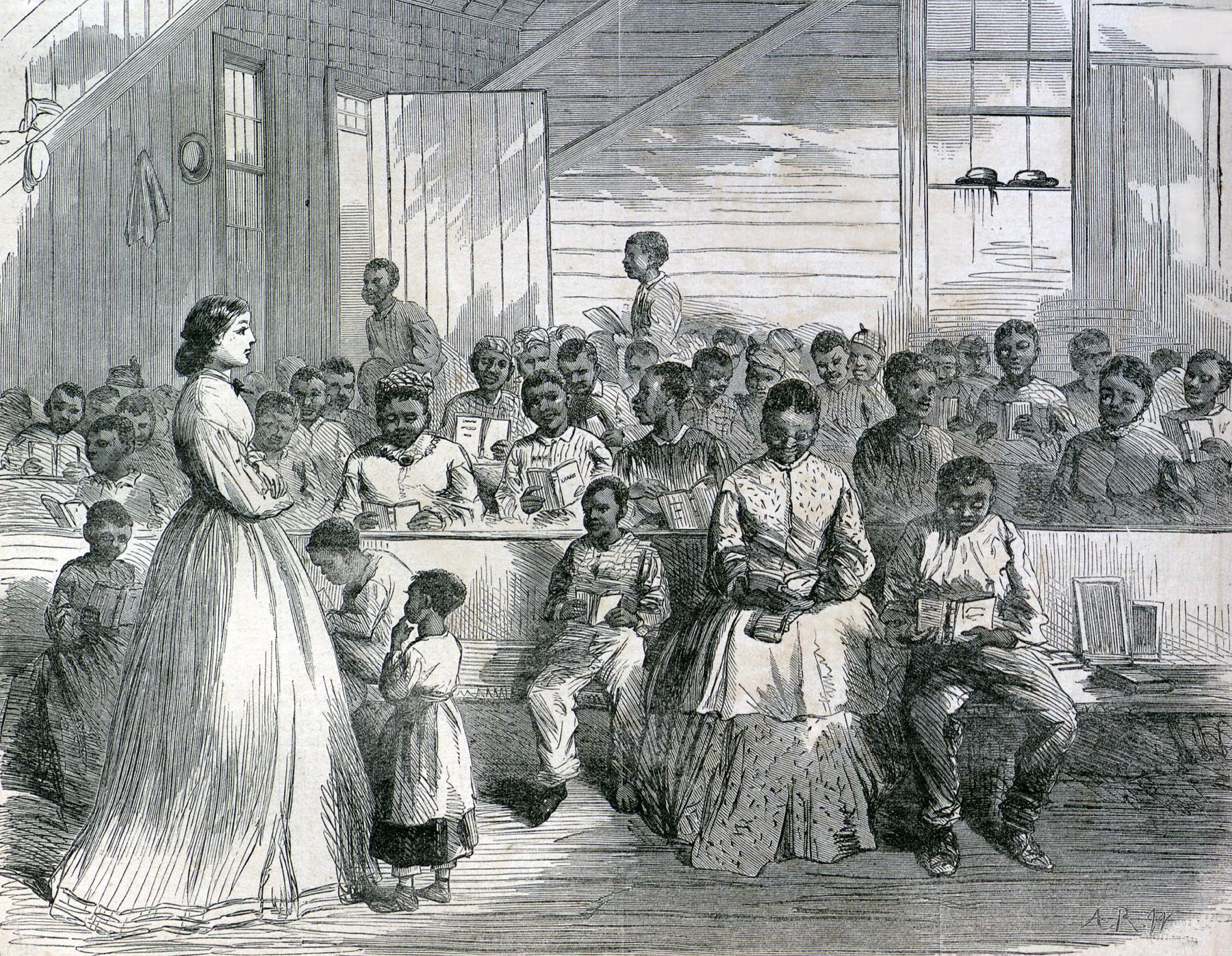
Black voters participated in elections and constitutional conventions, helping establish new Republican coalitions and, in several states, governments committed to public education and civil rights. Black officeholders served as legislators, local officials and eventually members of Congress. These achievements depended on political organization as well as legal eligibility. Churches, veterans and community leaders provided networks through which voters could learn about elections and advocate policies. White supremacist violence challenged that participation, and political rights often required federal enforcement. The acts are therefore significant not simply because Congress passed them, but because communities used new opportunities to alter government. Their influence can be traced in convention proceedings and the careers of Reconstruction-era elected officials.
How did President Johnson react?
Johnson opposed the military Reconstruction framework and vetoed the first act. He argued that Congress was exceeding constitutional authority and treating restored Southern governments illegitimately. Congressional Republicans overrode his veto, demonstrating the depth of conflict between the branches. The struggle formed part of the political background to Johnson’s impeachment in 1868, although the immediate articles concerned specific executive actions and statutory disputes. Reducing the conflict to the personalities of Johnson and a few congressional leaders would overlook the central issue: whether the federal government could require stronger protections for formerly enslaved people before restoring Southern representation. The outcome placed Congress, rather than the president alone, at the center of Reconstruction policy.
Did the acts end violence and discrimination?
No. Establishing military districts and new voting procedures did not remove white supremacist organizations or the economic power of former slaveholders. Armed intimidation and organized attacks targeted Black communities, teachers, political meetings and officials. Federal officers sometimes intervened, but authority and troop numbers were not sufficient everywhere. Additional enforcement legislation followed in 1870 and 1871 to protect federal voting rights. The persistence of violence reveals why a constitutional structure, a statute and a secure everyday experience were different things. It also warns against describing Reconstruction as a straightforward period when legal reform automatically produced lasting equality. Progress was real in many states, but threats and political counteroffensives continued.
How did the districts come to an end?
States moved through registration, conventions, approval of constitutions and other congressional conditions on different schedules. Once their representation was restored, the particular military-district process changed, although federal troops and intervention could continue for other reasons. Arkansas resumed representation in 1868; Virginia, Mississippi and Texas did so in 1870, for example. Reconstruction itself continued beyond the first wave of readmissions because controversies over voting, violence and state power remained unresolved. The conventional endpoint of 1877 refers to a later political transition, not the day all five districts were simultaneously abolished. Chronological precision is important: March 1867 created the framework, while its administration and consequences unfolded over several years.
Why are the Acts considered a turning point?
The Reconstruction Acts transformed the legal route by which former Confederate states would regain congressional representation. They linked recognition to new constitutions, Black male political participation and ratification of the Fourteenth Amendment. Their implementation helped create new state governments and unprecedented opportunities for African American political leadership. Their limits also became visible when violence, hostile officials and declining national commitment weakened those achievements. The acts provide a clear example of federal law shaping state political institutions after rebellion. They should be read alongside the Civil Rights Act of 1866 and the Reconstruction Amendments, because each addressed different aspects of the same fundamental question: what would freedom and national reunion mean in practice?
Reconstruction Acts timeline
| Date | Event |
|---|---|
| March 2, 1867 | First Reconstruction Act becomes law despite Johnson’s veto. |
| March 23, 1867 | Supplementary legislation provides registration and election procedures. |
| July 19, 1867 | Further legislation clarifies congressional and military authority. |
| 1868 | Several states meet conditions for representation. |
| 1870 | Final states in the process, including Texas, are readmitted to representation. |