Battle of Monocacy (1864): Lew Wallace, Jubal Early and Washington
The Battle of Monocacy was fought on July 9, 1864, near Frederick, Maryland. Confederate General Jubal Early defeated Union General Lew Wallace, but the smaller Union for
The Battle of Monocacy was fought on July 9, 1864, near Frederick, Maryland. Confederate General Jubal Early defeated Union General Lew Wallace, but the smaller Union force delayed Early’s advance toward Washington, D.C. That delay helped federal reinforcements reach the capital before Early’s army arrived, earning the battle its nickname, the Battle That Saved Washington.
A sourced historical guide to the chronology, evidence, people and consequences of this event.
On this page — 23 topics
When was the Battle of Monocacy?
The Battle of Monocacy was fought on July 9, 1864, along the Monocacy River near Frederick, Maryland. Confederate Lieutenant General Jubal A. Early led an army north from Virginia while Union Major General Lew Wallace assembled a smaller force to block important approaches to Washington, D.C. Early’s troops eventually drove the Union defenders from the field. Yet the fighting consumed time that Early needed if he hoped to reach a poorly defended capital before reinforcements arrived. The unusual result gives the battle a dual significance: it was a Confederate battlefield victory that nevertheless helped the Union meet a major strategic objective.
Why was Washington threatened in July 1864?
Ulysses S. Grant’s main Union armies were engaged in a demanding campaign against Robert E. Lee around Petersburg and Richmond. To relieve that pressure, Lee sent Jubal Early with experienced Confederate troops through the Shenandoah Valley toward Maryland and the national capital. Washington possessed extensive fortifications, but many veteran soldiers had been transferred to field operations. The remaining garrison included reserves and troops with limited combat experience. Early’s advance therefore created genuine concern, even if capturing and permanently holding Washington would have been extraordinarily difficult. The Confederates hoped at minimum to force Grant to divert troops from Virginia.
Who was Union General Lew Wallace?
Lew Wallace was a Union major general commanding the Middle Department, with headquarters in Baltimore. He was later celebrated as the author of the novel Ben-Hur, but in July 1864 his immediate problem was military: he had to identify the direction of Early’s advance and delay it with the troops available. Wallace initially brought together inexperienced soldiers, then received veteran reinforcements from the VI Corps. His force remained outnumbered, but its position along the Monocacy River could obstruct key roads and railroad crossings. His decision to fight rather than withdraw immediately became central to his later historical reputation.
Who was Confederate General Jubal Early?
Jubal A. Early was a Confederate officer commanding a field force detached from Lee’s Army of Northern Virginia. He had recently fought in the Shenandoah Valley and moved into Maryland as part of a strategy to threaten the North. Early hoped that a rapid advance would expose federal weakness and possibly force Grant to send significant reinforcements away from the Petersburg lines. The campaign required speed, because Union commanders could move troops by railroad or ship once the danger became known. Monocacy mattered precisely because Early needed to move quickly, and Wallace placed an army directly in his path.
Why was the Monocacy River a useful defensive position?
The Monocacy River crossed several important approaches toward Washington and Baltimore near Frederick, including the Georgetown Pike and the Baltimore & Ohio Railroad. The stream, its bridges and surrounding farms provided natural obstacles where a smaller army might slow a larger one. Wallace arranged his troops to defend the crossings and force Early to deploy for battle rather than simply continue along the road. The position did not make the Union army invulnerable: Confederate units could search for fords and strike the flank. Nevertheless, every hour spent locating a crossing and attacking defenders contributed to the federal delaying mission.
What was Monocacy Junction?
Monocacy Junction was a transportation point where the railroad and roads near Frederick converged. It could be used to move soldiers and supplies, and it had considerable value for a Confederate force advancing eastward. Railroad personnel helped alert Union leaders to Early’s movements. Union troops used the junction and nearby bridges to organize defense and monitor approaches. Its importance was not merely geographical: nineteenth-century armies depended on a small number of reliable roads and rail crossings, especially when moving guns and wagons. Control of this location could influence whether Early marched efficiently toward Washington or spent a day fighting a battle.
How many soldiers did Wallace have?
The National Park Service describes a Union force of approximately 6,600 by the morning of July 9, including veteran troops rushed north from the Petersburg area. Early’s Confederate army numbered about 15,000 in the immediate campaign, substantially outnumbering the defenders. Some publications cite slightly different figures depending on which detached units are included. The critical point is that Wallace did not possess enough men to expect a decisive destruction of the Confederate force. His troops were assembled for a delaying action whose success would be measured largely in time, not the permanent possession of every battlefield position.
What happened in Frederick before the battle?
Early’s army entered Frederick and demanded a substantial financial payment to spare the city from destruction. The amount was $200,000, raised through local banks. The episode reflected the use of coercion during the campaign and demonstrated the practical difficulties civilians faced when an army arrived suddenly. Early’s troops then moved toward Monocacy Junction, where Wallace blocked the route. Frederick was not merely a backdrop: roads leading out of the city influenced the Confederate approach, while local residents had to navigate the risks of occupation, requisitions and fighting on nearby farmland. The ransom remains part of the local memory of the campaign.
How did the fighting begin on July 9?
Confederate skirmishers advanced toward Union positions near Monocacy Junction on the morning of July 9. Wallace’s troops resisted along key roads, railroad facilities and the river crossings. Early had to determine how much Union strength stood before him and whether the defenders could be bypassed. Fighting grew as Confederate units sought crossings and moved around the flank. The opening stages demonstrated the value of Wallace’s position: the Confederates could not simply march unimpeded to Washington. At the same time, the small Union force was increasingly threatened by the numbers of troops Early could bring into action.
Why was the covered bridge important?
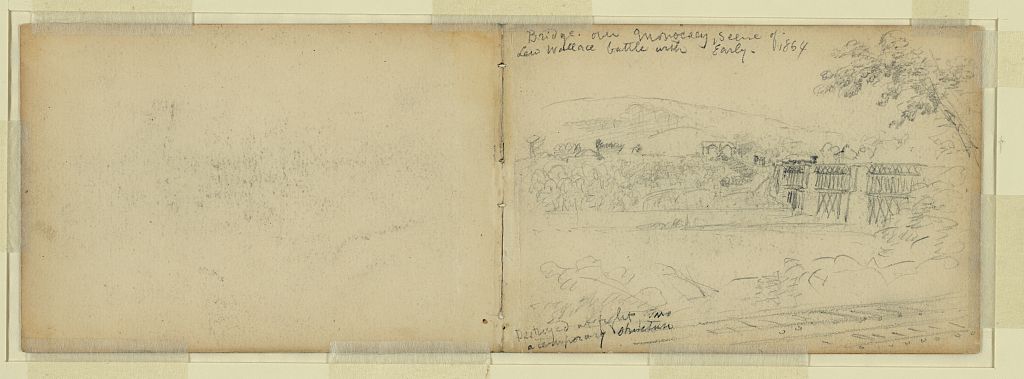
A wooden covered bridge carried the Georgetown Pike over the Monocacy River. This crossing led toward Washington and was therefore a central feature of the federal defensive plan. Union soldiers positioned themselves to block Confederate movement and used the river as an obstacle. The bridge and nearby roads concentrated troops in a limited area, while fighting on the flanks affected whether the crossing could be held. Historical maps show how the bridge connected the action near the junction with the larger battle on adjacent farms. Readers should distinguish that nineteenth-century wooden bridge from modern road crossings when visiting the site.
How did Confederate troops outflank the Union?
Confederate units located or used crossings that allowed them to move around the main Union position on the Georgetown Pike. John B. Gordon’s division played an important role in the attack against Wallace’s vulnerable flank. The Confederates brought pressure against Union troops positioned on farmland south of the river, where repeated assaults gradually weakened the defense. Wallace could not commit enough reserves to meet every threat. This maneuver helped decide the battlefield result, but the fighting needed to accomplish it took much of the day. The Confederates gained ground while losing the time required for a rapid advance on Washington.
What happened at the Thomas Farm?
The Thomas Farm became one of the principal areas of infantry fighting. Union and Confederate units advanced and counterattacked across fields and around buildings while the civilian family sought protection. The National Park Service notes that the farm changed hands more than once during the battle, demonstrating how contested the ground became. The site is important because it links tactical movement with the experiences of civilians living on the battlefield. Fences, lanes and farm structures affected troop movement, while residents faced fear and property damage. The battle was fought across occupied land, not on an empty military exercise ground.
What was the role of the Worthington Farm?
The Worthington Farm occupied a key part of the Monocacy battlefield near the river. Federal troops used the ground to delay Confederate movement and resist attacks. The Worthington family, including a young boy named Glenn, experienced the conflict directly. Glenn Worthington later wrote an influential early account of the battle, providing a civilian perspective that complements military reports. His recollections also remind historians to compare memories written years afterward with records produced during the fighting. Farmhouses and fields help researchers reconstruct both the geography of the action and the daily lives disrupted by an army’s advance.
Did Wallace win the battle?
No. Confederates defeated Wallace’s troops and compelled a Union retreat on July 9. The National Park Service records Monocacy as a Confederate victory and estimates 2,094 casualties across the two forces. The retreat was an orderly attempt to preserve as much of the Union force as possible rather than a final collapse of federal resistance in Maryland. Yet Wallace had achieved the purpose for which he chose to fight: he forced Early to spend a day deploying and battling instead of continuing toward Washington. Both statements can be true—a tactical defeat and a strategically important delay.
How did the battle save Washington?
Grant responded to the Confederate threat by sending veteran troops toward Washington, including VI Corps formations from the Petersburg front. The day consumed at Monocacy helped those reinforcements arrive before Early could mount an effective attack against the capital’s defenses. Early reached Washington’s outskirts on July 11 and encountered a better defended city than he had hoped. His troops skirmished at Fort Stevens before withdrawing. Because the delay affected the capital’s safety, Monocacy became known as the “Battle That Saved Washington.” The nickname is interpretive, but it rests on a clear relationship between battlefield resistance and reinforcement timing.
What happened at Fort Stevens?
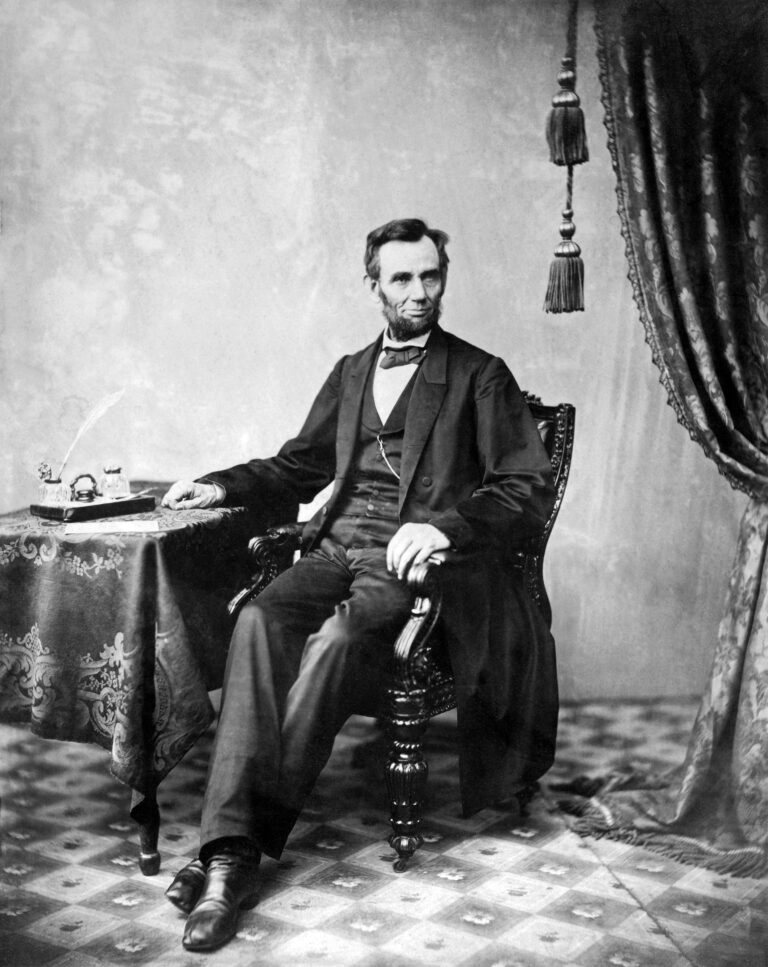
On July 11–12, Early’s Confederates approached Union fortifications near Fort Stevens in the northern part of Washington. They exchanged fire with defenders, but federal reinforcements strengthened the line. Early judged that a successful assault was unlikely and withdrew. President Abraham Lincoln visited the defensive area, an unusual episode that later generated stories about his exposure to hostile fire. The Fort Stevens fighting should be distinguished from the July 9 battle at Monocacy, which took place in Maryland. Monocacy delayed Early; Fort Stevens demonstrated why the threat to the capital had become much harder to carry out once additional Union troops arrived.
How did Monocacy connect to Petersburg?
Lee sent Early north in part to relieve Union pressure on the Confederate defenses around Petersburg. The raid forced Grant to transfer veteran soldiers away from operations in Virginia, achieving at least a temporary diversion. Yet Early failed to capture Washington or win a major, lasting political victory. Monocacy was one stage in the effort to influence the broader war. Understanding this connection prevents readers from treating the Maryland engagement as a random Confederate incursion disconnected from the main 1864 campaigns. See the Petersburg guide for the war in Virginia during the same period.
Were Maryland civilians affected?
The Confederate advance affected Frederick and surrounding rural communities through demands for money, troop movements, damage to property and the danger of fighting near homes. Families on the Thomas and Worthington farms sheltered while soldiers fought across their land. Railroads and bridges also suffered disruption as armies contested control of transportation routes. Maryland was a Union state with divided political sympathies, making the raid especially tense for local residents. Military success could be measured in hours gained or lost, but civilians experienced the event through damaged fields, fear and uncertainty about what soldiers would do next. Preservation programs now interpret these human consequences alongside the battlefield action.
Why is Monocacy different from Gettysburg?
Monocacy and Gettysburg were fought in nearby regions during separate Confederate invasions of the North, but their strategic purposes and scales differed. Gettysburg in July 1863 involved the main armies of Lee and George Meade and ended in a major Union victory. Monocacy in July 1864 involved Early’s smaller force against Wallace’s outnumbered defenders and resulted in Confederate possession of the battlefield. Monocacy’s importance rests chiefly on delaying a threat to Washington. Comparing the two is useful only when the distinction between a decisive field battle and a strategic delaying action is preserved.
What can visitors see at Monocacy National Battlefield?
Monocacy National Battlefield near Frederick preserves farm landscapes, sections of the river and locations associated with the troops’ movements. The park’s interpretive resources explain the railroad, crossings, civilian families and the battle’s timing. Its official historical narrative traces the July 9 fighting and the consequences for Washington. Visitors should use battlefield maps to understand how crossings and roads related to each other, and distinguish reconstructed or modified modern infrastructure from the structures of 1864. The preserved setting provides a rare opportunity to interpret a Confederate victory that served an important Union strategic purpose.
Timeline
| Date | Event |
|---|---|
| Early July 1864 | Early advances into Maryland from the Shenandoah Valley. |
| July 9 | Wallace resists Early at the Monocacy River and retreats. |
| July 10–11 | Union reinforcements move toward Washington. |
| July 11–12 | Confederate troops skirmish near Fort Stevens; Early withdraws. |