Atlanta Campaign (1864): Sherman, Johnston, Hood and the Fall of Atlanta
Sherman’s advance through Georgia weakened the Confederacy and gave Lincoln an important political victory.
The Atlanta Campaign lasted from May to early September 1864 as Union general William T. Sherman advanced from northern Georgia toward Atlanta. Confederate general Joseph E. Johnston delayed the Union through defensive maneuvers and battles, but was replaced by John Bell Hood in July. Hood launched costly attacks, and Sherman eventually threatened the city’s railroad connections. Confederate forces abandoned Atlanta, which Union troops entered on September 2.
A source-based guide to the sequence, commanders, decisions and historical consequences.
On this page — 20 topics
What was the Atlanta Campaign?
The Atlanta Campaign was Sherman’s sustained advance across northern Georgia during the spring and summer of 1864. It combined large-scale maneuver, combat and the pressure of maintaining supply lines over considerable distances. Atlanta’s rail connections and industrial facilities made it an important Confederate center and a desirable Union objective.
The campaign was not a single battle for the city. It involved fighting near Dalton, Resaca, New Hope Church, Kennesaw Mountain, Peachtree Creek, Atlanta and Jonesboro. Confederate defenders tried to delay the approach, while Sherman repeatedly sought ways around strong positions. The fall of Atlanta was the cumulative result of months of military activity.
Why did Sherman attack Georgia in 1864?
Union general-in-chief Ulysses S. Grant sought coordinated pressure on major Confederate armies. While he advanced against Lee in Virginia, Sherman moved against Confederate forces in Georgia. This simultaneous strategy made it harder for Confederate commanders to move reinforcements freely between regions and weakened their ability to concentrate at a single threatened point.
Sherman aimed to defeat the Army of Tennessee, disrupt its supplies and capture Atlanta. The city’s railroads linked regions of the Confederacy and helped supply southern armies. The campaign therefore offered both a military objective and the prospect of a morale-boosting victory as the Union faced mounting casualties and a presidential election.
Who were the opposing commanders?
William Tecumseh Sherman directed several Union armies working together, including forces associated with George H. Thomas, James B. McPherson and John M. Schofield. This large command required careful coordination across separate roads and valleys. Sherman’s subordinates led different columns while he managed the wider advance and the protection of his communications.
Joseph E. Johnston initially commanded the Confederate Army of Tennessee. He withdrew from successive defensive lines while looking for opportunities to strike. Confederate president Jefferson Davis became frustrated with this retreat and appointed John Bell Hood in July. Hood adopted a more aggressive style and launched major attacks in an effort to halt the Union approach.
How did the mountains and roads affect the campaign?
Northern Georgia’s ridges, passes, forests and rivers made frontal assaults difficult and gave defenders many opportunities to block advances. Sherman often attempted to threaten Johnston’s rear or railroad connections, persuading the Confederates to abandon positions without an overwhelming attack. Even when the Union had more soldiers, it could not simply walk through mountains or fortified gaps.
Railroads were equally important. The Western & Atlantic Railroad supported the Union advance from Chattanooga, and protecting it required guards, repairs and supplies. Confederate cavalry and raiders sought to interrupt communications. Military maps show why a movement around a mountain could force the defenders to retreat even when neither side won a decisive battle on that ground.
What happened at Rocky Face Ridge and Resaca?
Early in May, Johnston used the strong terrain around Dalton and Rocky Face Ridge to impede Sherman. Union forces tested the Confederate defenses while other columns maneuvered to threaten the railroad behind them. Johnston withdrew toward Resaca to avoid being cut off, where the armies fought on May 14 and 15.
The engagements illustrated the campaign’s recurring pattern. Sherman looked for a vulnerable flank or a route around a strong line; Johnston resisted where he could and withdrew when his communications were endangered. This approach prolonged the campaign and saved parts of the Confederate army, but it also surrendered ground along the route to Atlanta.
What happened near New Hope Church?
In late May the Union advanced into a region of difficult woods and roads around Dallas and New Hope Church. Confederate forces resisted in a series of engagements, including Pickett’s Mill and fighting around Dallas. Rain, restricted visibility and uncertain maps made the movement of large columns hard to coordinate.
The Union did not win every encounter and suffered significant setbacks in some attacks. Those reverses did not end the campaign because Sherman continued to maneuver and pressure the defenders. The New Hope Church operations show why it is misleading to portray the Atlanta advance as an effortless march made possible only by superior numbers.
Why did the attack at Kennesaw Mountain fail?
At Kennesaw Mountain on June 27, 1864, Sherman launched a major assault against established Confederate defenses. The attackers faced steep approaches, prepared positions and strong fire. The attack was repulsed with heavy losses, becoming one of the best-known Union tactical failures of the campaign.
Sherman had often preferred maneuver, so his decision to assault raised questions even among contemporaries. After the failure, he returned to movements intended to threaten the Confederate flanks. Kennesaw demonstrates how geography and entrenchments could overcome numerical strength and why battlefield outcomes must be understood within the larger sequence of operations.
Why did Johnston lose command?
Johnston’s defensive withdrawal kept his army in the field but allowed Sherman to approach Atlanta. Confederate leaders feared that continued retreat would cost the city without forcing a decisive battle. Jefferson Davis replaced Johnston with Hood in mid-July 1864, hoping a more aggressive commander could reverse the momentum.
Historians disagree about whether Johnston had a realistic opportunity to defeat Sherman through maneuver alone. Hood inherited a difficult situation, with Union forces near the city and Confederate manpower limited. The replacement is an important command decision because it changed how the defenders used their remaining army during the final phases of the campaign.
What changed when Hood took over?
Hood launched major attacks against Union forces instead of relying primarily on defensive repositioning. At Peachtree Creek on July 20, the Confederates attempted to strike an exposed part of Sherman’s command but were repulsed. The new commander hoped aggressive blows would disrupt Union coordination before Atlanta was fully invested.
Two days later another large Confederate attack developed around Atlanta. These operations caused severe casualties and did not remove the Union threat. Hood’s offensive approach contrasted with Johnston’s caution, though both commanders faced the same fundamental problem: an enemy with greater resources was steadily threatening the city’s vital transport links.
What happened at the Battle of Atlanta?
On July 22, Confederate troops attacked Union positions east and southeast of Atlanta in an effort to surprise and damage Sherman’s forces. The fighting involved several Union commands and resulted in intense combat. Union general James B. McPherson was killed, a major loss to the army and to Sherman personally.
Despite the shock, Union forces held and the Confederate attack failed to achieve its objective. The battle was not the day Atlanta fell; the city remained in Confederate hands for weeks. Distinguishing the July battle from the September occupation avoids confusion in popular summaries that treat the Battle of Atlanta as the end of the entire campaign.
Why did railroad lines matter at Jonesboro?
In late August, Sherman shifted forces to threaten railroad connections south of Atlanta. Fighting at Jonesboro on August 31 and September 1 threatened the Macon & Western Railroad and helped make Hood’s position untenable. The Confederate army risked being cut off from supplies if it remained in the city.
The movement accomplished what direct attacks on Atlanta had not: it endangered the ability of defenders to sustain themselves. Hood withdrew rather than allow his army to be trapped. When Union soldiers occupied the city on September 2, they gained a strategic transport center and a victory with consequences far beyond the immediate battlefield.
How did Atlanta’s fall affect the 1864 election?
By late summer many Northern voters were exhausted by the war and uncertain whether victory was near. Lincoln faced former general George B. McClellan in the presidential election. News that Sherman had captured Atlanta strengthened confidence in the Union’s capacity to win and helped alter the political atmosphere.
Atlanta was not the only factor in Lincoln’s reelection: battlefield results in the Shenandoah Valley and other considerations also mattered. Still, the victory was a striking answer to fears of military stalemate. The connection between campaigns and elections reminds readers that Civil War armies operated within a democratic political system facing enormous stress.
What did Atlanta’s capture mean for civilians?
Atlanta residents faced bombardment, displacement, shortages and damage to infrastructure during the military campaign. After occupying the city, Sherman ordered civilians to leave while Union troops used it as a base. Families were forced to abandon homes amid difficult circumstances and uncertain prospects.
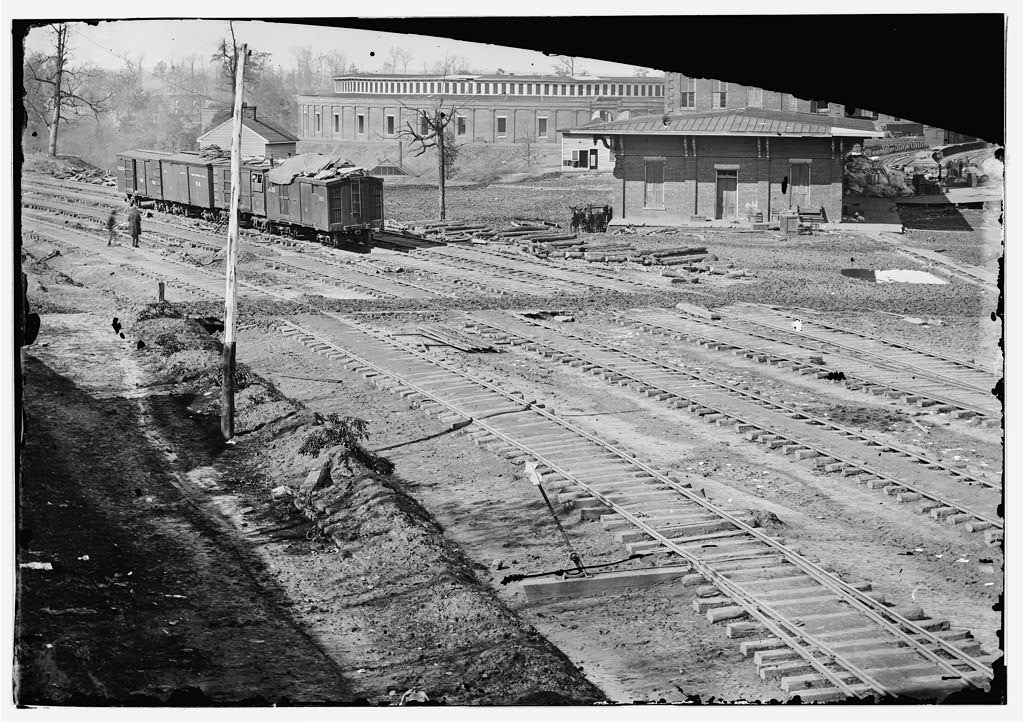
Enslaved people in and around Atlanta also confronted a rapidly changing situation as Union forces approached. Military occupation could open opportunities for freedom, but war, forced migration and disrupted labor systems created hardship. Period photographs of damaged railroad facilities testify to material destruction; they should not be mistaken for a complete record of civilian experience.
Was Sherman planning the March to the Sea already?
The capture of Atlanta created a new strategic opportunity. Sherman eventually decided to march through Georgia toward the Atlantic coast, disrupting Confederate resources and reducing dependence on the railroad line back to Chattanooga. The March to the Sea began in November, after weeks of planning and preparation.
The new campaign was different from the effort to capture Atlanta. Rather than fighting a defending army around a major city, Sherman moved across Georgia while living partly off local resources and destroying military infrastructure. The two operations are connected but should be studied separately, each with its own dates, geography and effects on civilians.
How many casualties were there?
The campaign caused large numbers of casualties across months of fighting. Estimates vary depending on which engagements and types of losses are counted. The National Park Service notes that more than 180,000 Union and Confederate troops participated and that the campaign generated very large combined losses.
It is essential to distinguish casualties from deaths. Many men were wounded, captured or missing, and repeated transfers of units complicate aggregate statistics. Comparing the losses at Kennesaw Mountain with the entire Atlanta Campaign without explaining the dates produces misleading conclusions. Numbers are meaningful when connected to a specific source and definition.
Why is the Atlanta Campaign a turning point?
The campaign gave the Union a major military and political success in 1864. Sherman captured an important Confederate railroad center while keeping his armies capable of further operations. The victory weakened Southern communications and demonstrated that important Confederate positions could be lost even while defensive armies continued to resist.
Its significance extends to Lincoln’s reelection, the later March to the Sea and the war’s final campaigns. It also provides a useful study of command choices: Johnston’s retreating defense, Hood’s costly offensives and Sherman’s repeated efforts to turn strong positions rather than attack them directly. Together those decisions explain the eventual outcome.
Atlanta Campaign 1864 timeline
These dates distinguish the main stages of the operation; the consequences often continued beyond the moment of battle.
| Date | Event |
|---|---|
| May 1864 | Sherman advances from Chattanooga into northern Georgia. |
| May 14–15 | Battle of Resaca. |
| Late May | Fighting near New Hope Church and Pickett’s Mill. |
| June 27 | Kennesaw Mountain assault. |
| July 17 | Hood replaces Johnston. |
| July 20–22 | Peachtree Creek and Battle of Atlanta. |
| August 31–Sept 1 | Battle of Jonesboro threatens the railroad. |
| Sept 2 | Union forces occupy Atlanta. |
Frequently asked questions
When did it happen? May–September 1864.
Where did it take place? Northern Georgia.
Who commanded the principal forces? Sherman, Johnston, Hood.
What was the outcome? Union captures Atlanta. The sections above explain the tactical result and the wider consequences.
How does it fit into the Civil War? For a broader chronology see the American Civil War guide.
Historical sources and further reading
The account uses National Park Service historical interpretation and Library of Congress records. Images are identified as contemporary photographs or later historical representations where applicable.