Watts Uprising of 1965: Causes, Six Days of Unrest and the McCone Commission
Watts Uprising of 1965: Causes, Six Days of Unrest and the McCone Commission
How a traffic stop in Los Angeles triggered six days of unrest, what residents said about policing and inequality, and what investigators concluded.
Quick answer
How a traffic stop in Los Angeles triggered six days of unrest, what residents said about policing and inequality, and what investigators concluded.
Key facts
On this page
Los Angeles before August 1965
In the early 1960s, many Black residents of Los Angeles confronted discrimination in housing, employment and schools despite the region’s reputation for economic opportunity. Segregated neighborhoods, limited job prospects and mistrust of police shaped everyday life. Community organizers had been raising concerns well before the unrest.
The passage of national civil-rights legislation did not resolve every local problem. Different laws addressed formal segregation and voting rights, but poverty and unequal policing required additional political and institutional responses. Understanding Watts begins with those longer-standing grievances rather than treating the events as an inexplicable eruption.
The August 11 traffic stop
The immediate confrontation began on August 11, 1965, when California Highway Patrol officers stopped Marquette Frye, a young Black motorist, near Watts on suspicion of intoxicated driving. As officers attempted to arrest him, an argument developed involving family members and bystanders. Rumors and anger spread through the crowd.
Historical accounts differ in some descriptions of the confrontation, and rumor quickly became part of the escalating tension. The stop was the immediate spark, but it cannot by itself account for the widespread distrust and participation that followed.
Six days of unrest
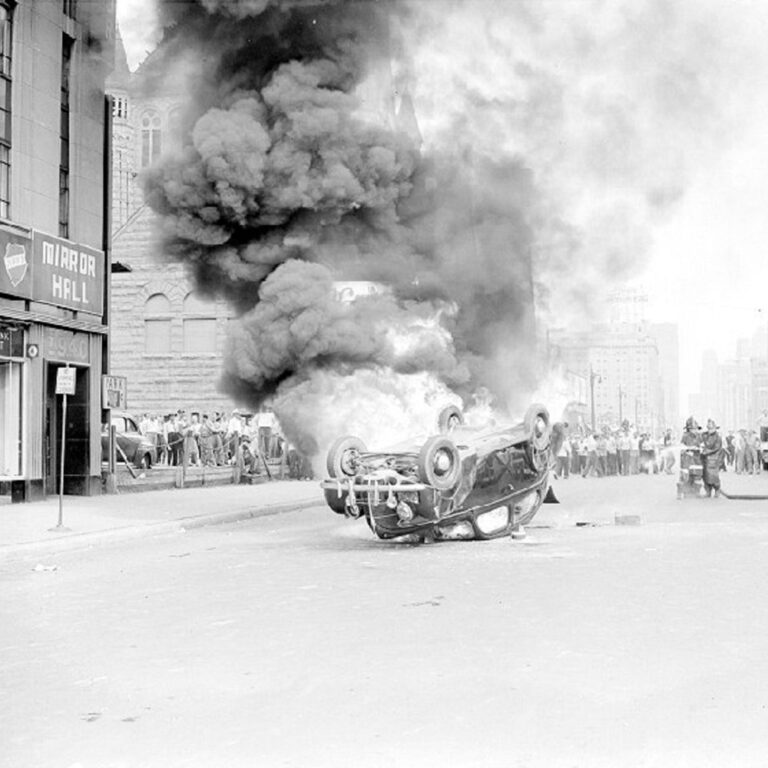
The disturbance expanded into several days of confrontations with police, fires, looting and destruction of businesses and other property. The unrest affected Watts and adjacent communities in South Los Angeles, not every part of the city equally.
Residents were neither a single organized political faction nor united in support of violent action. Some participated in confrontations, some attempted to protect homes or businesses, and many experienced fear and disruption. Treating all inhabitants as rioters would erase those distinctions.
National Guard intervention and human losses
California authorities deployed National Guard troops, and a large security presence helped suppress the unrest by August 16. The widely cited totals are 34 people killed, about 1,032 injured and nearly 4,000 arrested. Property damage exceeded tens of millions of dollars in contemporary estimates.
Those numbers are often repeated as precise statistics, but they summarize different kinds of loss. The deaths and injuries were profound human consequences; property damage also affected employment, businesses and neighborhood stability.
The McCone Commission’s investigation
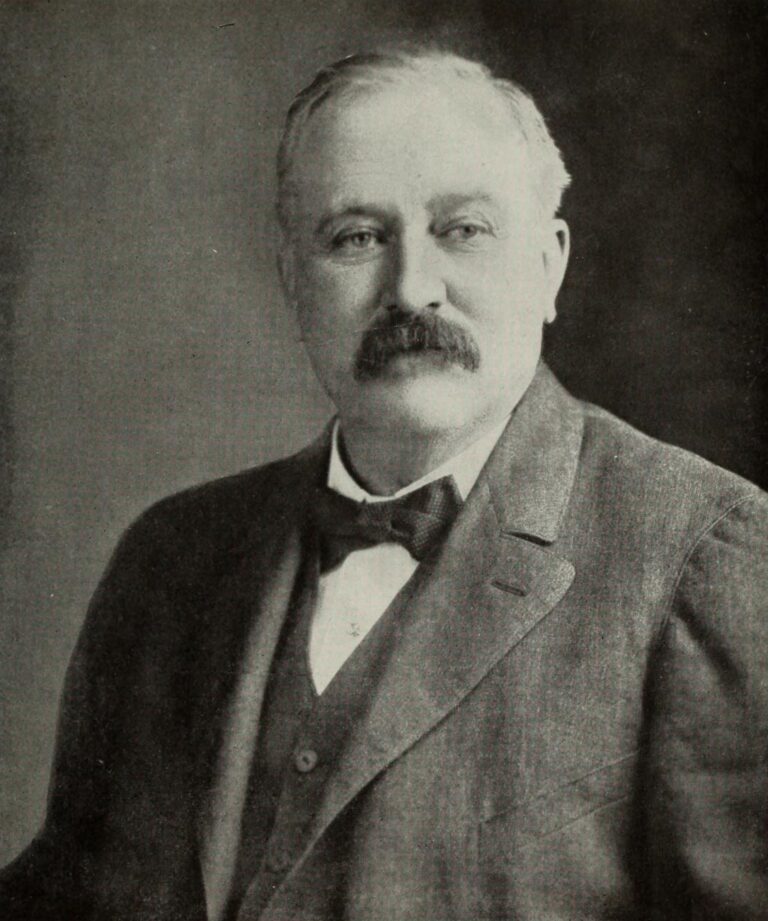
California governor Pat Brown appointed a commission chaired by former CIA director John McCone to investigate the causes and propose responses. Its report addressed conditions involving jobs, education, policing and services, even as interpretations of responsibility remained contested.
Investigation did not mean that residents immediately received all the reforms recommended. Local politics, budgets and institutional priorities influenced the degree to which the city’s response changed everyday circumstances.
Martin Luther King Jr. and the debate over protest
Martin Luther King Jr. visited Los Angeles after the uprising and spoke with residents about their grievances. He criticized destructive violence while arguing that economic inequality and political neglect had helped create the crisis. Other activists emphasized frustrations with the limitations of nonviolent tactics.
The debate reflected changing civil-rights politics in the mid-1960s. Some organizers stressed integration and federal legislation; others called for greater community control, economic independence and a different approach to power.
Legacy of the Watts Uprising
Watts became an important reference point for urban unrest, policing and racial inequality in the later 1960s. Its significance extends beyond its duration because it challenged the assumption that civil-rights victories in Congress had ended the conditions that produced protest.
The useful distinction is between the immediate traffic-stop confrontation and the accumulated grievances that made the situation combustible. A careful account also remembers the dead and the community’s varied experiences, not only images of fire and troops.
Frequently asked questions
When did the Watts Uprising occur?
August 11–16, 1965.
What immediately triggered it?
A traffic stop and arrest involving Marquette Frye.
How many people died?
The commonly reported toll was 34 deaths.
What was the McCone Commission?
A state-appointed inquiry into the causes of the unrest and possible reforms.
Sources and further reading
Related history: Civil Rights Act of 1964 · Voting Rights Act of 1965 · Birmingham Campaign of 1963