Detroit Race Riot of 1943: Causes, 34 Deaths and the Wartime Housing Crisis
How wartime population growth, segregated housing, rumors and policing contributed to deadly racial violence in Detroit in June 1943.
Quick answer
Detroit experienced severe racial violence from June 20 to 22, 1943, beginning after conflicts at Belle Isle and spreading into the city. Thirty-four people died, including 25 Black and nine white victims, according to the Detroit Historical Society and National Park Service. Crowded housing, discrimination, wartime industrial migration and inflammatory rumors heightened tensions. Police responses were widely criticized, and federal troops were deployed to restore order. The episode revealed major inequalities on the American home front.
Key facts
On this page
- Detroit’s industrial transformation during World War II
- Segregated housing and overcrowded neighborhoods
- The Sojourner Truth housing controversy
- June 20: fighting begins on Belle Isle
- How the violence spread through the city
- The death toll and racial pattern of victims
- How Detroit police responded
- Federal troops and the restoration of order
- Rumors, newspapers and racial stereotypes
- The riot in the context of wartime race relations
- Official investigations and competing interpretations
- The Detroit riot’s lasting significance
- Timeline
- FAQs
- Sources
Detroit’s industrial transformation during World War II
Detroit became one of the leading centers of American wartime production as automobile factories shifted toward making tanks, vehicles, engines and other equipment. Federal contracts created enormous demand for workers, attracting people from the South and other parts of the country. The city was central to the effort that officials called the Arsenal of Democracy, and its factories helped sustain military operations overseas.
The rapid population growth also strained housing, transport and public services. Black workers arriving through the Great Migration confronted discriminatory barriers to neighborhoods and employment opportunities. White residents and Black newcomers competed within an unequal urban system. Although the war expanded jobs, it did not automatically remove segregation or the prejudices that shaped access to resources.
Segregated housing and overcrowded neighborhoods
Detroit’s housing market was marked by racial exclusion, restrictive practices and unequal access to better-quality housing. Many Black families were confined to crowded neighborhoods even when they earned wages from defense work. White neighborhoods often resisted integration through organized protests, intimidation and discriminatory real-estate practices. The scarcity of housing during wartime made these conflicts more intense.
Overcrowding affected family life and increased pressure on transport and public recreation areas. Employers needed workers but did not always provide housing that allowed new arrivals to live safely near jobs. The result was an urban contradiction: the nation relied on industrial labor while many workers lacked equal access to the city’s residential opportunities. Housing tensions formed a major structural background to the 1943 riot.
The Sojourner Truth housing controversy
A federal housing project named for abolitionist Sojourner Truth became a flashpoint before the 1943 violence. Plans to house Black defense workers encountered strong opposition from some white residents near the project. Protests and confrontations over occupancy revealed resistance to federal attempts to address housing shortages while also demonstrating the vulnerability of Black families seeking better living conditions.
The conflict did not by itself cause the June riot but showed that racial tensions were already severe. Debates about who could live in government-supported housing became symbols of larger struggles over citizenship and employment. Historical accounts should separate the earlier housing confrontation from the specific events on Belle Isle while recognizing that both reflected the same underlying patterns of segregation.
June 20: fighting begins on Belle Isle
On June 20, 1943, large crowds gathered on Belle Isle, a popular Detroit park. Fighting involving groups of Black and white young people began and spread as rumors circulated. The conflict escalated quickly beyond the initial confrontation. By night, stories of attacks appeared in different neighborhoods, some exaggerated or false, and groups assembled in anger and fear.
Police and community leaders struggled to contain the situation. In an atmosphere of distrust, rumors could move faster than officials could verify them. Historical accounts describe false claims about assaults on women and children that helped inflame retaliatory violence. The existence of these stories should not be repeated as though the alleged crimes actually occurred. Their historical significance lies in how misinformation contributed to collective attacks.
How the violence spread through the city
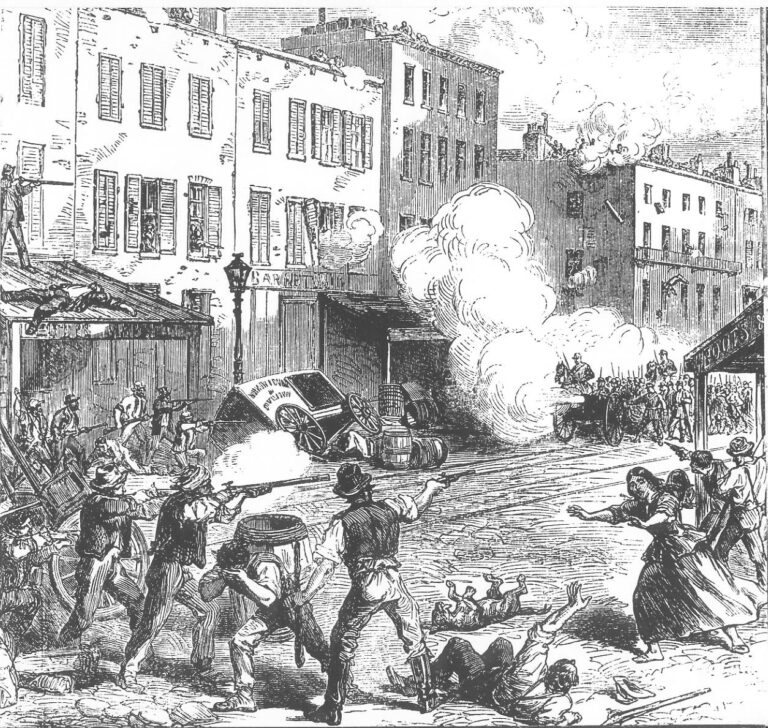
Groups of people attacked pedestrians, vehicles and businesses as the conflict moved from Belle Isle into other parts of Detroit. Black and white residents were targeted in different neighborhoods, and the violence caused deaths, injuries and severe property damage. Urban streets and transportation routes became dangerous, while workers attempting to travel to jobs faced unexpected risk.
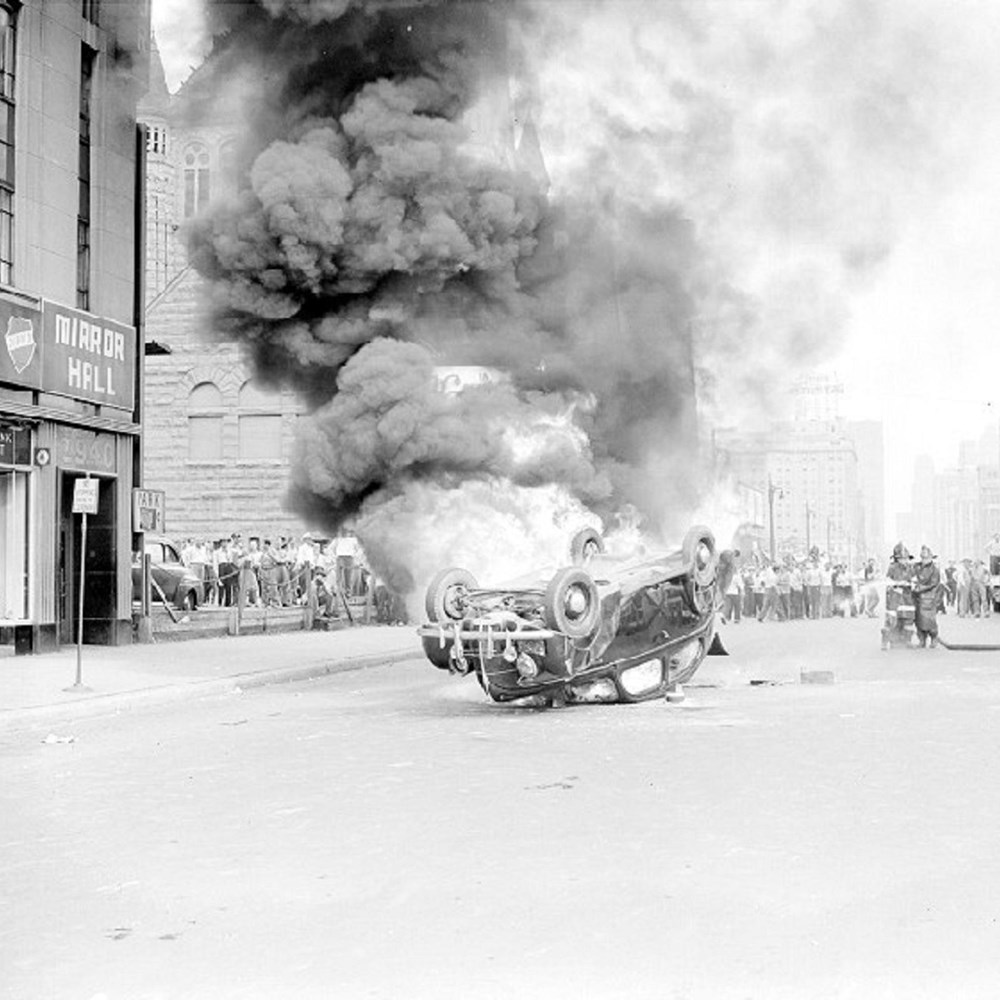
The featured photograph shows an overturned burning car during the riot, illustrating the destruction visible in the city. It does not identify the people who set the fire or establish the circumstances of any particular death. Archival photographs should be used alongside police and investigative records, rather than treated as a complete explanation of who committed violence and why. The event was complex and unfolded across multiple locations.
The death toll and racial pattern of victims
The Detroit Historical Society and National Park Service report a total of 34 deaths, including 25 Black victims and nine white victims. Hundreds of people were injured. The disproportionate number of Black deaths is an important fact when assessing the intensity and direction of violence. It complicates descriptions that suggest a perfectly symmetrical conflict in which every community faced identical danger.
Fatalities included people killed during street attacks and those shot in police confrontations. Some accounts identify a particularly large number of Black victims killed by police officers. Exact categories should be attributed to investigative reports rather than estimated from photographs. The death toll is a measure of human loss, not simply a statistic demonstrating the riot’s scale. Individual victims and families faced irreversible consequences.
How Detroit police responded
Police officers attempted to restore order, but their actions became a major focus of criticism. Contemporary reports and later scholarship describe unequal treatment of Black residents, including heavy use of force and failure to protect people under attack. Racial bias within law enforcement helped shape public anger and fear. The police response was not merely a neutral intervention between two equally protected communities.
The historical record does not require assuming that every officer acted identically or that every confrontation had the same circumstances. However, patterns of enforcement and shooting should be evaluated through evidence about who was arrested, injured or killed. The riot raised questions about institutional accountability at a time when the federal government relied on Detroit’s diverse workforce for essential war production.
Federal troops and the restoration of order
As local authorities struggled, federal troops were deployed to help restore order. Their arrival marked the seriousness of the crisis and the risk that uncontrolled violence posed to civilian safety and wartime production. Military presence helped bring the most intense fighting to an end after roughly two days, although fear and mistrust persisted long afterward.
The deployment did not immediately solve Detroit’s housing discrimination or unequal access to employment. Federal intervention could suppress visible violence while leaving its underlying causes unresolved. This distinction is essential when evaluating what ‘restoring order’ meant. Streets might become quieter while families still faced segregation, displacement and the consequences of deaths and injuries.
Rumors, newspapers and racial stereotypes
False rumors helped intensify the riot. Accounts of purported attacks on women or children circulated as people sought explanations and justification for retaliation. In periods of collective fear, dramatic claims can encourage violence before evidence is checked. Newspapers and radio could influence public understanding through the selection of headlines, language and images.
Racial stereotypes also shaped whose accounts were believed. Historians examine contemporary coverage as evidence of public attitudes, not merely as an objective chronology. Official investigations and later oral histories help identify how rumor differed from fact. The events demonstrate the destructive interaction between long-standing prejudice and quickly spread misinformation during a moment of social stress.
The riot in the context of wartime race relations
Detroit was not the only American city to experience serious racial conflict during World War II. Los Angeles saw the Zoot Suit Riots in June 1943, with different participants and patterns of violence. Both incidents revealed how wartime migration, crowded public spaces and discriminatory institutions could turn local confrontations into larger crises.
Black Americans were also organizing against unequal treatment in defense industries and the military, demanding that wartime claims about democracy apply at home. The Detroit riot exposed the gap between expanding industrial opportunity and continued segregation. Civil-rights activism did not begin in 1943, but the wartime period sharpened demands for fair employment, housing and protection from violence.
Official investigations and competing interpretations
Michigan Governor Harry Kelly appointed a fact-finding committee to investigate the riot. Its report examined events, causes and official response, providing an important contemporary source. Investigations also reflected the assumptions and limitations of the officials who conducted them. Historians read such reports alongside newspapers, photographs, community testimony and later scholarship.
Different interpretations emphasize particular causes such as overcrowding, labor competition or racism, but the evidence supports a combination of structural and immediate factors. No single rumor or fight explains the entire event. The conflict emerged where discrimination and wartime strain had already created severe tension. A reliable historical account should distinguish the spark from the conditions that allowed violence to spread.
The Detroit riot’s lasting significance
The 1943 riot revealed how racial inequality shaped life in one of the country’s most important war-production cities. Industrial jobs expanded while Black residents remained restricted in housing and exposed to unequal law enforcement. The death of 34 people illustrated the potentially catastrophic consequences of those conditions when rumors and crowds turned violent.
The event remains important to Detroit’s history because it predated later urban unrest and showed that civil-rights tensions were deeply rooted before the 1960s. It also belongs to the wider World War II home-front story, when Americans confronted contradictions between fighting for freedom abroad and accepting discrimination at home. The source record supports careful analysis of victims, institutions and causes rather than a simplified image of two equal mobs.
Timeline
- 1941–1942: Detroit wartime employment and migration surge
- 1942: Sojourner Truth housing dispute highlights segregation
- June 20, 1943: Fighting begins at Belle Isle
- June 21: Violence spreads through Detroit
- June 21–22: Federal troops help restore order
- August 1943: Governor Kelly committee report published
- Later decades: Event becomes central to Detroit race-relations history
Frequently asked questions
When was the Detroit race riot?
June 20–22, 1943.
How many people died?
34: twenty-five Black victims and nine white victims.
Where did the unrest start?
Belle Isle park, before spreading to city neighborhoods.
What were the deeper causes?
Racial discrimination, segregated housing, wartime migration and strain on urban services.
Did rumors contribute?
Yes. Inflammatory and sometimes false stories helped escalate retaliatory violence.
Did federal troops intervene?
Yes. Troops were deployed when local authorities failed to control the violence.
Was Detroit the only wartime riot?
No. Other cities, including Los Angeles, experienced distinct episodes of racial violence in 1943.