Home / Early Modern History / Renaissance
What Was the Renaissance? Meaning, Timeline, Humanism and Art
What was the Renaissance, when did it happen and why did it begin in Italy? Explore humanism, art, patronage, printing, major figures and the transition from medieval to early modern Europe.
Published 3 October 2026
The Renaissance was a broad cultural movement that reshaped art, education, literature, architecture and intellectual life in parts of Europe between the later Middle Ages and the early modern period. The word means “rebirth”, referring above all to a renewed fascination with the literature, art and ideas of ancient Greece and Rome.
It did not begin on a single date, and medieval culture did not suddenly disappear when the Renaissance arrived. Many developments associated with the Renaissance grew from medieval universities, cities, workshops, trade networks and religious institutions. What changed was the scale and intensity with which scholars and artists studied antiquity, experimented with new techniques and presented their own age as a revival of classical learning.
The movement first became especially influential in Italian cities such as Florence during the fourteenth and fifteenth centuries. By the late fifteenth and sixteenth centuries, Renaissance ideas and artistic styles had spread through much of Europe.
For the period that came before it, see our guide to the Middle Ages: timeline, society and daily life.
What does Renaissance mean?
Renaissance comes from the French word for “rebirth.” Historians use it to describe a renewed engagement with classical Greek and Roman culture and the artistic, literary and intellectual changes associated with that revival.
People living in fifteenth-century Italy did not all agree that they were living in a neatly defined new historical period. Yet some humanists deliberately described their own era as a recovery of learning after what they believed had been centuries of decline.
That judgment should be treated carefully. Renaissance writers often exaggerated the supposed backwardness of the Middle Ages in order to celebrate their own achievements. Medieval Europe had produced universities, Gothic cathedrals, sophisticated philosophy, expanding commercial cities and important developments in law, science and technology.
The Renaissance is therefore better understood as a period of change and reinterpretation rather than a complete break with everything medieval.
When was the Renaissance?
There is no universally accepted starting and ending date.
For Italy, historians often discuss a Renaissance stretching broadly from the fourteenth to the sixteenth century. Developments appeared at different times in different cities and fields.
- 1300s: writers such as Petrarch promoted renewed study of classical texts, while artists such as Giotto helped transform approaches to pictorial space and human emotion.
- 1400s: Florence became a major center of humanism, architecture, sculpture and painting.
- Late 1400s to early 1500s: the period associated with Leonardo da Vinci, Michelangelo and Raphael is often called the High Renaissance.
- 1500s: Renaissance culture flourished across Italy and spread through northern Europe, while new styles such as Mannerism developed.
In northern Europe, Renaissance developments became especially visible during the later fifteenth and sixteenth centuries.
Where did the Renaissance begin?
The Renaissance is most closely associated with the city-states and courts of Italy.
Florence became one of its most famous centers, but Venice, Rome, Milan, Mantua, Ferrara, Urbino and other cities also played major roles. There was never one single Renaissance capital for the entire period.
Why did the Renaissance begin in Italy?
No single cause explains the rise of Renaissance culture. Several conditions reinforced one another.
Wealthy and competitive cities
Italian urban centers were deeply connected to Mediterranean and European trade. Banking, manufacturing and commerce created wealthy families, governments, guilds and church institutions capable of financing expensive buildings, paintings, sculptures, books and schools.
Patrons also competed for prestige. A chapel, palace, public statue or impressive manuscript could demonstrate wealth, devotion, civic pride and political authority.
The visible legacy of ancient Rome
Italy contained ruins, inscriptions, sculptures and buildings from the Roman world. Artists and scholars could study classical remains directly.
Ancient Rome was not forgotten during the Middle Ages, but Renaissance scholars increasingly treated classical works as models that could be recovered, analyzed and sometimes surpassed.
For more on the civilization Renaissance scholars admired, explore our Ancient Rome hub.
Humanist scholarship
Italian scholars collected, copied, corrected and translated ancient texts. Their work strengthened interest in classical history, rhetoric, poetry, ethics and political thought.
Patronage
Powerful patrons gave artists and scholars the money and opportunities needed to work. The Medici family in Florence became especially famous, but they were only one part of a much wider culture of patronage that included popes, princes, republics, confraternities, monasteries, merchants and guilds.
Political competition
Italy was divided among republics, duchies, kingdoms and papal territories. Rival cities and rulers used culture to advertise legitimacy and magnificence. Artistic achievement could serve political purposes as well as religious or aesthetic ones.
Did the Black Death cause the Renaissance?
The Black Death of the fourteenth century profoundly changed European society, but it is too simple to say that the plague “caused” the Renaissance.
Mass mortality altered labor markets, inheritance patterns, religious life and social relationships. In some regions, survivors had access to greater resources. Yet humanism and new artistic developments had multiple origins, some of which predated or developed independently of the plague.
The Black Death is better treated as part of the broader fourteenth-century context in which European society changed dramatically. See what caused the Black Death and how it spread.
What was Renaissance humanism?
Humanism was one of the most important intellectual movements associated with the Renaissance.
Humanists emphasized the study of classical Greek and Latin literature. Their educational program, often described as the studia humanitatis, focused on subjects including grammar, rhetoric, poetry, history and moral philosophy.
Humanism did not normally mean rejecting Christianity. Many humanists were deeply religious. Their aim was often to use classical learning to improve education, writing, ethics, government or religious understanding.
Petrarch and the revival of classical learning
Francesco Petrarch, who lived from 1304 to 1374, is frequently described as one of the founders of Renaissance humanism.
He searched for classical manuscripts, admired Roman authors such as Cicero and encouraged scholars to recover the literary achievements of antiquity.
Petrarch also helped popularize a way of thinking about history that separated the ancient world from a later “middle” age. His unfavorable picture of the medieval centuries influenced later historical writing, even though modern historians reject the idea that the entire Middle Ages were culturally dark.
Why were Greek texts important?
Interest in ancient Greek language and literature increased significantly in Renaissance Italy.
Scholars from the Byzantine world helped teach Greek and circulate texts by authors such as Plato and Homer. Contacts between Italy and the eastern Mediterranean had existed long before the fall of Constantinople in 1453, but migration after Ottoman expansion added further scholars and manuscripts to Italian intellectual networks.
Humanists translated Greek works into Latin, widening access among educated Europeans who could read Latin but not Greek.
How Renaissance art changed
For a dedicated guide to the visual side of the period, see Renaissance art: characteristics, artists and famous works.
Renaissance art is famous for naturalistic bodies, convincing space, classical architecture and careful observation. Yet these developments did not appear all at once, nor did every artist follow the same style.
Linear perspective
One of the best-known innovations was the systematic use of linear perspective to create the illusion of three-dimensional space on a flat surface.
Filippo Brunelleschi is traditionally associated with important early experiments in perspective. Leon Battista Alberti later explained its principles in his treatise on painting.
Perspective allowed artists to organize buildings, streets and figures around a coherent geometrical system, though Renaissance painters continued to combine perspective with many other visual techniques.
Observation of the human body
Artists increasingly studied anatomy, movement and proportion in order to represent the human figure convincingly.
Leonardo da Vinci is especially famous for anatomical drawings based on observation and dissection. Other artists, including Antonio Pollaiuolo, also explored musculature and bodily movement.
These investigations served artistic goals but also contributed to the culture of close observation associated with Renaissance workshops.
Classical models
Sculptors and architects studied surviving Greek and Roman works. Ancient columns, arches, domes, mythological subjects and idealized bodies became important sources of inspiration.
This revival did not simply reproduce antiquity. Renaissance artists adapted classical forms for Christian churches, civic monuments, private homes and new political settings.
Religious art remained central
The Renaissance was not a shift from religious art to secular art. Churches, monasteries, confraternities and popes remained among the most important patrons.
Artists applied new techniques to traditional Christian subjects such as the Virgin Mary, the Crucifixion, saints and biblical narratives.
At the same time, portraits, mythological scenes and subjects drawn from ancient history became increasingly prominent in elite settings.
Renaissance architecture
Renaissance architects looked closely at Roman buildings and the architectural writings of Vitruvius.
They emphasized proportion, symmetry, geometry and classical elements such as columns, pilasters, arches and domes.
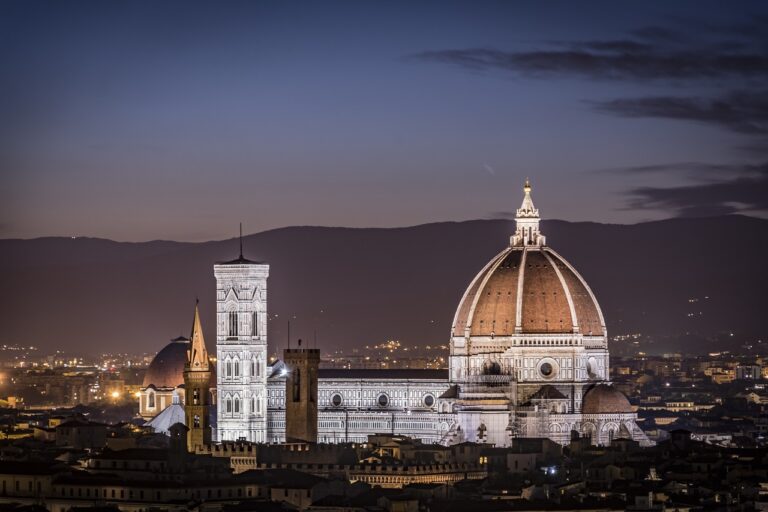
Filippo Brunelleschi became one of the defining figures of early Renaissance architecture. His work on the great dome of Florence Cathedral demonstrated both engineering skill and the ambition of the city.
Leon Battista Alberti combined humanist scholarship with architectural practice. His writings helped explain how classical principles could guide contemporary art and building.
Who were the major Renaissance artists?
Giotto
Giotto died in 1337, before what many historians call the mature Renaissance, but later writers regarded him as a crucial figure in the renewal of painting. His figures showed weight, emotion and presence in ways that strongly influenced later Italian art.
Brunelleschi
Filippo Brunelleschi was an architect and designer associated with Florence Cathedral’s dome and early experiments in linear perspective.
Donatello
Donatello transformed Renaissance sculpture through close study of the human body, expressive realism and engagement with ancient forms.
Sandro Botticelli
Botticelli worked in late fifteenth-century Florence. Paintings such as the Birth of Venus demonstrate the growing importance of classical mythology in elite Renaissance culture, alongside his extensive production of Christian art.
Leonardo da Vinci
Leonardo combined painting with interests in mechanics, anatomy, engineering, nature and many other subjects. His notebooks have become one of the clearest symbols of the Renaissance ideal of wide-ranging inquiry.
Michelangelo
Michelangelo was a sculptor, painter, architect and poet. Works such as the David, the Pietà and the Sistine Chapel ceiling made him one of the most influential artists in European history.
Raphael
Raphael became famous for balanced compositions, graceful figures and major commissions in papal Rome. His Vatican fresco known as the School of Athens visually connected Renaissance artistic achievement with the philosophers of classical antiquity.
Titian
Venetian painting developed distinctive approaches to color, light and surface. Titian became one of its greatest representatives and worked for powerful patrons across Europe.
What role did the Medici play?
The Medici were a wealthy banking family who became extraordinarily influential in Florence.
Members of the family supported artists, architects and humanists, while using cultural patronage to strengthen prestige and political authority. Lorenzo de’ Medici, commonly called Lorenzo the Magnificent, became especially associated with Florence’s artistic and intellectual life.
However, the statement that “the Medici created the Renaissance” goes too far. Renaissance culture had many patrons and many centers. Venice, Rome, Milan, Mantua, Ferrara, Urbino and other courts and cities all developed important traditions.
How did artists get paid?
Most Renaissance artists worked through commissions rather than creating art primarily for anonymous galleries or museums.
A patron might hire an artist to paint an altarpiece, decorate a chapel, design a palace, carve a tomb, produce a portrait or construct a public monument.
Contracts could specify materials, dimensions, subjects, deadlines and even the amount of expensive pigments such as ultramarine that had to be used.
Workshops were essential. Famous masters usually depended on assistants and apprentices who prepared materials, copied designs and sometimes completed significant sections of large projects.
Did Renaissance artists become celebrities?
Some did.
The social position of successful artists changed during the Renaissance. Although art remained closely connected to skilled craft, leading painters, sculptors and architects could cultivate reputations as intellectual and creative personalities rather than simply anonymous craftsmen.
The careers of Leonardo, Michelangelo and Raphael illustrate this shift particularly clearly. Courts and popes competed for their services, while biographies and correspondence helped build their fame.
The invention of printing and the Renaissance
Movable-type printing existed earlier in East Asia. In Europe, Johannes Gutenberg and other fifteenth-century printers developed a system of printing with movable metal type that transformed the scale of book production.
Printing did not create Renaissance humanism, which had begun earlier, but it greatly accelerated the circulation of texts.
Classical works, humanist editions, religious books, maps, scientific texts and political arguments could reach larger audiences more quickly and consistently than manuscript copying alone allowed.
Printers also created new commercial networks connecting authors, editors, booksellers and readers across Europe.
Was the Renaissance only Italian?
No.
Italian Renaissance culture was enormously influential, but northern Europe developed its own forms of humanism and artistic innovation.
Artists and scholars in the Low Countries, German lands, France, England and elsewhere adapted classical learning to local political and religious conditions.
Northern painters such as Jan van Eyck developed extraordinary techniques in oil painting and detailed observation. Albrecht Dürer combined northern traditions with ideas encountered through contact with Italy.
Humanists such as Erasmus used classical languages and textual criticism in projects closely connected to Christian scholarship and reform.
What was the Northern Renaissance?
The term Northern Renaissance generally refers to Renaissance developments outside Italy, particularly in northern and western Europe during the fifteenth and sixteenth centuries.
It shared features with Italian humanism, including interest in classical texts and educational reform, but it also developed distinctive artistic traditions and strong connections to religious scholarship.
The spread of print helped these networks expand rapidly.
Renaissance and Reformation
The Renaissance and Protestant Reformation were different movements, but they overlapped in time and influenced some of the same intellectual networks.
Humanist scholars emphasized careful study of texts in their original languages. That approach was applied not only to classical literature but also to biblical manuscripts and early Christian writings.
Printing then allowed religious arguments to circulate across Europe at unprecedented speed.
It would be misleading, however, to describe humanism as simply a cause of Protestantism. Major Catholic scholars and church leaders were also humanists, and Renaissance culture flourished in Catholic courts and institutions.
Renaissance science and observation
The Renaissance is often presented as the moment when modern science suddenly appeared. The real story is more gradual.
Medieval universities had already developed sophisticated traditions in medicine, astronomy and natural philosophy. Renaissance scholars inherited those traditions while also gaining access to new texts, instruments and observational practices.
Artists studied perspective and anatomy. Cartographers produced increasingly detailed maps. Engineers designed machines and fortifications. Physicians and anatomists questioned older authorities through direct observation.
These developments helped create conditions for the later Scientific Revolution, but they should not be reduced to a simple story of Renaissance reason replacing medieval superstition.
Did everyone experience a Renaissance?
This is an important question because the most famous Renaissance evidence comes from elites: palaces, courts, wealthy merchants, church institutions, scholars and major artists.
Most Europeans remained farmers, laborers, servants, craftspeople or small traders. Their lives were shaped more immediately by harvests, wages, disease, taxes, war, family and religion than by elite debates over Cicero or Plato.
Even in flourishing Renaissance cities, inequality was substantial.
The Renaissance therefore describes important cultural changes, but it should not be treated as an experience shared equally by every person in Europe.
Women in the Renaissance
Women faced major legal, educational and social restrictions, yet they were not absent from Renaissance intellectual and artistic life.
Elite women could act as patrons, collectors and political intermediaries. Isabella d’Este, Marchioness of Mantua, became one of the most famous patrons of the period.
Women humanists such as Isotta Nogarola and Laura Cereta participated in learned literary culture, although they encountered strong criticism and barriers that male scholars did not face.
By the sixteenth century, artists such as Sofonisba Anguissola achieved international reputations despite the limitations placed on women’s professional training.
How was Renaissance politics different?
Renaissance politics was not democratic in the modern sense.
Italian cities contained republics, oligarchies, princely courts and territories ruled by the papacy. Political competition could be violent, involving exile, assassination, factional rivalry and war.
Humanists nevertheless studied Roman history and political philosophy intensely. Questions about republican liberty, civic virtue, princely rule and effective government became central themes in Renaissance writing.
Niccolò Machiavelli’s works emerged from this turbulent political world.
Why was Florence so important?
Florence combined commercial wealth, powerful guild traditions, political competition, humanist scholarship and ambitious patronage.
The city produced or attracted figures including Brunelleschi, Donatello, Botticelli, Leonardo and Michelangelo.
Florence’s later reputation was also strengthened by Renaissance writers such as Giorgio Vasari, whose influential biographies placed Florentine artists at the center of the story of artistic progress.
Modern historians take a broader view, recognizing the equally important roles of other Italian centers.
Why was Rome important?
Rome became especially important during the High Renaissance.
Popes such as Julius II and Leo X commissioned monumental artistic and architectural projects intended to reinforce both religious authority and papal prestige.
Michelangelo painted the Sistine Chapel ceiling, Raphael decorated papal rooms in the Vatican, and major rebuilding projects transformed the city.
Why was Venice important?
Venice was a wealthy maritime republic with extensive commercial connections.
Its painters developed celebrated traditions of color and atmospheric light. Giovanni Bellini, Giorgione and Titian became central figures in Venetian Renaissance art.
The city was also one of Europe’s most important printing centers, helping circulate Greek, Latin and vernacular texts.
What was the High Renaissance?
The term High Renaissance is commonly used for a relatively short phase of Italian art around the late fifteenth and early sixteenth centuries.
It is particularly associated with Leonardo da Vinci, Michelangelo and Raphael and with major artistic centers such as Florence and Rome.
The label emphasizes works admired for monumental scale, balanced composition, technical mastery and synthesis of earlier Renaissance developments.
Like all period labels, it is useful but imperfect. Artistic change did not occur everywhere at the same time.
When did the Renaissance end?
There is no single end date.
The Sack of Rome in 1527 is sometimes treated as a symbolic end to the High Renaissance in Rome. The political and religious landscape of Europe was also being transformed by the Reformation, warfare and the growth of powerful territorial states.
Meanwhile, artists developed styles later labeled Mannerism, and Renaissance ideas continued long after the early sixteenth century.
In many historical narratives, the sixteenth century is best understood as a period in which Renaissance culture overlapped with Reformation, global expansion, state formation and the early Scientific Revolution.
Renaissance timeline
- 1304: Francesco Petrarch is born.
- c. 1305: Giotto begins the famous fresco cycle in the Arena Chapel at Padua.
- 1347–1351: the Black Death devastates much of Europe.
- 1374: Petrarch dies after decades devoted to classical scholarship and literary culture.
- 1401: competition for the bronze doors of Florence Baptistery becomes a celebrated episode in early Renaissance art.
- 1417: humanist Poggio Bracciolini discovers a manuscript of Lucretius’s On the Nature of Things.
- 1420: construction work begins on Brunelleschi’s dome for Florence Cathedral.
- 1434: Cosimo de’ Medici returns to Florence and becomes the dominant political figure in the city.
- c. 1450s: movable metal type printing expands in Europe through Gutenberg and other printers.
- 1453: Constantinople falls to the Ottoman Empire.
- 1469: Lorenzo de’ Medici becomes the leading figure of the Medici regime in Florence.
- 1480s–1490s: Leonardo da Vinci works at the court of Milan.
- 1494: the Medici are expelled from Florence; French invasion intensifies the Italian Wars.
- 1498: Savonarola is executed in Florence.
- 1501–1504: Michelangelo creates the David.
- 1503: Leonardo begins work on the portrait known as the Mona Lisa.
- 1508–1512: Michelangelo paints the ceiling of the Sistine Chapel.
- 1509–1511: Raphael paints the School of Athens in the Vatican.
- 1513: Machiavelli writes the work later known as The Prince.
- 1517: Martin Luther’s challenge to indulgences becomes a major event in the Reformation.
- 1519: Leonardo da Vinci dies in France.
- 1520: Raphael dies in Rome.
- 1527: imperial troops sack Rome.
- 1564: Michelangelo dies.
Common myths about the Renaissance
Myth: nobody studied classical texts during the Middle Ages
False. Medieval scholars copied and studied many ancient works. Renaissance humanists expanded this activity, recovered additional texts and developed distinctive methods of textual criticism and education.
Myth: the Renaissance began because Constantinople fell in 1453
Too simple. Greek scholars and manuscripts had reached Italy before 1453, and Italian humanism had already been developing for generations. The Ottoman conquest accelerated some movements of people and texts but did not create the Renaissance from nothing.
Myth: the Medici invented the Renaissance
The Medici were major patrons, especially in Florence, but Renaissance culture had numerous political, religious and commercial patrons across Italy and Europe.
Myth: Renaissance culture replaced religion with secularism
Religious institutions remained central to artistic production and intellectual life. Humanism could encourage interest in worldly subjects while remaining compatible with Christian belief.
Myth: the Renaissance instantly created the modern world
Many developments associated with modern Europe emerged through long processes stretching across medieval and early modern history. The Renaissance was important, but it was one part of a larger transformation.
Why does the Renaissance matter?
The Renaissance matters because it transformed how educated Europeans engaged with the classical past and helped reshape visual art, architecture, schooling, historical writing and literary culture.
Its artists developed techniques and styles that influenced European art for centuries. Humanists changed the way texts were collected, edited and taught. Printing accelerated the spread of knowledge. Patrons used culture as an instrument of religious devotion, civic identity and political power.
Perhaps most importantly, the Renaissance demonstrates that historical change rarely happens through a clean break. It emerged from medieval society even while Renaissance thinkers sometimes defined themselves against that medieval past.
Renaissance FAQ
What was the Renaissance in simple terms?
The Renaissance was a cultural movement that began in Italian cities and emphasized renewed study of ancient Greek and Roman learning, alongside important developments in art, architecture, literature and education.
When did the Renaissance start?
There is no exact date. In Italy, major Renaissance developments are visible from the fourteenth century, with especially strong artistic and humanist activity during the fifteenth century.
When did the Renaissance end?
There is no single end date. The High Renaissance in Italy is often associated with the early sixteenth century, while Renaissance culture continued through much of the 1500s and overlapped with later movements.
Where did the Renaissance begin?
It began in the Italian peninsula, with Florence becoming one of its most important early centers. Venice, Rome, Milan and numerous other cities also played major roles.
Why did the Renaissance start in Italy?
Important factors included wealthy urban economies, competitive patronage, access to Roman remains, strong traditions of scholarship, political rivalry and extensive commercial networks.
What was humanism?
Renaissance humanism was an educational and intellectual movement based on close study of classical Greek and Latin literature, especially grammar, rhetoric, poetry, history and moral philosophy.
Who were the three most famous High Renaissance artists?
Leonardo da Vinci, Michelangelo and Raphael are the three figures most commonly associated with the High Renaissance, although many other artists were equally important to the broader period.
Did the Renaissance end the Middle Ages?
Not on a specific date. Renaissance developments overlapped with late medieval institutions and traditions. Historians use the labels “medieval,” “Renaissance” and “early modern” to organize gradual and uneven historical changes.
Sources and further reading
- Smarthistory — Humanism in Renaissance Italy
- The Metropolitan Museum of Art — Florence and Central Italy, 1400–1600
- The Metropolitan Museum of Art — Architecture in Renaissance Italy
- The Metropolitan Museum of Art — Anatomy in the Renaissance
- Peter Burke, The Italian Renaissance: Culture and Society in Italy.
- Jacob Burckhardt, The Civilization of the Renaissance in Italy — historically influential, though many of its interpretations have been revised by later scholarship.
Stories, people and events that shaped our world. Explore history with context, clarity and curiosity.
© 2026 Passion for History. All rights reserved.
Some content is created with AI assistance and may contain errors. We aim to review, verify and improve our articles over time.