Home / Early Modern History / Renaissance
Renaissance Art: Characteristics, Artists and Famous Works
What made Renaissance art different? Explore perspective, realism, anatomy, classical influence, patronage, Leonardo, Michelangelo, Raphael, Botticelli and the works that shaped European art.
Published 3 October 2026
Renaissance art transformed the way European artists represented people, space, nature and the classical past. Painters and sculptors pursued greater naturalism, architects revived ancient forms, and wealthy patrons funded ambitious works that still shape how the Renaissance is imagined today.
Some of the most recognizable names in Western art—Leonardo da Vinci, Michelangelo, Raphael, Botticelli, Donatello and Titian—worked during this period. Yet Renaissance art was not created by isolated geniuses working alone. It depended on workshops, apprentices, patrons, religious institutions, guilds, courts, trade networks and technical knowledge accumulated over generations.
For the broader context, start with what the Renaissance was and why it began in Italy. For the intellectual background, see our guide to Renaissance humanism.
What is Renaissance art?
Renaissance art usually refers to painting, sculpture and architecture produced during the cultural movement that developed first in Italian cities and later spread across much of Europe.
In Italy, the period is often discussed from roughly the fourteenth through the sixteenth century. Art historians commonly distinguish between the Early Renaissance, the High Renaissance and later sixteenth-century developments such as Mannerism.
These labels are useful, but they can make artistic change look more orderly than it really was. Different cities developed at different speeds, older styles continued alongside new ones, and artists borrowed from both medieval and classical traditions.
What are the main characteristics of Renaissance art?
Renaissance art is often recognized through a combination of visual and intellectual features rather than one single style.
- Naturalism: figures and spaces appear more physically convincing.
- Linear perspective: artists use geometry to create the illusion of depth.
- Anatomical observation: bodies are studied more closely for proportion and movement.
- Chiaroscuro: light and shadow help model three-dimensional forms.
- Classical influence: artists study Greco-Roman sculpture, architecture and mythology.
- Contrapposto: standing figures shift weight naturally onto one leg.
- Portraiture: individual identity and social status receive greater attention.
- Patronage: works are shaped by the religious, political and social goals of commissioners.
- Religious continuity: Christian subjects remain central despite increased interest in classical themes.
Naturalism and realism
One of the most important goals of Renaissance artists was to make figures, bodies and spaces look increasingly convincing.
This did not mean that artists simply copied reality. They selected, organized and idealized what they saw. A Renaissance painting might depict an anatomically believable body inside a mathematically constructed space while still presenting an idealized saint, mythological figure or ruler.
The drive toward naturalism can be seen in the treatment of weight, facial expression, gesture, fabric, landscape and light.
Linear perspective
Linear perspective is one of the most famous technical developments associated with the Italian Renaissance.
The basic principle is that parallel lines appear to converge as they recede into the distance. Artists could organize these lines around one or more vanishing points to create a systematic illusion of depth on a flat surface.
Filippo Brunelleschi is traditionally associated with early experiments in one-point perspective in Florence during the early fifteenth century. Leon Battista Alberti later explained the method in his treatise On Painting.
Perspective did not replace every earlier way of representing space, but it gave painters a powerful tool for constructing architectural interiors, streets and carefully ordered compositions.
Why was perspective so important?
Perspective offered a visual language that matched several Renaissance interests at once: geometry, observation, architecture, classical theory and the idea that art could be governed by rational principles.
It also increased the viewer’s sense of being located within a coherent visual world. In religious paintings, artists could use this system to make sacred events seem to unfold in believable human space.
Chiaroscuro
Chiaroscuro means the use of light and dark to model form.
Instead of defining a body only through outline, painters could use gradual shifts between highlights and shadows to make flesh, drapery and faces appear rounded.
The technique became especially important in creating a sense of volume. Leonardo da Vinci pushed this interest further through subtle tonal transitions.
What is sfumato?
Sfumato is especially associated with Leonardo.
The Italian word suggests something smoky or softened. Rather than sharply outlining features, Leonardo used delicate transitions between light and dark so that edges seem to dissolve gradually.
The technique contributes to the famous ambiguity of the Mona Lisa, particularly around the mouth and eyes.
Renaissance artists and anatomy
Many Renaissance artists paid close attention to the human body.
Life drawing, sculptural study and, in some cases, dissection helped artists understand the structure beneath the skin. Leonardo da Vinci and Michelangelo are particularly famous for detailed anatomical study, but they were part of a wider culture of observation.
Anatomy mattered because patrons increasingly valued convincing bodies. Knowledge of muscles, joints and skeletal structure helped artists represent weight, movement, tension and complex poses.
At the same time, most artists did not become physicians or professional anatomists. Their primary goal was usually artistic representation.
Contrapposto and the return of the classical body
Contrapposto describes a pose in which a standing figure places most of its weight on one leg, causing the hips and shoulders to shift in opposite directions.
This creates a relaxed and natural asymmetry. Renaissance sculptors admired the pose in surviving ancient sculpture and adapted it to Christian, civic and mythological subjects.
Donatello’s bronze David is one of the most famous early Renaissance examples of a freestanding nude shaped by renewed interest in classical sculpture.
Why did classical art matter?
Renaissance artists in Italy lived among the physical remains of ancient Rome. Ruins, inscriptions, coins, statues, columns and reliefs provided models that could be studied directly.
Artists and architects examined ancient proportion, drapery, poses, decorative motifs and building forms. Humanists supplied literary knowledge of Greek and Roman history and mythology.
Classical influence did not mean copying the ancient world exactly. Renaissance artists adapted classical forms to contemporary Christian churches, civic monuments, courtly settings and private commissions.
For more on the ancient civilization that inspired Renaissance artists, explore our Ancient Rome hub.
Was Renaissance art secular?
Renaissance art is sometimes described as a shift from medieval religion to secular modernity. That is misleading.
Christian art remained central. Churches, monasteries, confraternities, popes and religious orders commissioned enormous numbers of paintings, sculptures and buildings.
Artists continued to represent the Virgin Mary, Christ, saints, biblical stories and scenes of martyrdom.
What changed was that secular portraiture, classical mythology, ancient history and courtly subjects became increasingly prominent alongside religious art.
Patronage: who paid for Renaissance art?
Most major Renaissance works were made because someone commissioned them.
Patrons included:
- popes and cardinals;
- princes and ruling dynasties;
- republican governments;
- merchant and banking families;
- guilds and confraternities;
- churches and monasteries;
- wealthy private individuals.
Patronage shaped the subject, size, materials, location and meaning of artworks. A family chapel might advertise devotion and status at the same time. A public statue could become a political symbol. A palace fresco cycle might present a ruler as learned, legitimate and connected to classical greatness.
The Medici and Renaissance art
The Medici family became famous patrons in Florence.
Through banking wealth and political influence, different members of the family supported artists, architects and scholars. Their patronage helped create some of the visual culture most strongly associated with Renaissance Florence.
But the Medici did not create Renaissance art by themselves. Patronage flourished in Venice, Rome, Milan, Ferrara, Mantua, Urbino, Naples and many other centers.
How Renaissance workshops worked
Famous artists usually worked with assistants.
A workshop could include apprentices, journeymen, specialists and family members. The master might design a composition or paint the most important passages while assistants prepared surfaces, ground pigments, copied drawings or completed secondary elements.
This makes the modern image of the solitary Renaissance genius misleading. Large altarpieces, fresco cycles and sculptural projects often depended on coordinated teams.
Giotto and the path toward the Renaissance
Giotto di Bondone died in 1337, before the period many historians call the mature Renaissance, but later artists and writers treated him as a major turning point.
His figures appear to occupy weighty bodies in coherent settings, and his frescoes convey strong human emotion.
Giotto did not suddenly invent Renaissance naturalism, but his work became an important reference point for later Italian painting.
Masaccio
Masaccio was one of the most important painters of the early fifteenth century.
His frescoes in the Brancacci Chapel in Florence combine monumental figures, coherent light and convincing spatial organization.
His Holy Trinity is particularly famous for its use of linear perspective to create the illusion of an architectural space opening behind the wall.
Donatello
Donatello transformed Renaissance sculpture through technical experimentation, emotional intensity and close engagement with classical models.
His works range from monumental public sculpture to smaller bronzes and reliefs. His bronze David became one of the most celebrated freestanding nude sculptures since antiquity.
Fra Angelico
Fra Angelico was a Dominican friar and painter whose work shows that Renaissance naturalism and religious devotion were not opposites.
His paintings combine elegant color, carefully constructed space and contemplative spiritual atmosphere.
Piero della Francesca
Piero della Francesca became famous for calm monumental figures, geometric clarity and sophisticated perspective.
He also wrote about mathematics and perspective, illustrating how artistic practice and intellectual inquiry could overlap.
Sandro Botticelli
Sandro Botticelli worked in late fifteenth-century Florence and is closely associated with the courtly and humanist culture surrounding elite patrons.
His most famous paintings include The Birth of Venus and Primavera.
These works helped make classical myth a major subject in elite Renaissance painting. Yet Botticelli also produced many Christian images and devotional works.
Leonardo da Vinci
Leonardo da Vinci became a symbol of the Renaissance because his interests ranged far beyond painting.
He studied anatomy, engineering, water, optics, mechanics and natural phenomena. His notebooks reveal a relentless habit of observation and experimentation.
As a painter, Leonardo was interested in subtle light, psychological expression, atmospheric effects and complex figure arrangements.
The Last Supper
The Last Supper, painted in Milan in the 1490s, represents Christ announcing that one of his apostles will betray him.
Leonardo arranged the apostles in expressive groups and used perspective to focus attention on Christ.
The painting has suffered badly because Leonardo experimented with a technique that was less durable than traditional fresco.
The Mona Lisa
The Mona Lisa is one of the world’s most famous portraits.
Its fame comes partly from Leonardo’s subtle modeling, atmospheric landscape and ambiguous expression. Sfumato softens the transitions around the face, avoiding hard outlines.
Michelangelo
Michelangelo Buonarroti worked as sculptor, painter, architect and poet.
He emphasized the expressive power of the human body and often pushed anatomy toward heroic or idealized forms.
David
Michelangelo carved the marble David between 1501 and 1504.
The figure was originally intended for Florence Cathedral but was instead installed in a prominent civic location. Florentines came to associate it with republican strength and vigilance.
The Sistine Chapel ceiling
Between 1508 and 1512, Michelangelo painted the ceiling of the Sistine Chapel in Rome.
The enormous program includes scenes from Genesis, prophets, sibyls and hundreds of figures. The Creation of Adam became one of the most recognizable images in Western art.
Raphael
Raphael Sanzio became famous for clarity, harmony and graceful figure composition.
After training in central Italy, he moved to Florence and absorbed ideas from Leonardo and Michelangelo. He later worked extensively for the papal court in Rome.
The School of Athens
Raphael’s School of Athens is one of the defining images of the High Renaissance.
It presents ancient philosophers in a monumental classical setting. Plato and Aristotle occupy the center, while other thinkers are arranged across a carefully organized architectural space.
The fresco links classical learning, Renaissance humanism and papal patronage in one image.
Titian and Venetian Renaissance painting
Venice developed a distinctive Renaissance painting tradition.
Venetian artists became particularly admired for color, light, atmosphere and the expressive possibilities of oil paint.
Titian became the most internationally famous Venetian painter of the sixteenth century, producing portraits, religious works and mythological scenes for elite patrons across Europe.
Why oil painting mattered
Oil paint was not invented in the Renaissance, but its use expanded dramatically.
It allowed artists to build up translucent layers, rich color and subtle tonal transitions. Painters in the Low Countries had already developed highly sophisticated oil techniques, and Italian artists increasingly adopted and adapted them.
Venetian painters used oil especially effectively because the medium suited their interest in color and atmospheric effects.
Fresco painting
Fresco involves painting onto wet plaster so that pigment becomes chemically bound to the wall as the surface dries.
The technique is durable but demanding. Artists must work in sections before the plaster dries.
Major Renaissance fresco cycles decorated churches, chapels, palaces and government buildings.
Tempera painting
Before oil painting became dominant in many regions, Italian painters frequently used tempera, especially egg tempera, on wooden panels.
Tempera dries quickly and produces clear, bright color. Early Renaissance altarpieces often combine tempera with gold leaf and elaborate panel construction.
Renaissance sculpture
Sculpture played a central role in Renaissance visual culture.
Artists revived freestanding nude figures, equestrian monuments, portrait busts and monumental public statues inspired partly by classical precedents.
Bronze casting and marble carving reached extraordinary technical levels.
Donatello, Verrocchio and Michelangelo were among the period’s most influential sculptors.
Renaissance architecture
Renaissance architects studied ancient Roman buildings and the writings of Vitruvius.
They favored proportion, symmetry, rounded arches, columns, pilasters, domes and mathematically ordered façades.
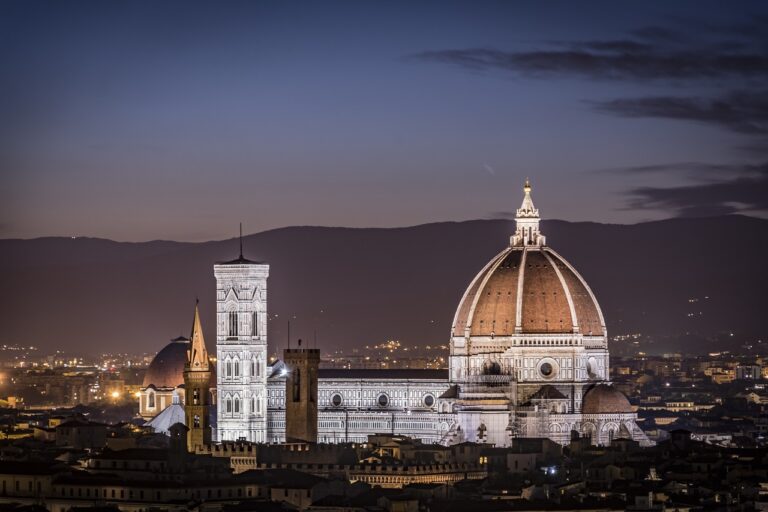
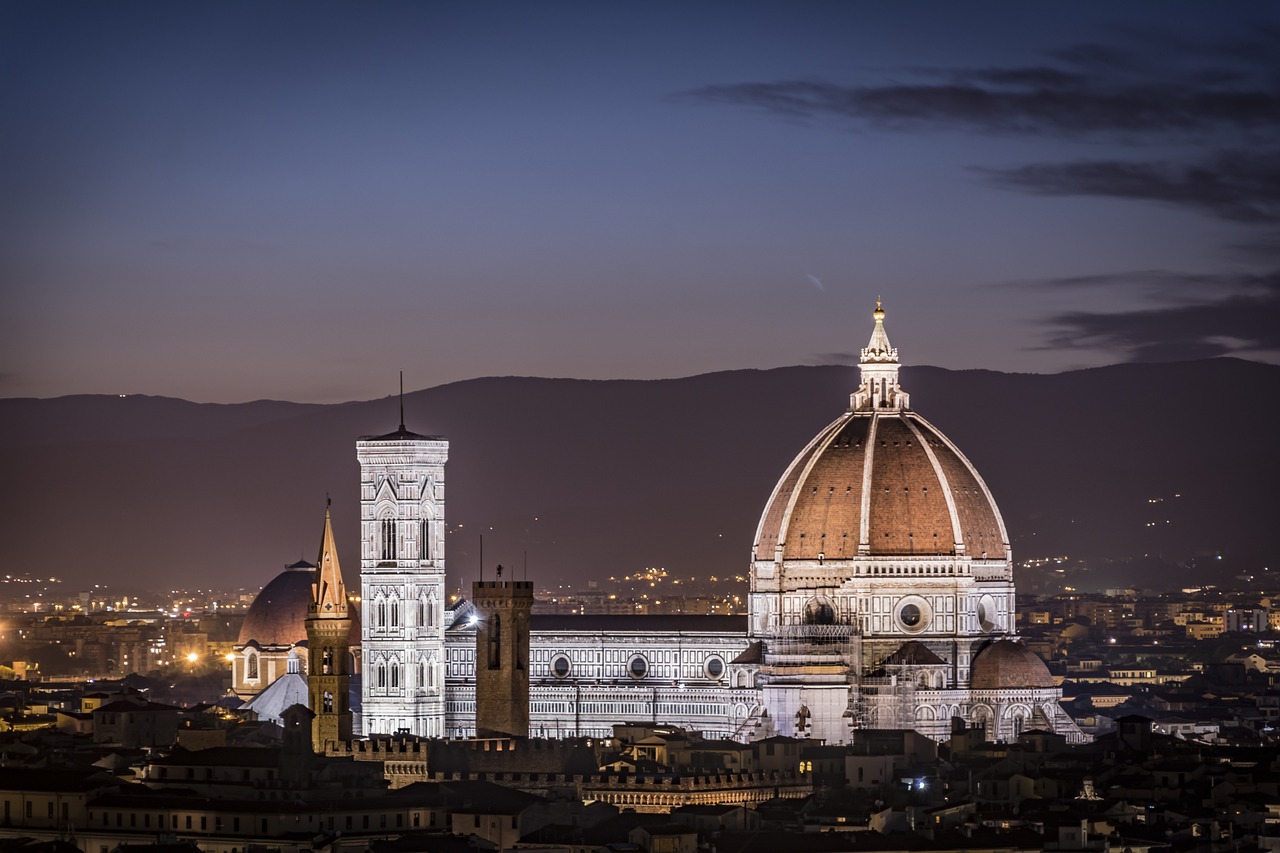
Brunelleschi’s dome for Florence Cathedral became one of the greatest engineering achievements of the period.
Leon Battista Alberti connected architectural practice with humanist theory, helping revive classical principles in contemporary building.
What was the High Renaissance?
The High Renaissance is usually used for a relatively short phase of Italian art around the late fifteenth and early sixteenth centuries.
It is especially associated with Leonardo, Michelangelo and Raphael.
Art from this period is often praised for monumental scale, balanced composition, idealized anatomy and a confident synthesis of earlier developments.
Rome became particularly important as popes commissioned enormous artistic projects.
Did the High Renaissance end in 1527?
The Sack of Rome in 1527 is sometimes treated as a symbolic endpoint, especially for the papal artistic world of the early sixteenth century.
But artistic change did not stop. Renaissance traditions continued while newer approaches developed.
One of the most important of these was Mannerism.
What was Mannerism?
Mannerism is a label used for certain sixteenth-century styles that developed after the High Renaissance.
Mannerist artists often preferred elongated bodies, complex poses, unusual color, compressed space and deliberately artificial elegance.
The style demonstrates that Renaissance art did not simply move in a straight line toward greater realism.
The Northern Renaissance
Renaissance art also developed north of the Alps.
Artists in the Low Countries and German lands often emphasized detailed surfaces, oil painting, domestic interiors, landscape and symbolic objects.
Jan van Eyck, Rogier van der Weyden and Albrecht Dürer became major figures.
Northern artists exchanged ideas with Italy, but they did not merely imitate Italian models. The Northern Renaissance had its own traditions and priorities.
Jan van Eyck
Jan van Eyck was one of the most influential painters of the fifteenth century.
His works are famous for microscopic detail, luminous surfaces and sophisticated oil technique.
He did not invent oil painting, as older art-history myths sometimes claimed, but he helped demonstrate its extraordinary possibilities.
Albrecht Dürer
Albrecht Dürer linked northern European traditions with Italian Renaissance interests in proportion, perspective and classical form.
His prints circulated widely, giving him an international reputation.
Dürer also wrote theoretical works and deliberately cultivated the image of the artist as a learned creator.
Women artists in the Renaissance
Women faced major barriers to training, workshop access, life drawing and professional recognition.
Nevertheless, several women built successful artistic careers.
Sofonisba Anguissola became an internationally known portrait painter and worked at the Spanish court.
Lavinia Fontana later built a substantial professional career in Bologna, receiving major commissions.
Their achievements demonstrate both the possibilities and limitations women faced in Renaissance artistic culture.
How did Renaissance artists learn?
Most artists trained through apprenticeships rather than universities.
A young apprentice might learn drawing, pigment preparation, panel construction, fresco technique, metalwork, sculpture or design depending on the workshop.
Students copied the master’s drawings and works, observed experienced assistants and gradually took on more difficult tasks.
By the sixteenth century, academies and more formal systems of artistic theory became increasingly important.
Drawing and design
Drawing became increasingly central to artistic planning.
Artists used sketches to study bodies, drapery, perspective and composition. Large cartoons could transfer designs to walls or panels.
Leonardo, Michelangelo and Raphael all left important bodies of drawings that reveal how carefully major compositions were developed.
Were Renaissance artists considered geniuses?
The idea of the artist as an exceptional creative individual grew stronger during the Renaissance.
Writers such as Giorgio Vasari helped construct biographies centered on talent, personality and artistic progress.
However, this image can obscure workshop collaboration, social privilege and patronage. Successful artists depended on networks of labor and opportunity.
Giorgio Vasari and the story of Renaissance art
Giorgio Vasari published his Lives of the Most Excellent Painters, Sculptors, and Architects in the sixteenth century.
His work became foundational for European art history.
Vasari described art as progressing through stages toward the achievements of masters such as Michelangelo. His story strongly favored Tuscan and especially Florentine artists.
Modern scholars still use Vasari as an important source, but they also question his biases and the idea that artistic history follows a simple path of improvement.
Renaissance art and humanism
Humanism influenced Renaissance art in several ways.
Humanists recovered classical texts, supplied knowledge about ancient mythology and history, and promoted rhetorical and educational ideals that shaped elite culture.
Artists and patrons increasingly used classical subjects to display learning and status.
Yet humanism was not an artistic style by itself. For the intellectual movement in detail, see Renaissance humanism: meaning, Petrarch and education.
Ten famous Renaissance artworks
- Giotto, Arena Chapel frescoes — early fourteenth-century paintings celebrated for emotional and spatial clarity.
- Donatello, David — a freestanding bronze nude inspired partly by classical sculpture.
- Masaccio, Holy Trinity — a landmark in systematic linear perspective.
- Botticelli, The Birth of Venus — classical mythology adapted to elite Florentine culture.
- Leonardo, The Last Supper — perspective, psychology and dramatic group composition.
- Leonardo, Mona Lisa — subtle sfumato, atmospheric landscape and psychological ambiguity.
- Michelangelo, David — monumental marble figure combining classical form with civic meaning.
- Michelangelo, Sistine Chapel ceiling — one of the largest and most influential High Renaissance projects.
- Raphael, School of Athens — classical philosophy represented within monumental Renaissance architecture.
- Titian, Venus of Urbino — Venetian color, oil technique and courtly patronage.
Renaissance art timeline
- c. 1305: Giotto works on the Arena Chapel frescoes in Padua.
- 1401: Florence Baptistery door competition becomes a celebrated moment in early Renaissance art.
- 1420: Brunelleschi begins construction of Florence Cathedral’s dome.
- 1420s: Masaccio creates major perspective-based frescoes in Florence.
- 1430s–1440s: Donatello produces revolutionary sculpture in Florence and elsewhere.
- c. 1480s: Botticelli paints major mythological works for elite Florentine patrons.
- 1490s: Leonardo paints The Last Supper in Milan.
- 1501–1504: Michelangelo creates the David.
- 1503 onward: Leonardo works on the portrait known as the Mona Lisa.
- 1508–1512: Michelangelo paints the Sistine Chapel ceiling.
- 1509–1511: Raphael paints the School of Athens.
- 1527: Sack of Rome disrupts the artistic world of the papal court.
- Mid-1500s: Mannerism develops alongside continuing Renaissance traditions.
Common myths about Renaissance art
Myth: Renaissance artists invented realism
Artists long before the Renaissance had created convincing bodies, spaces and natural detail. Renaissance artists developed distinctive systems and priorities, but they did not invent observation itself.
Myth: perspective was instantly adopted everywhere
Linear perspective became influential, especially in Italy, but artists continued to use multiple ways of constructing space.
Myth: Renaissance art was mostly secular
False. Religious commissions remained central throughout the period.
Myth: Leonardo, Michelangelo and Raphael worked alone
They depended on assistants, workshops, patrons, suppliers and institutional networks.
Myth: oil painting was invented by Jan van Eyck
Oil-based painting existed earlier. Van Eyck and other northern artists helped perfect and popularize highly sophisticated techniques.
Why Renaissance art matters
Renaissance art mattered because it changed artistic practice, theory and social status.
Artists developed new systems for representing space, studied anatomy with increasing intensity and engaged deeply with the classical past. Patrons turned art into a tool of civic identity, religious devotion and political competition.
The period also helped establish ideas that later became central to European art education: drawing as intellectual design, the artist as learned creator, the study of antiquity, anatomical training and formal theories of perspective and proportion.
Its influence continued for centuries, even when later artists deliberately rejected Renaissance ideals.
Renaissance art FAQ
What are the main characteristics of Renaissance art?
Common characteristics include naturalism, linear perspective, anatomical study, classical influence, balanced composition, chiaroscuro, contrapposto and increased interest in portraiture and individual identity.
Who are the most famous Renaissance artists?
Leonardo da Vinci, Michelangelo, Raphael, Botticelli, Donatello and Titian are among the best known, although the period included many other important artists.
What is linear perspective?
Linear perspective is a geometrical system for representing depth in which parallel lines appear to converge toward one or more vanishing points.
What is chiaroscuro?
Chiaroscuro is the use of contrasting light and dark to model three-dimensional form.
What is sfumato?
Sfumato is a technique of soft, gradual tonal transition especially associated with Leonardo da Vinci.
What is the High Renaissance?
The High Renaissance is a label for a short phase of Italian art around the late fifteenth and early sixteenth centuries, especially associated with Leonardo, Michelangelo and Raphael.
Was Renaissance art religious?
Yes. Religious art remained central, even as classical mythology, portraiture and other secular subjects became increasingly prominent.
Did Renaissance art begin in Florence?
Florence was one of the most important early centers, but major Renaissance developments also occurred in Venice, Rome, Milan, Padua, Urbino, Mantua and elsewhere.
Sources and further reading
- Smarthistory — Italian Renaissance
- Smarthistory — A primer for Italian Renaissance art
- Smarthistory — Linear perspective
- The Metropolitan Museum of Art — Anatomy in the Renaissance
- The Metropolitan Museum of Art — Renaissance Drawings: Material and Function
- National Gallery, London — Renaissance painting and Raphael
- Michael Baxandall, Painting and Experience in Fifteenth-Century Italy.
- Peter Burke, The Italian Renaissance: Culture and Society in Italy.
CONTINUE EXPLORING
More Renaissance History
Stories, people and events that shaped our world. Explore history with context, clarity and curiosity.
© 2026 Passion for History. All rights reserved.
Some content is created with AI assistance and may contain errors. We aim to review, verify and improve our articles over time.