Home / Ancient History / Ancient Rome
A Day in the Life of a Roman Soldier
What did an ordinary Roman legionary’s day look like? Explore training, discipline, food, construction work, camp life and the routines behind Rome’s military power.
Published 6 June 2025
The Roman army was one of the institutions that made the Roman Empire possible, but a soldier’s life was far more than battle. Training, marching, construction, guard duty, equipment maintenance and communal living filled most days. The exact routine varied by century, unit and whether a soldier was on campaign or stationed in a permanent fort. For more context, start with our Ancient Rome hub.
Life in an eight-man contubernium
Legionaries were normally organized into small living groups known as contubernia. On campaign, eight men could share a tent and divide practical tasks such as cooking, carrying equipment and maintaining the temporary camp. In permanent forts, soldiers lived in barrack blocks rather than tents, and conditions could be considerably more settled.
Archaeology and surviving letters show that forts were not isolated military machines. They could be surrounded by workshops, merchants, families, bathhouses and civilian settlements. The Roman army created entire communities along the empire’s frontiers.
1. Waking, inspection and orders
A military day began with organization and discipline. Soldiers had to be available for orders, inspections and assigned duties. Weapons, shields, clothing and other equipment required constant maintenance, and Roman military discipline could be severe.
There was no single timetable followed by every legion across the empire. A soldier stationed on Rome’s frontier in Britain might face a very different routine from a legionary on campaign in the East or a marine serving near Italy.
2. Marching and physical training
Marching was a fundamental military skill. Recruits learned to move in formation and trained through route marches, maneuvers and strenuous manual work. The British Museum’s research for its Legion exhibition notes that packs could weigh about 27 kilograms, while a shield could weigh at least another 5.5 kilograms. Loads varied according to role and circumstance.
Training was intended to build endurance as well as battlefield coordination. Soldiers practiced repeatedly because Roman success depended on units being able to move and react together rather than simply on individual strength.
3. Weapons training and combat drills
Roman soldiers practiced close combat and missile use with training weapons and targets. Wooden practice arms could be deliberately heavier than combat weapons in order to build strength. Drills also reinforced formations, commands and the controlled use of the shield.
- Formation marching and maneuvering
- Javelin and missile practice
- Sword and shield drills
- Physical conditioning and route marches
- Repeated exercises designed to make battlefield movements automatic
The late Roman military writer Vegetius repeatedly emphasized the importance of discipline and training. That principle, rather than any single famous quotation, captures the logic of Roman military preparation.
4. Soldiers were also builders
Roman soldiers spent large amounts of time doing work that had little to do with fighting. Military units built and repaired roads, forts, bridges, walls, ditches and other infrastructure. A marching army also had to create defensible camps and organize supplies.
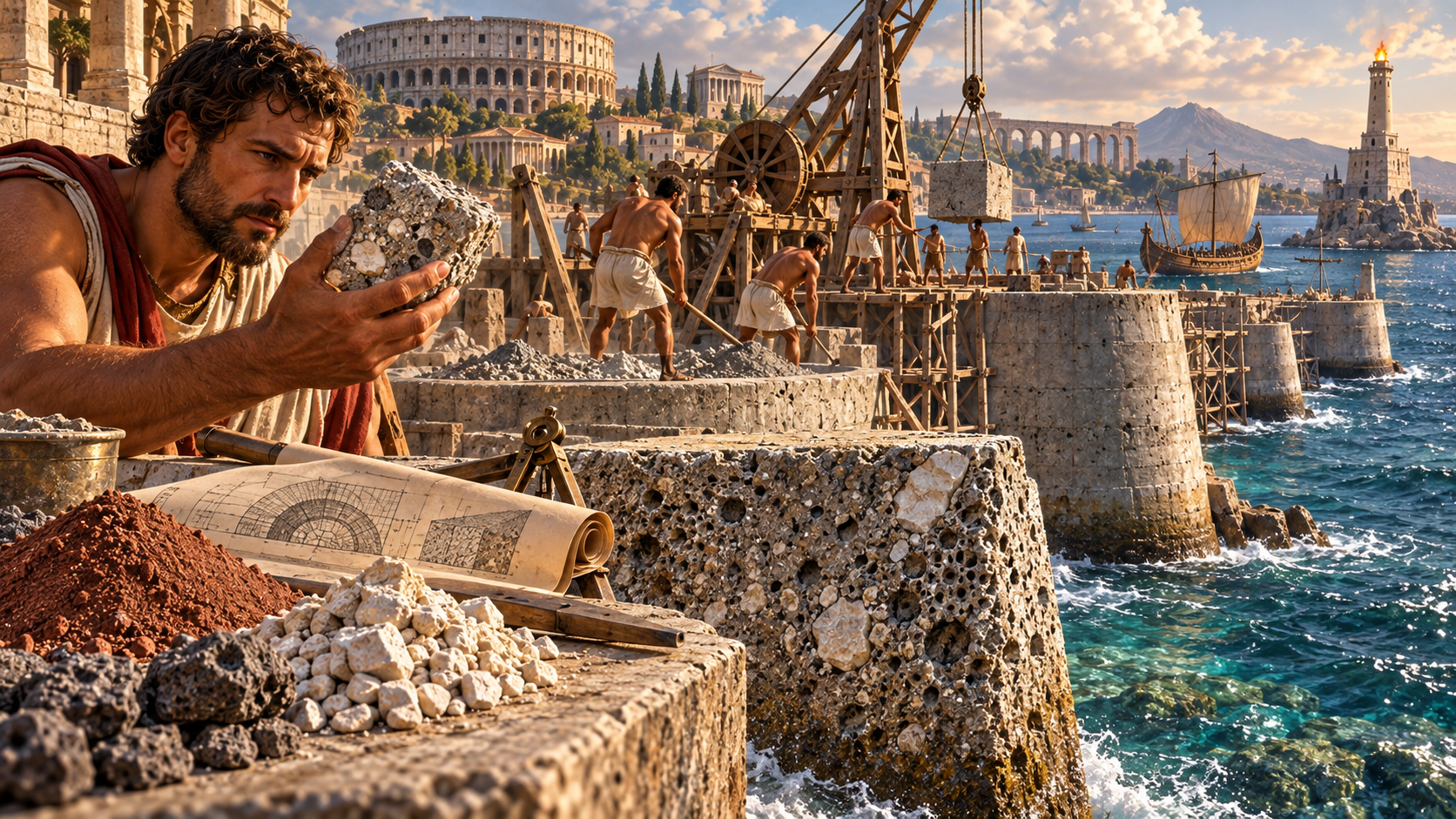
This practical engineering culture helps explain why the Roman military left such a strong physical mark across the empire. It also connects military history with broader Roman engineering, from durable building materials to roads and monumental construction.
5. Food and the midday routine
Military diets varied across time and region, but grain was a major staple, supplemented by foods such as legumes, meat, cheese, vegetables, oil and wine. Soldiers often prepared food within their small groups rather than eating from a modern-style military canteen.
Diluted wine was common in the Roman world, but it should not be assumed that Romans drank it simply because all water was unsafe. Forts and camps required reliable water supplies, and Roman military planners paid close attention to access to water.
6. Letters, games and life off duty
Off-duty life is visible in surviving evidence from places such as Vindolanda near Hadrian’s Wall. Letters reveal soldiers asking for clothing, arranging social visits and discussing ordinary personal concerns. Gaming pieces, dice and other finds show that leisure mattered too.
Literacy levels varied, and soldiers who could not write for themselves could use scribes or literate comrades. These documents make the Roman army feel less abstract: soldiers were workers, friends, customers and family members as well as fighters.
7. Guard duty and night watch
Forts and marching camps required constant security. Soldiers rotated through watches at gates, walls and other strategic points. Sentries were part of a larger system of passwords, patrols and command structures intended to prevent surprise and maintain order.
Guard duty could be monotonous, but failures of vigilance were treated seriously. Roman discipline depended on each soldier performing routine tasks reliably even when no battle was taking place.
8. Baths, health and military communities
Permanent forts could include bathhouses, hospitals and substantial administrative buildings. Soldiers did not live in identical conditions everywhere, but long-term garrisons could become complex settlements. The army also included doctors, craftsmen, clerks, engineers and specialists alongside ordinary infantry and cavalry.
This wider community is particularly visible in frontier provinces such as Roman Britain, where military bases helped shape towns, roads and local economies.
Why the Roman soldier mattered
The Roman soldier was not simply a battlefield figure. Soldiers enforced imperial authority, built infrastructure, guarded frontiers and helped move people, goods and ideas around a vast territory. Their routine labor was as important to the empire as famous victories.
That is why the history of an ordinary legionary belongs inside the larger story of Rome’s rise, expansion and transformation.
Sources and further reading
CONTINUE EXPLORING ROME
Related Roman history
Stories, people and events that shaped our world. Explore history with context, clarity and curiosity.
© 2026 Passion for History. All rights reserved.
Some content is created with AI assistance and may contain errors. We aim to review, verify and improve our articles over time.