U.S. Children’s Bureau (1912): Julia Lathrop, Child Welfare and Reform
The campaign that created the first federal bureau devoted to children’s welfare and the research its first chief pioneered.
Quick answer
President William Howard Taft signed the law establishing the U.S. Children’s Bureau on April 9, 1912. Initially placed in the Department of Commerce and Labor, it was tasked with investigating and reporting on the welfare of children, including infant mortality, dangerous work, disease and juvenile courts. Julia Lathrop became its first chief—the first woman to lead a federal bureau of this kind.
Key facts
On this page
- Why federal officials began studying child welfare
- The organizing campaign before 1912
- The law signed April 9, 1912
- Julia Lathrop, the first bureau chief
- Infant mortality as an early research priority
- What the bureau did—and did not—do
- Child labor and the path to federal legislation
- Public health, families and educational materials
- How the bureau intersected with changing women’s roles
- Later programs and the agency’s expanding place
- Why the creation of the Children’s Bureau mattered
- Timeline
- FAQ
- Sources
Why federal officials began studying child welfare
At the beginning of the twentieth century, the circumstances in which American children grew up varied enormously by family income, location, race, ethnicity and access to medical care. Infants died from preventable diseases, many children worked for wages, and public authorities lacked consistent information about conditions in different communities. Reformers believed that the nation could not make sound policy without investigating what was happening to children in homes, schools, factories, farms and institutions. Their argument was not simply that federal government should replace parents or local communities, but that reliable national evidence could help identify dangers and guide action.,Women’s associations, public-health professionals, settlement-house workers and child-labor organizations were central to the movement. Their work connected statistical research with practical campaigns for cleaner water, safer housing, education, maternal support and regulation of hazardous work. Congress had already created agencies concerned with business, labor and agriculture. Supporters of a children’s bureau argued that young people’s needs deserved a sustained place in federal inquiry as well. The new institution emerged from those overlapping efforts.
The organizing campaign before 1912
The campaign for a national children’s bureau developed over several years. Reformers advocated a permanent federal office devoted to collecting information, making studies and reporting findings to the public and policymakers. Figures associated with settlement houses and the National Child Labor Committee played influential roles. The movement gathered support from people who agreed that high rates of infant death, exploitative working conditions and unequal care were national concerns, even when they differed about federal authority and the proper remedies.,Legislative support was not automatic. Members of Congress questioned the cost of a new bureau and whether researching the welfare of children belonged within national rather than state responsibilities. Advocates made the case that collecting facts and publishing them would be a relatively modest but valuable first step. A 1910 letter preserved by the U.S. House historian illustrates the organized lobbying that preceded the measure. The 1912 law represented years of effort, not a sudden invention by one president.
The law signed April 9, 1912
President Taft signed the act creating the Children’s Bureau on April 9, 1912. It was originally placed in the Department of Commerce and Labor, which existed before the separate Department of Labor was created in 1913. This location matters when reading official documents from the bureau’s earliest year. Describing it as part of the Department of Labor from the moment it was founded skips an institutional change that happened later.,The statute directed the bureau to investigate and report on the welfare of children and child life among people of different circumstances. It specifically identified infant mortality, the birth rate, orphanages, juvenile courts, desertion, dangerous occupations, accidents, diseases, employment and laws affecting children in states and territories. These subjects formed a broad research mandate. The original legislation did not create a comprehensive national child-benefit system or give the bureau power to prohibit every form of child labor on its own.
Julia Lathrop, the first bureau chief
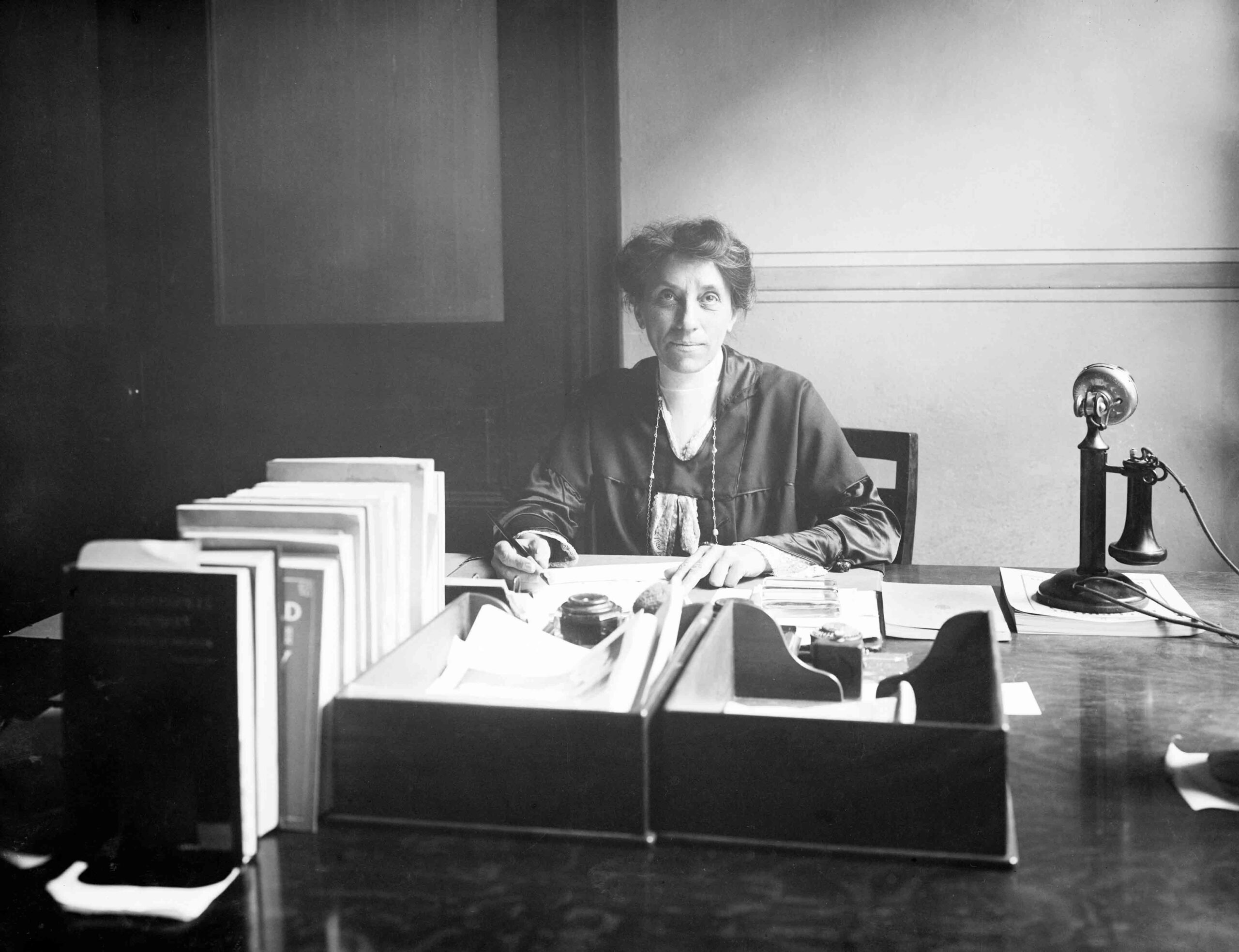
Julia Clifford Lathrop was appointed the first chief of the bureau, becoming the first woman to lead a federal bureau in this position. She had worked with Chicago’s Hull House network and served in Illinois public-charity administration, where she investigated institutions and the conditions of vulnerable people. Her experience supported an approach based on observation, records, careful interviews and the publication of findings. She did not regard the mere existence of a new office as proof that children’s lives would improve.,Lathrop’s leadership also reflected the growing public role of women reformers before women possessed nationwide constitutional protection for voting. Associations and reform networks had helped create the political constituency for the bureau. Once appointed, Lathrop sought to turn their demands into an enduring federal information service. This history connects to the wider struggle for political rights described in our Nineteenth Amendment article, without implying that the two movements were identical.
Infant mortality as an early research priority
One of Lathrop’s first choices was to focus on infant mortality, the deaths of babies before their first birthdays. Public-health reformers knew that poor sanitation, infectious disease, inadequate care and economic hardship contributed to danger, but reliable comparisons between communities could be difficult. The bureau conducted studies of families’ circumstances and compiled evidence about birth and death patterns. Research on infant deaths required more than counting funerals: it involved understanding household income, maternal work, housing, feeding practices and the availability of services.,These studies helped change the public discussion from isolated tragedies to patterns that communities and officials might address. They also highlighted the limitations of data systems in a period when birth registration was incomplete in parts of the country. Statistics could illuminate unequal conditions, but they needed careful interpretation. The bureau’s research could identify associations between circumstances and mortality without proving that one factor explained every death. That methodological caution remains important when readers use early twentieth-century welfare reports.
What the bureau did—and did not—do
The early bureau chiefly investigated, reported, advised and publicized information. It was not a modern combined social-service agency operating every program associated with family benefits. Its small initial staff and budget made research priorities important. It published information for parents, professionals and legislators, helping turn local observations into subjects of national debate. The Social Security Administration’s historical account records a modest original organization, emphasizing how different it was from later, much larger federal administrations.,Because the law assigned research and reporting responsibilities, the bureau’s success cannot be measured solely by how many children it directly rescued. Its influence also depended on whether organizations, governments and families used its findings. That approach was characteristic of a Progressive Era faith in careful investigation and the practical application of expertise. Critics could still question findings or disagree about proposed actions. The agency provided a forum and a body of evidence; it did not eliminate political debate over child welfare.
Child labor and the path to federal legislation
Children’s employment was part of the bureau’s founding mandate. Industrial work could involve long hours, dangerous machinery and lost schooling. Federal limits faced political and constitutional questions, while states had different laws and enforcement practices. The bureau’s investigations and those of private organizations helped document conditions and strengthen the case for public action. Yet publishing reports did not automatically grant Congress powers it had not previously exercised.,The Keating–Owen Child Labor Act of 1916 attempted to restrict interstate trade in goods produced under specified child-labor conditions. Its enactment came four years after the bureau was founded, and the law encountered constitutional challenges. This relationship is an example of how research and advocacy could support legislation while the courts continued to determine federal limits. The history of the bureau and the law belongs in connected but separate articles, because one concerns an agency’s research mission and the other a contested legal prohibition.
Public health, families and educational materials
The bureau became known for producing accessible publications about child care and family welfare. Advising parents could be controversial as well as helpful: recommendations sometimes reflected contemporary social assumptions and could be difficult for poor households to follow without clean water, adequate housing or medical resources. A mother who worked long hours or lacked reliable food supplies could not necessarily act on every instruction in an official pamphlet. Reading such materials critically means distinguishing what the agency recommended from what families could realistically achieve.,The value of early publications is also historical. They reveal what officials believed about health and child development, what evidence they possessed and where they misunderstood social circumstances. Some ideas were later revised as medicine, public health and social science advanced. Using them as sources for conditions a century ago is appropriate; treating old pamphlets as current medical advice is not. Our article concerns the history of research and administration rather than modern guidance for infant care.
How the bureau intersected with changing women’s roles
Women were prominent in settlement houses, social work, public health, suffrage associations and family-support organizations. Their participation helped turn domestic and local experiences into national political issues. Lathrop’s appointment was therefore significant beyond her individual career. It demonstrated an opening for women in senior federal administration at a time when most national offices were led by men. Nevertheless, women’s increasing public influence did not mean they shared identical priorities or that Black women and immigrant women had equal access to reform leadership.,Historical accounts should also ask who appeared in research and whose voices were left out. Studies of child welfare depended on the participation of families whose circumstances could differ greatly from those of officials writing the reports. Discriminatory institutions and unequal access to care influenced how families experienced federal and local policies. The bureau’s early mission included children among all classes of people, but achieving fair and representative coverage was a continuing challenge.
Later programs and the agency’s expanding place
The agency’s role evolved well beyond the first studies. In the 1920s federal and state initiatives concerned with maternal and infant welfare expanded the practical relevance of the bureau’s work. During the New Deal, the Social Security Act of 1935 introduced broader public structures for old-age support, unemployment compensation and certain welfare programs. The Children’s Bureau was connected to maternal and child welfare administration, but those later programs should not be projected back into the small original organization of 1912.,The bureau also moved among departments over later decades. Its history shows how a research-oriented initiative can acquire new tasks and become part of larger systems of public administration. The Social Security Act of 1935 provides an important later comparison. One law founded a modest investigatory institution; the other enacted extensive programs with distinct funding and eligibility structures. Both are important to the history of American social policy, but they represent different stages.
Why the creation of the Children’s Bureau mattered
The bureau made the welfare of children a permanent subject of national research and reporting. It helped connect child labor, infant death, education, family resources and legal protections in an institutional setting that produced information over many years. That change made it easier for later reformers to cite national evidence rather than relying on isolated accounts. Its creation also recorded a milestone in women’s participation in federal leadership through Julia Lathrop’s appointment.,The anniversary of April 9, 1912, marks the beginning of an agency, not the beginning of concern for children in America. Families, educators and reformers had worked on these problems long before that date. The significant change was that Congress provided a lasting federal place for the work. Understanding the distinction between research authority, later regulatory powers and modern family programs gives a more accurate picture of how child welfare became part of national policy.
Timeline
- 1903 onward: Advocates campaign for a federal children’s bureau
- 1909–1910: Child-welfare proposals gain public support
- April 9, 1912: Taft signs founding act
- April 1912: Julia Lathrop appointed first chief
- 1913: Bureau enters newly created Department of Labor
- 1916: Keating–Owen federal child-labor law enacted
- 1935: Social Security Act broadens federal welfare arrangements
Frequently asked questions
When was the Children’s Bureau established?
April 9, 1912, when President William Howard Taft signed the founding law.
Who was the first chief?
Julia Clifford Lathrop, a Progressive Era social reformer and the first woman to lead a federal bureau in this role.
Which department originally housed it?
The Department of Commerce and Labor, before the separate Department of Labor was formed in 1913.
Was its first task to run benefits programs?
No. It was founded chiefly to investigate and report on children’s welfare.
What did it study?
The law identified infant mortality, birth rates, juvenile courts, orphanages, dangerous occupations, illness, employment and child-welfare laws.
How does it relate to child-labor reform?
Its research was part of a wider campaign, but direct federal restrictions were enacted separately and faced legal challenges.
Sources and further reading
Source links prioritize historical institutions and primary legal records.