Women’s Army Corps in WWII: From the WAAC of 1942 to the WAC of 1943
Why Congress created the Women’s Army Auxiliary Corps in May 1942, how it gained full Army status in 1943 and what women did at home and overseas.
Quick answer
Congress established the Women’s Army Auxiliary Corps (WAAC) in May 1942, with Oveta Culp Hobby as its first director. The WAAC provided women to support U.S. Army operations during World War II, initially as auxiliaries rather than fully enlisted Army personnel. On July 1, 1943, Roosevelt signed legislation creating the Women’s Army Corps (WAC) with military status. Members performed administrative, communications, technical and other noncombat assignments in the United States and overseas. The corps expanded women’s wartime service, though discrimination and limits on roles remained.
Key facts
On this page
- Why the Army wanted women during the war
- The creation of the WAAC in May 1942
- Oveta Culp Hobby and corps leadership
- Training and the first WAAC recruits
- The change to WAC on July 1, 1943
- Administrative and communications work
- WAC service overseas
- Black women and racial segregation
- Rumors, public criticism and gender expectations
- How the WAC differed from Navy and aviation programs
- What happened after 1945?
- Why WAAC and WAC history matters
- Timeline
- FAQs
- Sources
Why the Army wanted women during the war
World War II forced the U.S. Army to expand far beyond its prewar size. Millions of men entered military service, and headquarters, camps, hospitals and logistical organizations needed increasing numbers of clerks, telephone operators, mechanics and administrators. Using trained women for certain positions could release more male soldiers for other assignments without abandoning work essential to military operations.
The idea faced resistance from people who believed women should not wear military uniforms or work within armed forces structures. Supporters argued that women already performed many skills the Army urgently needed and that proper training could enable them to contribute under military discipline. The debate took place in a society with sharply gendered expectations and within a military that also maintained racial segregation. The women’s corps emerged through legislation and political advocacy rather than an automatic opening of all positions.
The creation of the WAAC in May 1942
Congress approved legislation establishing the Women’s Army Auxiliary Corps in May 1942. The initial organization was auxiliary to the Army, which meant women served under an unusual legal arrangement distinct from the full military status of ordinary soldiers. This compromise helped secure political support but created concerns about pay, benefits, rank and protections if women were injured or died while serving.
WAAC members underwent military-style training, wore uniforms and accepted disciplined assignments, yet their technical legal position could differ from that of male Army personnel. For that reason it is historically misleading to say the WAAC and WAC were exactly the same organization from the first day. The conversion to full military status in 1943 resolved some major legal ambiguities while leaving other questions about gender and assignments unresolved.
Oveta Culp Hobby and corps leadership
Oveta Culp Hobby was appointed the first director of the WAAC. She had worked in publishing and federal wartime public information and was expected to create a new organization under close scrutiny. Hobby oversaw recruiting, training and development of policies while answering criticism from outside and within the Army. Her leadership combined organizational management with the political work needed to demonstrate that women could serve effectively.
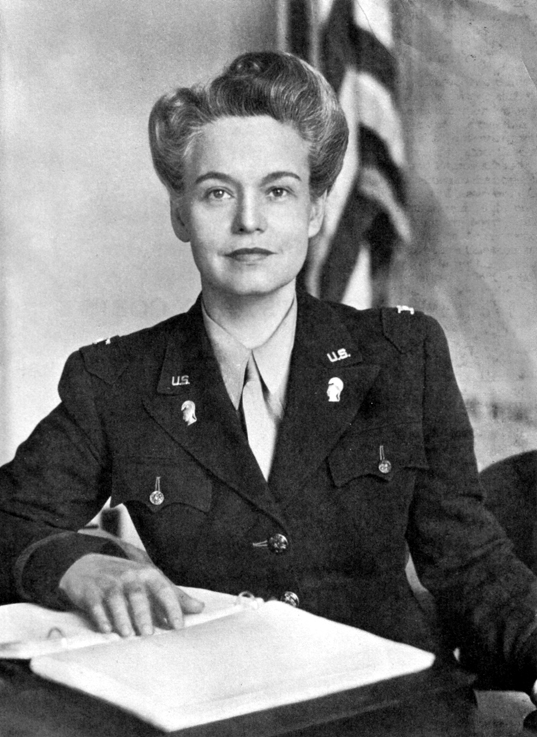
The featured image shows Hobby in Army uniform during the wartime period. It identifies the program’s leading administrator rather than a scene from the May 1942 congressional vote. Hobby later held the rank of colonel after establishment of the WAC. Her career shows that women moved into important official leadership positions during the war, although senior military command and combat opportunities remained highly restricted.
Training and the first WAAC recruits
Early recruits attended basic training covering Army customs, discipline, physical conditioning, organization and practical duties. Training centers had to develop housing, uniforms and instruction suitable for the new force. In some respects the program mirrored existing military preparation, but administrators also had to respond to concerns about women’s living conditions and public reputation. The process was shaped by both operational needs and contemporary gender expectations.
Applicants came from different civilian occupations. Some already had secretarial, communications or technical experience; others learned new skills after joining. Training did not ensure every woman obtained her preferred role or duty station. Assignments were made according to Army demand, qualifications and the policies of the time. The National Women’s History Museum preserves accounts describing the mixture of opportunity, challenge and daily routine that women experienced.
The change to WAC on July 1, 1943
Roosevelt signed legislation on July 1, 1943, establishing the Women’s Army Corps within the Army and replacing the earlier auxiliary status. The change gave women a clearer position as military personnel, including associated rights and responsibilities. It addressed concerns that the auxiliary framework had disadvantaged women performing dangerous or demanding duties in support of military operations.
The legal distinction mattered for families and service members, not just for uniforms. Military status affected entitlements, disciplinary rules and the way service was recognized. The WAC did not become an unrestricted combat branch, and women still held particular assignments under policies of the period. Nevertheless the act established a more durable framework for women’s participation in the Army while the conflict continued.
Administrative and communications work
Many WAC members served as typists, file clerks, telephone operators, stenographers and record administrators. These tasks were vital to military organizations moving personnel, supplies and messages on an unprecedented scale. A correctly transmitted order or maintained personnel record could affect troops far from the office where it was prepared. The work may be less visually dramatic than battlefield service but remained essential to wartime effectiveness.
Other women took on technical duties in mapping, weather observation, maintenance, transport and communications. Their assignments depended on training and the Army’s willingness to accept women in particular roles. The breadth of the program contradicts the notion that WAC service meant only one kind of clerical position, while also falling short of claims that women were given all military occupational specialties available to men.
WAC service overseas
Women served in theaters beyond the United States, including Europe, North Africa and parts of Asia and the Pacific. Overseas personnel supported command headquarters, communications networks and logistical systems. Deployments involved unfamiliar living conditions and military danger even when women were not assigned to direct infantry combat. Travel and duty required the same broad logistical support as other military movements.
The nature of overseas service varied. Some members worked in relatively secure headquarters while others performed tasks under air-raid threat or in difficult climates. The work could be tedious, exhausting or technically challenging depending on assignment. A historical account that describes all WAC members as fighting on the front lines would be inaccurate, as would one that pretends they never faced wartime risk.
Black women and racial segregation
The women’s Army organizations recruited Black women, but the armed forces operated under discriminatory rules and segregated structures. Black recruits encountered barriers in assignment, training conditions and opportunities for leadership. Mary McLeod Bethune and other advocates pressed officials to provide fair access and encouraged recruitment. The Library of Congress describes efforts to meet expectations for Black participation while overcoming distrust generated by Army discrimination.
The experience of the 6888th Central Postal Directory Battalion in the European theater later became a prominent example of Black women’s wartime service. Their work sorting massive volumes of military mail was essential to morale and communication. Their achievements did not mean the entire Army was integrated in 1945. The tensions experienced by WAC members formed part of the broader struggle eventually leading to military desegregation.
Rumors, public criticism and gender expectations
The WAAC and WAC faced hostile rumors that questioned women’s morals, competence and reasons for joining. Some attacks reflected fear that women’s independence and employment outside the home challenged traditional expectations. Officials responded through publicity, discipline and efforts to maintain recruitment. The controversy shaped the experience of members even when their immediate duties were professional and routine.
Such criticism did not affect all women in the same way. Race, class, family background and local attitudes influenced how their service was perceived. Some women found new pride and economic opportunity, while others encountered harassment or pressure to leave. Accounts by veterans are important because official recruitment posters generally emphasize idealized duty and patriotism, not the full range of problems members faced.
How the WAC differed from Navy and aviation programs
Women also served through separate wartime programs outside the Army’s WAC structure. The Navy’s WAVES provided women with naval assignments, while the Marine Corps and Coast Guard created their own organizations. The Women Airforce Service Pilots performed military-related flying duties but were classified as civilian personnel rather than full members of the armed forces during the war.
These distinctions mattered for recruitment, uniforms, duties and legal benefits. A woman working as a WAC communications specialist and a WASP ferrying aircraft both contributed to the war, but their service arrangements were not interchangeable. Avoiding the generic claim that all women in wartime uniform belonged to the same corps preserves the organizations’ individual histories.
What happened after 1945?
As the war ended, some WAC positions were reduced during demobilization, yet leaders recognized the value of continued women’s military service. The Women’s Armed Services Integration Act of 1948 provided a more permanent statutory basis for women serving in several U.S. armed services. Later decades saw further changes to promotion, assignments and the role of women in the military.
The postwar development should not be read back into 1942. The original WAAC was an auxiliary organization created during emergency mobilization; the later WAC possessed full military status, and permanent integration required additional legislation. Women’s service expanded through a sequence of political decisions rather than one law instantly resolving every restriction.
Why WAAC and WAC history matters
The WAAC and WAC allowed large numbers of women to contribute directly to U.S. Army operations and reshaped assumptions about their ability to serve in a military environment. Their contributions included essential administrative and technical work at home and overseas, often performed under difficult conditions. Oveta Culp Hobby’s leadership helped build an organization that persisted beyond the immediate wartime emergency.
The historical significance lies in both the new opportunities and the remaining inequalities. Black women faced segregation, all members experienced gendered restrictions and the legal difference between auxiliary and full Army status affected their rights. The transition from 1942 to 1943 and the later 1948 legislation show how women’s military service became a lasting part of American institutions.
Timeline
- May 1942: Congress creates Women’s Army Auxiliary Corps
- May 1942: Oveta Culp Hobby becomes director
- 1942–1943: WAAC recruitment and training expand
- July 1, 1943: Women’s Army Corps established with military status
- 1944–1945: WAC units serve in domestic and overseas assignments
- 1945: War ends and demobilization begins
- 1948: Women’s Armed Services Integration Act supports continuing service
Frequently asked questions
What does WAAC stand for?
Women’s Army Auxiliary Corps, established in May 1942.
What does WAC stand for?
Women’s Army Corps, given Army military status in July 1943.
Who directed the program?
Oveta Culp Hobby was its first director.
Why did the name change?
Congress replaced auxiliary status with full military status, clarifying service rights and responsibilities.
Did WAC members serve overseas?
Yes. Many supported headquarters, communications and logistics in overseas theaters.
Was the corps racially integrated?
No. Black women served while facing segregation and discriminatory conditions.
Was WAC the same as WASP?
No. The Women Airforce Service Pilots were a separate military-related civilian flying program.