Battle of Fort Stedman (March 25, 1865): Lee’s Last Petersburg Offensive
A daring Confederate attempt to break the siege briefly captured a Union fort before being overwhelmed by counterattacks.
The Battle of Fort Stedman took place near Petersburg on March 25, 1865. Confederate general John B. Gordon led a predawn surprise attack that captured Fort Stedman and nearby Union batteries. Federal soldiers under John G. Parke and John F. Hartranft counterattacked, recovered the works and captured many Confederate troops. The failure depleted Lee’s army before the decisive Union offensives at Five Forks and Petersburg.
A source-based guide to the sequence, commanders, decisions and historical consequences.
On this page — 20 topics
What happened at Fort Stedman?
Fort Stedman was the target of a Confederate surprise attack during the final weeks of the Siege of Petersburg. On the morning of March 25, 1865, troops under John B. Gordon crossed the ground between the lines and captured the Union fort and nearby batteries. Their success disrupted the federal position for several hours.
Union forces organized a counterattack and recovered the fort, while many attacking Confederates were killed, wounded or captured. The assault failed to achieve the larger aim of breaking through toward Union supply operations. It is generally regarded as one of Lee’s last major offensive attempts before the collapse of Petersburg in early April.
Where was Fort Stedman located?
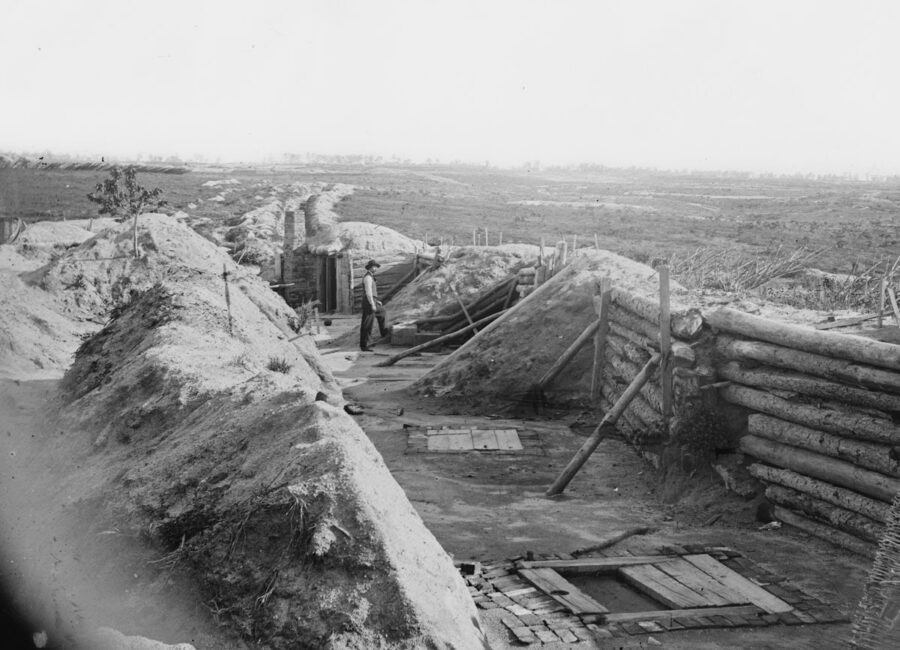
Fort Stedman stood within the Union siege works east of Petersburg, Virginia. The armies had established long opposing lines around the city, with some forward positions close enough for rifle fire and nighttime raids. Forts, batteries and connecting trenches protected soldiers and artillery while giving commanders control over approaches to their lines.
The fort was one piece of a much larger defensive system, so capturing it was not automatically equivalent to destroying the Union army. To achieve a major breakthrough, Gordon needed to move additional troops through the gap, overcome neighboring works and reach vital roads or depots beyond the front. The geography made that a much harder problem than the initial capture.
Why did Robert E. Lee authorize an attack?
By March 1865, Lee’s army faced severe pressure after many months defending Petersburg and Richmond. Grant had gradually extended federal positions, threatening railroads and reducing the Confederacy’s ability to resupply its soldiers. Desertion, shortages and the need to hold an increasingly long line limited Lee’s options.
Lee could either remain behind defenses that were growing harder to maintain or attempt a dramatic operation to disrupt the Union position. Gordon developed a plan to penetrate the line before dawn. Even if such an attack did not permanently lift the siege, it might delay Grant or create an opening for Lee’s army to maneuver.
Who was John B. Gordon?
John Brown Gordon was a Confederate general who had led troops in major eastern campaigns. In early 1865 he helped plan an attack intended to surprise the federal position near Fort Stedman. His role included coordinating assaulting infantry and attempting to push additional forces through the captured works.
Gordon’s plan required timing, deception and a fast advance. His troops had to cross dangerous ground under the threat of gunfire, take the fort and then move farther before Union reserves arrived. The operation’s initial success has sometimes encouraged admiration for its boldness, but the larger failure reveals the limits of surprise when the attacking army lacks sufficient resources.
How did the Confederates achieve surprise?
Confederate troops moved forward before daybreak and crossed the space between the opposing lines. Their assault used the darkness and local knowledge of the defenses to reduce warning. Federal outposts and soldiers in the forward works faced attackers before the full Union command could respond.
The initial movement quickly overwhelmed portions of the garrison. Nearby batteries also fell, producing a breach in the federal defensive system. But the Confederate force had to exploit that opening immediately. As daylight increased, defenders gained better information and Union formations from adjacent positions began directing fire and reinforcements toward the threat.
Which nearby batteries were captured?
The National Park Service identifies Batteries X, XI and XII among the positions temporarily captured during the Confederate assault. Their loss increased the seriousness of the breakthrough and gave Gordon an opportunity to move beyond the original objective. Controlling these guns and works could have threatened neighboring positions.
However, a captured battery remained vulnerable if the attacking soldiers could not secure the routes and trenches around it. The Confederate force was now inside a complex defensive network with Union troops on both sides. That situation became dangerous as federal commanders organized counterattacks and directed artillery fire toward the penetration.
Did the attack reach City Point?
City Point was an important Union logistical base east of Petersburg, connected to the military rail and supply system. Gordon’s broader hopes included disrupting federal communications and supplies. Capturing Fort Stedman alone did not give Confederates control of City Point or the ability to attack it directly.
The distance, neighboring Union defenses and rapidly mobilizing federal reserves made a deep breakthrough extremely difficult. Some popular accounts describe an ambitious plan and then imply that the objective was almost achieved. The historical result was much narrower: Confederates temporarily gained a portion of the front but did not reach the supply center needed to change the siege.
Who commanded the Union defense?
Major General John G. Parke directed federal forces responsible for much of the sector, while John F. Hartranft played an important role in organizing the counterattack. Local garrisons and nearby units responded as Confederate troops moved through the works. The Union ability to shift soldiers quickly to threatened points was essential.
The response showed the strength of a connected defensive system. Even when a forward position was taken by surprise, formations behind it and on adjoining lines could contain a breakthrough. Artillery and organized infantry attacks made Gordon’s captured ground increasingly difficult to hold. Command effectiveness was therefore not measured by preventing all surprise but by recovering rapidly.
What happened during the counterattack?
Union forces struck the Confederate troops from adjacent positions and from reserves arriving behind the fort. Artillery fire made movement across open ground dangerous, while counterattacking infantry pressed the men who had entered the federal works. As Confederate momentum slowed, the attacking troops found themselves surrounded by fire.
The fort was recaptured, and many Confederates were taken prisoner. Some attackers withdrew across the ground they had crossed before dawn, while others were unable to escape. The result demonstrated how a promising assault could end in disaster if the attacking force could not widen or sustain the original breach.
Why did the plan fail?
The Confederate operation depended on more than capturing one fort. It required coordinated follow-up attacks, the rapid arrival of reinforcements and a realistic route to deeper Union targets. Those conditions were not met. Neighboring federal defenses remained functional, Union commanders responded effectively and Confederate troops were caught in a narrow penetration.
Lee’s limited reserves also mattered. The army could not easily replace men lost in an attack that had little chance of achieving a lasting strategic result. The failure therefore reflected both local tactical problems and the broader imbalance of resources in March 1865. Fort Stedman was daring, but daring alone could not reverse the siege.
How many casualties occurred?
The National Park Service’s Civil War battlefield database estimates approximately 3,698 combined casualties, including 1,017 Union and 2,681 Confederate. It reports that more than 1,900 Confederate attackers were captured. These figures include killed, wounded, missing and captured, rather than deaths alone.
The casualty balance was especially damaging to Lee’s shrinking force. The loss of prisoners weakened units that were needed to hold the long Petersburg front. As always, historians should distinguish estimates for the single battle from losses in the wider siege and identify the source of totals rather than combining unlike categories.
What happened elsewhere on March 25?
While Gordon’s attack unfolded, other Union forces took advantage of weakened Confederate positions on different sectors of the line. Federal troops assaulted forward picket works and captured ground that could support future operations. Thus the Confederate offensive not only failed to open a strategic gap but also helped create opportunities for its opponent.
The wider events are important for understanding why the day is viewed as a serious Confederate defeat. Even after Fort Stedman was recovered, the balance of the siege had shifted further in Grant’s favor. Lee now faced a front with fewer defenders and a Union army preparing to move more strongly against the western railroads.
How was Fort Stedman linked to Five Forks?
The failure at Fort Stedman was followed by Union operations designed to threaten Lee’s right flank and the South Side Railroad. Sheridan’s cavalry and Warren’s V Corps moved against Confederate positions near Five Forks, where they achieved a decisive victory on April 1. The events form a short final sequence of pressure and collapse.
The battles were not identical, and Five Forks was not a direct second assault on Fort Stedman. Rather, Grant used opportunities across the Petersburg front after the Confederate attack failed. The Five Forks battle helped make Lee’s defense of Petersburg untenable, leading to the Confederate evacuation days later.
What did Lee do after the failure?
Lee continued defending Petersburg and Richmond as federal attacks threatened the western approaches. His army had to cover vulnerable positions with fewer soldiers and increasingly unreliable supply connections. A general withdrawal would require careful movement and access to food and transport, but the Union army was closing routes south and west.
The following week brought more serious reverses. After Five Forks and a broad Union assault on April 2, Lee advised Confederate leaders that the cities must be abandoned. His army then retreated westward, beginning the final movements toward Appomattox. Fort Stedman was therefore a failed attempt to avoid, delay or change that outcome.
Did the Confederates have any chance of breaking the siege?
Military historians differ over how realistic Gordon’s ambitions were, but the general imbalance in March 1865 is clear. Confederate troops could still surprise and overrun federal positions, as Fort Stedman demonstrated, yet they lacked the reserves and logistics necessary to turn a local penetration into a sustained operational success.
A careful account should distinguish a conceivable tactical success from a plausible strategic recovery. The initial breach was real, and Union units faced danger. But reaching supply centers and compelling Grant to abandon the siege required much more than those few hours of success. The Confederate situation was already deeply precarious.
Why is the battle historically important?
Fort Stedman marks the limits of Confederate offensive power near the end of the Civil War. It also illustrates the vulnerability and resilience of large trench systems: even fortified lines could be surprised, but organized reserves and artillery could recover the position before the attackers gained strategic depth.
Its importance becomes clearer in the final timeline of Petersburg. March 25 was followed by Five Forks on April 1, the breakthrough and evacuation on April 2 and 3, and Appomattox on April 9. These events show how a failed offensive could accelerate rather than prevent the collapse of an already exhausted defending army.
Battle of Fort Stedman 1865 timeline
These dates distinguish the main stages of the operation from the consequences that came afterward.
| Date | Event |
|---|---|
| June 1864 | Union and Confederate forces begin prolonged Petersburg operations. |
| Early March 1865 | Lee’s army faces worsening supply problems and extended defenses. |
| March 25, before dawn | Gordon’s troops surprise and overrun Fort Stedman. |
| March 25, morning | Union troops counterattack and retake the works. |
| March 25, later | Federal attacks seize additional Confederate picket lines. |
| April 1 | Union victory at Five Forks exposes the last major supply route. |
| April 2–3 | Petersburg and Richmond are abandoned by Confederate forces. |
| April 9 | Lee surrenders at Appomattox. |
Frequently asked questions
When did it happen? March 25, 1865.
Where did it happen? Petersburg, Virginia.
Who were the main figures? Gordon, Parke, Hartranft.
What was the outcome? Union defensive victory. The sections above explain the result in context.
How does it fit into the war? Our Civil War overview provides the wider timeline.
Historical sources and further reading
This guide uses National Park Service research and period images; factual claims and interpretations are distinguished from later artistic impressions.